Colorado 14ers by Difficulty: All 58 Ranked from Easiest to Hardest
The easiest Colorado 14er is Mount Bierstadt, a well-marked 7-mile round trip you can do as a first summit. The hardest 14er in Colorado is Capitol Peak, a Class 4 climb with a knife-edge ridge that has killed experienced mountaineers. Every one of Colorado's 58 fourteeners falls somewhere between those two, and knowing where a peak lands before you drive to the trailhead is the difference between a great day and a dangerous one.
This is the full ranking of Colorado's 58 fourteeners by difficulty, grouped into four tiers you can actually use to plan. Ratings reflect each peak's standard (easiest) route, so a Class 4 peak might have a harder line too, but nobody sane starts there.
Quick answer: Beginners should start with Mount Bierstadt, Quandary Peak, or Grays Peak (all Tier 1). Skip anything Class 3 or higher until you've done several Class 2 peaks and are comfortable with exposure. The five deadliest are Capitol, Little Bear, the two Maroon Bells, and Pyramid.
What You'll Find
- How Colorado 14ers are rated for difficulty
- The easiest Colorado 14ers (Tier 1)
- Moderate 14ers: long days, no scrambling (Tier 2)
- Hard 14ers: where the scrambling starts (Tier 3)
- The hardest 14ers in Colorado (Tier 4)
- All 58 Colorado 14ers by difficulty tier
- How to work up the difficulty ladder
- Gear for each difficulty level
- Frequently asked questions
How Colorado 14ers Are Rated for Difficulty
Most people think a 14er's difficulty is about height. It isn't. All 58 peaks top 14,000 feet, so elevation barely separates them. What actually separates a walk-up from a death-trap is the class rating, and then a handful of secondary factors.
Colorado 14ers use the Yosemite Decimal System (YDS) to rate the hardest move on the standard route:
- Class 1: Trail hiking. You never use your hands.
- Class 2: Rough ground, talus, and scree. You'll use hands for balance, but there's no real fall risk.
- Class 3: Scrambling. Hands are needed to climb, and now there's exposure. A fall could hurt or kill you.
- Class 4: Steep, exposed climbing on often-loose rock. Many climbers rope up. A fall would very likely be fatal.
Class is the headline number, but four other things change how hard a peak feels on the day:
- Round-trip distance and elevation gain. Pikes Peak by the Barr Trail is only Class 1, yet it's a 26-mile round trip with 7,400 feet of gain, harder for most people than a short Class 2.
- Exposure. This is the big one. Two Class 3 peaks can feel totally different depending on how far the drop is beside the scramble.
- Rock quality. The Elk Range peaks (Capitol, the Maroon Bells, Pyramid) are famous for rotten, loose rock that breaks off in your hands. That's why they're deadlier than solid Class 4 rock elsewhere.
- Access and altitude. A high trailhead means less climbing; a remote one (think the San Juans) means a long approach or even an overnight before you touch the peak.
Put those together and you get the four tiers below. Wherever we have a full trail write-up, we've linked it so you can dig into the route.
The Easiest Colorado 14ers (Tier 1)
These are the walk-ups: Class 1 and easy Class 2 peaks with marked trails, forgiving terrain, and little to no exposure. If you're fit enough to hike 8 miles with 3,000 feet of gain at sea level, and you've acclimatized, you can summit any of these. Start here.
| Peak | Elevation | Round trip | Gain | Class | Range |
|---|---|---|---|---|---|
| Mount Sherman | 14,036 ft | 5.25 mi | 2,100 ft | 2 | Mosquito |
| Mount Democrat | 14,155 ft | 7.5 mi | 3,700 ft | 2 | Mosquito |
| Handies Peak | 14,048 ft | 5.75 mi | 2,500 ft | 1 | San Juan |
| Quandary Peak | 14,271 ft | 6.75 mi | 3,450 ft | 1 | Tenmile |
| Mount Bierstadt | 14,060 ft | 7 mi | 2,850 ft | 2 | Front |
| Grays Peak | 14,275 ft | 8 mi | 3,000 ft | 1 | Front |
| Mount Elbert | 14,440 ft | 9.5 mi | 4,500 ft | 1 | Sawatch |
Mount Bierstadt is the classic first 14er thanks to its high Guanella Pass trailhead and short drive from Denver. Quandary Peak near Breckenridge is the most-hiked 14er in the state, Class 1 the whole way. Mount Elbert is the highest point in Colorado and, despite the distance, never harder than a walk. For the full beginner breakdown with trailhead directions, see our easiest 14ers guide.
Also in this tier: Torreys Peak (pair it with Grays), Pikes Peak by the Barr Trail, Mount Blue Sky (formerly Mount Evans), San Luis Peak, and Huron Peak. Pikes and Blue Sky both have summit roads, so you can drive up and hike a shorter route if you want the view without the full day.
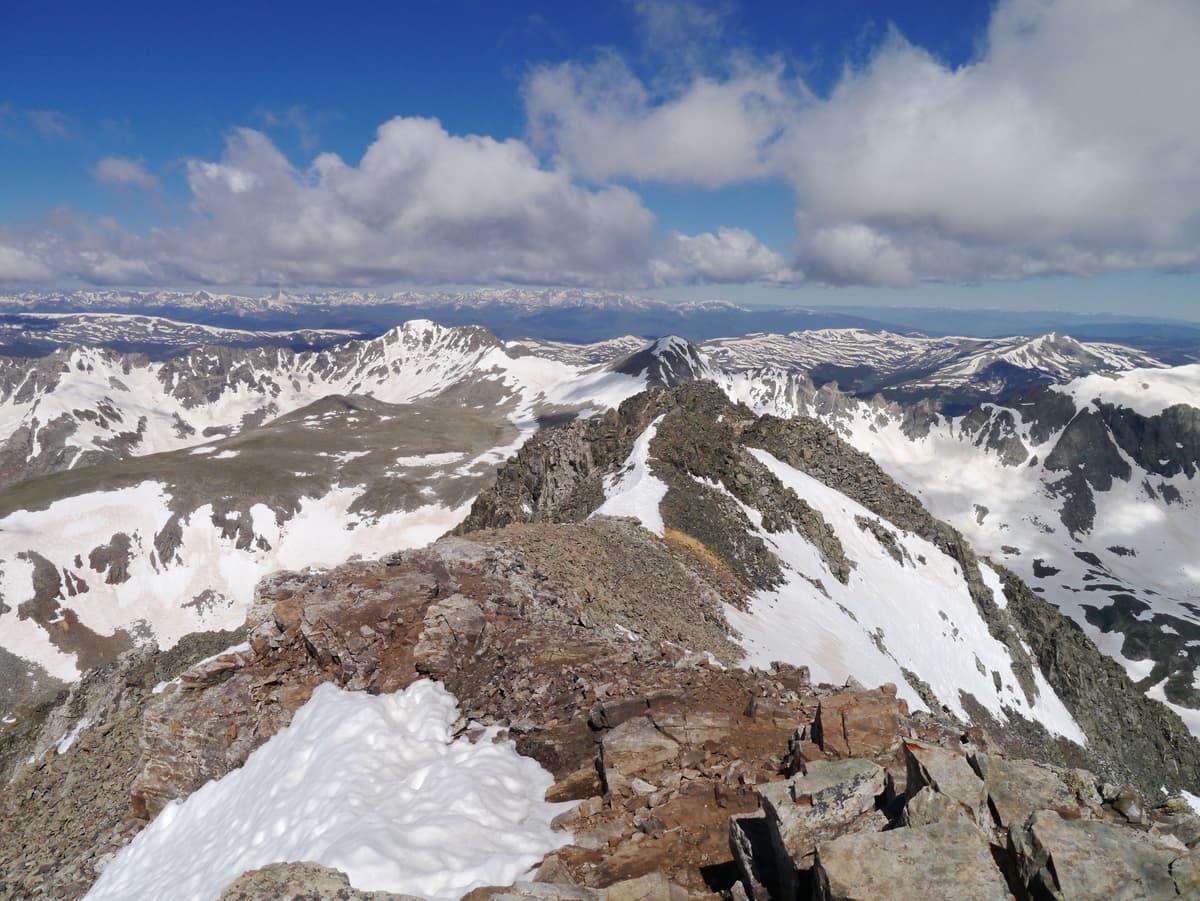 Quandary Peak is the most popular first 14er in Colorado: Class 1, well-marked, and close to Breckenridge. Photo: Wikimedia Commons
Moderate 14ers: Long Days, No Scrambling (Tier 2)
Tier 2 peaks are Class 2. There's no scrambling that will scare you and no fall-you-die exposure, but the days get long, the trailheads get rougher, and the talus gets tedious. These are where you build the fitness and altitude legs you'll need before touching anything Class 3.
The Sawatch Range holds most of them, and they share a personality: big, rounded, relentless climbs on decent trail. Mount Massive and Mount Harvard are the second- and third-highest peaks in the state, both long Class 2 grinds. La Plata Peak, Mount Yale, Mount Columbia, Mount Princeton, Mount Antero, Mount Shavano with Tabeguache, and Mount of the Holy Cross round out the range. Holy Cross is sneaky-hard because you climb back over Half Moon Pass on the way out, so you finish uphill when you're already spent.
The Sangre de Cristos and San Juans add more Class 2 with a wilder feel: Humboldt Peak, Culebra Peak (private land, paid reservation required), Uncompahgre Peak (the sixth-highest 14er, mostly a hike with one steep gully), Redcloud and Sunshine Peaks (a two-fer), and Castle Peak in the Elk Range. The Mosquito Range gives you the Decalibron, where Democrat, Cameron, Lincoln, and Bross link into one loop, though Bross has had access issues, so check the current status before you go.
Blanca Peak sits at the top of this tier as a stout Class 2+, and it's a useful checkpoint: if Blanca's northwest ridge feels fine, you're probably ready to start Class 3.
Hard 14ers: Where the Scrambling Starts (Tier 3)
Tier 3 is the jump that catches people off guard. Class 3 means real scrambling with real exposure, hands on rock, drops beside you, and consequences if you slip. The physical fitness you built in Tier 2 matters less here than your comfort with heights and your ability to pick a line up a face.
Longs Peak via the Keyhole Route is the most famous Class 3 in the state and a rite of passage: a 15-mile day with the exposed Narrows and Homestretch near the top. Mount Sneffels and Wetterhorn Peak are shorter but deliver committing summit scrambles. The Crestones, Kit Carson Peak, Challenger Point, and Mount Lindsey in the Sangre de Cristos climb on some of the best solid rock in Colorado, which is exactly why they're a smart place to learn Class 3.
Deep in the San Juans, the Chicago Basin peaks (Mount Eolus, Windom Peak, and often Sunlight) usually mean riding the Durango & Silverton train and backpacking in, so the difficulty is as much logistics as climbing. Wilson Peak (the one on the Coors can) and Ellingwood Point finish out the tier. Do several of these before you even think about Tier 4.
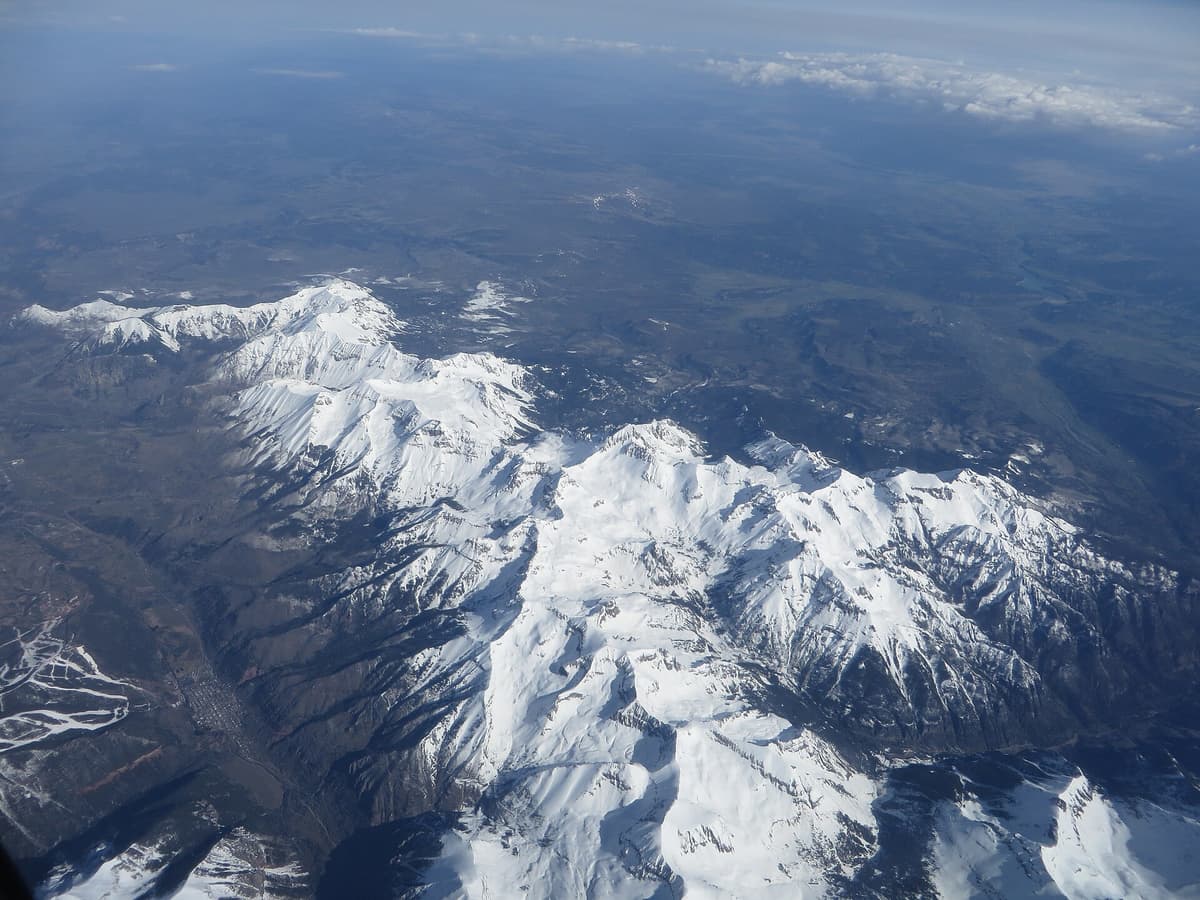 Mount Sneffels in the San Juans is a compact but exposed Class 3, a good peak for learning to scramble on solid rock. Photo: Wikimedia Commons
The Hardest 14ers in Colorado (Tier 4)
Tier 4 is Class 4: steep, exposed, and usually on loose rock that you cannot trust. These peaks require route-finding, a head for heights, and often a rope. Most fatalities on Colorado 14ers happen here. If you have to ask whether you're ready, you aren't.
| Peak | Elevation | Round trip | Gain | Class | Why it's brutal |
|---|---|---|---|---|---|
| Capitol Peak | 14,130 ft | 17 mi | 5,300 ft | 4 | The Knife Edge, a razor ridge with huge drops both sides |
| Little Bear Peak | 14,037 ft | 14 mi | 6,200 ft | 4 | The Hourglass gully funnels rockfall onto climbers |
| North Maroon Peak | 14,014 ft | 9.25 mi | 4,500 ft | 4 | Rotten, downsloping rock; a "Deadly Bell" |
| Pyramid Peak | 14,025 ft | 8.25 mi | 4,500 ft | 4 | Relentless loose terrain, hard route-finding |
| Maroon Peak | 14,163 ft | 11.5 mi | 4,800 ft | 3+ | Long, loose, and easy to get cliffed out |
| Snowmass Mountain | 14,098 ft | 22 mi | 5,800 ft | 3-4 | A monster approach plus a steep summit block |
| Mount Wilson | 14,252 ft | 16 mi | 5,100 ft | 4 | Exposed summit block, loose gullies |
| Sunlight Peak | 14,059 ft | 17 mi | 5,800 ft | 4 | A famous exposed leap-of-faith summit move |
Capitol Peak is widely called the hardest and most dangerous 14er in Colorado. Its Knife Edge is a 100-foot section of ridge you straddle with thousand-foot drops on both sides, and the peak has claimed multiple experienced climbers in recent years. The Maroon Bells, Maroon Peak and North Maroon Peak, earned the nickname "Deadly Bells" because their rock is so rotten that solid-looking holds pull away. Little Bear's Hourglass is a bowling alley for falling rock when anyone is above you.
None of these are peaks you work up to casually. Climbers who tackle them have usually done dozens of easier 14ers first, taken a scrambling or mountaineering course, and go with partners who know the routes.
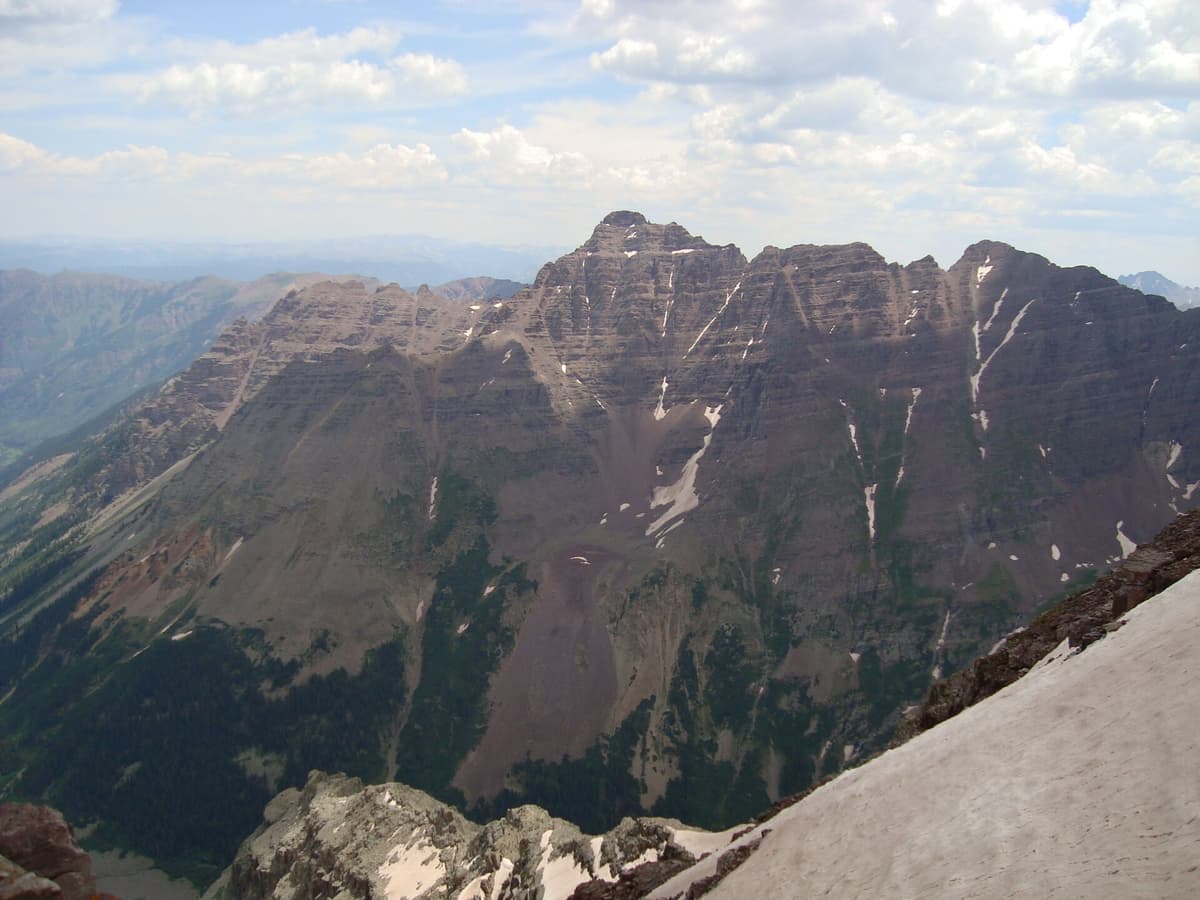 Pyramid Peak in the Elk Range: Class 4, loose the whole way, and one of Colorado's most demanding standard routes. Photo: Wikimedia Commons
All 58 Colorado 14ers by Difficulty Tier
Here's the full list, grouped by tier. Colorado has 58 fourteeners (53 ranked peaks plus 5 unranked sub-summits), and the tiers below sort them by their standard-route difficulty. Within each tier, roughly easier peaks come first.
Tier 1: Easiest walk-ups (Class 1 to easy Class 2)
Mount Sherman, Mount Democrat, Handies Peak, Quandary Peak, Mount Bierstadt, Grays Peak, Torreys Peak, Mount Blue Sky (Mount Evans), Pikes Peak, San Luis Peak, Huron Peak, Mount Elbert
Tier 2: Moderate Class 2 (long, steep, non-technical)
Mount Massive, Mount Harvard, La Plata Peak, Mount Yale, Mount Columbia, Mount Princeton, Mount Antero, Mount Shavano, Tabeguache Peak, Mount of the Holy Cross, Mount Belford, Mount Oxford, Missouri Mountain, Mount Lincoln, Mount Cameron, Mount Bross, Uncompahgre Peak, Redcloud Peak, Sunshine Peak, Humboldt Peak, Castle Peak, Culebra Peak, Blanca Peak
Tier 3: Hard Class 3 (scrambling with exposure)
Mount Sneffels, Wetterhorn Peak, Longs Peak, Mount Lindsey, Kit Carson Peak, Challenger Point, Crestone Peak, Crestone Needle, Ellingwood Point, Wilson Peak, Mount Eolus, Windom Peak
Tier 4: Hardest Class 4 (technical, loose, deadly exposure)
Maroon Peak, Snowmass Mountain, Sunlight Peak, Pyramid Peak, Mount Wilson, El Diente Peak, North Maroon Peak, Little Bear Peak, Capitol Peak
Two notes. First, class ratings describe the easiest standard route; harder lines exist on almost every peak. Second, snow changes everything. A summer Class 2 can become a technical snow climb in June or October, so the season you pick matters as much as the tier.
How to Work Up the Difficulty Ladder
The smart way through the 14ers is one tier at a time. Skipping ahead is how unprepared hikers end up needing a rescue, or worse.
Start below the 14ers. If you've never hiked at altitude, do a few 12,000- to 13,000-foot peaks first and read our Colorado hiking for beginners guide. Get your body used to thin air before you chase a summit.
Do three or four Tier 1 peaks. Learn how your body handles altitude, how early you need to start, and how fast afternoon storms build. Quandary, Bierstadt, and Grays and Torreys together make a great starter set.
Move to Tier 2 for the fitness. These long Class 2 days teach pacing and endurance. If a peak like Mount Massive or Holy Cross wrecks you, spend more time here before adding technical risk.
Take a class before Tier 3. Comfort with exposure is a skill you build, not a switch you flip. A guided scramble or a mountaineering course pays for itself the first time you're on the Longs Peak Narrows.
Treat Tier 4 as its own sport. By the time Capitol or the Bells make sense, you'll know it, because you'll have the experience, the partners, and the honest self-assessment to back it up.
At every level, altitude is the great equalizer. Learn to spot and respond to altitude sickness, because it hits fit and unfit hikers alike and gets more likely the higher and longer you go.
Gear for Each Difficulty Level
Your kit should scale with the tier. Overpacking a walk-up wastes energy; underpacking a Class 4 gets you hurt.
Tier 1 and 2 (walk-ups and Class 2): Sturdy hiking boots, a good rain shell for daily afternoon storms, and trekking poles to save your knees on long talus descents. A solid pair of poles is the single best upgrade for these peaks. Carry 3 liters of water, warm layers, and a headlamp for the pre-dawn start.
Shoulder season on any tier: If you're climbing in late spring or fall, snow lingers in the gullies. A pair of microspikes and, on steeper snow, an ice axe turn a sketchy slope into a manageable one.
Tier 3 and 4 (scrambling and technical): Add a climbing helmet for rockfall, which is the real killer on loose Elk Range peaks. Bring a downloaded route description and a GPS or satellite communicator for the remote San Juan approaches where cell service disappears. Class 4 climbers often carry a light rope and know how to use it.
Whatever the tier, pack a first aid kit and enough food to keep moving. You can browse our full gear reviews for tested picks.
Frequently Asked Questions
What is the hardest 14er in Colorado?
Capitol Peak is generally considered the hardest and most dangerous 14er in Colorado. Its standard route is a long Class 4 climb featuring the Knife Edge, a narrow ridge with sheer drops on both sides, and the peak has caused several deaths among experienced climbers. Little Bear Peak and the Maroon Bells are close behind.
What is the easiest 14er in Colorado?
Mount Bierstadt is the most common pick for the easiest 14er, thanks to its high Guanella Pass trailhead, short 7-mile round trip, and marked trail an hour from Denver. Quandary Peak and Grays Peak are equally beginner-friendly and fully Class 1. Any of the three makes a good first summit.
How are Colorado 14ers ranked by difficulty?
They're ranked using the Yosemite Decimal System, which rates the hardest move on the standard route from Class 1 (trail hiking) to Class 4 (exposed, technical climbing). Distance, elevation gain, exposure, rock quality, and trailhead access then fine-tune the ranking within each class.
How many Class 4 14ers are in Colorado?
Colorado has roughly nine 14ers with Class 4 standard routes, including Capitol Peak, Little Bear Peak, Pyramid Peak, both Maroon Bells, Snowmass Mountain, Mount Wilson, El Diente Peak, and Sunlight Peak. These require scrambling skills, comfort with serious exposure, and often a rope.
Can a beginner climb a 14er?
Yes. A fit beginner who has acclimatized can climb a Tier 1 peak like Quandary or Mount Bierstadt with no technical skills. Train on lower hikes first, start before dawn to beat the afternoon storms, and stay in Class 1 and 2 terrain until you've built experience.
Start With the Right Peak
Colorado's 58 fourteeners aren't one challenge, they're a ladder. Pick a Tier 1 walk-up, learn how altitude and weather work, and let each summit earn you the next. The mountains reward patience and punish ego, so climb the peak you're ready for, not the one that sounds impressive.
Ready to pick your first? Start with our easiest 14ers guide, read the full Colorado 14ers overview, or browse every Colorado 14er by name. See you at the summit.
Get the Colorado 14er Packing Checklist (free PDF)
Plus a weekly note on the best Colorado trails, gear deals, and seasonal hike picks. No spam, unsubscribe anytime.
We respect your inbox. Unsubscribe anytime.