12 Best Hikes in Rocky Mountain National Park (2026 Trail Guide)
Rocky Mountain National Park packs more than 350 miles of trail into a stretch of the Front Range where the peaks top out above 14,000 feet. You can walk a flat lakeshore loop with your kids in the morning and stand below the Diamond on Longs Peak the next day. The hard part isn't finding a good hike here, it's choosing. This guide covers the 12 best hikes in Rocky Mountain National Park across every difficulty level, with real trail stats, where to park, and how the timed entry permit system works so you actually get in. For a broader overview of the park, see our full Rocky Mountain National Park guide.
What You'll Learn
- Bear Lake Nature Trail
- Alberta Falls
- Nymph, Dream, and Emerald Lakes
- Cub Lake Loop
- Gem Lake
- Deer Mountain
- The Loch
- Mills Lake
- Ouzel Falls
- Sky Pond
- Chasm Lake
- Longs Peak via the Keyhole
- How the Timed Entry Permit Works
- What to Pack for RMNP Hikes
- Frequently Asked Questions
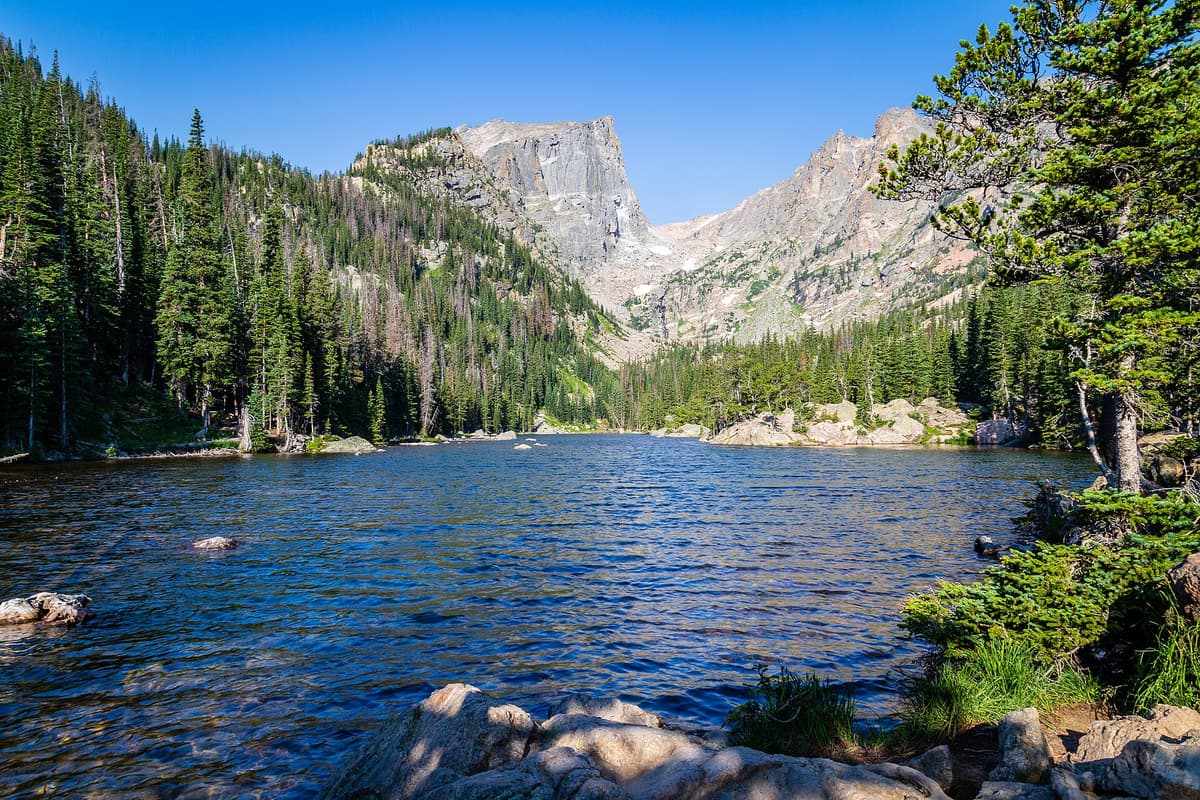
Bear Lake Nature Trail
Distance: 0.7 miles loop | Elevation Gain: 45 ft | Difficulty: Easy
If you have one hour and want the biggest payoff for the least effort, walk the Bear Lake loop. The trail circles a subalpine lake at 9,475 feet with Hallett Peak and the Flattop Mountain wall reflected in the water. It's flat, mostly smooth, and stroller-friendly for the paved sections, which makes it the park's most popular short walk.
The catch is the crowd. Bear Lake sits at the end of Bear Lake Road, the busiest corridor in the park, and its lot fills by 8 AM most summer mornings. Ride the free park shuttle from the Park and Ride if you can. For the full rundown on this trailhead and the hikes that branch off it, read our Bear Lake trailhead guide.
Alberta Falls
Distance: 1.6 miles round trip | Elevation Gain: 230 ft | Difficulty: Easy
Alberta Falls is the payoff hike for families who want moving water without a long climb. Starting from the Glacier Gorge trailhead, the path rolls through aspen and pine to a 30-foot cascade on Glacier Creek that roars in June and mellows to a trickle by September. It's a gentle grade the whole way, and the falls make an easy turnaround for younger kids.
This trail is also the gateway to some of the park's best longer hikes, so expect steady foot traffic. Get here early, both for parking and for the light on the water. The Glacier Gorge lot is tiny and fills before Bear Lake does, which is another vote for the shuttle.
Nymph, Dream, and Emerald Lakes
Distance: 3.5 miles round trip | Elevation Gain: 700 ft | Difficulty: Moderate
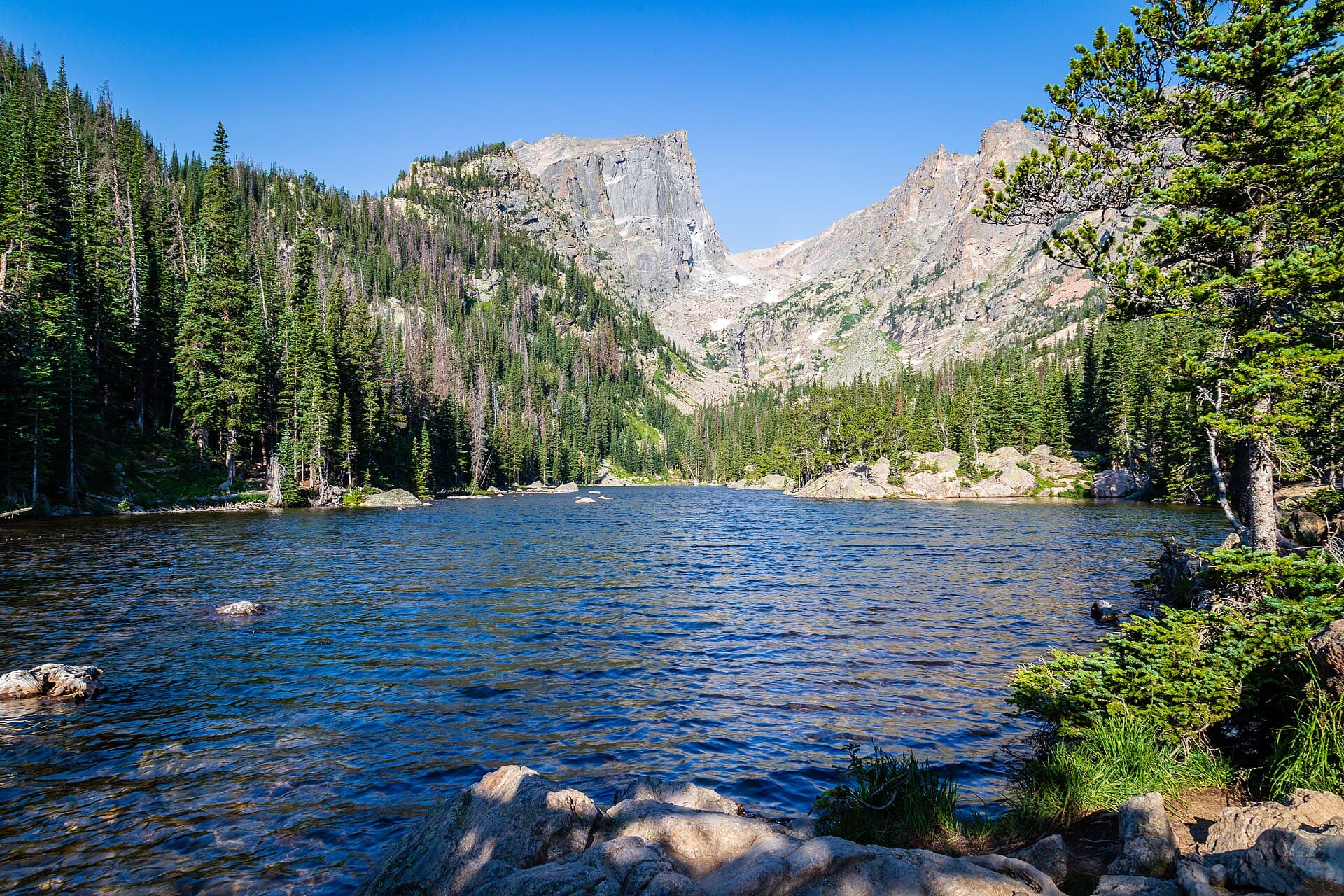
This is the classic RMNP day hike, a string of three alpine lakes that get better as you climb. Nymph Lake comes first at half a mile, covered in yellow pond lilies. Dream Lake follows, long and narrow with Hallett Peak towering over the far end. Emerald Lake caps it off, tucked in a rock bowl below Flattop Mountain.
The trail starts at Bear Lake and climbs steadily but never gets brutal. Footing turns rocky above Dream Lake, so decent shoes help. This is a great first real hike for visitors getting used to the altitude. We break down the whole route in our Emerald Lake trail guide. New to hiking at 10,000 feet? Skim our Colorado hiking beginners guide first.
Cub Lake Loop
Distance: 6 miles loop | Elevation Gain: 760 ft | Difficulty: Moderate
Cub Lake is the quieter side of the park, and the loop through Moraine Park shows off a different kind of scenery than the high alpine lakes. The trail crosses wet meadows where elk graze at dawn and dusk, climbs to a lily-covered lake, and returns through a section that burned in the 2012 Fern Lake Fire, now growing back green.
Start from the Cub Lake trailhead in Moraine Park and hike the loop counterclockwise to save the gentler grade for the end. The meadows here are prime wildlife spots, so bring binoculars and keep your distance from the elk. This one stays cooler and less crowded than the Bear Lake corridor even on busy weekends.
Gem Lake
Distance: 3.1 miles round trip | Elevation Gain: 1,000 ft | Difficulty: Moderate
Gem Lake sits in the Lumpy Ridge area north of Estes Park, and it's a completely different flavor of hike. There's no glacier-carved bowl here, just weird rounded granite formations, a tiny sand-rimmed pond with no inlet or outlet, and big views back over the Estes Valley. The lake is small enough to feel like a secret when you crest the final rise.
The trail climbs steadily through rock gardens and a few sets of stone steps, so it earns its moderate rating despite the short distance. Park at the Lumpy Ridge trailhead, which sits outside the main park boundary and does not require a timed entry permit. That makes Gem Lake a smart pick when you strike out on reservations.
Deer Mountain
Distance: 6 miles round trip | Elevation Gain: 1,210 ft | Difficulty: Moderate
Deer Mountain gives you a true summit without any exposure or scrambling, which makes it a favorite for hikers who want the top-of-the-world feeling on their first Colorado trip. The 10,013-foot summit looks straight across at the high peaks along the Continental Divide, with Longs Peak anchoring the skyline to the south.
The trailhead sits at Deer Ridge Junction where Highway 34 meets Highway 36. The trail switchbacks up through open forest, then finishes with a short spur to the rocky summit. It's exposed near the top, so watch the weather and turn around if clouds build. A pair of trekking poles takes the sting out of the descent.
The Loch
Distance: 5.4 miles round trip | Elevation Gain: 1,000 ft | Difficulty: Moderate
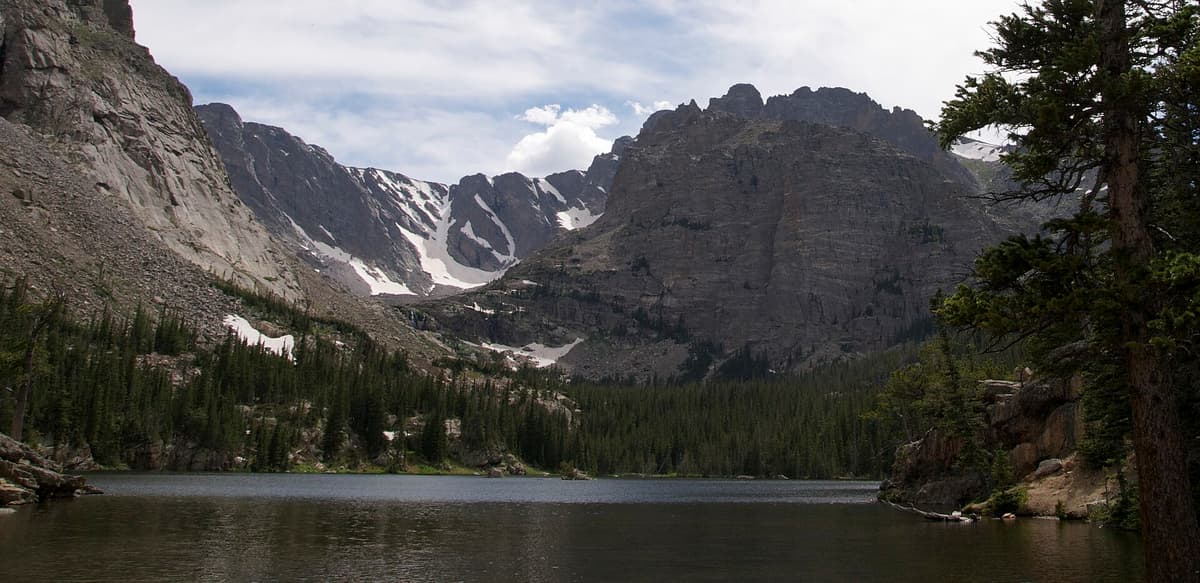
The Loch is one of the prettiest lakes in the park you can reach without a scramble, and it doubles as the halfway point on the way to Sky Pond. From the Glacier Gorge trailhead you pass Alberta Falls, climb a series of well-built switchbacks, and arrive at a long alpine lake ringed by pines with the Cathedral Spires rising behind it.
Plenty of hikers make The Loch their turnaround for a satisfying half-day trip. The lakeshore has flat rocks that beg for a lunch break, and the reflections in the morning are worth the early start. If you want to keep going, the trail continues up toward Sky Pond, which is where this hike gets serious.
Mills Lake
Distance: 5.3 miles round trip | Elevation Gain: 750 ft | Difficulty: Moderate
Mills Lake sits in Glacier Gorge with a straight-on view of Longs Peak and the surrounding walls, and it might be the best scenery-to-effort ratio in the whole park. The trail shares the first stretch with the Loch and Sky Pond routes, then branches left and rolls over granite slabs to the lakeshore.
Because the grade is gentle and the distance is manageable, Mills Lake works well for hikers who want a big alpine view without a hard climb. Late afternoon light on Longs Peak from the lake is stunning. The slabs near the water can be slick when wet, so watch your footing after a rain and pack a rain shell for the afternoon storms.
Ouzel Falls
Distance: 5.4 miles round trip | Elevation Gain: 950 ft | Difficulty: Moderate
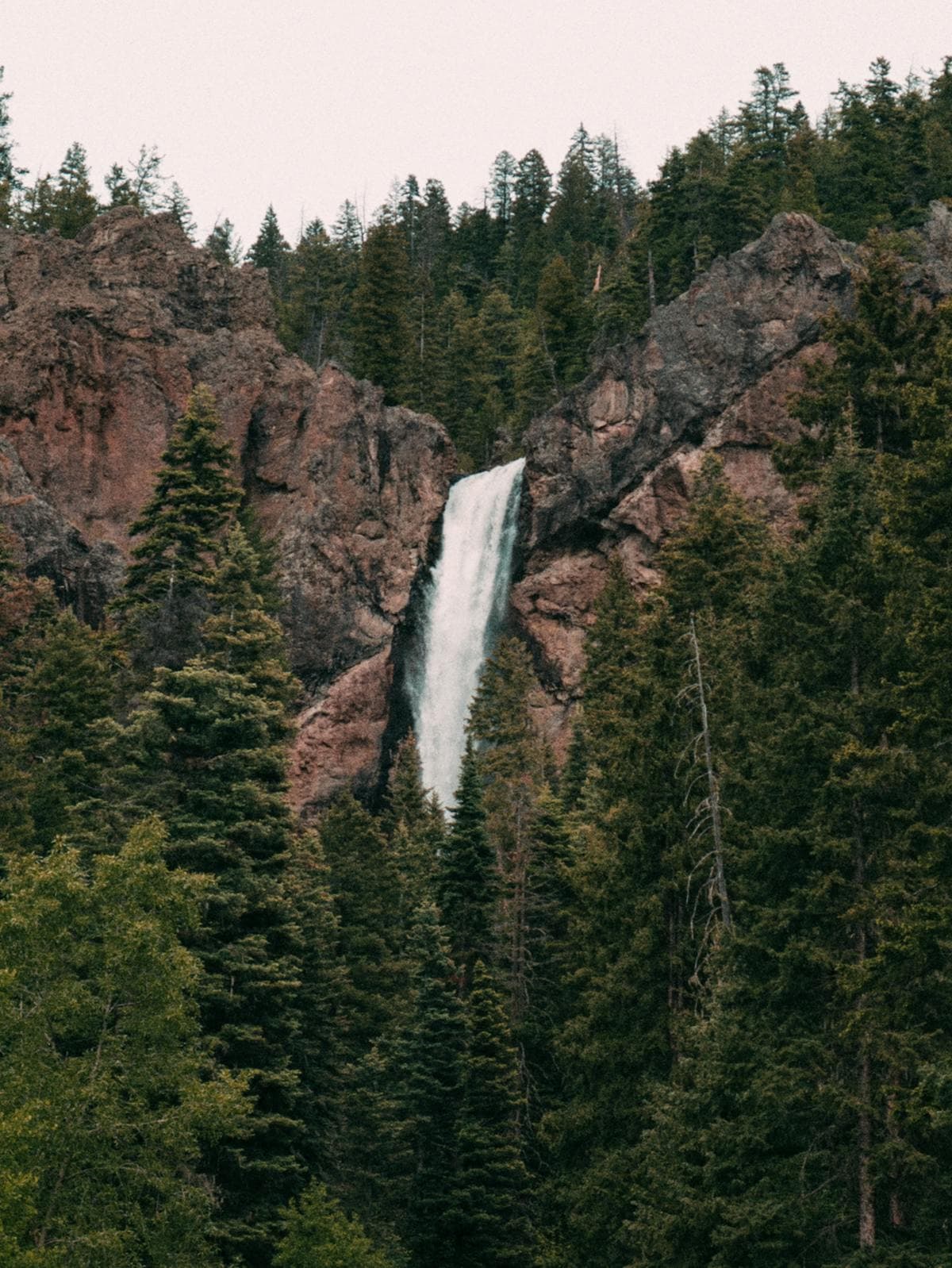
Ouzel Falls is the star of Wild Basin, the park's southeast corner, and the hike there strings together three waterfalls. You pass Copeland Falls in the first mile, reach the cascading Calypso Cascades at the halfway mark, and finish at Ouzel Falls, a 40-foot drop named for the water-loving bird that darts through the spray.
Wild Basin has its own entrance off Highway 7 south of Estes Park, and its dirt access road and small lot keep the crowds thinner than the Bear Lake side. The forest here is thick and shaded, a nice change on a hot day. Sturdy footing helps on the rooty, rocky sections near the falls.
Sky Pond
Distance: 9 miles round trip | Elevation Gain: 1,780 ft | Difficulty: Hard
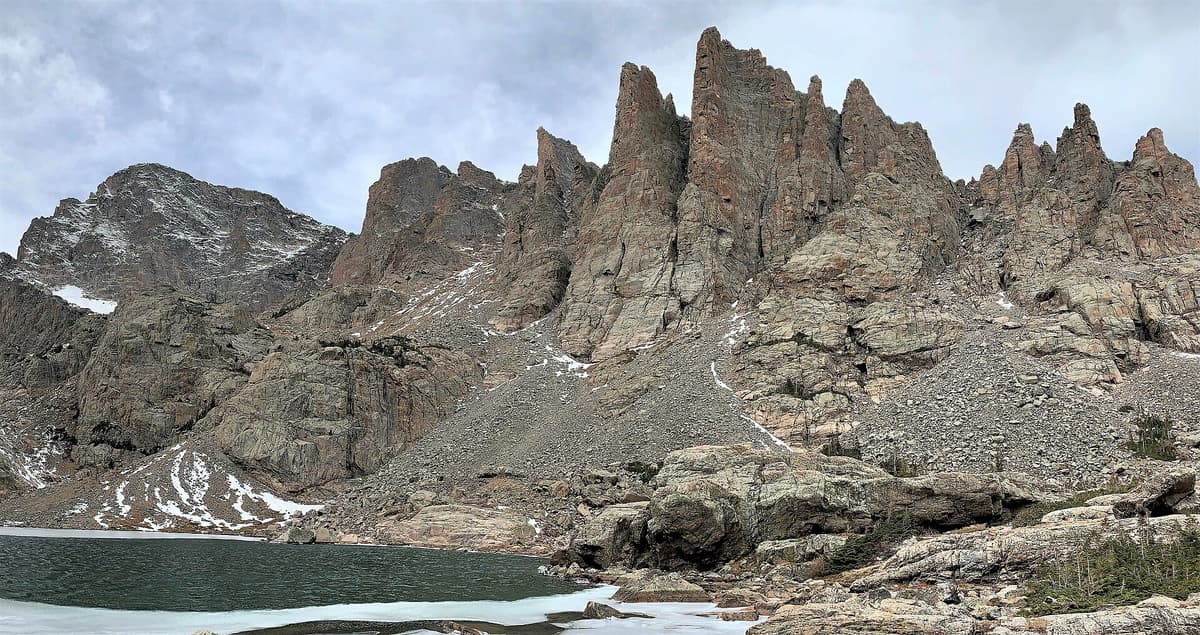
Sky Pond is the bucket-list hard hike in Rocky Mountain National Park, and it earns every bit of its reputation. The route follows the Loch, then climbs past Timberline Falls, where you have to scramble up a steep 30-foot rock pitch beside the cascade using your hands. Above the falls sit the Lake of Glass and finally Sky Pond, a stark alpine tarn under the jagged Cathedral Spires.
That scramble is the crux, and it can be slick and intimidating, especially with snowmelt running in early summer. Save this hike for a clear day, start at dawn, and be off the exposed upper basin before afternoon storms. Early season often means lingering snow and ice, so pack microspikes into July.
Chasm Lake
Distance: 8.4 miles round trip | Elevation Gain: 2,500 ft | Difficulty: Hard
Chasm Lake puts you at the base of the most dramatic wall in Colorado, the 1,000-foot vertical Diamond on the east face of Longs Peak. The lake sits at 11,760 feet in a rock cirque, and the final push involves a short rocky scramble to reach the shore. Standing there with the Diamond towering overhead is one of the great mountain moments in the state.
The trail leaves from the Longs Peak trailhead and climbs steadily through forest, then above treeline into open tundra. The upper stretch is fully exposed to wind and weather, so this is another dawn-start, off-by-noon hike. The parking lot fills in the middle of the night during summer, so plan on an early or overnight arrival.
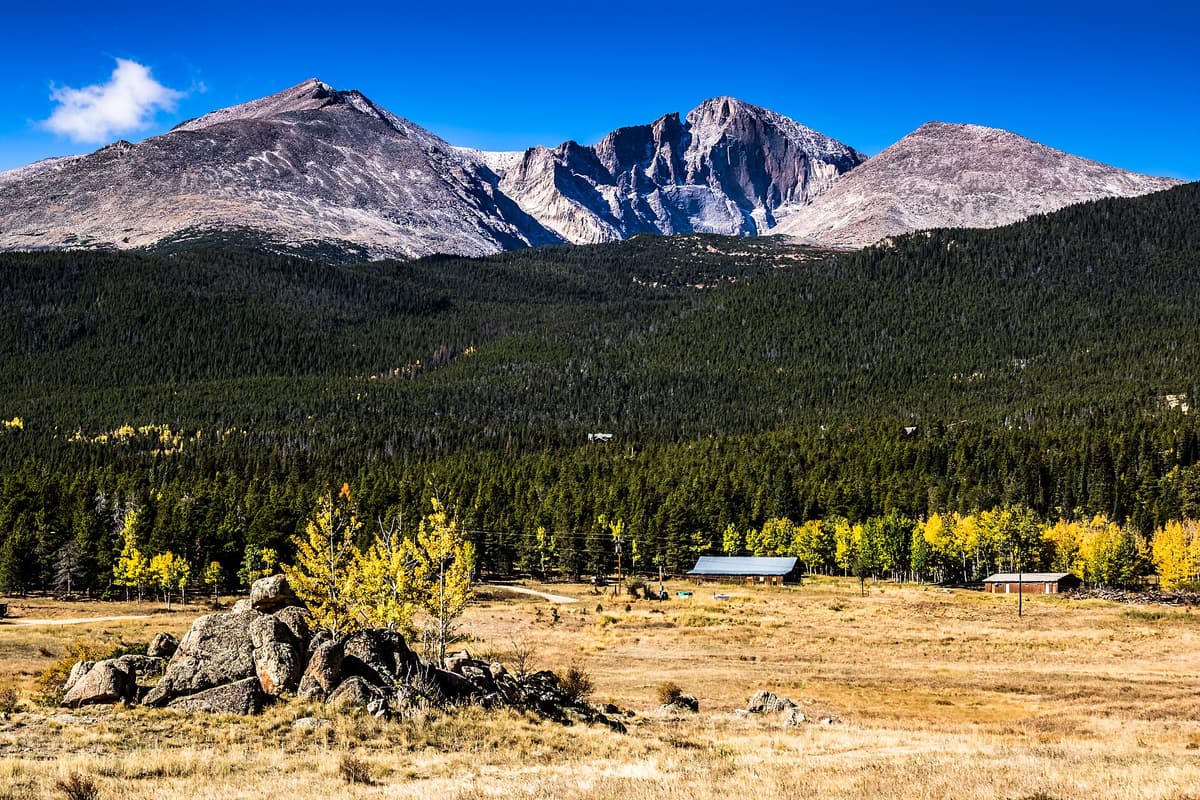
Longs Peak via the Keyhole
Distance: 14.5 miles round trip | Elevation Gain: 5,100 ft | Difficulty: Expert
Longs Peak is the only fourteener in the park, and its Keyhole Route is the top objective for strong RMNP hikers. This is not a trail hike. Above the Keyhole formation, the route crosses the Ledges, climbs the Trough, traverses the Narrows, and finishes up the Homestretch, all Class 3 scrambling with real exposure and long drops.
Most people start between 2 and 3 AM to summit and get below the Keyhole before afternoon storms, which makes a bright headlamp mandatory. This is a full mountaineering day that demands fitness, a solid weather window, and comfort on steep rock. Read our detailed Longs Peak Keyhole Route guide before you commit to it.
How the Timed Entry Permit Works
Rocky Mountain National Park runs a timed entry reservation system in the busy season, and skipping this step is the fastest way to get turned around at the gate. In recent years the system has run from late May through mid-October, roughly 9 AM to 2 PM for park-wide entry. Because the exact dates and windows shift each year, check the current details on the park's official page at nps.gov before your trip.
There are two permit types. The park-wide "timed entry" permit covers most of the park but not the Bear Lake Road corridor. The "timed entry plus Bear Lake Road" permit is the one you need for Bear Lake, Glacier Gorge, and the lake hikes off that road, and it sells out fastest. Reservations go through recreation.gov for a small processing fee, on top of the park entrance fee. A block of next-day permits is typically released at 7 PM the evening before, which is your backup if the early batch is gone.
A few trailheads sit outside the reservation zone, including Longs Peak, Wild Basin, and Lumpy Ridge. That means Gem Lake, Ouzel Falls, and Chasm Lake stay reachable even when you can't land a Bear Lake permit. Entering the park before 9 AM or after 2 PM also skips the reservation requirement, which is one more reason to start early.
What to Pack for RMNP Hikes
The park's trailheads sit between 7,500 and 9,400 feet, and the high lakes push well past 11,000, so the thin air hits hard if you just flew in. Drink more water than feels normal, slow your pace, and know the warning signs from our guide to altitude sickness prevention. Give yourself a day to adjust before the big climbs.
Afternoon thunderstorms roll in almost daily from June through August, and the exposed basins above treeline are dangerous places to be when lightning starts. Start at or before dawn on any hike that leaves the forest, and aim to be heading down by noon. Pack layers for a 30-degree temperature swing, a rain shell, sun protection, and more food and water than you think you need. A lightweight daypack carries it all, and a water filter lets you refill from the streams on longer days. For a full first-timer breakdown, see our best hikes near Estes Park guide.
Frequently Asked Questions
What is the best hike in Rocky Mountain National Park?
The Nymph, Dream, and Emerald Lakes trail is the best all-around hike for most visitors. It's a 3.6-mile round trip from Bear Lake that strings together three alpine lakes with big peak views, and it works for reasonably fit hikers of most ages. Sky Pond is the top pick for a harder day.
Do you need a permit to hike in Rocky Mountain National Park?
You need a timed entry reservation to drive into the park during the busy season, typically late May through mid-October between 9 AM and 2 PM. The Bear Lake Road corridor requires its own permit type. You can skip the reservation by entering before 9 AM or after 2 PM, or by using trailheads outside the zone like Longs Peak and Wild Basin.
What is the hardest hike in Rocky Mountain National Park?
Longs Peak via the Keyhole Route is the hardest standard hike, at 14.5 miles round trip with 5,100 feet of gain and sustained Class 3 scrambling above the Keyhole. Sky Pond and Chasm Lake are the hardest hikes that don't require true mountaineering skills.
When is the best time to hike in Rocky Mountain National Park?
Mid-July through September offers the most reliable trail conditions, with the snow gone from the high lakes and stable morning weather. June often still has snow and ice on the upper trails like Sky Pond. September brings cool air, golden aspens, and thinner crowds once school is back in session.
Can beginners hike in Rocky Mountain National Park?
Yes. The Bear Lake loop, Alberta Falls, and the lower Wild Basin waterfalls are all gentle enough for first-time hikers and families. The main challenge for beginners is the altitude, so take it slow, drink plenty of water, and give yourself a day to adjust before anything longer.
Final Thoughts
Rocky Mountain National Park rewards an early alarm more than almost anywhere else in Colorado. Nail down your timed entry permit, get to the trailhead before the lots fill, and be off the high ground before the afternoon storms, and you'll have your pick of alpine lakes, waterfalls, and summits. Start with the Bear Lake corridor, then work your way up to Sky Pond and the big peaks as your legs and lungs adjust.
For more Front Range trail ideas nearby, check out our guides to the best hikes near Estes Park and the full Rocky Mountain National Park overview.
Get the Colorado 14er Packing Checklist (free PDF)
Plus a weekly note on the best Colorado trails, gear deals, and seasonal hike picks. No spam, unsubscribe anytime.
We respect your inbox. Unsubscribe anytime.