Colorado Trailhead Parking: Reservations, Fees, and How to Get a Spot in 2026
If you're driving to a popular Colorado trailhead in 2026, parking is no longer a sure thing. Many of the busiest spots now require a timed reservation, a paid permit, or a shuttle ride, and the lots that are still first-come fill up before sunrise on summer weekends. The short version: check whether your trailhead needs a reservation before you leave the house, and if it's a free lot, plan to be there by 6 or 7 a.m.
This guide covers every major Colorado trailhead parking system for the 2026 season, what each one costs, the dates the rules apply, and the realistic arrival times that get you a spot instead of a long walk back to your car.
What You'll Learn
- Which Colorado trailheads need a parking reservation in 2026
- How early should you arrive at a Colorado trailhead?
- Rocky Mountain National Park timed entry
- Quandary Peak and McCullough Gulch
- Maroon Bells: no private cars midday
- Brainard Lake timed entry
- Mount Blue Sky reservations
- Hanging Lake permits
- Free lots that fill before dawn
- Passes worth keeping in the glovebox
- Trailhead break-ins are real
- Frequently asked questions
Which Colorado Trailheads Need a Parking Reservation in 2026?
Here's the quick-reference table. Dates and prices shift a little every year, so confirm on the official site before you book, but this is the 2026 picture.
| Trailhead / Area | What you need | Season it applies | Cost |
|---|---|---|---|
| Rocky Mountain NP, Bear Lake corridor | Timed Entry + Bear Lake permit | May 22 to Oct 18, 5 a.m. to 6 p.m. | $2 reservation fee + park entry |
| Rocky Mountain NP, rest of park | Timed Entry permit | May 22 to Oct 12, 9 a.m. to 2 p.m. | $2 reservation fee + park entry |
| Quandary Peak / McCullough Gulch | Parking reservation or shuttle | June 13 to Sept 13 | $20/day parking (Fri to Sun), $7 shuttle |
| Maroon Bells | Parking or shuttle reservation | May 22 to Oct 18, cars banned 8 a.m. to 5 p.m. | $10 parking, ~$16 shuttle |
| Brainard Lake Recreation Area | Timed entry to park | June 12 to Oct 1 | $2 fee + $16 day-use |
| Mount Blue Sky | Reservation to drive and park | From May 22 | $20 all-site pass |
| Hanging Lake | Timed hiking permit | Year-round | $12/person (Apr 30 to Oct 31) |
Everything else, including most Front Range and 14er trailheads, is still free and first-come. That doesn't mean easy, though. Free just means you're competing for a finite number of spots with everyone else who set an alarm.
How Early Should You Arrive at a Colorado Trailhead?
For a free, first-come lot in summer, aim to be parked by 6 a.m. on weekends and by 7 a.m. on weekdays. The most popular trailheads near Denver and Boulder can fill by 7 on a Saturday, and 14er lots like Grays and Torreys or Mount Bierstadt are often full by 5:30 a.m. in July.
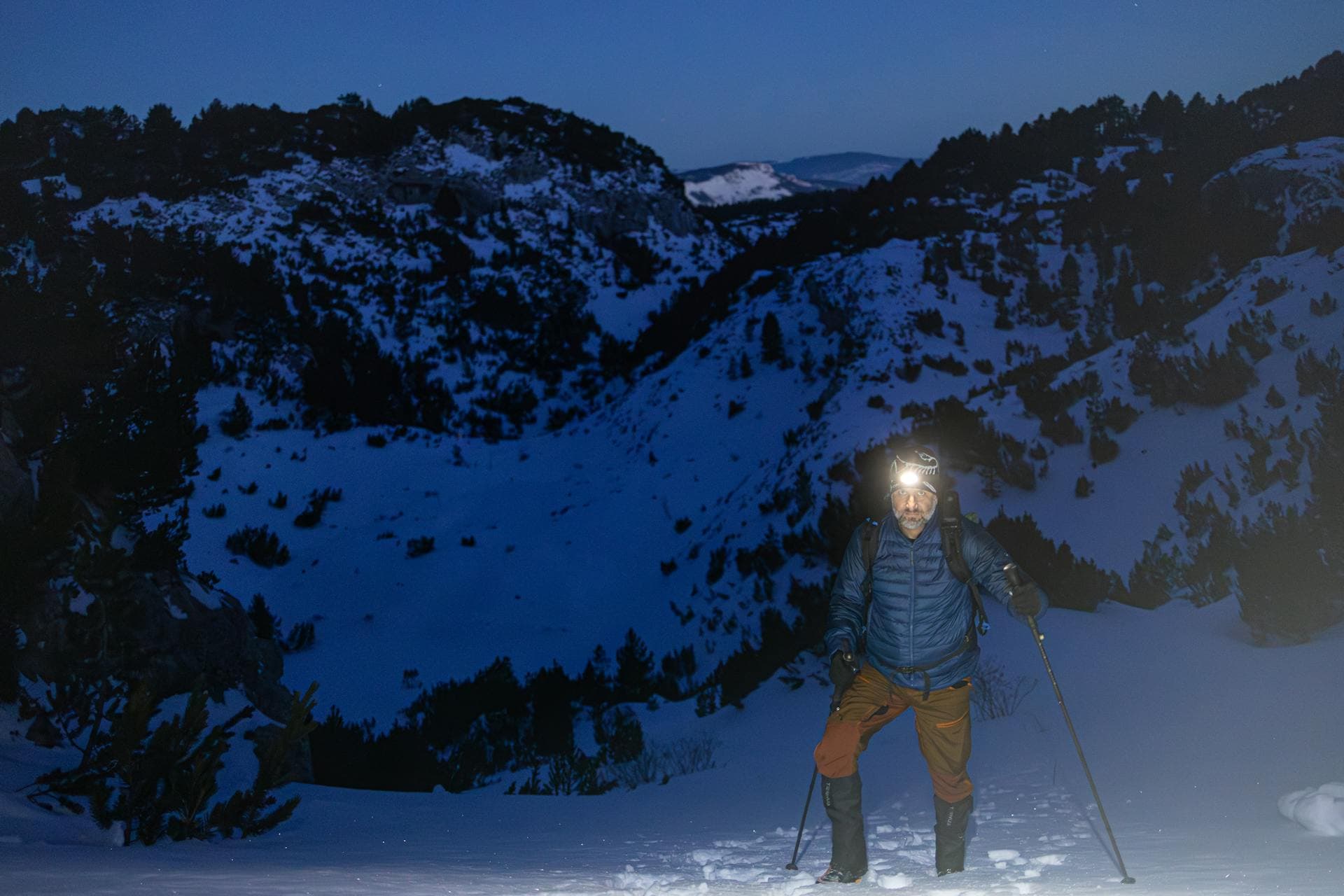
There's a second reason to start early that has nothing to do with parking: afternoon thunderstorms. Colorado's high country builds storms most summer afternoons, and you want to be off any exposed ridge or summit by noon. An early arrival solves the parking problem and the lightning problem at the same time.
If you're hiking a 14er, treat a 4 to 5 a.m. start as normal, not extreme. The people getting summit photos in calm morning light are the ones who left the trailhead in the dark.
For reservation-based trailheads, the math is different. You don't need to beat the crowd, but you do need to arrive inside your assigned window. Show up late for a timed-entry slot at Rocky Mountain National Park and the ranger can turn you around.
Rocky Mountain National Park Timed Entry
Rocky Mountain National Park runs the state's biggest reservation system, and it trips up first-time visitors every summer. From May 22 through mid-October 2026, you need a timed-entry permit to drive into the park during the day, on top of the regular entrance fee.
There are two permit types:
- Timed Entry + Bear Lake Road covers the Bear Lake corridor (Bear Lake, Bierstadt Lake, Glacier Gorge, Sprague Lake) and is required from 5 a.m. to 6 p.m. daily, May 22 to October 18. This is the one you want if you're hiking the classic lake trails.
- Timed Entry covers the rest of the park and is required from 9 a.m. to 2 p.m. daily, May 22 to October 12.
Each reservation is a two-hour entry window. Once you're through the gate inside that window, you can stay as long as you want. Only one reservation is needed per vehicle, not per person, and the only charge is a $2 processing fee on Recreation.gov. The park entrance fee is separate.
The catch is supply. Reservations release in monthly batches at 8 a.m. Mountain time, and Bear Lake permits for July and August disappear within minutes. A few next-day permits open at 7 p.m. the evening before, which is your backup plan if you missed the monthly drop. If you strike out entirely, enter before 5 a.m. or after 6 p.m. and no permit is required.
For trail picks once you're in, see our guides to the best hikes near Estes Park and the Bear Lake trailhead.
Quandary Peak and McCullough Gulch
Quandary Peak near Breckenridge was one of the first Colorado 14ers to go paid, and the 2026 program runs June 13 through September 13. During those dates you either reserve a parking spot at the Quandary Peak Trailhead or ride the shuttle from Breckenridge.
Parking reservations go through hikequandary.com and open two weeks ahead of your hike date, starting June 1. A full-day spot (5 a.m. to 3 p.m.) runs $20 on Fridays, weekends, and holidays. The lot is small, so weekend spots go fast.
The shuttle is the cheaper and often easier option. It runs seven days a week, 5 a.m. to 5 p.m., from the Breckenridge South Gondola parking structure to the trailhead, and costs $7 round trip for visitors (free for Summit County residents). If you're headed up McCullough Gulch instead, the same shuttle drops you at Quandary, then a free on-site shuttle runs you to the McCullough trailhead from 8 a.m. to 4 p.m.
Before June 13 and after September 13, parking at the Quandary trailhead is free and first-come. Outside those dates, get there early; the lot still fills on bluebird fall mornings. For the route itself, our Quandary Peak guide breaks down the standard East Ridge.
Maroon Bells: No Private Cars Midday
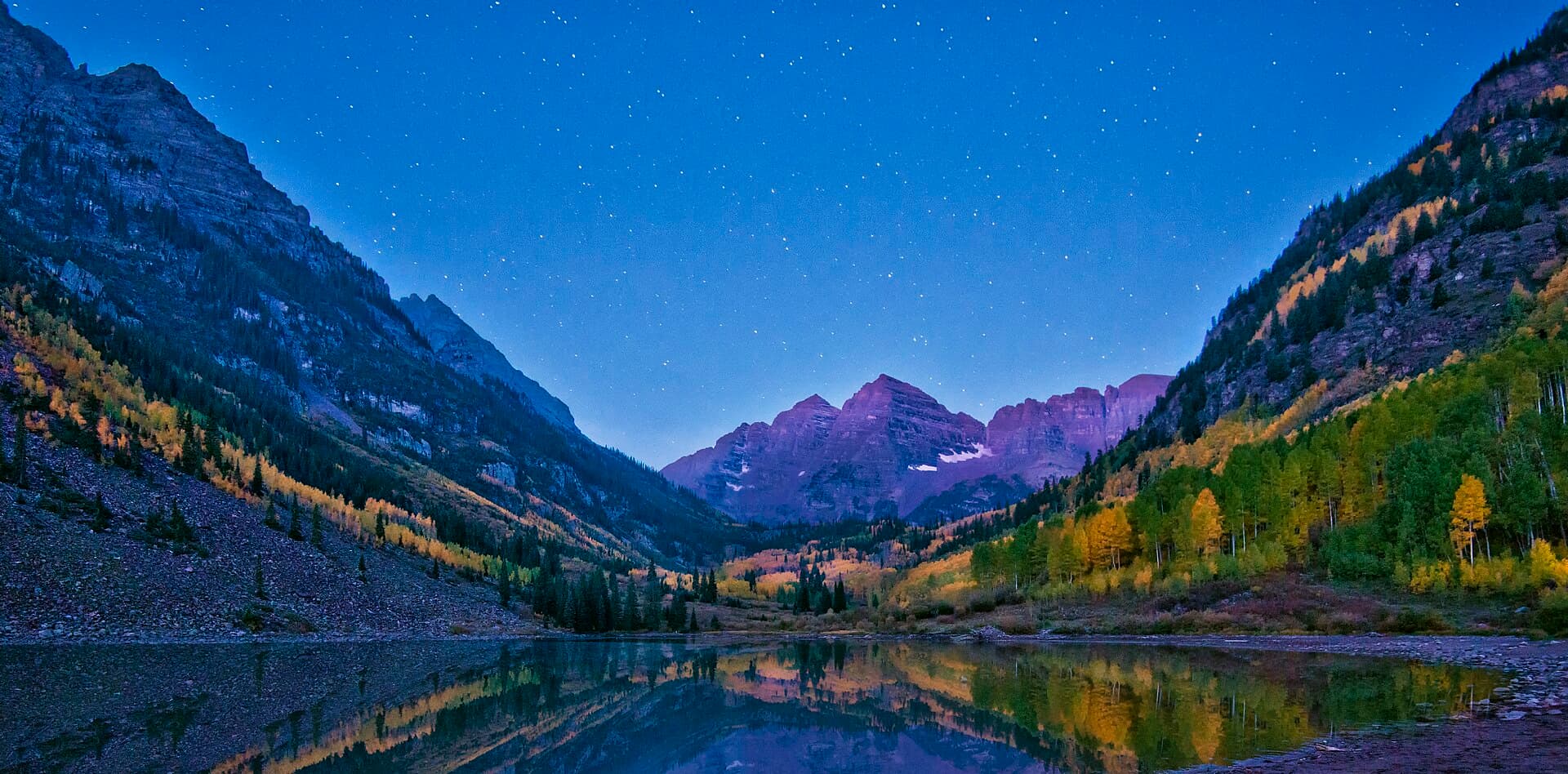
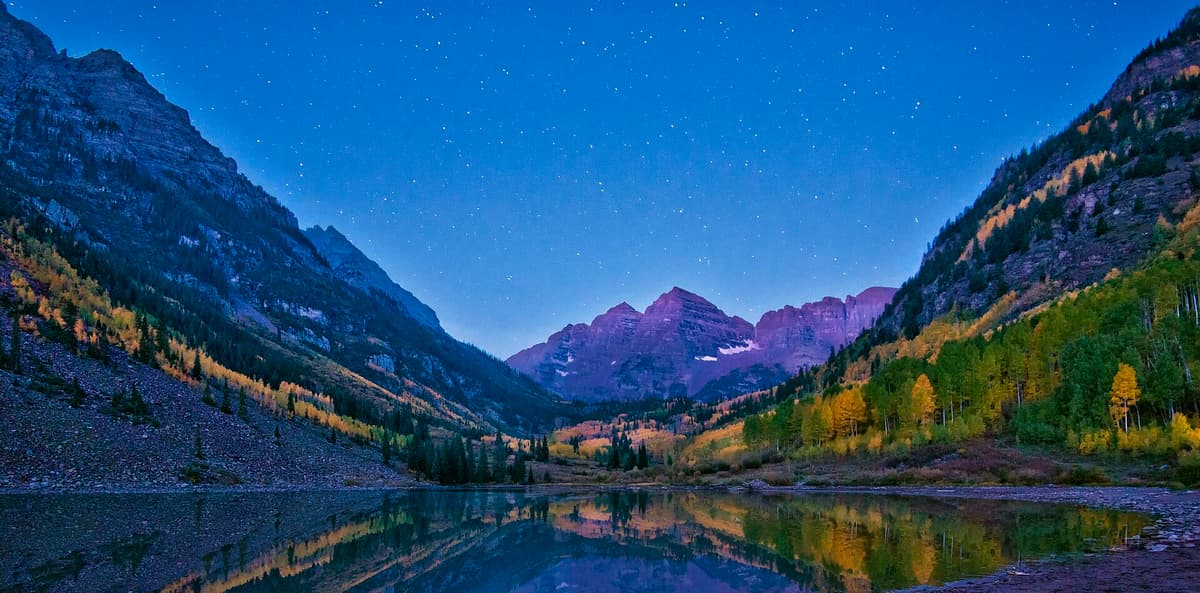
The Maroon Bells outside Aspen have the strictest setup in the state. From May 22 to October 18, the scenic area is closed to inbound private vehicles between 8 a.m. and 5 p.m. There is no "just show up and pay" option during those hours.
You've got two ways in. Reserve a shuttle seat on the RFTA bus from Aspen Highlands (around $16 for adults), or reserve a parking spot, which costs about $10 per vehicle but only lets you drive in before 8 a.m. or after 5 p.m. Most visitors take the shuttle, since it skips the parking scramble entirely and the early-morning window fills with sunrise photographers and through-hikers.
Both reservations go through the official Maroon Bells site and sell out for peak fall-color weekends weeks in advance. If you want those golden aspen reflections in late September, book the moment your dates open. While you're planning Aspen, our best hikes near Aspen roundup has trails that don't require a shuttle at all.
Brainard Lake Timed Entry
Brainard Lake Recreation Area west of Boulder added timed entry a few years back, and it's required to park there from June 12 to October 1, 2026. You reserve a timed ticket on Recreation.gov, and there's a $2 reservation fee plus the area's $16 day-use fee; walking or biking in from the Gateway lot costs $10 with no reservation.
One useful loophole: you don't need a timed reservation to enter on foot or by bike. Park at the Gateway Trailhead (still a $10 day-use fee) and walk or pedal in. It adds a couple of miles each way, but it's a workaround when the timed slots are gone.
Note the staggered opening. The Brainard Lake trailhead opens around mid-June, but the upper trailheads (Long Lake, Mitchell Lake, Niwot) usually don't open until July 1 because of snow and road conditions. If your plan is the Lake Isabelle or Mount Audubon trails, check that the upper lots are actually open before you book.
Mount Blue Sky Reservations
Mount Blue Sky (the peak formerly named Mount Evans) reopened in 2026 after being closed in 2024 and 2025 for road work. With it came a reservation system. The recreation area is scheduled to reopen around May 22, weather allowing, and you need a reservation to drive up and park at any of the three developed sites: Mount Goliath Natural Area, Summit Lake Park, or the summit.
An all-site pass is $20, a motorcycle reservation is $15, and bicycle access is free. Reservations open up to 30 days ahead on Recreation.gov. This is one of the only paved roads to a 14er summit in the country, so demand is high; book early for weekend dates.
Hanging Lake Permits
Hanging Lake in Glenwood Canyon reopened in 2026 after a major trail rebuild, and the permit system is back. Every hiker needs a time-specific reservation, available year-round through the official Glenwood site. Permits are $12 per person in the main season (May 1 to December 31 in 2026) and $10 in the off-season, the rest of the year, released hourly from 7 a.m. to 5 p.m. with a three-hour hiking window.
In summer and fall you can also reach the trail by bike along the Glenwood Canyon Recreation Path with a confirmed reservation. There's no shuttle to the parking area itself, so most people drive to the Hanging Lake rest area and walk to the trailhead from there.
Free Lots That Fill Before Dawn
Plenty of great Colorado trailheads are still free, but free and available aren't the same thing. A few worth planning around:
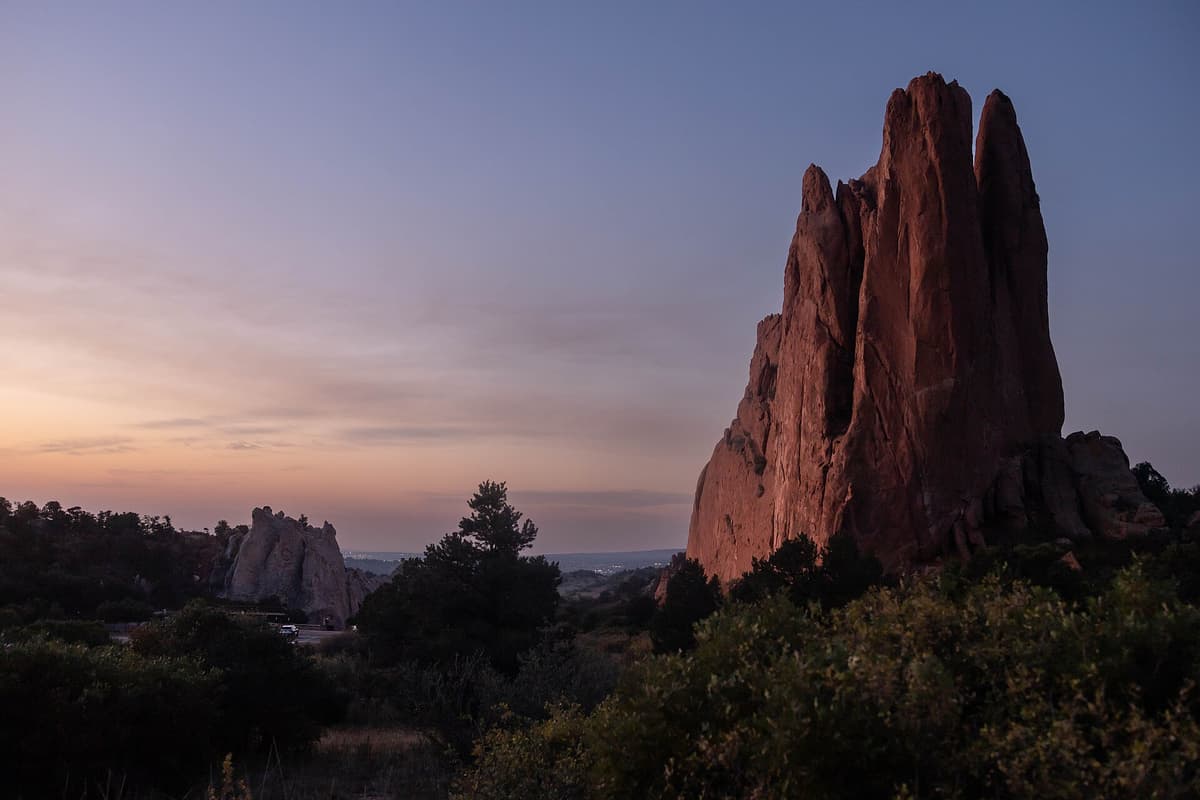
- Garden of the Gods in Colorado Springs is free, parking included, with no reservation. The main visitor center lot holds fewer than 240 cars and fills by mid-morning on summer weekends. An overflow lot off Gateway Road helps, but arrive before 9 a.m. or visit on a weekday. Our Garden of the Gods guide has the loop details.
- St. Mary's Glacier near Idaho Springs uses a private paid lot that runs about $20, cash, and fills early on weekends. It's a short, popular hike, so the turnover is decent, but don't count on a midday spot. See our St. Mary's Glacier hike writeup.
- Chautauqua Park in Boulder runs paid parking and a free weekend shuttle from a nearby lot during the busy season. The neighborhood streets around it are permit-only, so the shuttle is usually the stress-free choice.
- Front Range 14er lots like Grays and Torreys, Bierstadt, and Quandary's free shoulder-season window fill by 5:30 to 6 a.m. in peak summer. These are the ones where an alpine start pays for itself twice.
For a broader set of low-stress options close to the city, our best day hikes near Denver list flags which trailheads tend to fill first.
Passes Worth Keeping in the Glovebox
Two passes save real money if you hike more than a handful of times a year.
The America the Beautiful annual pass covers entrance fees at Rocky Mountain National Park, Great Sand Dunes, Black Canyon of the Gunnison, and every other national park and federal recreation site for $80 a year. It does not cover the separate timed-entry reservation, but it pays for itself in about three park visits. Keep it in the glovebox so you're never the car holding up the entrance line hunting for a credit card.
If you stick to state parks like Eldorado Canyon, Golden Gate Canyon, or Staunton, a Colorado Parks and Wildlife annual pass is the better buy and now comes bundled with most vehicle registrations through the Keep Colorado Wild program. Check whether you already opted in before paying again at the gate.
Trailhead Break-Ins Are Real
Colorado trailheads, especially the busy front-country lots near Denver and Boulder, see regular car break-ins. Thieves know hikers leave wallets, laptops, and bags in the car for hours. A few habits keep you out of the police-report club:
- Take your wallet, keys, and phone on the trail. Don't "hide" them under a seat.
- Leave the car visibly empty. An empty glovebox left open signals there's nothing to grab.
- Stash anything you can't carry before you arrive, not in the parking lot where someone's watching.
For the few items you genuinely can't bring, a locking car storage box bolted out of sight is better than a seat-back pocket. It won't stop a determined thief, but it removes the easy grab that most trailhead break-ins rely on.
Frequently Asked Questions
Do all Colorado trailheads require a reservation?
No. Most Colorado trailheads are still free and first-come. Reservations apply mainly to high-traffic spots: Rocky Mountain National Park, Maroon Bells, Quandary Peak, Brainard Lake, Mount Blue Sky, and Hanging Lake. Everywhere else, you're just competing for a free spot, so arrive early.
How early do I need to get to a popular trailhead?
For free summer lots, aim to be parked by 6 a.m. on weekends and 7 a.m. on weekdays. The busiest 14er trailheads fill by 5:30 a.m. in July. Arriving early also gets you off exposed terrain before afternoon thunderstorms build.
How much does trailhead parking cost in Colorado?
It ranges from free at most trailheads to $20 a day at reserved lots like Quandary Peak and Mount Blue Sky. National park entry runs $30 per vehicle (or an $80 annual pass), plus a $2 reservation fee for timed entry. Brainard Lake adds a $16 day-use fee.
Can I park overnight at a Colorado trailhead?
Sometimes, but check the signs. Many trailheads allow overnight parking for backpackers with a wilderness permit, while others post day-use-only hours and will tow. Reservation systems like Quandary and Maroon Bells are day-use, so overnight parking there isn't an option.
What happens if I show up without a timed-entry reservation?
At Rocky Mountain National Park you'll be turned away during reservation hours, but you can enter free before or after the window (before 5 a.m. or after 6 p.m. for the Bear Lake corridor). At reservation-only areas like Maroon Bells, there's no walk-up option midday; you'll have to take the shuttle or come back outside the restricted hours.
Plan the Parking Before You Plan the Hike
Colorado's reservation systems look intimidating, but they follow a simple rule: the more famous the view, the more planning the parking takes. Book the popular spots the day reservations open, set an early alarm for the free lots, and keep a federal pass in the car. Do that and parking becomes the easy part of the day.
Ready to pick a trail? Start with our guide to the best day hikes near Denver or the full Colorado 14ers guide for summit days worth the early start.
Get the Colorado 14er Packing Checklist (free PDF)
Plus a weekly note on the best Colorado trails, gear deals, and seasonal hike picks. No spam, unsubscribe anytime.
We respect your inbox. Unsubscribe anytime.