Pikes Peak by Barr Trail: A Complete Guide to the 26-Mile 14er
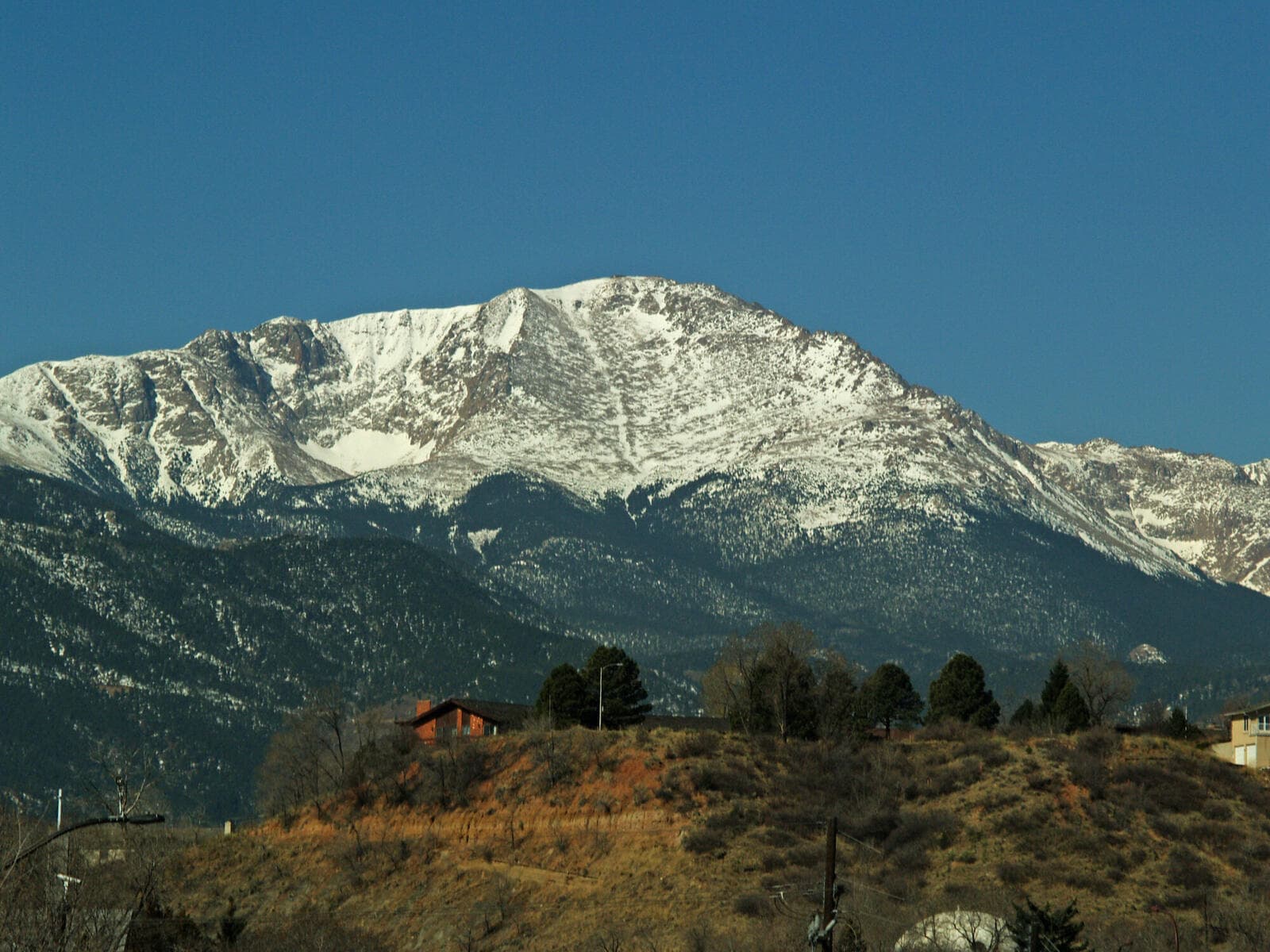
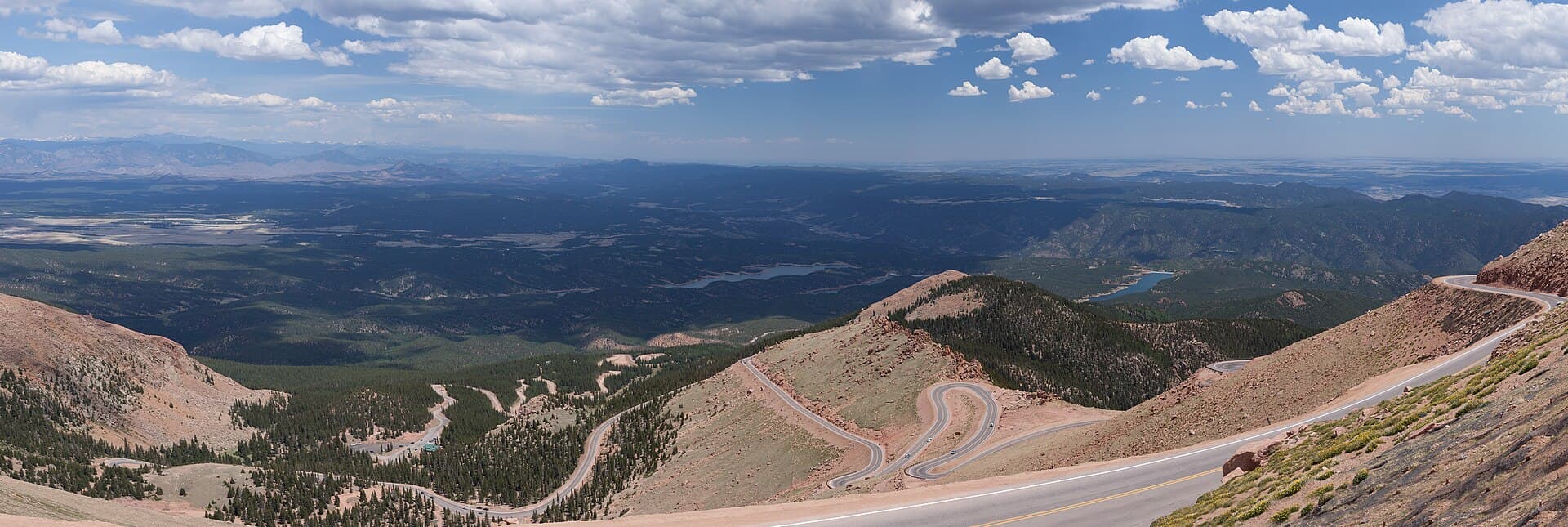
Pikes Peak (14,115 ft) is the most famous 14er in Colorado. It's the peak that inspired "America the Beautiful." It's the peak you can drive up via the Pikes Peak Highway. It's the peak you can take a cog railway to the summit of. And it's the peak whose Barr Trail hike from Manitou Springs is one of the most demanding day hikes in Colorado.
Barr Trail covers 26 miles round trip with 7,500 feet of elevation gain. That's the longest day hike on any 14er in Colorado. The trail starts at 6,720 feet in Manitou Springs and climbs to 14,115 feet at the summit. The total ascent is 7,395 vertical feet. Most fit hikers take 10-14 hours for the round trip. Some don't make it.
The flip side: the descent options. You can hike up Barr Trail and take the cog railway down (when running), drive a friend up the highway to meet you, or descend on Barr Trail and accept the long, knee-grinding return. This guide covers the route, the camps, and the strategic options that make Pikes Peak by Barr Trail achievable for fit hikers.
What You'll Learn
- Quick Stats
- Getting to the Trailhead
- The Barr Trail Route
- Barr Camp: The Strategic Stop
- The Descent: Three Real Options
- The Two-Day Option
- What to Pack
- Timing and Weather
- When to Climb
- What Makes Pikes Peak Different
- Common Mistakes
Quick Stats
- Elevation: 14,115 ft (30th highest in Colorado, but the most famous)
- Trailhead: Barr Trail, Manitou Springs, 6,720 ft
- Round Trip Distance: 26.0 miles (out and back)
- Elevation Gain: 7,500 ft
- Class: 1-2 (mostly trail, some talus near summit)
- Time: 10-14 hours typical (round trip)
- Best Season: May through October at lower elevations, June-September for the full route
- Permit: None required
- Crowds: Moderate on weekends, heavier near summit due to cog/highway tourists
Getting to the Trailhead
The Barr Trailhead is in downtown Manitou Springs, just west of Colorado Springs.
From Colorado Springs (15 minutes):
- Take Highway 24 west toward Manitou Springs
- Exit at Manitou Avenue / downtown Manitou Springs
- Drive through downtown to Ruxton Avenue
- Turn left on Ruxton, follow it past the Cog Railway depot
- Park in the public lot at the base of Hydro Street
The parking problem: Public parking in Manitou Springs is paid ($5-10 for the day) and limited. The lot fills by 5-6 AM on summer weekends. Overflow parking is available further down Ruxton.
The trailhead is at the top of Hydro Street; you walk a short distance from any of the parking lots.
From Denver, the drive is 90 minutes via I-25.
Restrooms: Public restrooms in the Manitou Springs lots and at the trailhead.
Cell service: Reasonable in Manitou Springs, drops to minimal above the first switchbacks.
The Barr Trail Route
Barr Trail is well-marked from start to finish. The route goes up, no decisions required.
Section 1: The W's (Miles 0-1.4)
The first 1.4 miles of Barr Trail is a series of switchbacks called "the W's." This section climbs 1,000 vertical feet quickly. The grade is steep and the trail is rocky.
This is where many hikers learn they're not in shape for the full Pikes Peak day. Use the W's as a fitness check. If they exhaust you, abort and try a shorter peak first.
After the W's, the trail levels out somewhat as you traverse east toward the No Name Creek drainage.
Section 2: To Barr Camp (Miles 1.4-7.0)
The middle section is a long, sustained, gradual climb through evergreen forest. The grade is moderate (8-12%) but the distance is significant. You'll gain about 2,500 feet over 5.5 miles.
Barr Camp sits at 10,200 feet. This is the strategic mid-point of the route. (More on Barr Camp below.)
The forest section can feel endless. Bring music or audiobooks if that helps you pace yourself. Watch for elk in the early morning.
Section 3: Barr Camp to A-Frame (Miles 7.0-10.5)
From Barr Camp, the trail climbs another 3,900 feet over 6.5 miles to the summit, the first 3.5 of them to the A-frame shelter near treeline. You'll pass through aspen groves, then transition into spruce/fir forest.
Around mile 10.5, you'll reach the A-Frame shelter (12,650 ft). This is a small emergency shelter for hikers caught in storms. It's not for overnight camping (no facilities) but provides storm protection.
Section 4: A-Frame to Treeline (Miles 10.5-11.5)
The trail steepens significantly. You'll transition above treeline around 12,000 ft. From here, the summit is visible for the rest of the climb.
This section is exposed to wind and weather. You'll see your altitude rise quickly: 12,000 to 13,000 ft in less than a mile of trail.
Section 5: The 16 Golden Stairs (Miles 11.5-12.5)
The final section to the summit is called "the 16 Golden Stairs" by locals. It's not actually 16 stairs; it's a series of steep talus and rocky switchbacks above 13,000 ft.
This is where altitude hits hardest. Pace yourself to one step at a time if needed. The summit looks close but takes time.
Section 6: The Summit (Mile 13.0)
Pikes Peak's summit is unlike any other 14er in Colorado. There's a visitor center (the new "Summit House" opened 2021), a gift shop, a cafe, and direct access from the Pikes Peak Highway. Tourists who drove up will mill around taking photos. You'll feel out of place in your hiking gear.
The visitor center has restrooms, food, and oxygen-enriched air. Take advantage of it. The summit donuts are famous (and surprisingly good).
The actual summit marker is just outside the visitor center.
Views span:
- Colorado Springs to the east
- The Sangre de Cristo Range to the south
- The Sawatch Range to the west
- The Front Range to the north
Section 7: The Return (Miles 13.0-26.0)
Returning on the same route is brutal. 13 miles of descent at the end of an already long day. Knees take serious damage. The forest section feels endless.
Most hikers regret not taking the cog or having a ride.
Barr Camp: The Strategic Stop
Barr Camp (10,200 ft) is a private campground run by hosts in the middle of Barr Trail. It is:
Mid-route refresh. Water (the only reliable source on the route), bathroom, occasional snacks for sale. Many hikers stop here for 15-30 minutes to eat and rest.
Emergency shelter. Open year-round, the hosts can provide emergency shelter and aid.
Overnight option. Reservations available for the two-day Pikes Peak option (more below). Cabins and tent sites available.
Barr Camp staff can also provide trail conditions reports, weather updates (when they have current info), and emergency communications.
For day hikers, Barr Camp is a 30-minute rest stop. For two-day hikers, it's where you sleep.
The Descent: Three Real Options
The hardest decision for Pikes Peak by Barr Trail is the descent strategy.
Option A: Hike Down Barr Trail
The classic "out and back" approach. 13 miles of descent on tired legs over rocky and varied terrain.
Pros: No logistics required, no money required.
Cons: Brutal on knees, adds 4-6 hours to your day, your legs will be wrecked.
Best for: Experienced ultra-hikers, hikers willing to suffer for the pure accomplishment.
Option B: Cog Railway Down (When Running)
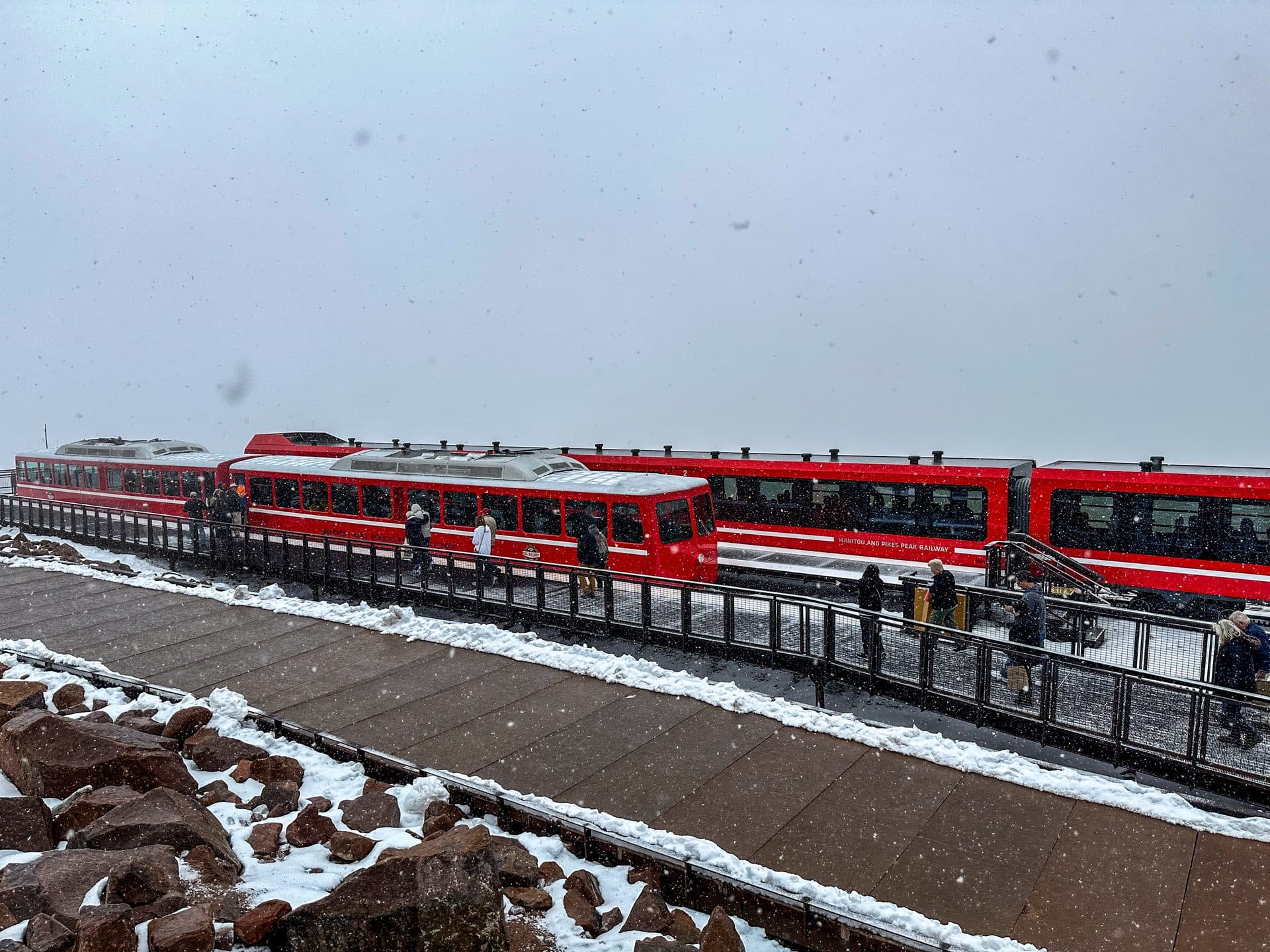
The Pikes Peak Cog Railway runs from Manitou Springs to the summit. From the summit, you can buy a one-way ticket and descend in 90 minutes of comfortable seating.
Pros: Saves 4-6 hours, saves your knees, gives you energy to enjoy the rest of the day.
Cons: Tickets are limited and often sold out for same-day purchase. Cost $40-60 one-way. Ride only operates when the cog is running.
Strategy: Buy a one-way ticket before your hike. Be at the summit by the ticket time. Worst case scenario: you take the cog all the way back and walk back to your car.
Cog Railway website: cograilway.com. Operating dates vary; check before your hike.
Option C: Highway Pickup
Have a friend drive up the Pikes Peak Highway and pick you up at the summit. You hike up, they drive up, they drive you both back down.
Pros: Saves the descent, saves money vs cog ticket, gives you a fast ride back.
Cons: Requires a friend with vehicle, requires coordination, weather can delay drive.
Strategy: Have your driver leave 2-3 hours after you start. They'll arrive at the summit shortly before you do. Pikes Peak Highway has its own toll ($15-20 per person).
For most fit hikers attempting Pikes Peak as a single-day adventure, Option B or C is the recommended strategy. The descent of Barr Trail is genuinely punishing.
The Two-Day Option
For hikers who want to enjoy Pikes Peak rather than survive it, the two-day Barr Camp option is ideal.
Day 1: Hike to Barr Camp (6.5 miles, 3,500 ft elevation gain). Sleep at Barr Camp.
Day 2: Hike to the summit and back to Manitou Springs (19 miles, 4,000 ft up + 7,500 ft down).
Reservations: Required at Barr Camp. Book at barrcamp.com months in advance, especially for summer weekends.
Cost: $20 per person for tent sites, $24 for lean-tos, and $45 for the bunkhouse.
This option dramatically reduces the difficulty of Day 1, lets you summit fresh, and still requires a long descent on Day 2. For most hikers, it's the right approach if scheduling allows.
What to Pack
The longest 14er day requires extra preparation:
Water. 3-4 liters minimum. Barr Camp has water available; plan to refill there. Carry treatment tablets in case the water source has issues.
Food. 2000-3000 calories of trail food. Real food: sandwiches, jerky, energy bars, candy, electrolyte powder.
Layers. Base + insulation + wind shell + rain shell. The summit is 30-40°F colder than the trailhead.
Sun protection. Sunglasses, sunscreen (apply at the trailhead and again at the W's), hat or visor.
Headlamp + spare batteries. You'll likely use it for the start in the dark and possibly the end.
Footwear. Real hiking boots, broken in. Trail runners often fail on a 26-mile day. See our hiking boots guide.
Trekking poles. Required, not optional. Both poles, not one.
Map and offline GPS. Pre-download the route. The route is well-marked but cell service drops.
First aid + blister treatment. Multiple types of bandages, moleskin, tape, ibuprofen.
Cash + credit card. For Barr Camp snacks, summit food, cog ticket, parking.
Mental preparation. This is a 10-14 hour day. Prepare to be tired and uncomfortable. Bring music, plan your mile-by-mile mental approach.
Timing and Weather
Same general rule: be off the summit by noon for storms.
Recommended timing for the full out-and-back day:
- Trailhead: 3:00-4:00 AM
- W's complete: 4:00-5:00 AM
- Barr Camp: 7:30-8:30 AM
- A-Frame: 10:30-11:00 AM
- Summit: 12:00-1:00 PM (later than other 14ers due to long approach)
- Back at Barr Camp: 4:00-5:00 PM
- Trailhead: 8:00-10:00 PM
For the cog-down or highway-down option, you can start later (5-6 AM) and still be off the summit by storm time.
For Barr Camp two-day:
- Day 1 trailhead: 9-10 AM (leisurely)
- Day 1 Barr Camp: 4-6 PM
- Day 2 Summit: 8-10 AM
- Day 2 trailhead: 4-7 PM
Check forecast.weather.gov for Colorado Springs / Manitou Springs / Pikes Peak summit conditions.
When to Climb
Best months: Mid-June through early October.
June: Lower trail dry. Upper sections may have snow until mid-month. Microspikes useful for early June attempts.
July: Peak season. Monsoon starts mid-month. Storms reliable by 2 PM most days.
August: Peak monsoon. Strict storm-window discipline required.
September: Best stable weather. Cooler. Excellent for the full Barr Trail experience.
October: Increasingly cold. Possible snow at upper elevations. Cog railway operating dates may end.
November-April: Winter conditions. Lower trail still doable; the full route requires winter mountaineering experience.
What Makes Pikes Peak Different
Pikes Peak vs other 14ers:
Longest day. 26 miles vs 7-12 miles for other Front Range 14ers.
Lowest trailhead. 6,720 ft vs 10,000-11,500 ft for other 14ers. You climb dramatically more.
Lowest technical difficulty. Class 1 throughout (no scrambling). The challenge is endurance, not technical skill.
Best descent options. The cog and highway are unique to Pikes Peak. Other 14ers, you walk down.
Tourist summit. The summit is busy with non-hikers. You'll feel out of place. Also makes for the most amenities (food, water, restrooms, oxygen).
Best low-altitude acclimatization. Starting at 6,720 ft, you have hours of moderate altitude to acclimatize before going above 10,000 ft.
For fit hikers building toward harder 14ers, Pikes Peak is a fundamentally different challenge: endurance over technical difficulty.
Common Mistakes
Underestimating the distance. 26 miles is significantly longer than people realize. People who breezed up Bierstadt struggle on Pikes Peak.
Inadequate training. Many hikers attempt Pikes Peak without first doing 15-20 mile day hikes. Train for the distance.
Insufficient food/water. A 12-hour day burns 5,000+ calories. Bring real food.
Wrong footwear. Trail runners fail on this distance for many hikers. Sturdy boots, broken in.
No descent plan. Showing up at the summit at 2 PM with 13 miles of descent ahead and no cog ticket is a recipe for misery.
Starting too late. A 6 AM start works only if you have a descent plan. Otherwise 3-4 AM is realistic.
Not enough trekking poles. Both poles. Use them on every section of descent.
Skipping Barr Camp. Stop, refill water, rest 15-30 minutes. Don't push through.
Overestimating cog availability. Buy tickets in advance.
Other 14ers to Consider
After Pikes Peak:
- Mount Bierstadt: Shorter, easier. See our Mount Bierstadt guide.
- Grays Peak and Torreys Peak: Front Range double. See our Grays Peak guide.
- Quandary Peak: Tenmile single-peak. See our Quandary Peak guide.
- Mount Elbert: Colorado's highest. See our Mount Elbert guide.
For the full beginner ranking, see our easiest 14ers guide.
Final Thoughts
Pikes Peak by Barr Trail is the longest day hike on a Colorado 14er and one of the most demanding day hikes in the state. The technical difficulty is low (Class 1, no scrambling), but the distance and elevation gain make it a serious challenge for any fit hiker.
The keys to a successful Pikes Peak day: train for the distance, have a descent plan (cog or highway pickup), start early, pace yourself for endurance, and use Barr Camp as a strategic rest. The two-day option is ideal if scheduling allows.
For hikers ready to test their endurance on a famous 14er with unique descent options, Pikes Peak is the natural challenge.
For the full gear kit, see our guides to hiking boots, rain jackets, base layers, headlamps, and microspikes.
Get the Colorado 14er Packing Checklist (free PDF)
Plus a weekly note on the best Colorado trails, gear deals, and seasonal hike picks. No spam, unsubscribe anytime.
We respect your inbox. Unsubscribe anytime.