Best Places to Visit in Colorado in Summer: 10 Spots for 2026
Colorado summer is short and fierce. Trail Ridge Road opens around Memorial Day, high-country wildflowers explode for three weeks in mid-July, and snowmelt waterfalls run hard June through early August. By mid-July, the North American Monsoon shows up like clockwork: clear mornings, thunderheads by 1 PM, lightning over the peaks by 3 PM. Plan around that rhythm and summer here is unbeatable.
The other reality: it gets hot at lower elevations. Denver and Grand Junction push into the 90s in July, while the mountains stay cool (highs in the 60s and 70s at 9,000 feet). These ten picks are built around that escape.
What You'll Learn
- Rocky Mountain National Park
- Maroon Bells and Aspen
- Crested Butte, the wildflower capital
- Telluride
- Glenwood Springs
- Steamboat Springs
- San Juan Mountains circuit
- Mesa Verde National Park
- Great Sand Dunes National Park
- Pikes Peak Region
1. Rocky Mountain National Park
Rocky Mountain National Park is the headline Colorado summer destination. Trail Ridge Road, the highest continuously paved road in the country, only opens around Memorial Day and closes by mid-October. That window is when you can drive from Estes Park to Grand Lake over the tundra at 12,183 feet, with elk, marmots, and ptarmigan along the way. Wildflower peak is mid-July across the Alpine Visitor Center benches.
Top summer moves: drive Trail Ridge Road early (be at the top by 9 AM to beat thunderstorms), hike the Bear Lake corridor to Dream Lake and Emerald Lake, and watch elk graze in Moraine Park near dusk.
The gotcha is the permit system. In 2026, the park runs timed-entry permits May 27 through October 14. The Bear Lake corridor needs a separate, harder-to-get permit on top of the standard one. Both release on a rolling schedule through recreation.gov. If you miss out, enter before 5 AM or after 6 PM. Estes Park is the eastern base camp.
More: hikes near Estes Park.
2. Maroon Bells and Aspen
The Maroon Bells are the most photographed mountains in North America. Twin 14,000-foot peaks rise straight out of a glacial lake, with wildflower meadows in the foreground from mid-July to early August. From mid-May through mid-October, you can't drive to Maroon Lake during the day; the road requires a reserved parking spot or the shuttle from Aspen Highlands, both booked at visitmaroonbells.com, with the shuttle around $16 per adult. Slots fill fast for weekends.
Top summer moves: ride the first shuttle (around 8 AM) and walk the trail to Crater Lake (3.6 miles round trip). If you have a permit, the Four Pass Loop is one of the best backpacks in the country.
The gotcha: Independence Pass (Highway 82 east) only opens around Memorial Day and closes with the first heavy snow. It's the scenic shortcut from the Front Range to Aspen.
More: best hikes near Aspen and Aspen trail map.
3. Crested Butte, the wildflower capital
Colorado officially designated Crested Butte the Wildflower Capital, and the Crested Butte Wildflower Festival in mid-July is the high holy week. Multi-day guided hikes, photography workshops, and botany walks fill up months ahead. The town sits at 8,909 feet, so even in late July you're sleeping in 40-degree nights. The mountain biking is in the conversation for best in the country, with the 401 Trail dropping through head-high wildflowers above Gothic.
Top summer moves: hike the West Maroon Pass trail toward Aspen through Schofield Park wildflower meadows; ride the 401 Trail in mid-July; drive Kebler Pass for one of Colorado's biggest aspen groves.
The gotcha: Crested Butte is a long drive from anywhere. Plan four hours from Denver, and the last hour from Gunnison is two-lane road behind RVs. Stay at least three nights to make the drive worth it.
4. Telluride
Telluride is a box canyon ski town that turns into a festival town in summer. The big one is Telluride Bluegrass Festival in late June, four days of headline shows in a meadow ringed by 13,000-foot peaks. Tickets sell out the moment they release and the town books up a year ahead. Mountainfilm in late May and the Telluride Jazz Festival in August are smaller but still excellent.
Top summer moves: ride the free gondola between Telluride and Mountain Village (one of the only free transit gondolas in North America); hike or drive to Bridal Veil Falls, the 365-foot waterfall at the head of the canyon; ride the Galloping Goose bike trail.
The gotcha: Telluride is roughly six hours from Denver. Most visitors fly into Montrose (1.5 hours away) or the small Telluride Regional Airport.
More: best hikes near Telluride and Telluride trail map.
5. Glenwood Springs
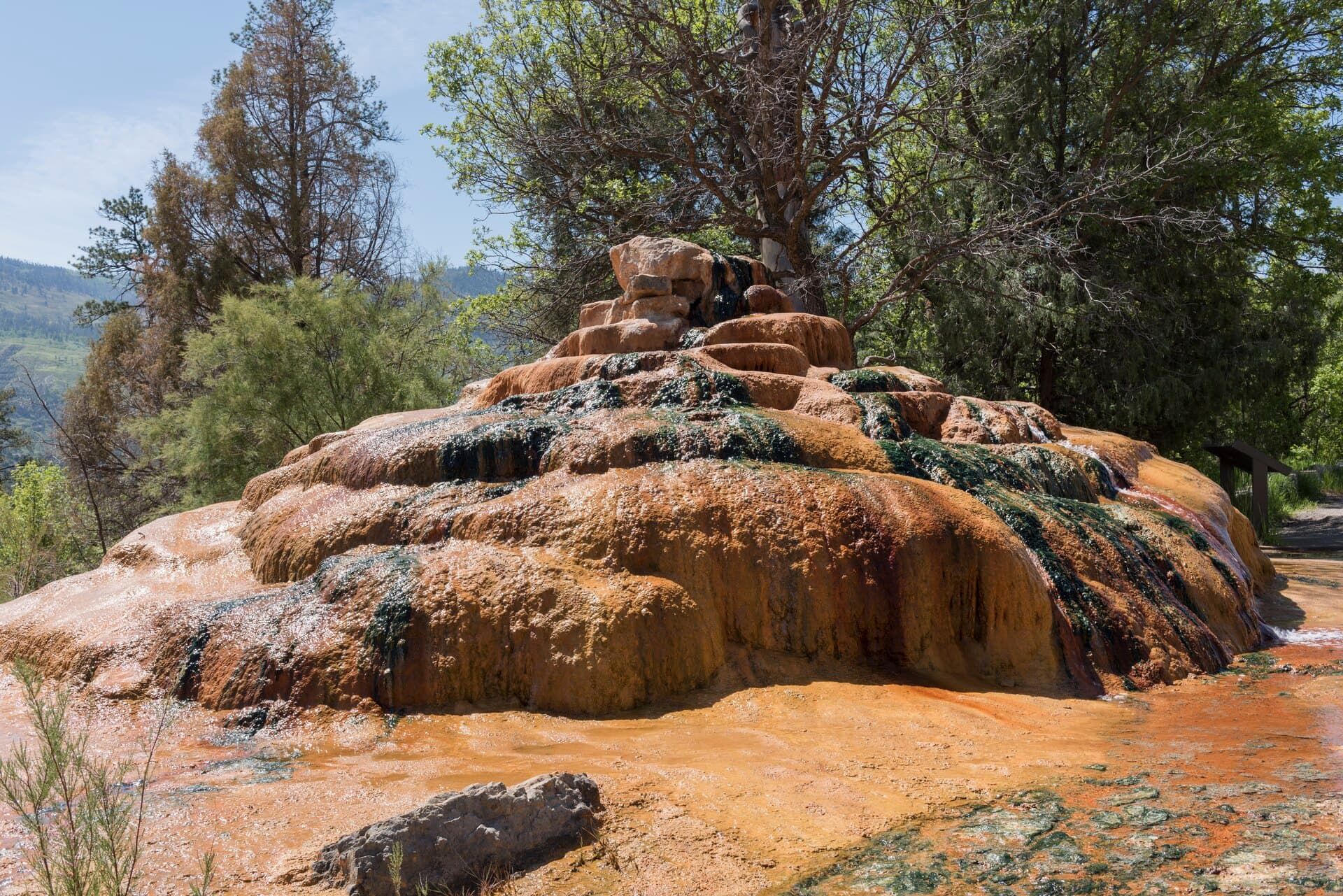
Glenwood Springs is built around water. The Colorado River runs through downtown, the hot springs predate the town, and Hanging Lake is up the canyon. It's a great I-70 base camp between Denver and the Western Slope.
Top summer moves: soak at the Glenwood Hot Springs Pool (the world's largest hot springs pool) or the more grown-up Iron Mountain Hot Springs; raft the Shoshone Rapids on the Colorado River (Class III, runnable through August); hike to Hanging Lake.
The gotcha: Hanging Lake requires a timed permit booked through hanginglake.com at least a month ahead. Glenwood Canyon closes occasionally for rockslides, so check CDOT before driving.
More: Glenwood Hot Springs Pool guide and Hanging Lake trail guide.
6. Steamboat Springs
Steamboat is the Yampa Valley ski town, but the summer scene is arguably better than the winter one. The Yampa River is a tubing magnet June through early August, Strawberry Park Hot Springs feels like a backcountry adventure (rough dirt road, dim lanterns), and Fish Creek Falls is a 280-foot waterfall 10 minutes from downtown.
Top summer moves: tube the Yampa River through downtown (rentals at Backdoor Sports); soak at Strawberry Park after dark; ride lift-served mountain biking on Steamboat Resort or pedal Emerald Mountain from town.
The gotcha: the Yampa closes to tubing when flows get too low or high. Check the Yampa River Flow Report. Strawberry Park requires four-wheel drive after rain and takes cash only.
7. San Juan Mountains circuit
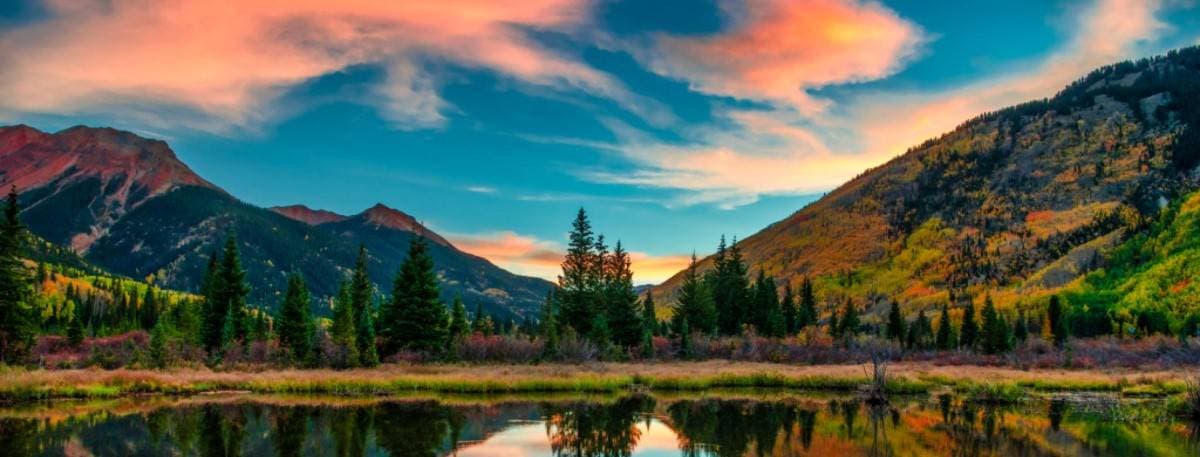
The San Juans in southwest Colorado are arguably the most dramatic range in the state. You can knock out three iconic towns in a weekend loop: Ouray, Silverton, and Durango, connected by the Million Dollar Highway (US 550). The drive itself is the experience: narrow, guardrail-free, with thousand-foot drops over Red Mountain Pass at 11,018 feet.
Top summer moves: ride the Durango and Silverton Narrow Gauge Railroad, a coal-burning steam train running since 1881; soak at the Ouray Hot Springs Pool; take a Jeep tour up Yankee Boy Basin from Ouray for the alpine wildflower basin (peak mid-July).
The gotcha: Ouray's famous ice park is closed in summer (December through March only), but the box canyon and Cascade Falls right above town are open year-round. The Million Dollar Highway is fine for stock cars but unnerving for nervous drivers; consider tackling it northbound so you're on the inside lane.
More: best hikes near Durango and Durango trail map.
8. Mesa Verde National Park
Mesa Verde, near the Four Corners, is the only US national park dedicated to the works of people: about 5,000 archaeological sites and 600 cliff dwellings built by Ancestral Puebloans between roughly 600 and 1300 AD. Ranger-led cliff dwelling tours (Cliff Palace, Balcony House, Long House) are the headline experience and only run in summer.
Top summer moves: book a Cliff Palace tour (the largest cliff dwelling in North America, with 150 rooms); walk the Petroglyph Point Trail; drive the Mesa Top Loop.
The gotcha: ranger-led tours require advance reservations through recreation.gov and sell out for summer weekends weeks ahead. Tickets are about $8 per tour on top of the $30/vehicle park entrance fee. Balcony House involves climbing a 32-foot ladder and crawling through an 18-inch tunnel. The park hits the mid-90s in July at lower elevations, so do tours in the morning and scenic drives in the afternoon.
9. Great Sand Dunes National Park
Great Sand Dunes is the strangest place in Colorado: 30 square miles of dunes up to 750 feet tall, pressed against the Sangre de Cristo Mountains. The summer signature is Medano Creek, a seasonal stream that creates "surge flow" waves at the base of the dunes (a "beach in the mountains" effect). The creek peaks late May and early June; by July it's usually a thin trickle or gone.
Top summer moves: rent a sandboard from the Oasis Store just outside the park ($25 a day, only place that rents them) and ride down the dunes; play in Medano Creek if you're there in late spring; hike to the top of High Dune for sunset.
The gotcha: sand temperatures hit 150 degrees Fahrenheit by midday. Be on the dunes before 10 AM or after 5 PM, never in between. Wear closed-toe shoes. Summer thunderstorms in the San Luis Valley can be intense; do not be on the dunes during lightning.
More: Great Sand Dunes complete guide and hikes near Alamosa.
10. Pikes Peak Region
The Pikes Peak Region (Colorado Springs and Manitou Springs) is the most accessible summer destination in the state. It's 90 minutes south of Denver, doesn't require timed-entry permits, and packs a 14er, a famous park, and a serious bridge into one weekend.
Top summer moves: ride the Pikes Peak Cog Railway from Manitou Springs to the 14,115-foot summit (run by The Broadmoor, the highest cog railway in the country); walk Garden of the Gods for free; cross the Royal Gorge Bridge near Cañon City; spend an afternoon at the US Olympic and Paralympic Museum.
The gotcha: the Manitou Incline (2,000 feet of stairs in less than a mile) requires a free timed reservation in summer, booked at manitouincline.com. Pikes Peak summit weather is wild, with snow possible in July; pack a jacket. Garden of the Gods is busiest from 10 AM to 4 PM, so go early.
More: Garden of the Gods guide, Pikes Peak Barr Trail guide, hikes near Colorado Springs, Colorado Springs trail map, and Manitou Springs trail map.
Summer in Colorado: what to expect
The North American Monsoon runs from roughly June 15 through September 15. Most July and August days follow the same rhythm: bluebird mornings, clouds building by noon, thunderstorms by 1 to 3 PM, then clearing by evening. Above treeline, lightning is the real risk. The rule locals follow: summit by noon, off the peak by 1 PM, off the ridges by 2 PM.
Wildflower windows are short. Foothills bloom in May and June. Subalpine zones (9,000 to 11,000 feet) peak mid-July. Above treeline, the tundra peaks late July into early August. By Labor Day, it's mostly over.
Altitude is a real issue. Denver is at 5,280 feet, but most destinations above sit between 8,000 and 12,000+ feet. Drink twice as much water as you think you need and skip alcohol the night before any big hike. More on this: altitude sickness prevention and treatment.
Heat is real at lower elevations. Denver hits 95 in July, Grand Junction crosses 100. The mountains stay cool: Aspen tops out around 80, Telluride and Crested Butte rarely break 75. If heat bothers you, head uphill.
How to pick the right summer trip
By group type. Families do best in Estes Park, Glenwood Springs, and Colorado Springs (short hikes, hot springs, paved scenic drives). Couples gravitate to Telluride and Aspen (festivals, restaurants, gondola). Solo backpackers should target Aspen (Four Pass Loop), the San Juans (Chicago Basin), or Rocky Mountain backcountry zones.
By time window. June is wildflower-at-lower-elevations, snowmelt waterfalls, rafting peak, and full Medano Creek season. July is the high-country wildflower peak and festival prime time (Bluegrass in Telluride, Wildflower Festival in Crested Butte). August is drier and hotter, with the best 14er climbing weather once you start early. Early September is the sweet spot if you can swing it: cooler temps, no crowds, monsoon mostly done, fall colors starting in the high country.
By budget. Aspen and Telluride are pricey ($400+ a night midweek in July, $600+ on festival weekends). Crested Butte, Steamboat, and Glenwood are more reasonable ($200-300). Estes Park, Colorado Springs, and the Mesa Verde and Great Sand Dunes gateway towns are the most affordable. National park campgrounds run $25-40 a night.
More inspiration: best Colorado vacation spots and best spring wildflower hikes.
FAQ
What is the best month to visit Colorado in summer?
Mid-July is the sweet spot: high-country wildflowers at peak, all alpine roads open, festivals running, snowmelt waterfalls still flowing. June is the runner-up if you want fewer crowds and bigger waterfalls but accept that some high-elevation roads may have just opened.
Is Colorado too hot in summer?
At lower elevations, yes. Denver and Grand Junction routinely hit the 90s in July, and Mesa Verde and Great Sand Dunes get hot at the surface. The mountains stay cool: above 8,000 feet, expect highs in the 70s and nights in the 40s and 50s. Base your trip in mountain towns and only visit lower spots in the morning or evening.
Do I need a reservation for Rocky Mountain National Park?
In 2026, yes. Timed-entry permits are required May 27 through October 14. The Bear Lake corridor needs a separate permit on top of that. Both release on a rolling schedule through recreation.gov. You can enter without a permit before 5 AM or after 6 PM.
When do wildflowers peak?
Foothills bloom in May and June. Subalpine zones (Crested Butte, the Maroon Bells area, Yankee Boy Basin) peak from about July 10 through August 5. Above treeline, alpine tundra peaks late July into early August.
Where can I escape the crowds in summer?
Skip the Bear Lake corridor and hit Wild Basin or the Cub Lake side instead. Skip Maroon Bells on a Saturday and go midweek before 9 AM. Head to the San Juans (Lake City, Ridgway, Silverton) or the Flat Tops Wilderness north of Glenwood Springs.
Final thoughts
The best places to visit in Colorado in summer all share one thing: they reward people who get up early. Build your itinerary around 6 AM trailhead starts and 2 PM hot springs soaks, and you'll see a version of Colorado most weekend visitors never catch. The state opens up for about 14 weeks a year. Don't waste a single one.
Get the Colorado 14er Packing Checklist (free PDF)
Plus a weekly note on the best Colorado trails, gear deals, and seasonal hike picks. No spam, unsubscribe anytime.
We respect your inbox. Unsubscribe anytime.