Chicago Basin: How to Backpack Colorado's Train-Access Trip to Three 14ers
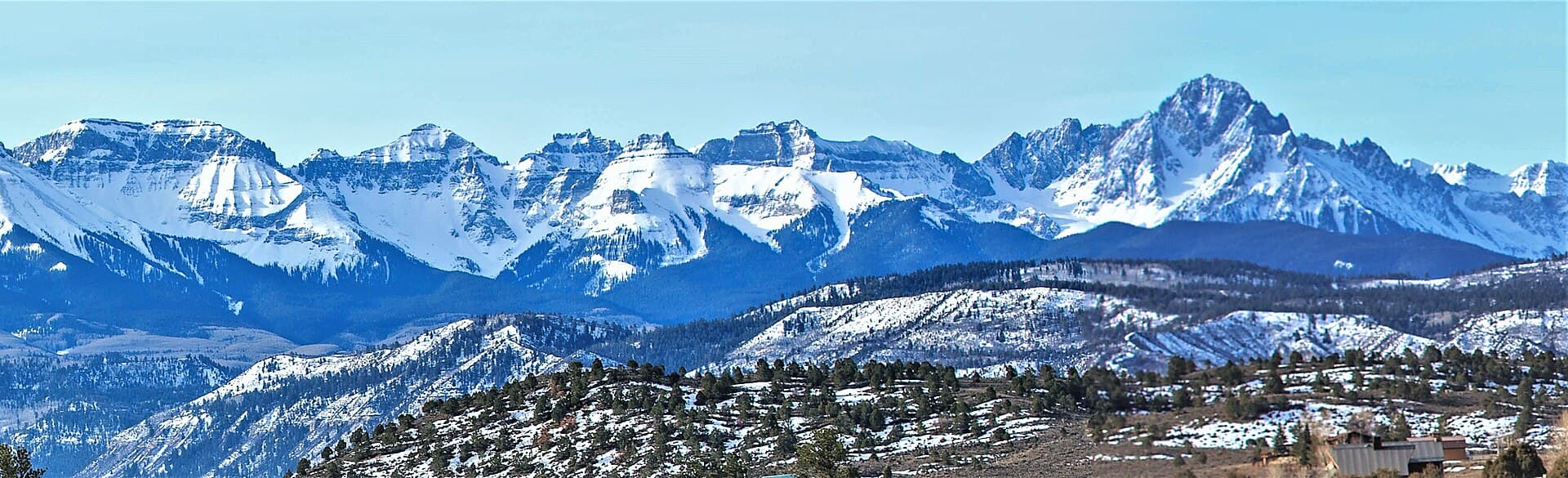
Chicago Basin is a high alpine bowl in southwestern Colorado's Weminuche Wilderness, and it's the launch point for three of the state's most remote 14ers: Sunlight Peak, Windom Peak, and Mount Eolus. What makes it famous isn't just the peaks. It's how you get there. Most backpackers ride the Durango & Silverton Narrow Gauge Railroad, a coal-fired steam train, and hop off at a flag stop called Needleton deep in the San Juan Mountains, then hike about 6 miles up to camp. There's no road, no trailhead parking lot, and no cell signal. You reach it on a hundred-year-old railroad or you walk 17 miles.
That combination of a steam-train approach, a basin ringed by jagged peaks, and a bumper crop of habituated mountain goats makes Chicago Basin a bucket-list trip for Colorado backpackers. It's also a real one. You're at 11,200 feet before you climb anything, the weather turns fast, and the summit routes range from a walk-up to a Class 4 move that stops a lot of people cold at the top.
This guide covers the train and how to flag it, the hike from Needleton, the four summits above the basin, camping and permit rules, the goat-and-marmot problem that's unique to this place, when to go, and what to pack for a trip where you can't run back to the car.
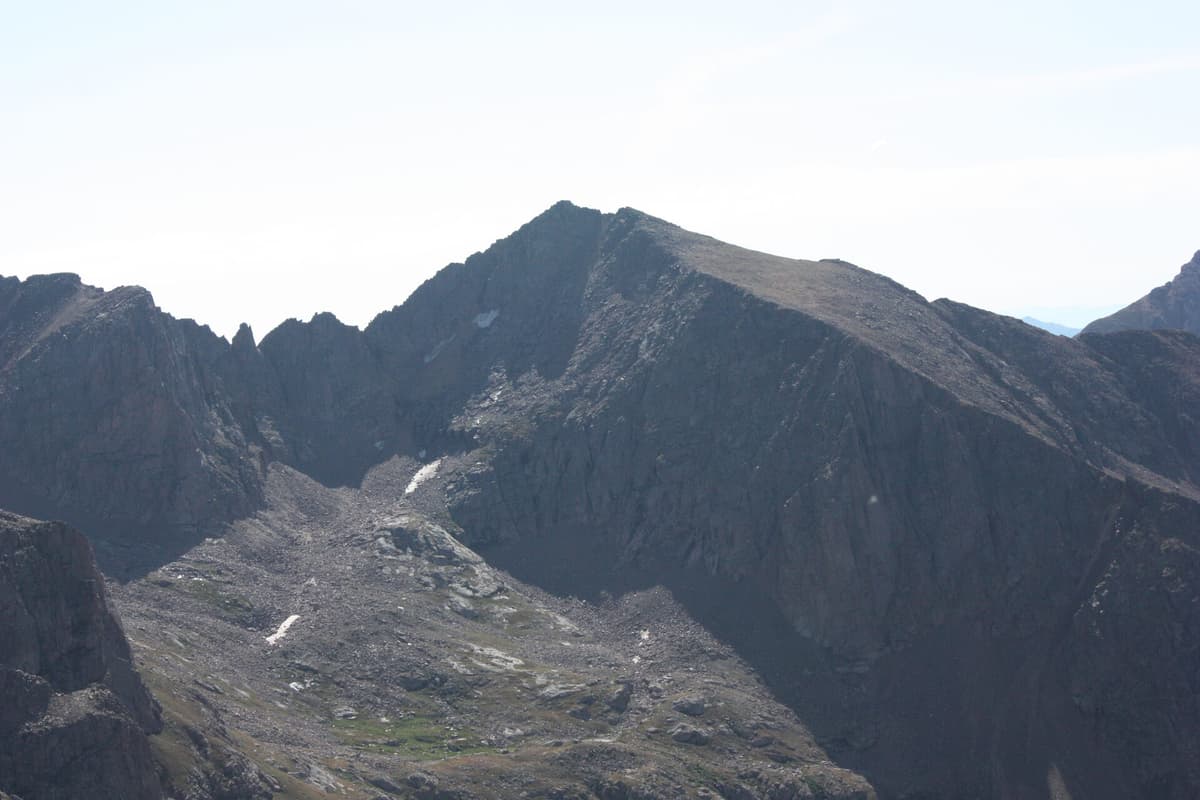
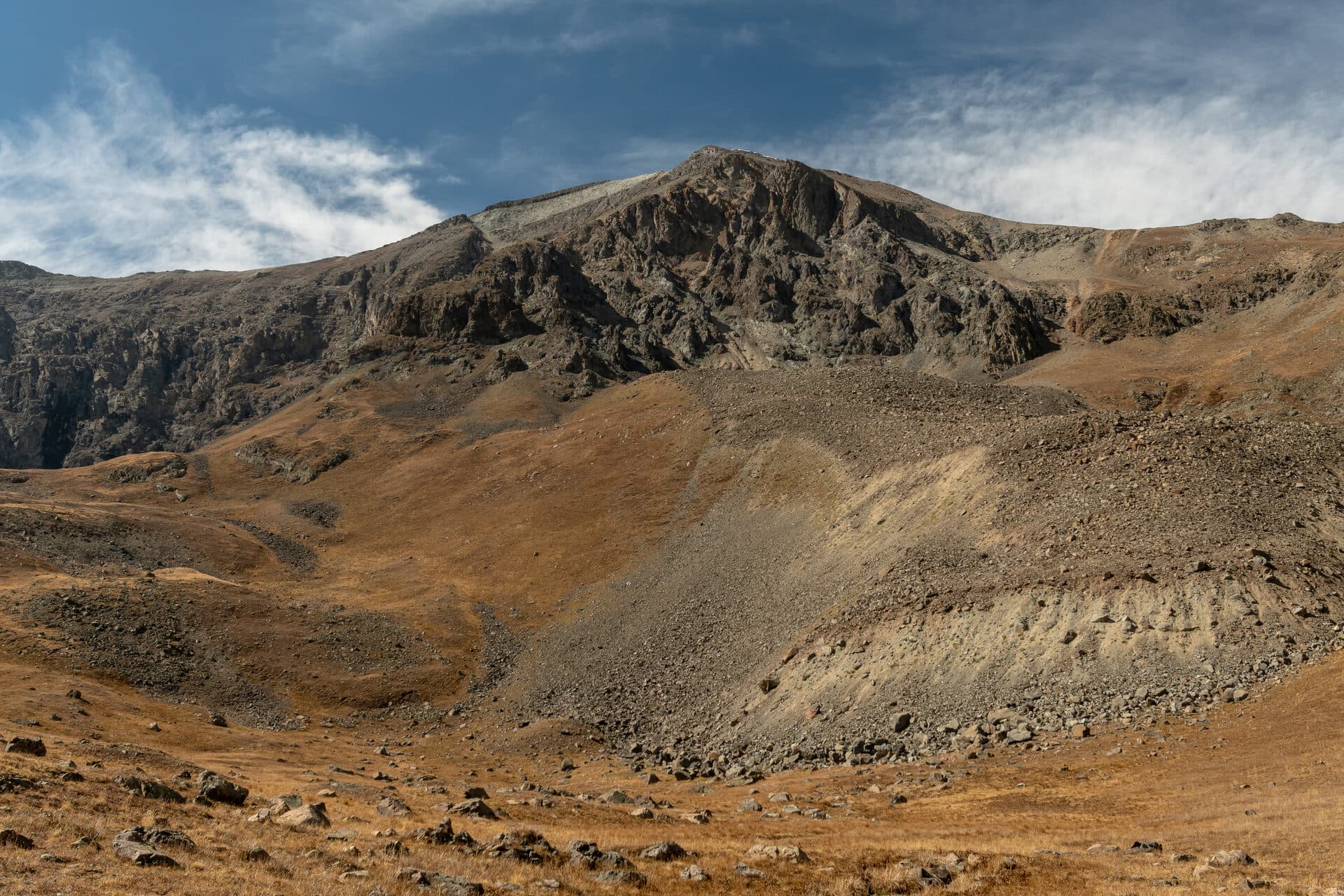
Jupiter Mountain stands over the floor of Chicago Basin. Camps spread through the trees below timberline at around 11,200 feet.
What You'll Learn
- Quick Stats
- Where Is Chicago Basin?
- Getting There on the Durango & Silverton Train
- The Hike In: Needle Creek Trail
- The Four Peaks Above the Basin
- Camping, Permits, and Fires
- Mountain Goats and Marmots
- When to Go
- What to Pack
- Frequently Asked Questions
Quick Stats {#quick-stats}
- Location: Weminuche Wilderness, San Juan National Forest, near Durango
- Access: Durango & Silverton train to the Needleton flag stop, then hike
- Hike to camp: about 6 miles, roughly 3,000 feet of gain
- Basin elevation: about 11,200 feet; timberline near 11,800 feet
- 14ers: Sunlight Peak (14,059 ft), Windom Peak (14,093 ft), Mount Eolus (14,083 ft), plus unranked North Eolus (14,039 ft)
- Permit: none required, and no fee to camp
- Train fare: about $35 per person each way for wilderness access
- Season: normally snow-free late June through mid-September
- Dogs: allowed, but the goats and long peak days make it hard on them
Where Is Chicago Basin? {#where}
Chicago Basin sits in the Weminuche Wilderness, the largest wilderness area in Colorado, in the San Juan Mountains northeast of Durango. The Weminuche is rugged, remote country, and this basin is one of its deepest pockets. The nearest road ends miles away, which is exactly why the train matters.
The basin is a glacier-carved bowl that drains into Needle Creek. Ring the top of it and you get the Needle Mountains, a cluster of steep, rocky summits that includes the three 14ers people come for. Because the whole area is so far from a trailhead, it stays wild in a way that closer Colorado peaks don't. You won't find day hikers here. Everyone in the basin carried a pack in.
If you're building a bigger Durango trip around this, our guide to the best hikes near Durango covers the shorter, road-accessible options that pair well with a big backpacking objective.
Getting There on the Durango & Silverton Train {#train}
The classic way in is the Durango & Silverton Narrow Gauge Railroad. You board in Durango on a morning departure, ride roughly 30 miles up the Animas River gorge, and get off at Needleton, a flag stop with no station, no town, just a clearing by the tracks and a footbridge over the river. The wilderness-access fare runs about $35 per person each way, and the service typically runs from mid-May into mid-October.
A few things trip people up, so plan for them:
- Reserve ahead through the Durango ticket office. Tell them you want wilderness access to Needleton and give them your return date. Space is limited and these trips book up in summer.
- You get on and off in Durango. The northbound train drops you at Needleton; to leave, you flag the Durango-bound train on your exit day. Confirm the schedule and your pickup with the ticket office before you go, because it changes by season.
- Flag the train to stop. On your way out, stand where the crew can see you and wave it down. The conductor is expecting backpackers there, but you still have to signal.
The train reaches Needleton around midday, which leaves you the afternoon to hike the 6 miles up to camp. If you'd rather not deal with the schedule, you can hike in from the Purgatory trailhead north of Durango instead, but that turns a 6-mile approach into roughly 17 miles one way down to the Animas and back up Needle Creek. Almost everyone takes the train.
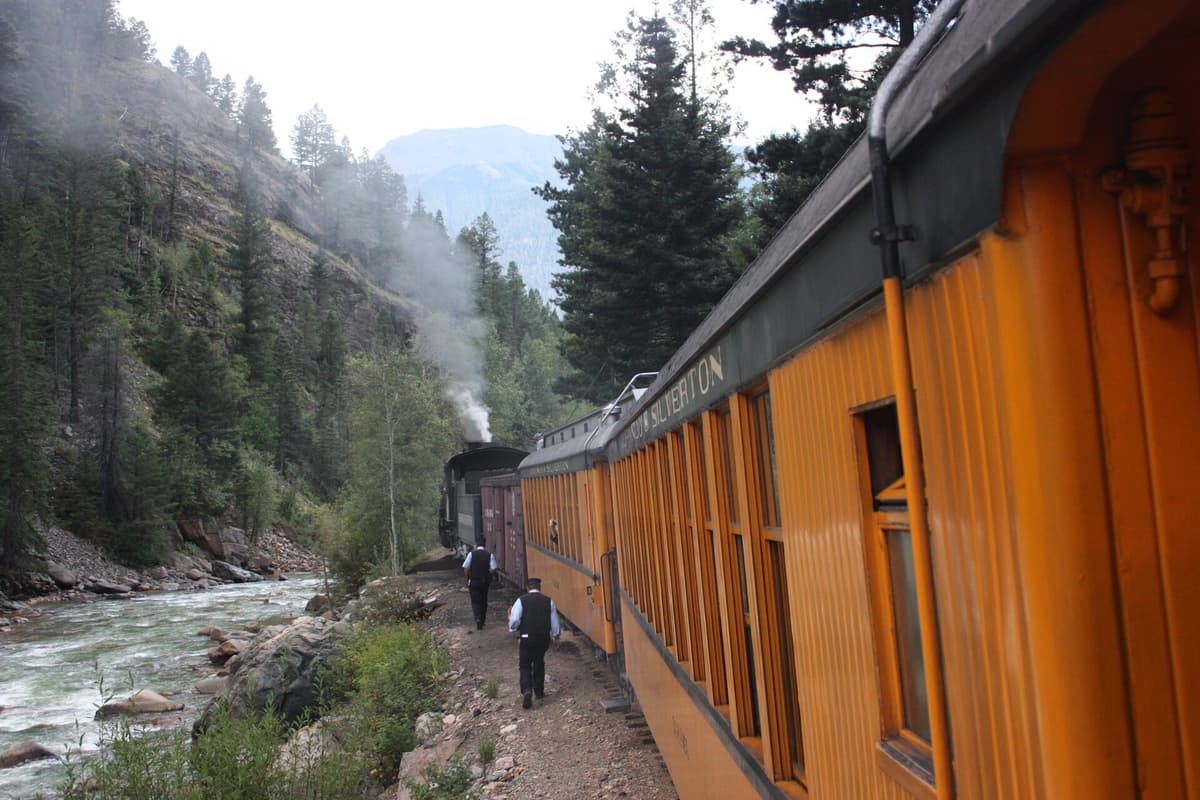
Needleton is just a clearing and a footbridge over the Animas River. From here the Needle Creek Trail climbs east into the basin.
The Hike In: Needle Creek Trail {#hike-in}
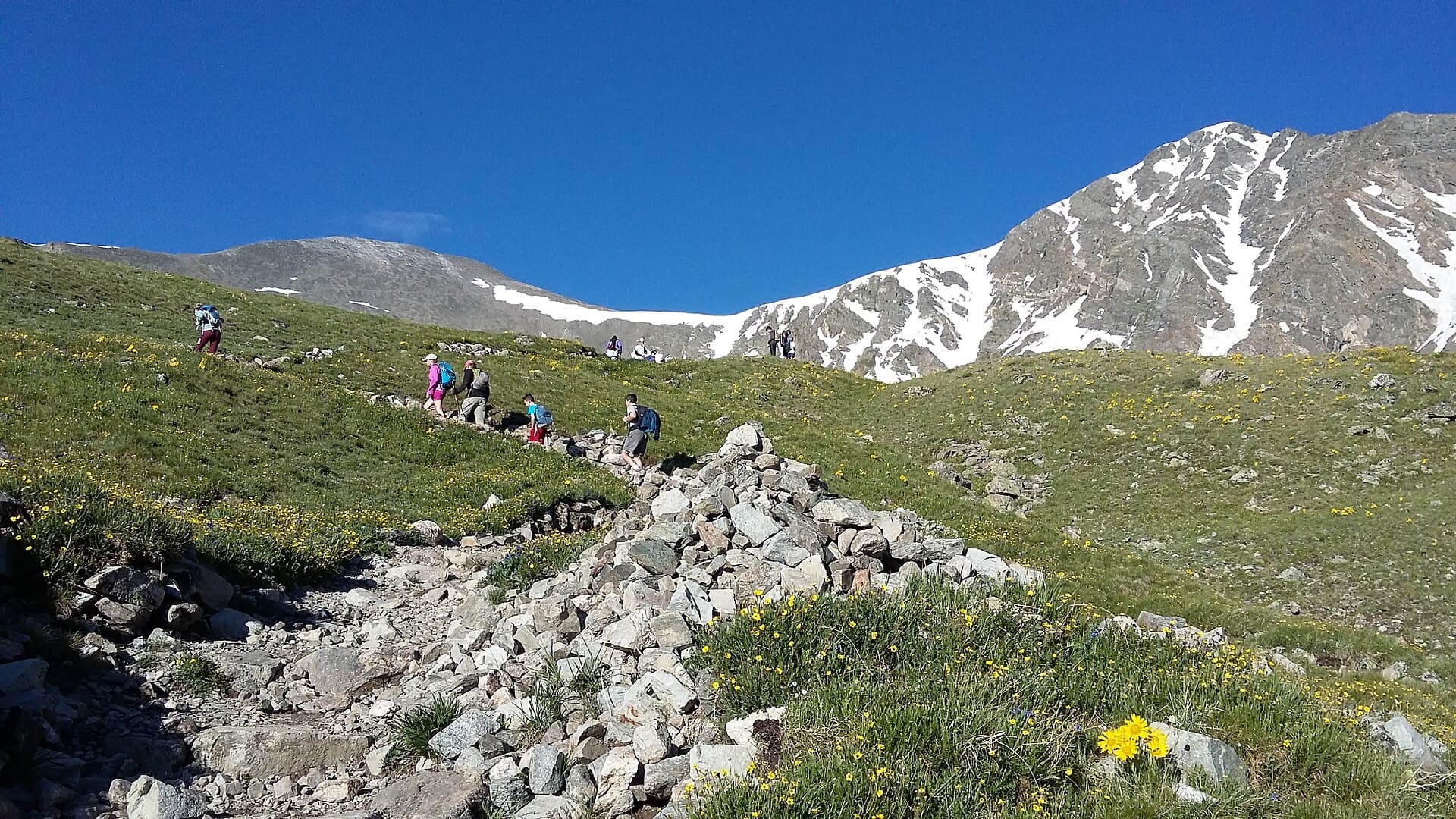
From Needleton, cross the footbridge over the Animas River and pick up the Needle Creek Trail heading east. It's a well-built, steady climb that gains about 3,000 feet over roughly 6 miles as it follows Needle Creek up into the basin. There's nothing technical about the walk in. It's just a long, uphill haul with a full backpacking load at altitude, and you started the day at 8,200 feet.
Most people leave the train around midday and reach camp in the late afternoon, which is plenty of time if you keep moving. Give yourself a cushion, though. Afternoon thunderstorms build fast in the San Juans, and you don't want to be caught high and exposed with a heavy pack. Filter your water straight from Needle Creek along the way; it runs the whole route.
Because you gain so much elevation and then sleep at 11,200 feet, altitude is a genuine concern here, especially if you drove up from sea level a day or two earlier. Read up on altitude sickness prevention and treatment before this trip and build in an easy first day. Summit day will punish you if you show up already behind on acclimatization.
The Four Peaks Above the Basin {#peaks}
Chicago Basin is base camp for four named summits, three of them ranked 14ers. Most people camp two or three nights and try to bag all of them, launching from camp before dawn and gaining another 2,000-plus feet up to the high country around Twin Lakes, where the routes split.
- Windom Peak (14,093 ft) is the most straightforward of the three, a Class 2+ scramble up its west ridge. It's the one to do first if you want to build confidence.
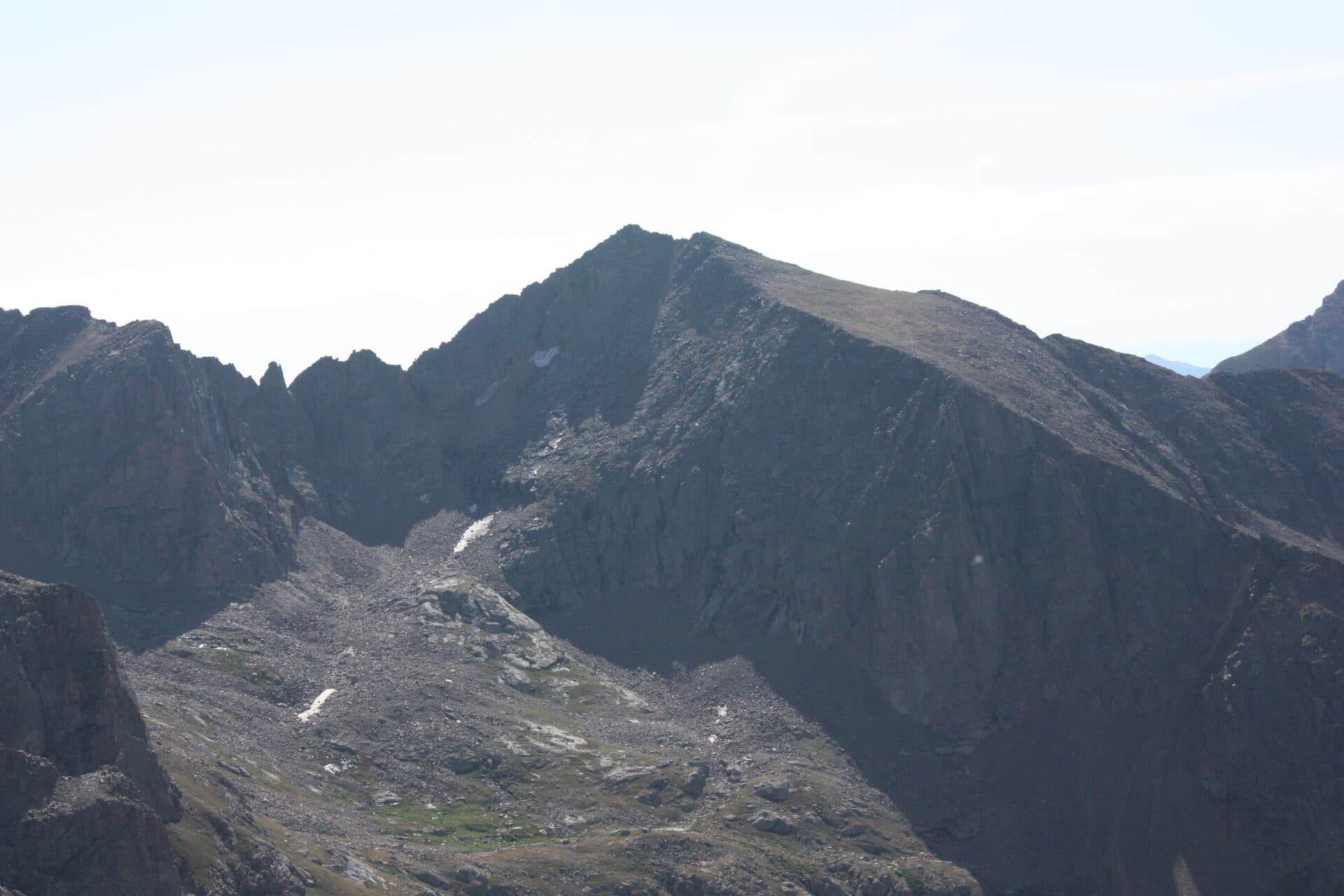
- Sunlight Peak (14,059 ft) is the wild card. The route is Class 4 near the top, and the true summit is a detached block you reach by stepping across a gap with big air underneath. Plenty of experienced hikers climb to the base of that block, look at it, and call it good. There's no shame in it.
- Mount Eolus (14,083 ft) involves the "Catwalk," a narrow rib of rock connecting to the upper mountain, followed by Class 3 scrambling. It's airy but has good holds.
- North Eolus (14,039 ft) is an unranked 14er most people tag on the way to or from Eolus, since it's a short Class 3 detour off the same saddle.
If you're new to peaks like these, don't make Chicago Basin your first 14er. Start on friendlier ground. Our roundup of the easiest 14ers in Colorado for beginners and the broader Colorado 14ers guide will tell you honestly where these three rank on the difficulty scale (near the hard end).
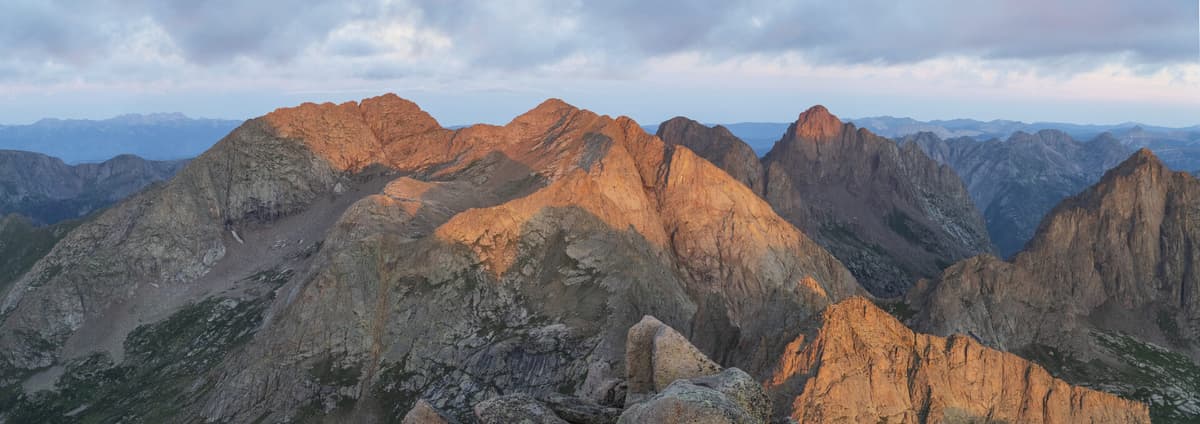
Dawn light on the Eolus peaks. Summit days here start in the dark to beat the afternoon storms.
Camping, Permits, and Fires {#camping}
Here's the good news: you don't need a permit to backpack or camp in Chicago Basin, and there's no fee. You can just show up. That's rare for a place this popular, and it puts the responsibility on you to camp lightly, because a lot of people share this basin in summer.
The rules that matter:
- Camp on durable, established sites at least 100 feet from water. Don't pitch in the open meadows; they're getting hammered.
- No camping in the Twin Lakes basin above the main camps. That fragile upper zone is off-limits for tents.
- Campfires are prohibited in the Needle Creek drainage. Bring a stove and plan on it. This is not a fire-ring trip.
- Pack out your toilet paper, and pack out solid waste with a WAG bag if you can. This is a high-use area with over a hundred people camped here on peak weekends, and catholes alone can't keep up. Dig catholes 6 to 8 inches deep and 200 feet from water if you don't carry bags.
For gear that holds up to alpine wind and cold nights at this elevation, see our picks for the best backpacking tents for Colorado. A three-season tent that can take a beating earns its weight up here.
Mountain Goats and Marmots {#wildlife}
This is the part that surprises first-timers. Chicago Basin has a large, bold population of mountain goats that have learned to associate people with salt, and they will walk right into your camp looking for it. They crave the minerals in urine and sweat, and they'll dig up vegetation and follow hikers to get it. The Forest Service asks you to pee on bare rock well away from camp and trails, not on plants, so the goats don't tear up the ground chasing the salt.
Give the goats room. They look docile, but they're big wild animals with horns, and a habituated one that's crowding you is a hazard, not a photo op. Never feed them or let them lick anything.
Marmots are the other problem, and they're sneakier. They'll chew through pack straps, hipbelts, and tent mesh to get at salty gear, and they do it while you're off climbing. Hang your pack and anything sweaty from a tree branch when you leave camp, since marmots can't climb trees. A hard-sided food canister protects your food from both the marmots and the occasional bear, and it doubles as a camp stool. Our guide to the best bear canisters for Colorado covers models that fit a multi-day load, or grab a bear canister before you go.
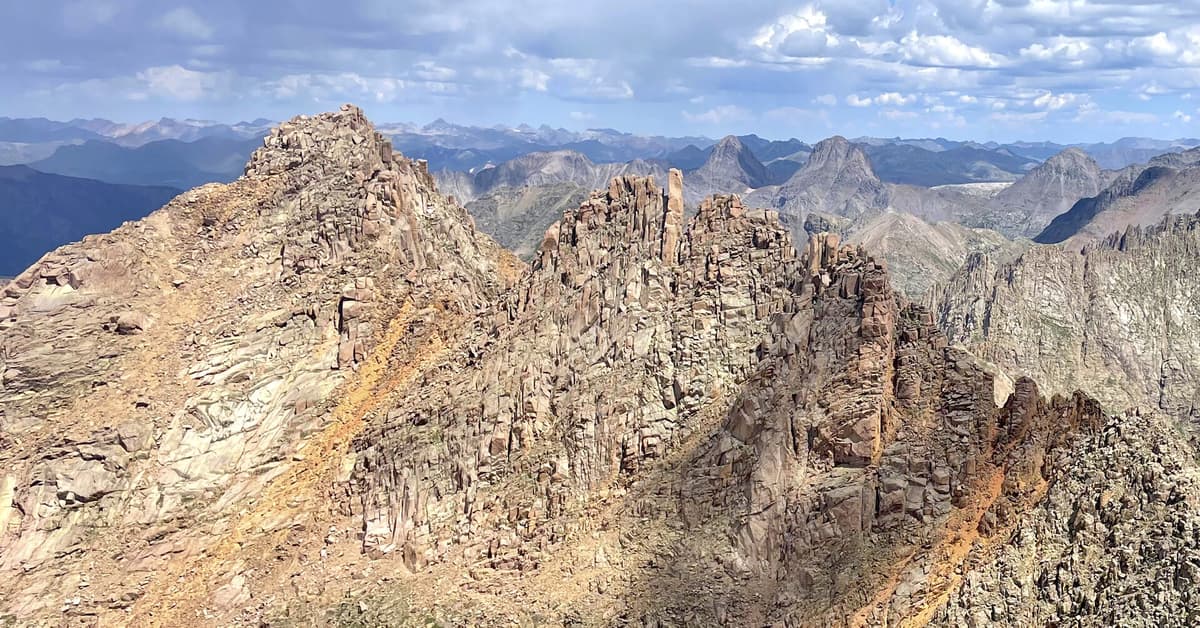
Sunlight Peak from Windom. The notorious summit block on Sunlight is the detached rock at the very top.
When to Go {#when-to-go}
The basin is normally snow-free from late June through mid-September, and that's your window. July and August bring the most reliable weather and, predictably, the biggest crowds. The stretch from around the Fourth of July to Labor Day is the busy season, when the basin can hold well over a hundred campers on a weekend.
If you want the same peaks with more solitude, aim for late June or the first couple weeks of September. Late June can still hold snow on the north-facing summit routes, so bring traction and an ice axe if you go early and know how to use them. September gives you crisp air and gold aspens down low, but the days are shorter and nights are cold, and the train's season is winding down, so confirm it's still running your dates.
Whatever month you pick, plan summit attempts for early morning. San Juan thunderstorms are serious and they build by early afternoon almost daily in summer. The rule up here is simple: be off the high peaks before noon.
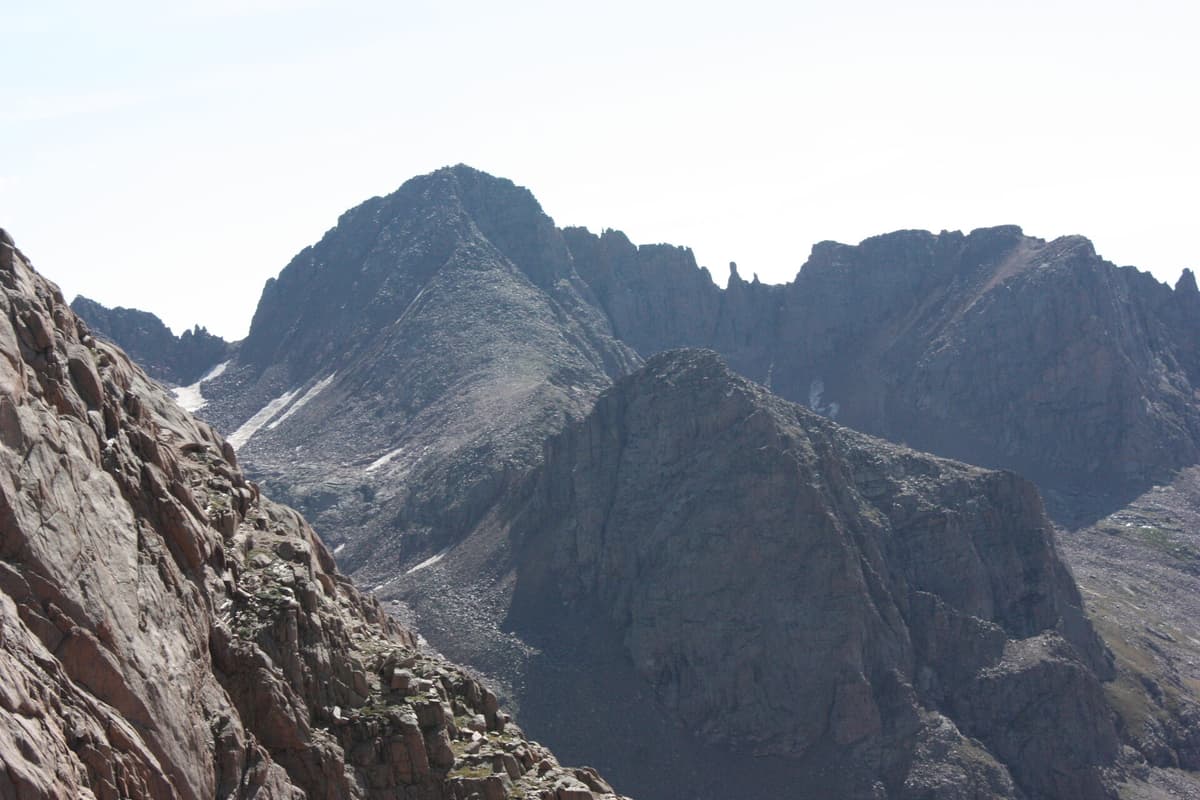
Windom Peak and its neighbors ring the head of the basin. From camp it's another 2,000 feet up to the peaks.
What to Pack {#what-to-pack}
This is a multi-day, self-supported trip in country with no bailout, so your kit has to be right before you step on the train. The basics:
- A backpacking pack in the 55 to 70 liter range to carry three or four days of food and gear. See our backpacking backpack picks for Colorado, or shop backpacking backpacks.
- A water filter or purifier. Needle Creek is your source. Our best water filters for hiking in Colorado breaks down the options, or grab a backpacking water filter.
- A warm layer. Nights at 11,200 feet are cold even in July. Pack a down jacket and a real rain shell.
- Trekking poles for the loaded climb in and the loose scree on the peaks. A set of trekking poles saves your knees on the descent.
- A hard-sided canister for food and salty gear, plus a length of cord to hang your pack for the marmots.
- WAG bags for human waste. Carry a few wag bags and use them.
- Traction and an ice axe if you're going in late June or early September, when the summit gullies can still hold snow.
Pack it so you can find your rain shell and warm layer fast, because the weather here doesn't wait for you to dig.
Frequently Asked Questions {#faq}
Do you need a permit for Chicago Basin?
No. There's no permit and no fee to hike or camp in Chicago Basin. You do need to buy a train ticket if you take the railroad in, and you're expected to follow the wilderness camping rules: established sites, no fires in the drainage, and packing out your waste.
How hard is the hike into Chicago Basin?
The approach itself isn't technical, but it's demanding. You climb about 3,000 feet over roughly 6 miles from Needleton with a full backpacking load, starting above 8,000 feet. The real difficulty is the altitude and the summit routes above camp, which run from Class 2 up to a Class 4 move on Sunlight Peak.
How much does the train to Chicago Basin cost?
Wilderness-access fare on the Durango & Silverton Narrow Gauge Railroad is about $35 per person each way to the Needleton flag stop. Reserve through the Durango ticket office ahead of time, and confirm both your drop-off and pickup dates, since the schedule shifts by season.
How many 14ers are in Chicago Basin?
Three ranked 14ers: Sunlight Peak, Windom Peak, and Mount Eolus. A fourth summit, North Eolus, tops 14,000 feet but is unranked because it doesn't rise far enough above the saddle it shares with Eolus. Most people climb all four from a single base camp over two or three days.
Are the mountain goats in Chicago Basin dangerous?
They're wild animals that have lost their fear of people, which makes them unpredictable up close. Keep your distance, never feed them, and pee on bare rock away from camp so you're not drawing them in for the salt. Treat a goat crowding your camp as a reason to back off, not a photo opportunity.
Plan the Trip
Chicago Basin rewards planning more than fitness alone. Book the train early, build in a day to acclimatize, guard your gear against the goats and marmots, and start your summit days in the dark. Do that and you get three remote 14ers and a steam-train ride most Colorado hikers never take. If you're stacking peaks this season, keep going with our Colorado 14ers guide for routes, ratings, and how to build up to the hard ones.
Get the Colorado 14er Packing Checklist (free PDF)
Plus a weekly note on the best Colorado trails, gear deals, and seasonal hike picks. No spam, unsubscribe anytime.
We respect your inbox. Unsubscribe anytime.