Castle Peak: A Complete Guide to Hiking Colorado's Highest Elk Mountain 14er
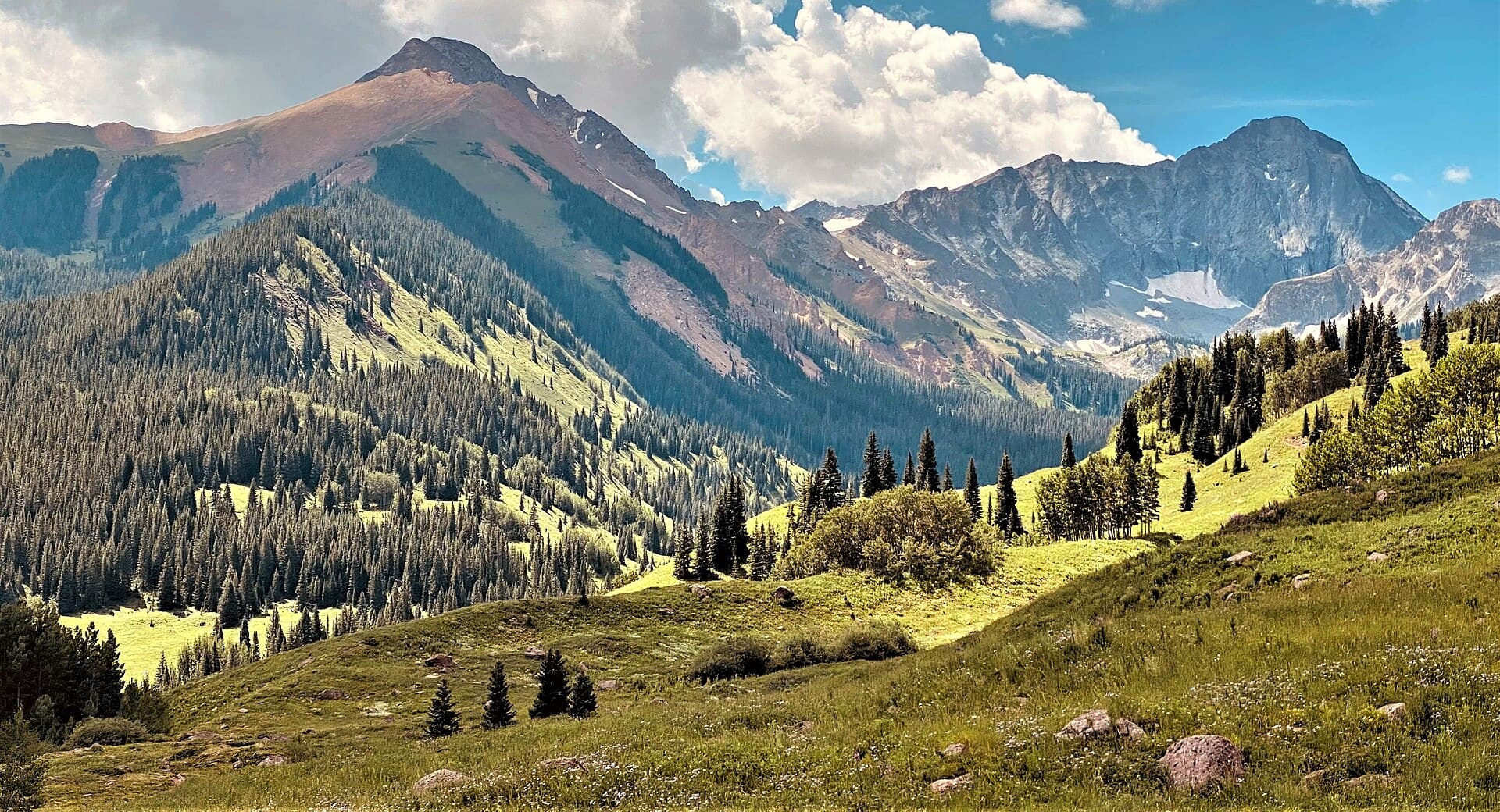
Castle Peak (14,279 ft) is the highest summit in the Elk Mountains and the peak most people climb first when they want a taste of that range without the danger that gives the Elks their reputation. It sits southeast of Aspen at the head of Montezuma Basin, and the standard Northeast Ridge is a Class 3 scramble that trades the loose, rotten rock the range is known for far more fairly than its neighbors do. That's why the Castle Peak trail shows up on so many "first Elk 14er" lists.
The catch is the road. Almost everyone's day on Castle Peak is shaped by how far up the rough Montezuma Basin road they can drive. From the upper basin, the climb is short: roughly 2.5 to 3 miles round trip with about 1,500 feet of gain. Park where a normal vehicle gives out, and the same summit becomes a 13-mile day with more than 4,500 feet of climbing. The mountain doesn't change. Your driveable trailhead does.
This guide covers the drive up Castle Creek Road and into Montezuma Basin, the Northeast Ridge route, the popular add-on to Conundrum Peak, and the gear and timing that keep a summer scramble on Castle safe and fun.
What You'll Learn
- Quick Stats
- Getting to the Trailhead
- The Standard Route: Northeast Ridge
- Adding Conundrum Peak
- What to Pack
- Timing and Weather
- When to Climb
- How Hard Is Castle Peak?
- Common Mistakes
- Frequently Asked Questions
Quick Stats
Northeast Ridge from the upper Montezuma Basin parking (very capable 4WD only):
- Elevation: 14,279 ft (one of Colorado's 58 fourteeners, and the highest peak in the Elk Mountains)
- Round Trip Distance: about 2.5 to 3 miles
- Elevation Gain: about 1,500 ft
- Class: 3 (hands-on scrambling on the upper ridge)
- Time: 4 to 6 hours
From the common 4WD parking around 12,000 ft:
- Round Trip Distance: about 5.5 miles
- Elevation Gain: about 2,300 ft
From lower parking where the road roughens (around 9,700 ft):
- Round Trip Distance: about 13 miles
- Elevation Gain: more than 4,500 ft
- A long day that many split by camping in the basin
Nearest town: Aspen
Range: Elk Mountains
Best Season: Mid-July through late September for the summer scramble
Permit: None required to climb
Crowds: Steady on summer weekends, lighter than the Front Range 14ers
Getting to the Trailhead
Castle Peak sits at the head of Montezuma Basin, and reaching it starts on Castle Creek Road, which leaves Highway 82 at the roundabout just west of Aspen. The pavement runs about 11 miles up a gorgeous valley to the old mining town site of Ashcroft, then continues as maintained dirt.
Here's how the access breaks down for most vehicles:
- Aspen to Ashcroft: Paved and easy in any car, climbing gently through aspen groves and past the Cathedral Lake trailhead, which shares this same road. This stretch is a scenic drive on its own.
- The dirt above Ashcroft: A careful passenger car can usually continue a few miles on graded dirt to around 9,700 feet, where the road forks and the surface starts to deteriorate. This is the practical stopping point for 2WD.
- The Montezuma Basin road: Past the fork, the road becomes a steep, rocky, high-clearance 4WD route. There's a shelf section, embedded rock, and often a stream crossing or two. Stock SUVs get stopped well before the top. Only short-wheelbase, high-clearance 4WD rigs and modified vehicles reach the upper basin around 12,800 feet.
The honest advice: park where your vehicle is comfortable and walk the rest. Grinding a rental SUV up that road to save a mile of walking is how people crack an oil pan at 12,000 feet with no cell service. For more on judging rough access roads like this one, see our notes on Colorado trailhead parking.
Drive from Denver: Budget about 4 hours to Aspen over Independence Pass in summer, then 45 to 90 minutes on Castle Creek Road and the basin road depending on your vehicle and where you stop. This is a peak you sleep near, not one you day-trip from the Front Range.
Camping: Many climbers camp in or near Montezuma Basin to shorten the summit push and acclimate. There are no services up here, so pack it all in and pack it all out.
Cell service: None past Aspen. Download your maps before you leave town.
The Standard Route: Northeast Ridge
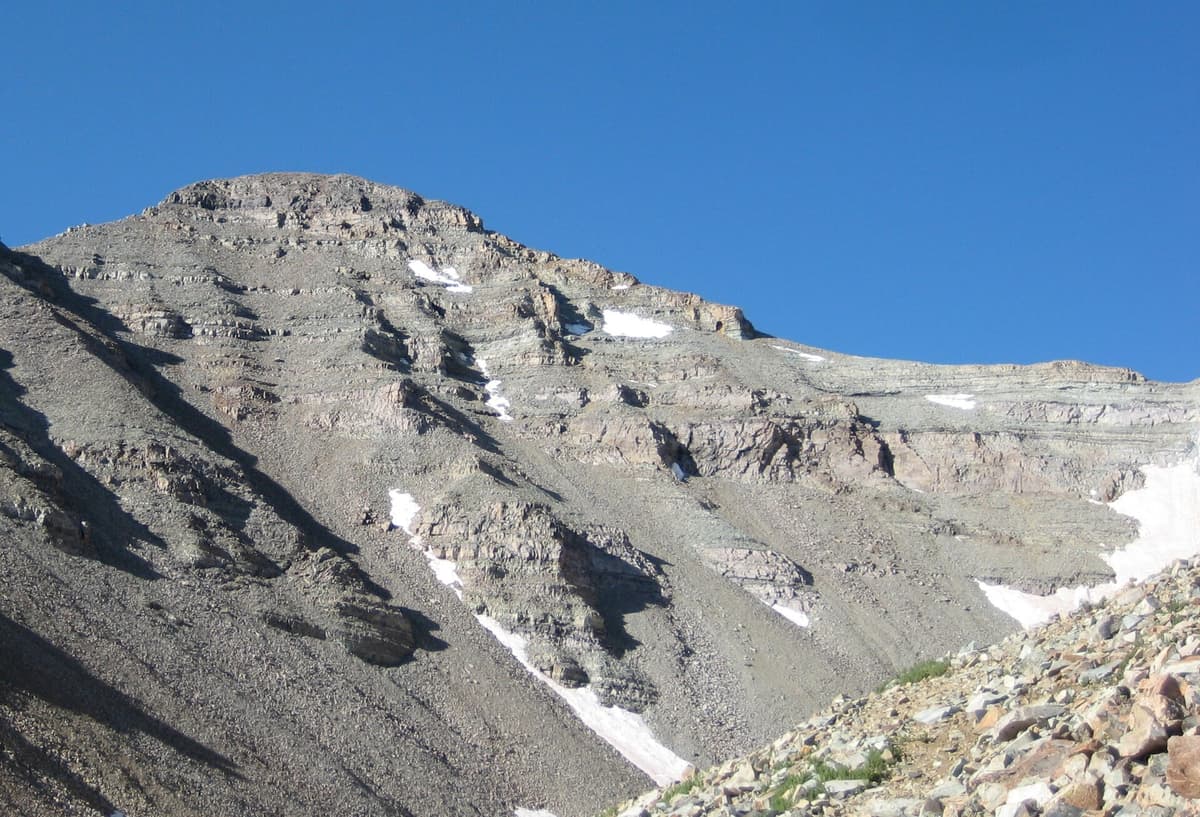
The Northeast Ridge is how nearly everyone climbs Castle Peak. It starts in Montezuma Basin, works up to the northeast ridge, and follows that ridge to the summit. Most of it is walking and easy scrambling, with the real hands-on moves saved for the top.
Section 1: Basin to the Snowfield (about 0.7 miles)
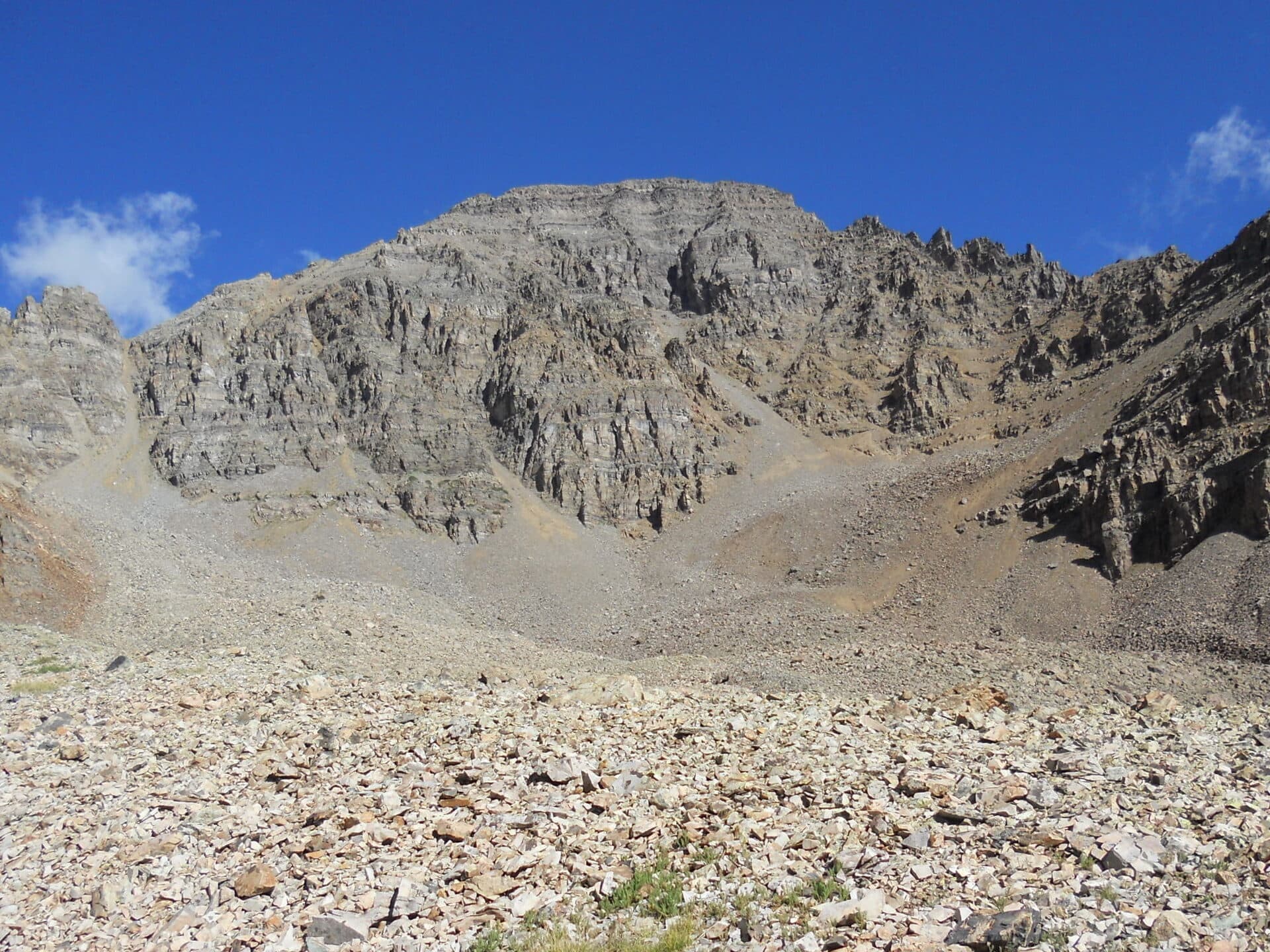
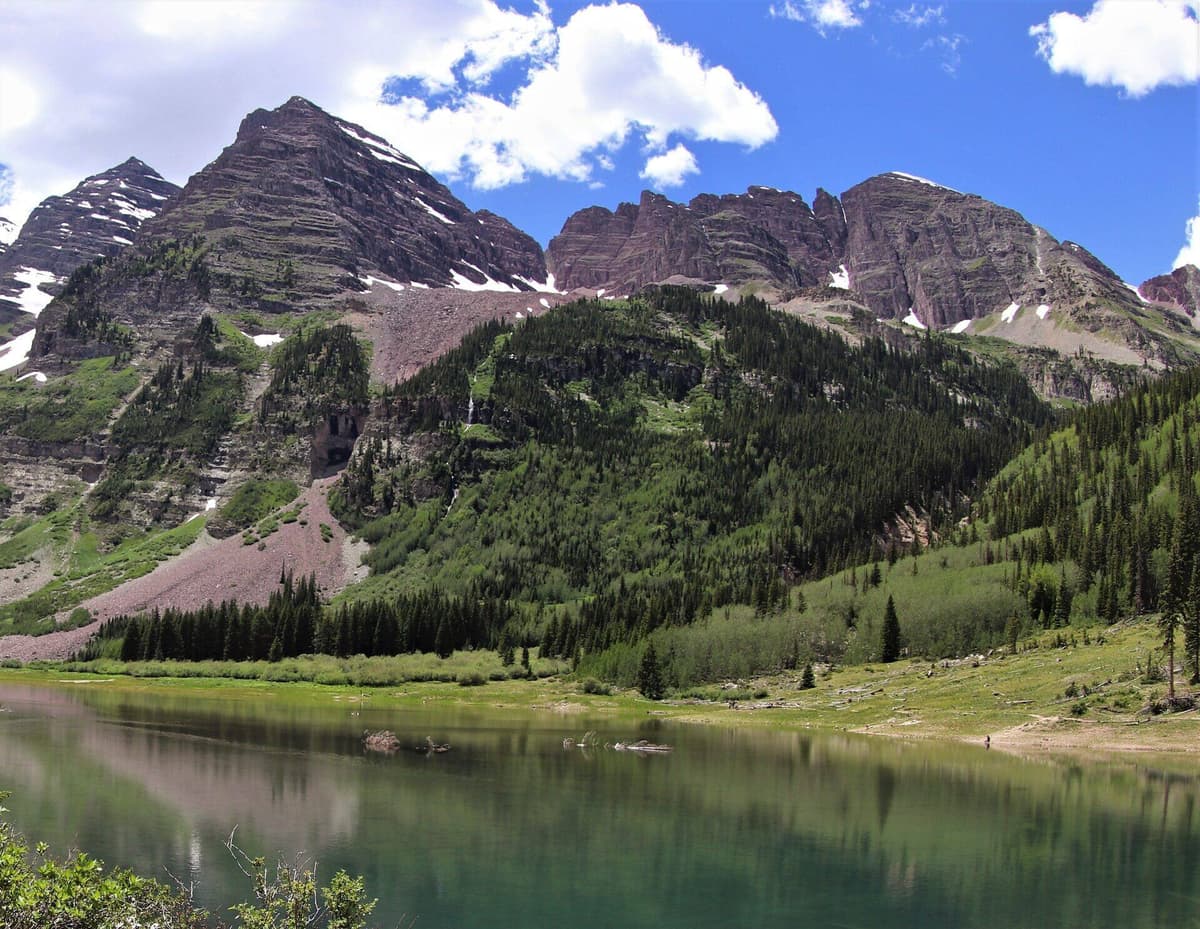
From the upper basin parking, the route heads southwest up Montezuma Basin, a classic glacial cirque ringed by dark, layered peaks. The footing is talus and old mining debris low down, and the grade is moderate. Castle Peak is the high point on the left side of the cirque as you look up-valley; the twin bump to its right is Conundrum Peak.
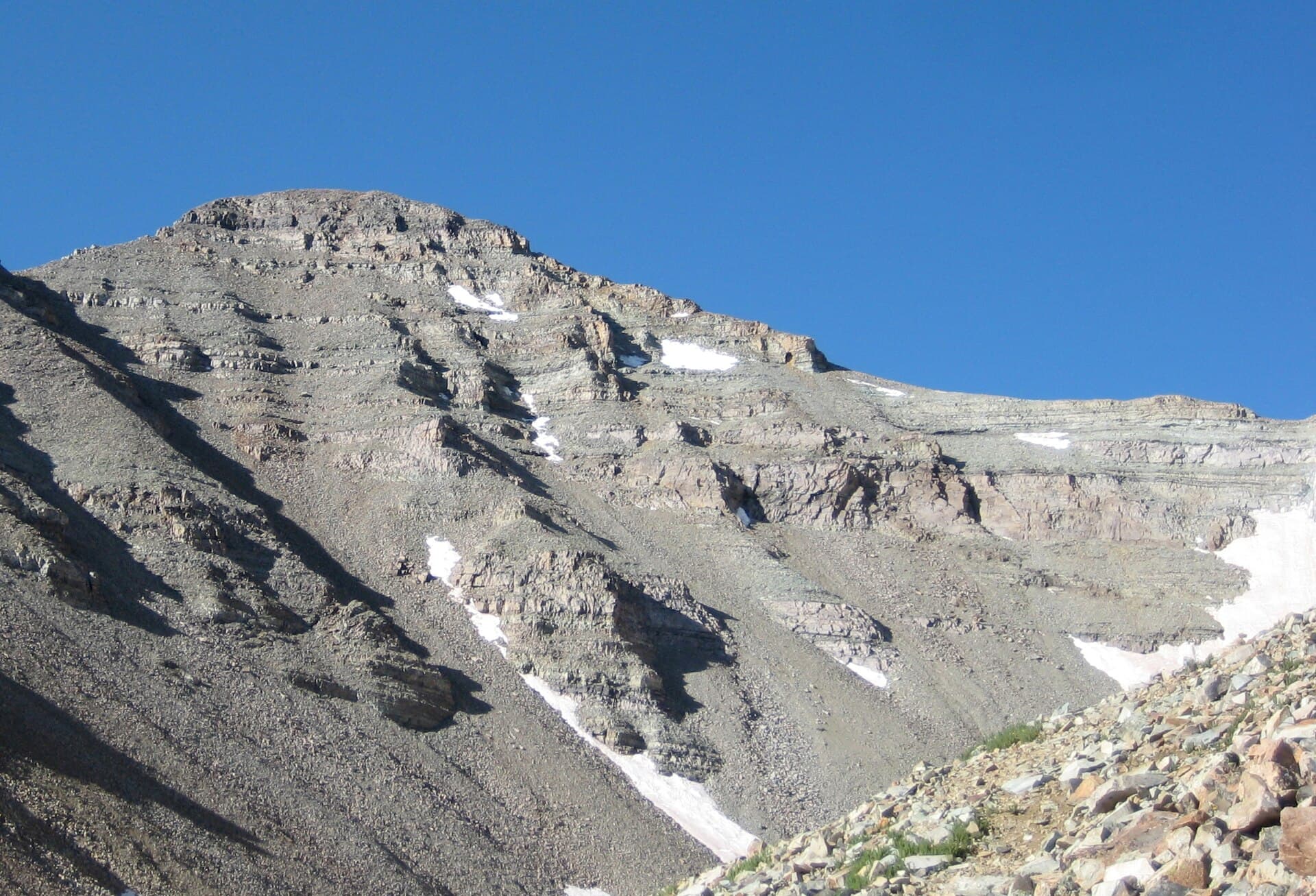
Ahead of you sits a semi-permanent snowfield that fills the upper basin. Early in the season it's a broad apron of firm snow that many parties climb directly with an ice axe and traction. By late summer it shrinks to a smaller patch you can often skirt on rock. Know which one you're facing before you go, because it changes the gear you carry.
Section 2: Snowfield to the Ridge (about 0.5 miles)
Above the flats, the route steepens toward the northeast ridge. You either kick steps up the snowfield or scramble the loose slope beside it, aiming for the low point on the ridge at roughly 13,800 feet. This is the most tiring stretch: steep, loose, and thin on air. Take the firmer lines where you can find them, and if you're on snow, keep your ice axe in hand and know how to self-arrest.
Gaining the ridge is the moment the whole climb opens up. Suddenly you're looking down the far side into the Conundrum Creek valley, with a wall of Elk Mountain summits stacked to the west.
Section 3: The Ridge to the Summit (about 0.3 miles)
The final ridge is where Castle earns its Class 3 rating. You follow the crest toward the summit on a mix of easy walking and short scrambling steps, using your hands on a few rock bands. The exposure is real but manageable, and the holds are more solid here than on most Elk peaks. Stay on or just below the ridge crest and follow the path of least resistance rather than pulling straight up the steepest rock.
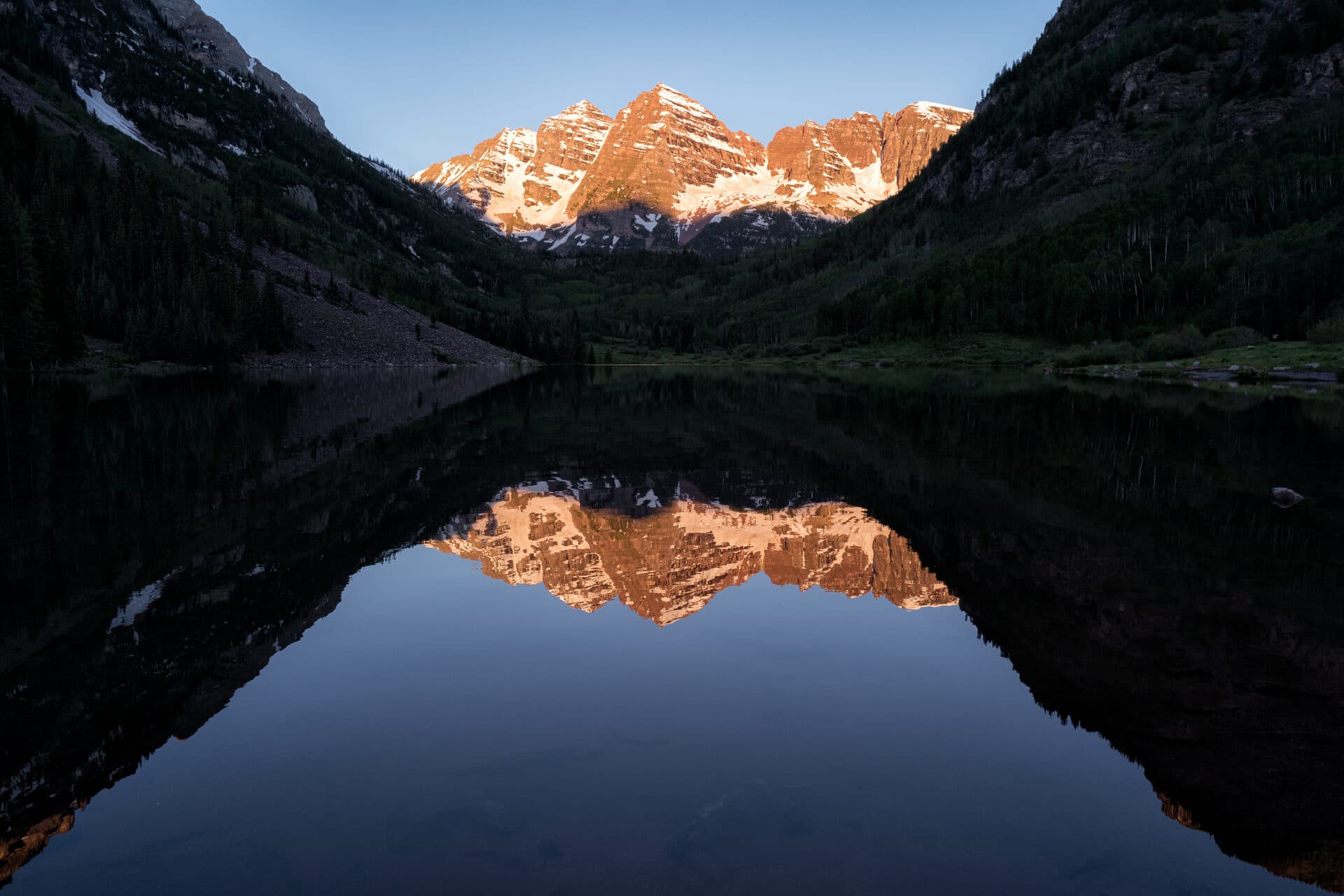
The true summit is a small, rocky perch with one of the best views in the Elks. On a clear morning you can pick out the Maroon Bells and Pyramid Peak to the northwest, Snowmass and Capitol beyond them, and the long line of the Sawatch Range across the valley to the east. Sign the register, get your photos, and start down before the weather turns.
The descent deserves your full attention. Downclimbing the ridge, then reversing the loose slope or the snowfield, is where tired legs get people in trouble. Face into the rock on the steep bits, test your holds, and take the snow slowly. If you glissade the snowfield, only do it where you can see a clean, rock-free runout and you can self-arrest.
Adding Conundrum Peak
Right beside Castle sits Conundrum Peak (14,060 ft), and most people grab both in a single trip. Conundrum is what climbers call an unranked 14er: it clears 14,000 feet, but it doesn't rise far enough above the saddle it shares with Castle to count as a separate ranked summit. That technicality doesn't make it any less fun to stand on.
The usual plan is to climb Castle first, then drop to the saddle between the two peaks and scramble north to Conundrum, or to tag Conundrum on the way up if the snow lines up well. The connecting scramble is short, roughly half a mile round trip from the saddle with a few hundred feet of gain, and it holds Class 3 moves of its own. It adds maybe an hour to the day.
If you've driven all that way and the weather is holding, the twofer is worth it. Just watch the clock the same as you would on Castle alone, and don't let the bonus peak push you past your turnaround time. For more high-country days in this corner of the state, see our guide to the best hikes near Aspen and our 3-day Aspen hiking itinerary.
What to Pack
Castle is a short climb by the numbers, but the loose rock, the snowfield, and the thin air raise the stakes over a walk-up 14er. Pack for rockfall, cold snow, and fast-changing weather.
Quick pick: A lightweight climbing helmet is the most useful piece of gear on Castle. The upper slopes are loose, and a helmet turns a dropped rock from a scary moment into a non-event. Best safety upgrade for this peak.
Core kit for a summer summit:
- A climbing helmet for the loose ridge and basin
- An ice axe if the snowfield is firm, plus the skills to self-arrest
- Microspikes or crampons for early-season snow
- Trekking poles for the loose talus on the way down
- 2.5 to 3 liters of water
- 800 to 1,200 calories of trail food
- A layering system: base layer, insulation, and a rain and wind shell
- Hiking gloves for the rough rock and cold snow
- A rechargeable headlamp for your pre-dawn start
- Sturdy boots with real tread, plus offline maps and a paper backup
For our full picks on the pieces that matter most up high, see our guides to hiking boots for Colorado, trekking poles, and microspikes. Whether you need the ice axe comes down to the calendar, so check recent trip reports for current snow conditions in the basin before you commit.
Timing and Weather
The rule for every Colorado 14er applies on Castle: be off the summit by noon.
Afternoon thunderstorms build fast over the Elk Mountains in summer, and the exposed ridge is the last place you want to be when lightning rolls in. Castle is short enough from the upper basin that a dawn start makes an early summit easy to hit.
A reasonable schedule from a high camp or the upper 4WD parking:
- Trailhead or camp: 5:30 AM
- On the ridge: 7:30 AM
- Summit: 8:30 to 9:00 AM
- Back at the car: 11:00 AM
Check the mountain forecast for the Aspen and Maroon Bells area the night before, since you won't have signal at the trailhead. Watch for these red flags:
- Storm probability above 30 percent
- Wind above 35 mph at altitude
- Any fresh snow in a summer forecast, which points to unstable air
Because the basin sits high and help is far away, take a headache or nausea seriously. Read up on altitude sickness prevention before you go, and sleep at least one night around Aspen's elevation, or higher in the basin, to start acclimating.
When to Climb
Best window: Mid-July through late September for the standard summer scramble.
June and early July: The Montezuma Basin snowfield is at its fullest, and many climbers treat Castle as a snow climb, ascending firm snow with an ice axe and crampons and glissading part of the way down. This is a great option if you have the skills, but it's a different trip from a dry-rock scramble.
Mid-July through August: The snow softens and shrinks, opening the rock line, though August brings peak monsoon storms. A dawn start is not optional. The basin also greens up with wildflowers in July.
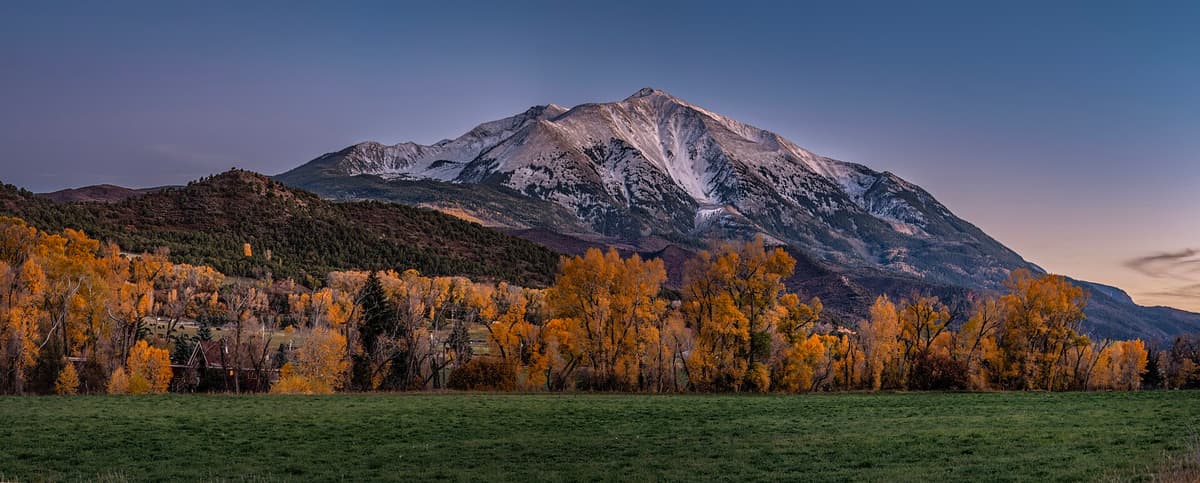
September: Often the most stable weather of the year, with cool mornings, thinning crowds, and the first fall color creeping into the aspen groves along Castle Creek Road. The basin road stays open until snow arrives.
October through May: Snow turns Castle into a serious winter mountaineering objective, and the upper road closes. That's avalanche terrain requiring the right training and gear. If cold-weather hiking is new to you, start with our winter hiking guide for beginners before considering anything at this elevation.
How Hard Is Castle Peak?
Castle Peak is a Class 3 climb, which puts it a step above walk-up 14ers like Handies or the easiest beginner summits. From the upper basin the distance and gain are modest, so the physical demand is manageable for a fit, acclimated hiker. The difficulty is about the terrain, not the mileage.
Two things make it feel serious. First, this is the Elk Mountains, a range infamous for loose, rotten rock, and even though Castle offers some of the most solid stone in the group, you still can't trust every hold or plant every foot without a test. Second, the snowfield in Montezuma Basin adds a mountaineering layer that a peak like Mount Sneffels doesn't, at least early in the year.
That combination is exactly why Castle is the usual recommendation for a first Elk 14er. It gives you real Class 3 scrambling and a taste of Elk Range terrain in a shorter, more forgiving package than Pyramid, the Maroon Bells, or Capitol, which are among the hardest and most dangerous peaks in the state. Climb Castle first, learn how the range moves under your boots, and save the rest for later. For the bigger picture on how Colorado's high peaks are rated, see our Colorado 14ers guide.
Common Mistakes
Forcing the road. The Montezuma Basin road eats vehicles that don't belong on it. Park where your rig is comfortable and walk. A cracked oil pan turns a summit day into a very long rescue.
Skipping the ice axe in early season. People see "Class 3 scramble" and leave the axe behind in June, then meet a firm snowfield they can't climb or descend safely. Match your gear to the current conditions, not the guidebook grade.
Trusting the rock. This is the Elk Mountains. Test holds, avoid climbing directly below other parties, and call out "rock" if you knock anything loose.
Starting late. The short summer mileage from the upper basin lures people into a mid-morning start, then storms catch them on the open ridge. Treat this like any 14er and start at dawn.
Underestimating the descent. Reversing the ridge and the loose slope, or downclimbing snow, is slower and riskier than the way up. Save energy and focus for going down.
Frequently Asked Questions
How hard is it to climb Castle Peak?
Castle Peak is a Class 3 climb, meaning you use your hands to scramble on the upper ridge. From the upper Montezuma Basin parking it's only about 2.5 to 3 miles round trip, so it's short, but loose Elk Range rock and a semi-permanent snowfield make it more serious than a walk-up 14er.
Can you drive to the Castle Peak trailhead?
Only part way for most vehicles. Castle Creek Road is paved to Ashcroft, then dirt continues to around 9,700 feet, where the road roughens into a steep, rocky 4WD route. Only very capable high-clearance 4WD rigs reach the upper basin near 12,800 feet, so most people park lower and walk.
Do you need an ice axe to climb Castle Peak?
It depends on the season. Early summer, the Montezuma Basin snowfield is firm and usually calls for an ice axe and crampons plus self-arrest skills. By late summer the snow shrinks enough that many parties climb it on rock without snow gear. Check recent conditions before you go.
Is Castle Peak a good first Elk Mountains 14er?
Yes, for a fit hiker with some scrambling experience. Castle is the shortest and most solid of the Elk 14ers, which makes it the common choice before harder peaks like Pyramid or the Maroon Bells. Go in with a helmet, Class 3 experience, and respect for loose rock.
How long does it take to climb Castle Peak?
From the upper 4WD parking, most people finish in 4 to 6 hours round trip, including the scramble and breaks. Starting from lower parking around 9,700 feet turns it into a full day of 13 miles or more, which many split by camping in the basin.
Final Thoughts
Castle Peak is the friendly introduction to a famously unfriendly range, and standing on the highest summit in the Elk Mountains is worth every loose step in the basin. The trip hinges on two things: how far up the road you're willing to drive, and the respect you give the rock and the snow. Match your parking to your vehicle, carry the gear the season demands, and start early.
Sleep high to acclimate, watch the weather, and take the descent as seriously as the climb. Do that, and Castle delivers a real Elk Mountains summit without the danger of its neighbors. When you're ready for more, see our Colorado 14ers guide, our roundup of the best hikes near Aspen, and our beginner's guide to Colorado hiking.
Get the Colorado 14er Packing Checklist (free PDF)
Plus a weekly note on the best Colorado trails, gear deals, and seasonal hike picks. No spam, unsubscribe anytime.
We respect your inbox. Unsubscribe anytime.