Conundrum Hot Springs: How to Backpack to Colorado's Highest Soak
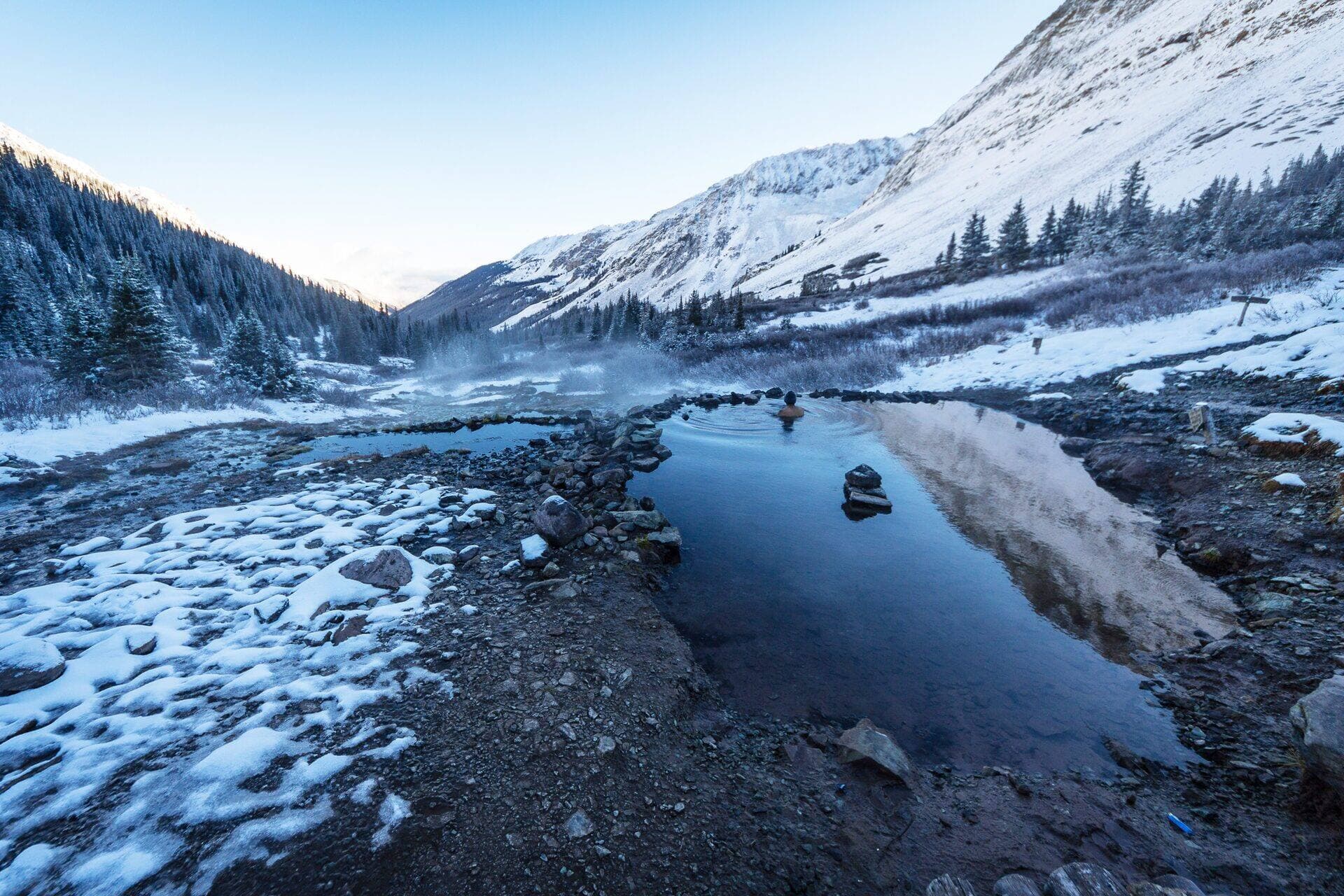
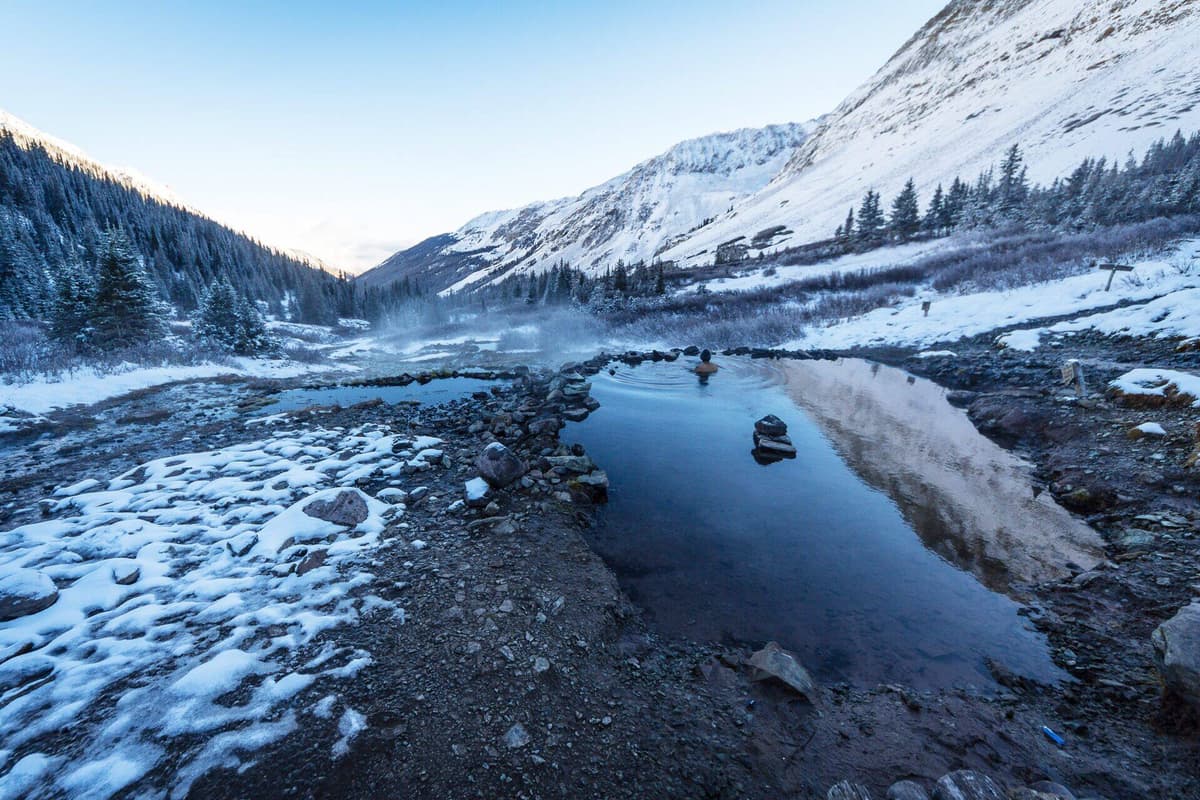
Conundrum Hot Springs is a set of natural rock pools at about 11,200 feet in the Maroon Bells-Snowmass Wilderness, roughly 8.5 miles up the trail from a trailhead south of Aspen. It's the highest hot springs in the country you can soak in, and getting there means a full backpacking trip: no road, no shuttle, no shortcut. You hike in, you camp in one of 20 permitted sites, and you soak in a pool that hovers around 100 degrees while 14,000-foot peaks stand over you. This guide covers the permit you have to win, the hike itself, where you sleep, and the gear that makes the difference between a great trip and a cold, miserable one.
If you take one thing from this page before you go further, make it this: you cannot legally camp at Conundrum without a permit reserved ahead of time on recreation.gov, and those permits sell out fast. The soak is the reward. The permit is the whole game.
What You'll Learn
- Quick facts at a glance
- Where Conundrum Hot Springs is
- How the permit system works
- The hike: Conundrum Creek Trail #1981
- The hot springs themselves
- Camping at the 20 designated sites
- What to pack
- Can you do it as a day hike?
- Best time to go
- Rules that actually get enforced
- Frequently asked questions
Quick facts at a glance
| Detail | Info |
|---|---|
| Location | Conundrum Creek valley, Maroon Bells-Snowmass Wilderness, south of Aspen |
| Trailhead | Conundrum Creek Trailhead, Trail #1981, end of Conundrum Road off Castle Creek Road |
| Distance | 8.5 miles one way, about 17 miles round trip |
| Elevation | Trailhead about 8,800 feet; springs about 11,200 feet; gain about 2,500 feet |
| Water temperature | Largest pool sits around 100 degrees |
| Permit | Required year-round for overnight camping, booked on recreation.gov, about $10 per person per night |
| Campsites | 20 designated, numbered sites, assigned when you reserve |
| Food storage | Bear canister required for all overnight visitors |
| Human waste | Pack it out with WAG bags |
| Dogs | Leashed only, and not allowed past Silver Dollar Pond |
| Best season | July through September |
Where Conundrum Hot Springs is
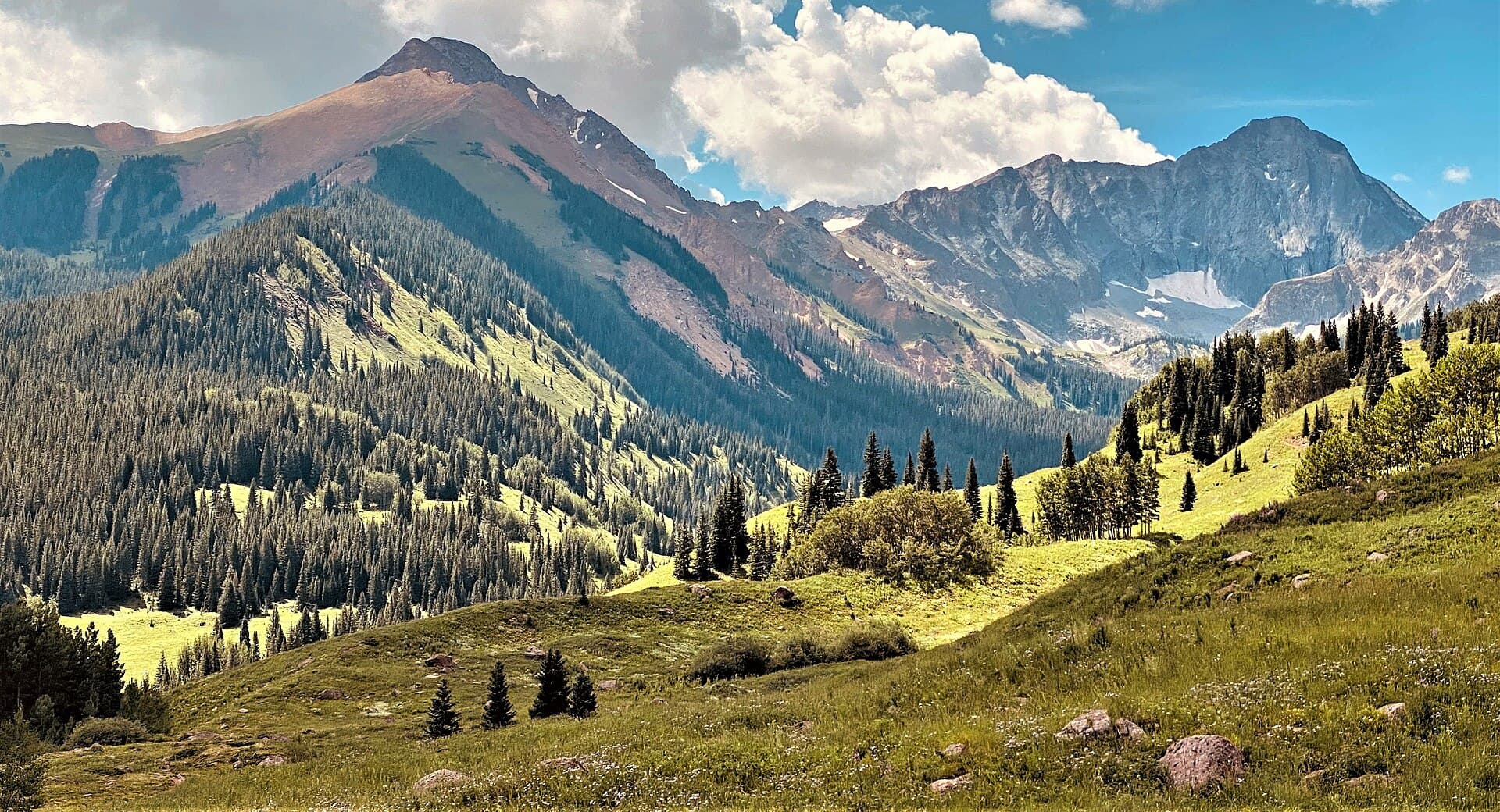
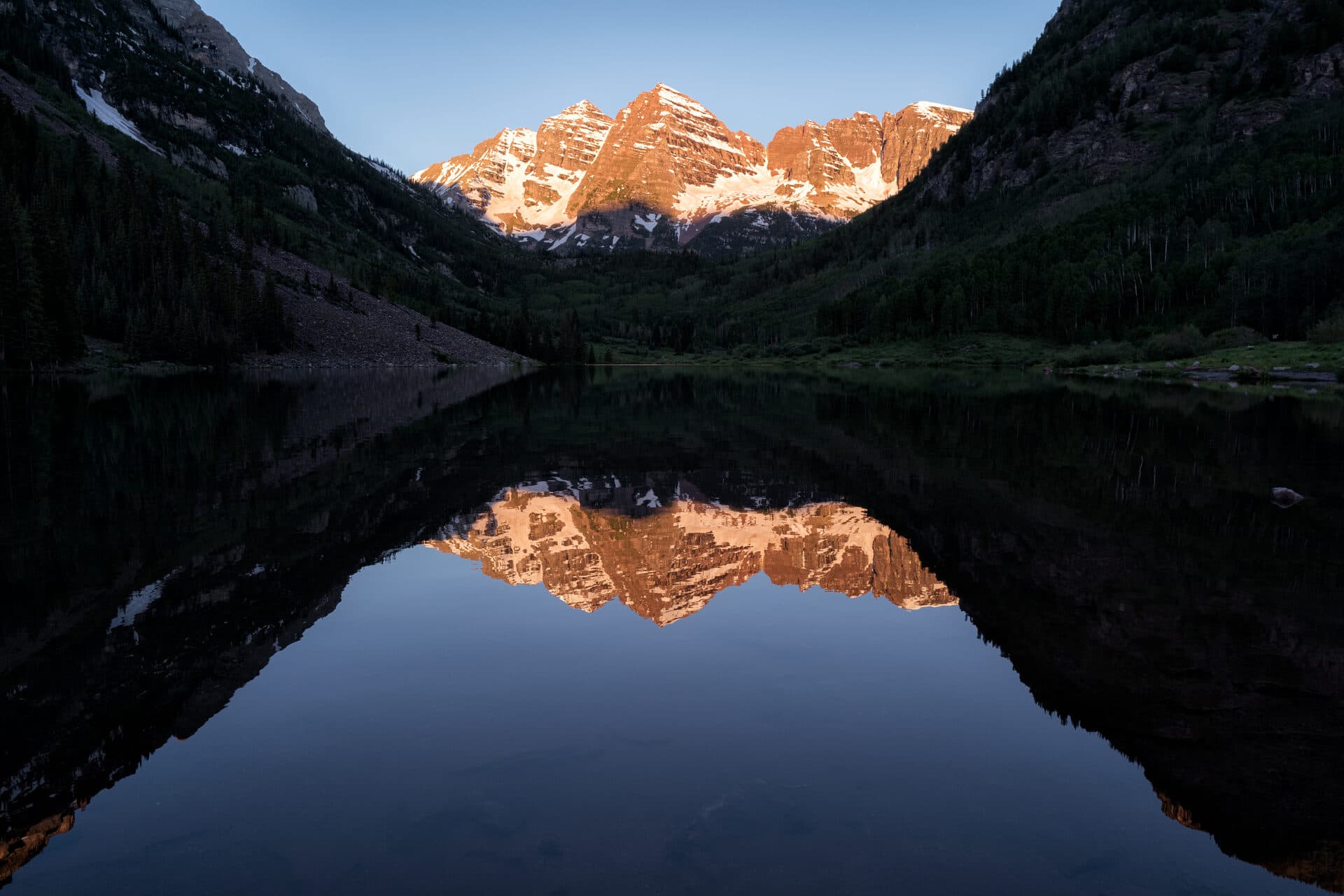
The springs sit deep in the Conundrum Creek valley, part of the Maroon Bells-Snowmass Wilderness in the Elk Mountains southwest of Aspen. This is the same rugged, high country that holds the Maroon Bells and the Four Pass Loop, so if you know that corner of the map, you know the terrain: steep valleys, loose red rock, and peaks that break 14,000 feet. Castle Peak and Conundrum Peak stand at the head of the valley, and both are within reach of a strong hiker willing to leave the springs behind for a summit day.
The trailhead is close to town as the crow flies but feels remote once you start walking. From the Aspen roundabout, you take Castle Creek Road about 5 miles, turn right onto Conundrum Road, and follow it a little over a mile to the parking lot at the Conundrum Creek Trailhead. The lot is not huge, and on a summer weekend it fills, so an early start helps you find parking as much as it helps you beat the afternoon storms.
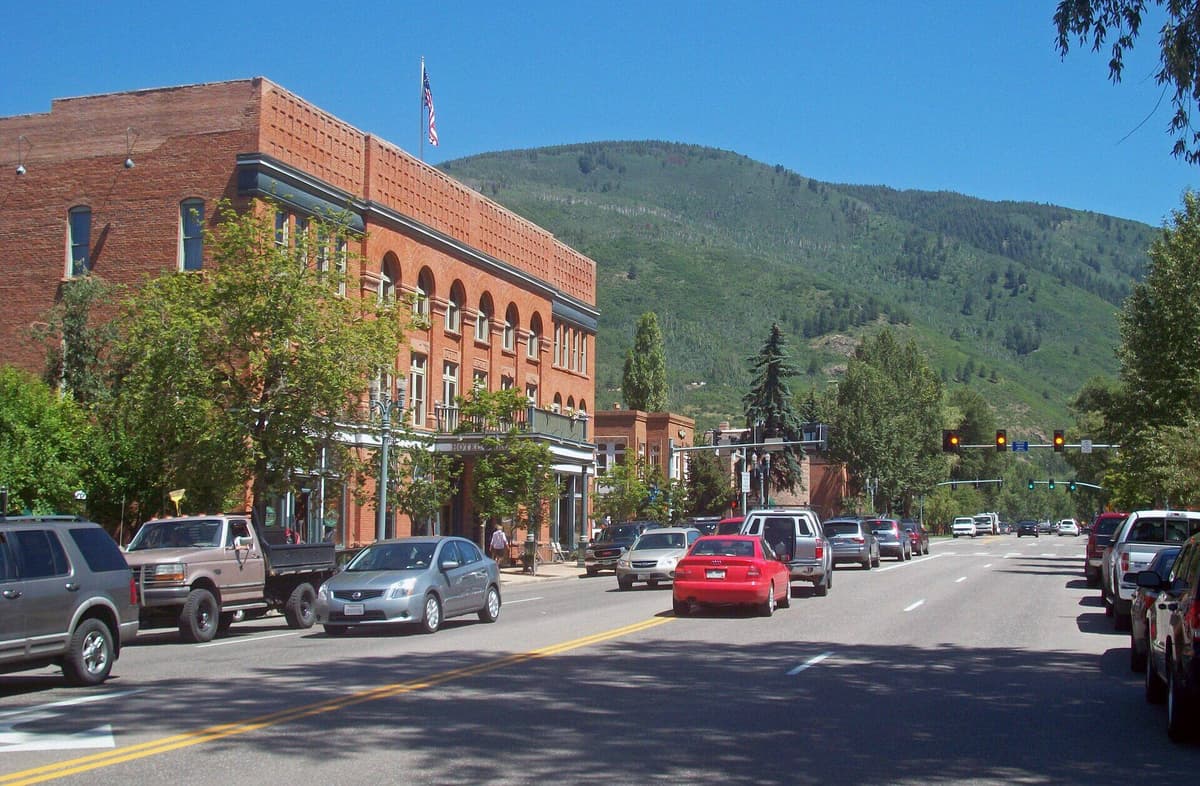
If you're building a longer trip around this one, Aspen makes a good base. Our guide to the best hikes near Aspen and our three-day Aspen hiking itinerary both fit around a Conundrum overnight, and the hikes near Aspen hub rounds out the area.
How the permit system works
The Forest Service put a permit system in place because Conundrum was getting loved to death. Hundreds of people were camping in a fragile alpine basin, and the damage showed. Now every overnight party needs a permit tied to a specific numbered campsite, reserved in advance on recreation.gov. There is no walk-up option for camping at the springs, and rangers patrol the trail in both directions checking permits and food storage.
Permits release in windows. Reservations for the spring and early-summer dates open in mid-February, and the late-summer and fall dates open in mid-June. The exact calendar shifts year to year, so set a reminder and check recreation.gov for the current release dates. When a window opens, popular weekend sites can be gone within minutes, so have your account logged in, your dates picked, and your party size set before the clock hits.
The fee runs around $10 per person per night, though you should confirm the current rate when you book. Each of the 20 sites has its own cap on party size, ranging from 2 to 6 people, and your permit lists the exact site you're allowed to use. You can't swap sites once you arrive, and you can't squeeze extra tents onto a small site. Weekday nights are far easier to score than weekends, so if your schedule is flexible, aim for a Tuesday or Wednesday.
The hike: Conundrum Creek Trail #1981
The trail to the springs is Conundrum Creek Trail #1981, and it's a steady 8.5 miles that gains roughly 2,500 feet. That works out to a grade that rarely feels brutal but never really lets up either. Most of the climb is spread across the miles rather than stacked into a few killer switchbacks, which is a mercy with a full pack on your back.
The lower trail rolls through aspen and evergreen forest and open meadows along Conundrum Creek. You'll pass Silver Dollar Pond partway up, a landmark worth noting because it's the point past which dogs are not allowed. Higher up, the valley opens into alpine terrain, wildflowers in July and early August, and views toward the peaks at the head of the basin.
Two creek crossings are the part to plan for. During spring runoff and after heavy rain, the water can run high and cold enough to be genuinely hazardous, and people have gotten into trouble here. Cross in the morning when flows are lower, unclip your pack's hip belt so you can ditch it if you fall, and consider bringing water shoes so you're not hiking the rest of the way in soaked boots. A set of trekking poles buys you a lot of stability on both the crossings and the long climb.
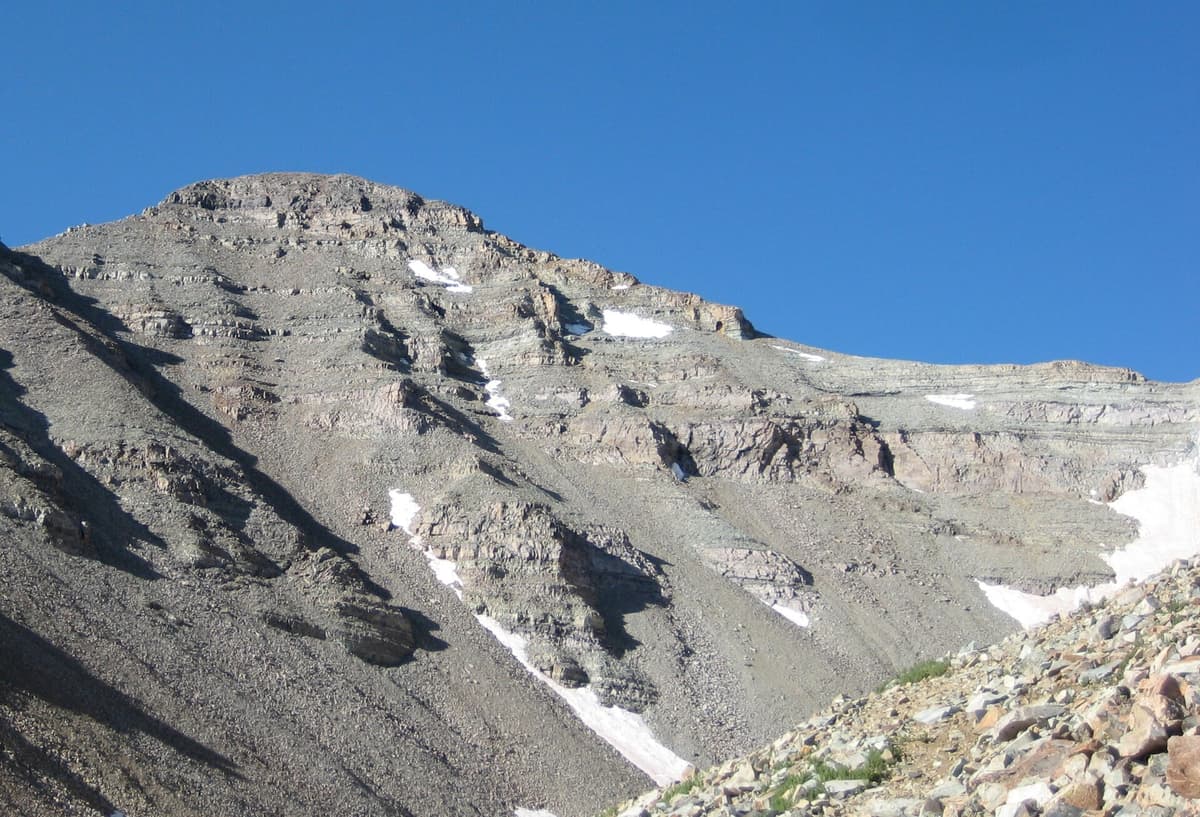
Give yourself real time. Loaded down and climbing to 11,000-plus feet, plan on 4 to 6 hours to reach the springs, more if you're not acclimated. If you're coming from sea level, spend a night in Aspen or Denver first. Thin air at this elevation hits hard, and altitude sickness can turn a dream trip into an early exit. Our guide to preventing and treating altitude sickness is worth reading before you go.
The hot springs themselves
The payoff is a cluster of rock-lined pools fed by geothermal water, sitting right around treeline with peaks on nearly every side. The largest pool holds close to 100 degrees, warm enough for a long soak but cooler than a developed hot springs resort, which is part of the appeal. After a full day under a pack, easing into that water with alpenglow on the summits is the kind of thing people plan a whole summer around.
A few things to know about the culture up here. Conundrum has a long-standing clothing-optional tradition, and many soakers go without. Nobody's required to, and plenty of people wear a suit, so bring one if you'd rather. Either way, the etiquette is simple: be relaxed about it and don't gawk. The pools are shared, they can get crowded on peak weekends, and the whole scene works because people are easygoing.
Keep everything out of the water that doesn't belong there. No soap, no shampoo, no sunscreen rinsing off into the pool, and pack out every scrap of trash. This basin only stays good if the people who love it treat it right, which is the same reason the permit system exists.
Camping at the 20 designated sites
There are 20 numbered campsites in the Conundrum area, and your permit assigns you one. The low-numbered sites sit closest to the pools, and site 20 is the farthest out. Closer sounds better until you realize the near sites are also the busiest and least private, so there's a real trade-off. Wherever you land, you camp only at your assigned site, full stop.
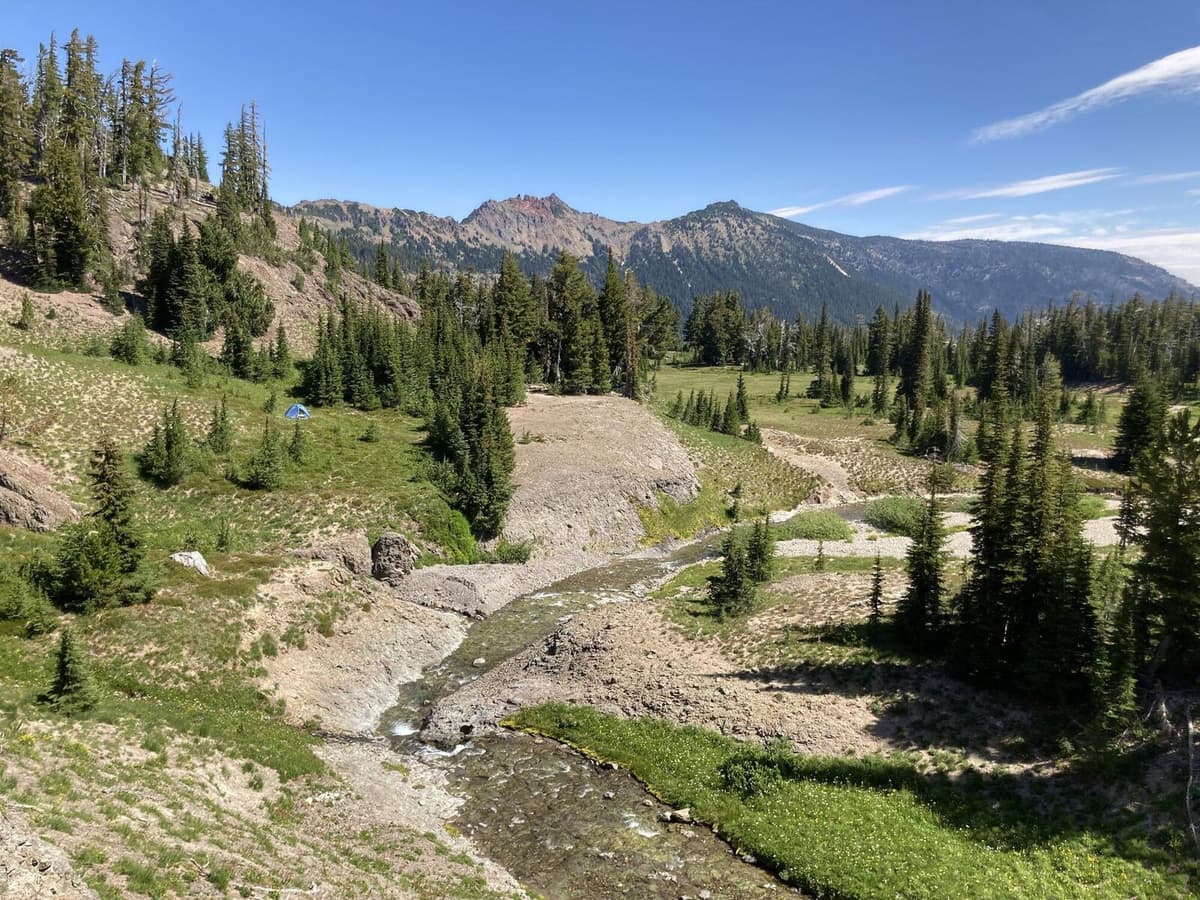
Because you're above or near treeline, plan for cold nights even in July. Temperatures can drop into the 30s after dark, and an early or late trip can bring frost or snow. A quality backpacking tent that can handle wind, a 20-degree sleeping bag, and an insulated sleeping pad are what keep you comfortable up here. A summer-weight setup that's fine at lower elevation will leave you shivering.
Campfires are not allowed at the Conundrum camping zone. You cook on a stove, period, so pack a reliable backpacking stove and fuel. For food, dehydrated backpacking meals keep the weight down, and everything scented goes into your bear canister at night.
What to pack
The list here isn't longer than a normal backpacking trip, but two items are non-negotiable and easy to overlook.
First, a bear canister. It's required for every overnight visitor, rangers check for it, and it protects both you and the bears that live in this valley. If you don't own one, our roundup of the best bear canisters for Colorado covers models the Forest Service accepts. Don't count on a bear bag or a stuff sack; the rule is a hard-sided canister.
Second, WAG bags for your waste. There are no toilets at the springs, and you're required to pack out human waste in the Conundrum valley. The trailhead usually stocks free WAG bags, but bring your own as a backup so you're never caught short.
Beyond those two, the usual backpacking kit applies. Treat your water from the creek with a backpacking water filter. Bring warm layers and a packable down jacket for camp, rain protection for the daily afternoon storms, and a headlamp for the walk to the pools after dark. If you're newer to loading a pack this heavy, our guide on how to pack a backpacking backpack and the notes on what to wear hiking at altitude will save you some rookie mistakes.
Can you do it as a day hike?
Technically, yes. Fit, well-conditioned hikers do the roughly 17-mile round trip in a single push, and no permit is required if you don't camp. But it's a long, high day, and you'll be rushed. By the time you climb 8.5 miles to the pools, you've got maybe a short soak before you have to turn around and hike out, often racing the afternoon storms that build over the Elks nearly every summer day.
The overnight is the better trip by a wide margin. You reach camp with time to relax, soak in the evening when the crowds thin, catch the stars at 11,000 feet, and soak again in the quiet of early morning before the day hikers arrive. If you can win a permit, take the overnight. If you can't get one and you're strong enough for the mileage, a day hike is your fallback, not your first choice.
Best time to go
The season runs July through September, and that's not a suggestion. From roughly early October to late June, the trail and campsites are buried in snow, and the valley carries real avalanche danger. Winter trips do happen, but only for experienced backcountry travelers with avalanche training and gear, and this guide is not written for that.
Within the summer window, July brings peak wildflowers and higher creek crossings from lingering snowmelt. August is warm and settled but also the busiest and the hardest for permits. September cools off, thins the crowds, and can deliver the first gold on the aspens lower in the valley, which makes it a favorite for a lot of regulars. Afternoon thunderstorms are a near-daily feature all summer, so plan to be at camp or below treeline by early afternoon.
Rules that actually get enforced
Conundrum has more active enforcement than most Colorado backcountry, because it has to. Here's what rangers check and what will actually get you turned around or ticketed:
- Overnight permit for your specific site. No permit, no camping, and they do check.
- Bear canister. Required, inspected, and non-negotiable for overnight visitors.
- Camp only at your assigned numbered site. No wildcat camping, no crowding an extra tent in.
- Pack out human waste with WAG bags.
- No campfires in the camping zone.
- Dogs leashed and no farther than Silver Dollar Pond. Leave the dog home if you're going to the springs.
- Group size caps. Ten people maximum per party, plus the smaller per-site limits.
None of this is meant to make the trip harder for its own sake. It's what keeps a fragile, wildly popular basin from being wrecked. Follow it and you're part of the reason the place is still worth the walk.
Frequently asked questions
Do you need a permit for Conundrum Hot Springs?
You need a permit to camp overnight, reserved in advance on recreation.gov for a specific numbered site, at about $10 per person per night. Day hiking to the springs does not require a permit, but you can't legally camp without one, and rangers check.
How long is the hike to Conundrum Hot Springs?
It's 8.5 miles one way, about 17 miles round trip, with roughly 2,500 feet of elevation gain. Most people with a full pack take 4 to 6 hours to reach the springs, depending on fitness and acclimation.
How hot is the water at Conundrum Hot Springs?
The largest pool sits around 100 degrees, warm enough for a long soak but cooler than a developed resort pool. The temperature drifts a little depending on flow and how many people are stirring the water.
Can you drive to Conundrum Hot Springs?
No. There's no road to the springs. The closest you can drive is the Conundrum Creek Trailhead off Castle Creek Road south of Aspen, and from there it's an 8.5-mile hike each way.
When can you visit Conundrum Hot Springs?
July through September is the reliable window. From about October to late June, the trail and campsites are snow-covered with avalanche danger, and only experienced winter backpackers should attempt it.
Plan the trip
Conundrum rewards the people who plan ahead: the permit reserved the day the window opens, the bear canister packed, the crossings timed for morning. Get those right and you earn one of the best nights Colorado's backcountry offers, a soak at 11,200 feet under the Elk Mountains. If Conundrum whets your appetite for the range, the Maroon Bells guide covers the next valley over, and our roundup of the best hot springs in Colorado has soaks that don't ask for a 17-mile round trip.
Get the Colorado 14er Packing Checklist (free PDF)
Plus a weekly note on the best Colorado trails, gear deals, and seasonal hike picks. No spam, unsubscribe anytime.
We respect your inbox. Unsubscribe anytime.