Aspen vs Vail for Hiking: Which Colorado Mountain Town Wins?
Aspen and Vail are Colorado's two most famous mountain towns, both at the heart of world-class summer hiking. They occupy similar tax brackets but offer dramatically different hiking experiences. If you're choosing between them for a hiking-focused trip, the answer depends on what kind of hiker you are and what you actually want from your trip.
This is the honest comparison based on real time spent in both areas across multiple summers.
TL;DR
- Choose Aspen if you want iconic destinations (Maroon Bells, Conundrum Hot Springs, 14ers), can plan ahead for permits, and don't mind paying premium for in-town lodging.
- Choose Vail if you want easier hiking access (no permit hassle), more affordable lodging at the family-resort end, and a broader trail network for mixed-ability groups.
At a Glance
| Spec | Aspen | Vail |
|---|---|---|
| Town elevation | 7,908 ft | 8,150 ft |
| Iconic destination | Maroon Bells | Mount of the Holy Cross |
| Highest local 14ers | Pyramid, Capitol, Maroon | Mount of the Holy Cross |
| Permit-required trails | Maroon Bells, Conundrum | None |
| Town size | 7,000 residents (intimate) | 5,500 residents (sprawled) |
| Lodging price (peak summer) | $$$ ($400-1,000+/night) | $$-$$$ ($250-800/night) |
| Restaurant density | Very high in town | Spread across Lionshead + Village |
| Gondola summer access | Aspen Mountain (Silver Queen) | Eagle Bahn (Lionshead) |
| Airport access | ASE (small, weather-prone) | EGE (1 hour from Vail) |
Where Aspen Wins
Iconic destinations
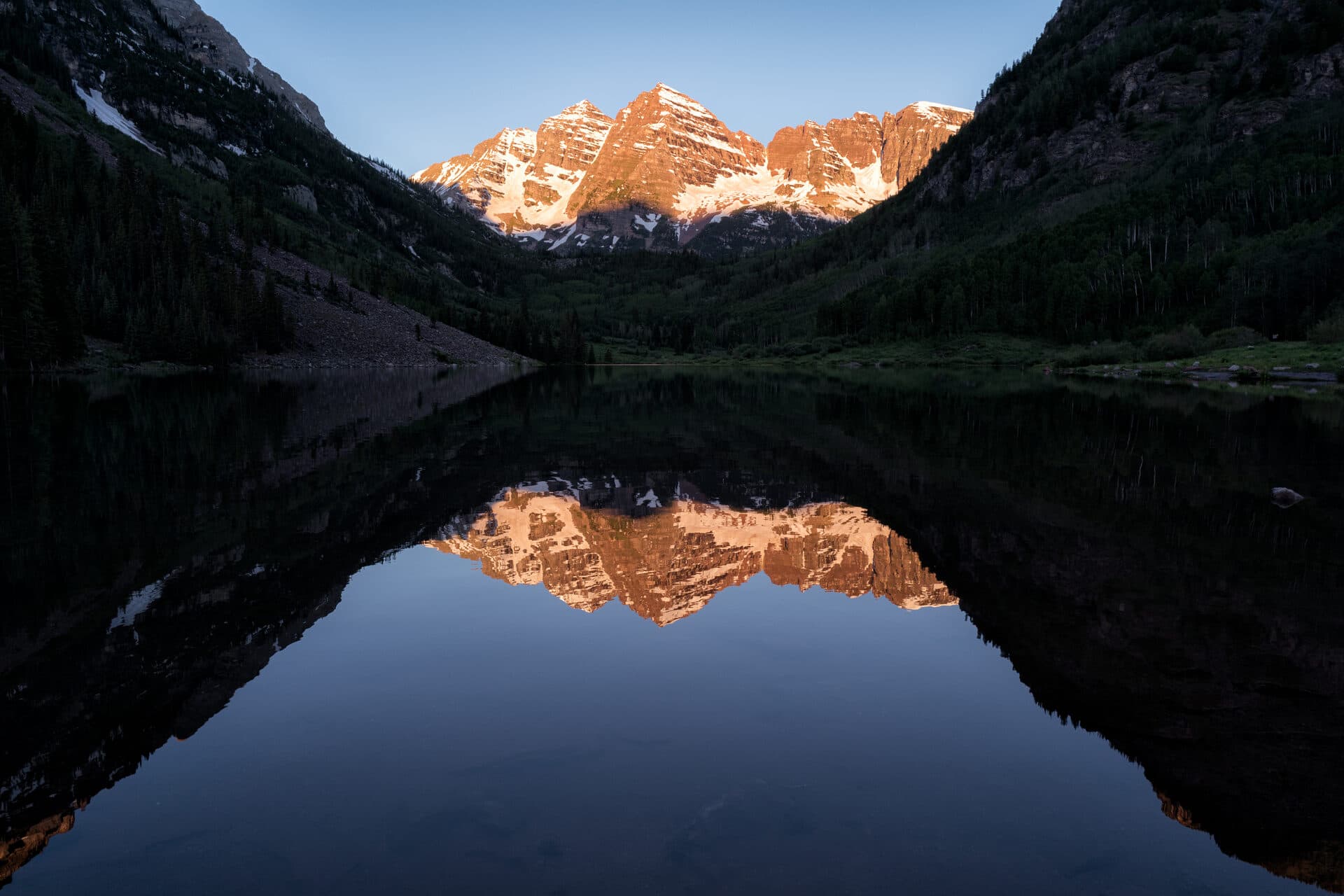
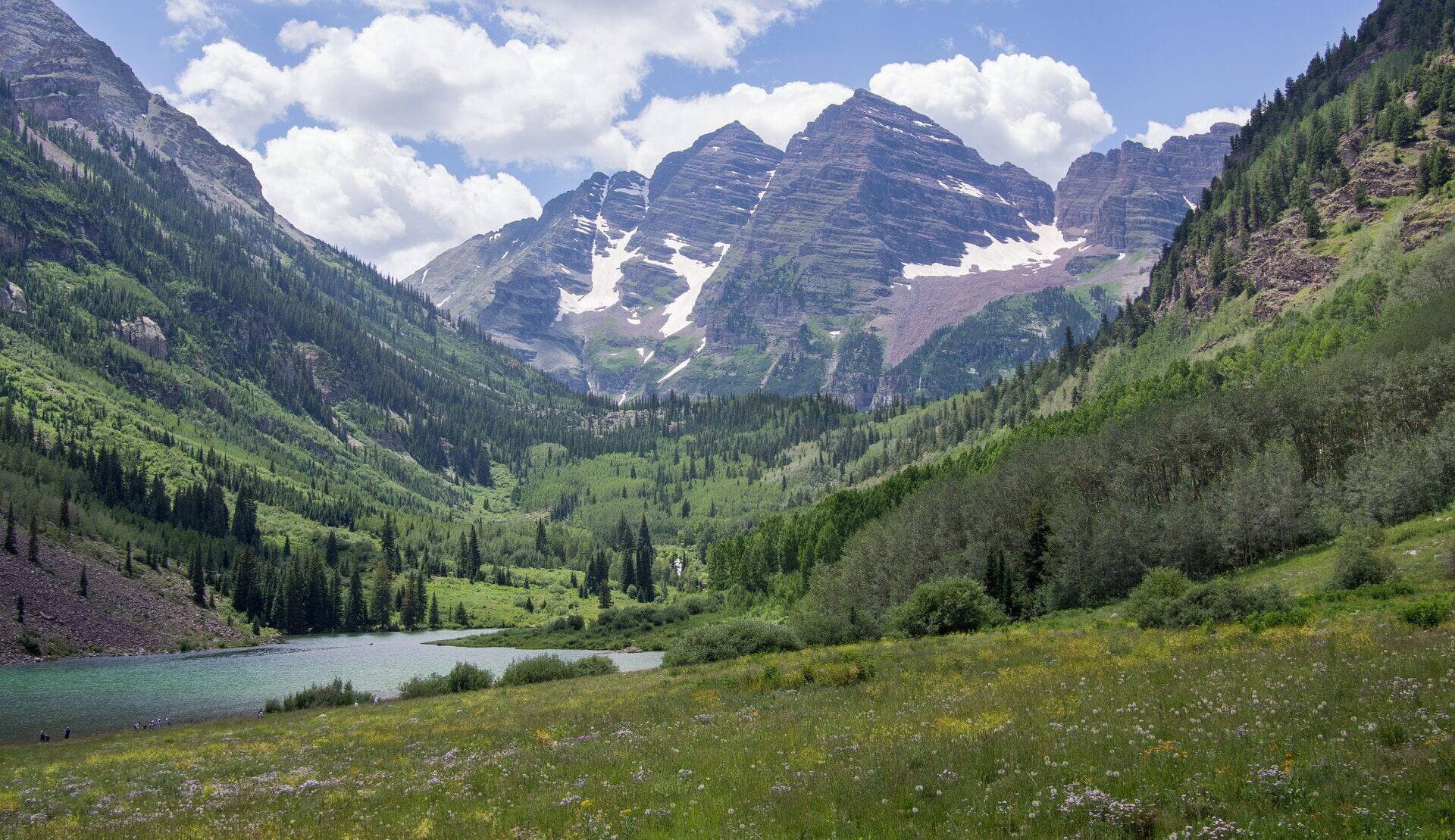
Aspen has more "bucket list" hikes per square mile than anywhere in Colorado. The Maroon Bells are the most photographed mountains in North America. Conundrum Hot Springs are the highest hot springs in the country. The Four Pass Loop is Colorado's iconic 25-mile backpack. Cathedral Lake is a local favorite that competes with anywhere in the state.
If your goal is "see the famous Colorado mountain scenes," Aspen has more of them in a smaller geographic footprint. The Maroon Bells alone justify the trip for first-time visitors.
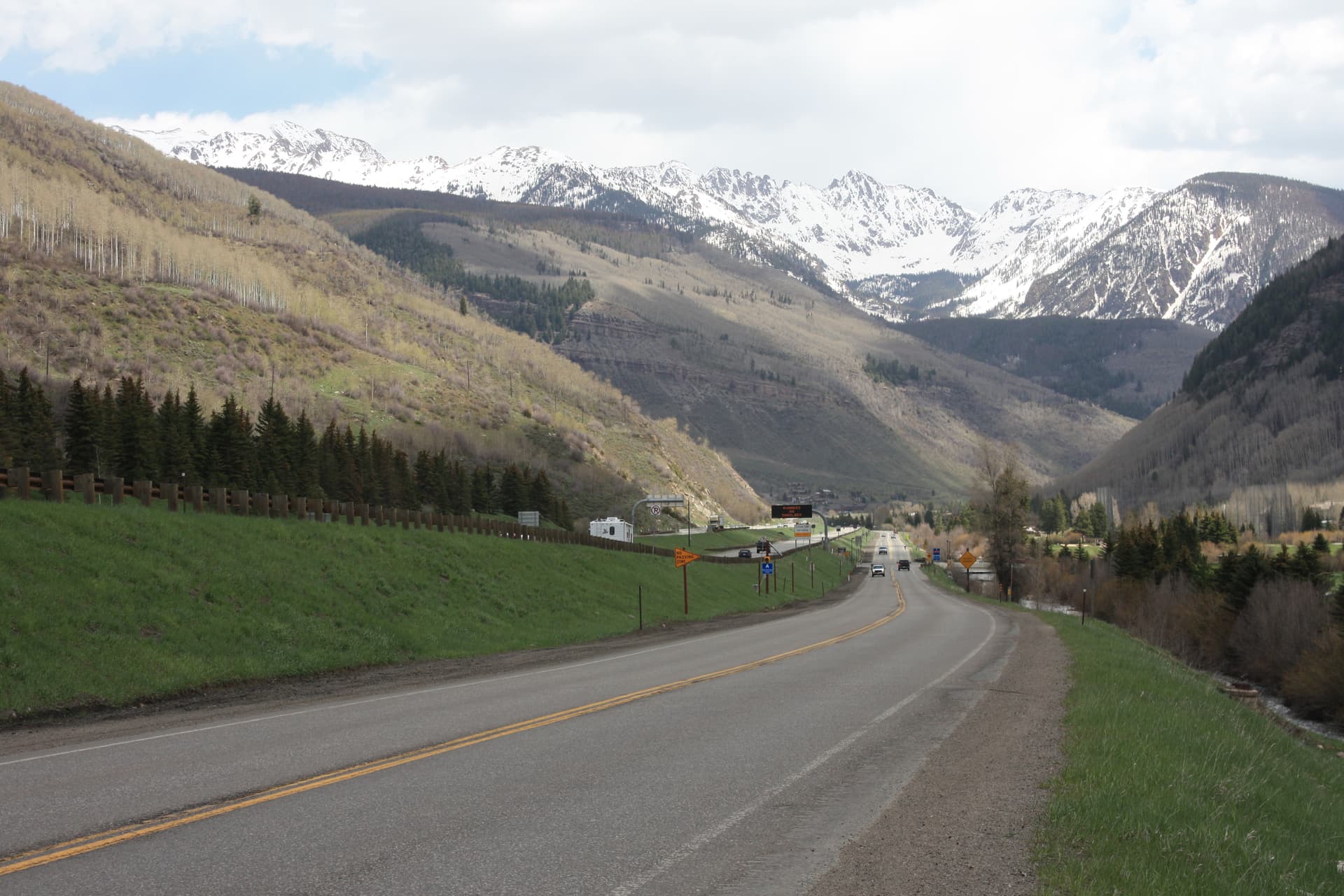
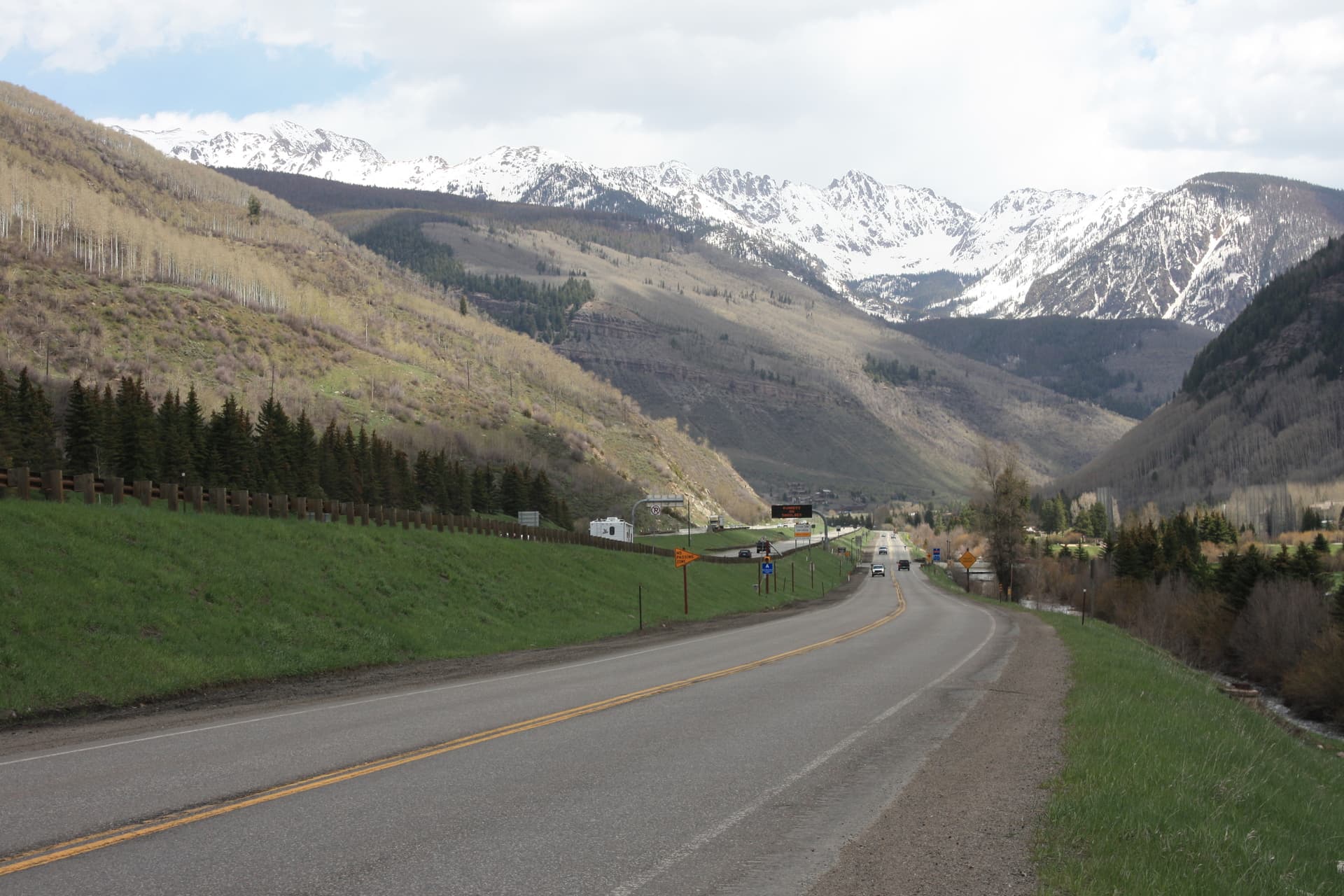
Vail's iconic destination. Mount of the Holy Cross. Is a long, hard 12-mile round trip from a remote trailhead. Bridal Veil Falls in Telluride is more dramatic than anything in Vail. The Gore Range scenery is excellent but not iconic in the way Aspen's is.
Advantage: Aspen, by a wide margin for iconic photography destinations.
14er access
Aspen has six 14ers within driving distance: the Maroon Bells (Maroon Peak, North Maroon Peak), Pyramid Peak, Castle Peak, Capitol Peak, and Snowmass Mountain. All are technical or near-technical climbs, but they're all real 14ers within an hour of town.
Vail's only nearby 14er is Mount of the Holy Cross, and it's a long approach. The Sawatch 14ers (Mt. Massive, Mt. Elbert, Mt. Harvard) are 1.5-2 hours south.
Advantage: Aspen, for 14er-focused trips.
Town walkability
Aspen's downtown is compact, walkable, and dense. You can walk from your hotel to dinner to a trailhead in 20 minutes. Hunter Creek Trail starts in town. The Aspen Mountain gondola (Silver Queen) launches from downtown.
Vail Village and Lionshead are walkable internally, but they're separate developments that require a shuttle bus or 15-minute walk between them. The trail access requires driving in most cases.
Advantage: Aspen, especially for travelers without a rental car.
Restaurant culture
Aspen has a denser, more diverse restaurant scene. From cheap eats (Big Wrap, Brown Dog Pizza) to fine dining (Element 47, Steakhouse No. 316), the options are concentrated and walkable. Reservations are necessary for dinner Friday-Saturday.
Vail's restaurants are spread across Lionshead, Vail Village, and the adjacent towns. The Lionshead restaurants tilt family-resort casual; Vail Village has more upscale options. Neither matches Aspen's density.
Advantage: Aspen, especially for food-focused travelers.
Where Vail Wins
Easier hiking access (no permits)
Vail has zero permit-required trails. The Booth Falls, Pitkin Lake, Gore Creek, and Upper Piney trails all use unrestricted USFS trailheads. Show up, hike, leave.
Aspen has multiple permit headaches: Maroon Bells requires a shuttle or parking reservation through visitmaroonbells.com (book 2-4 weeks ahead), Conundrum Hot Springs requires overnight permits (book 3-4 weeks ahead). For spontaneous summer trips, the permit system is a real friction.
Advantage: Vail, decisively for visitors who haven't planned far ahead.
Trail variety for mixed-ability groups
Vail's trail network better serves groups with mixed fitness levels. From paved riverside walks (the Gore Creek Trail) to easy lake hikes (Booth Falls section) to backcountry classics (Upper Piney, Gore Creek to Red Buffalo Pass), there's something for everyone.
Aspen's trail menu skews harder. Maroon Bells and Cathedral Lake have wide accessibility ranges, but Conundrum, the Four Pass Loop, and the 14ers are all serious efforts.
Advantage: Vail, for groups including non-hikers or kids.
Family-resort lodging
Vail Village is built around family resorts. The Sonnenalp, Manor Vail Lodge, and the Lionshead Westin all run family-friendly summer packages. Pool access, kid programming, casual restaurants, all designed for the families that drive Vail's winter business in summer.
Aspen has a smaller selection of family-resort lodging. The Hotel Jerome and Limelight Hotel are upscale-adult; the budget options trickle into Snowmass Village or Basalt.
Advantage: Vail, for family travel.
Airport access
Eagle County Airport (EGE) is 35 minutes from Vail with direct flights to Denver, Houston, Atlanta, Newark, Chicago, Phoenix, and Dallas. It's the best mountain airport in Colorado.
Aspen-Pitkin County Airport (ASE) is small, frequently weather-delayed, and only flies to Denver and a few other connections. Most Aspen visitors fly to Denver and drive 3.5 hours.
Advantage: Vail, by a wide margin for fly-in visitors.
Cost
Vail is expensive but Aspen is more expensive. Peak summer hotel rates in Vail Village run $250-800/night; in Aspen they run $400-1,200/night. Restaurants are similarly priced (high), but Vail has more options in the $20-30 entree range than Aspen does.
Advantage: Vail, for budget-conscious travelers.
Where They're Tied
Weather
Identical Colorado mountain weather: cool nights (40-50°F overnight in summer), warm sunny days, reliable afternoon thunderstorms July-September. Both towns sit at similar elevation, so weather patterns are nearly the same.
Altitude
8,000-foot starting elevation in both. Visitors from sea level should plan to sleep at altitude for a night before any high-alpine trail. The altitude challenge is the same in both.
Fall colors
Both towns have spectacular aspen color in late September. Aspen's around Maroon Lake is more photographed; Vail's along Vail Pass and Independence Pass is equivalent quality. Pick either and plan a September trip.
Mountain bike scene
Both towns have major mountain bike scenes that share trails with hikers. Vail's network is bigger; Aspen's tilts steeper. Mountain bikers will be fine either place; hikers should expect to share trails.
Direct Use-Case Test
First-time Colorado visit, want the iconic photos. → Aspen for Maroon Bells.
Family trip with mixed-ability hikers. → Vail for easier access + family-resort lodging.
Bucket-list 14er trip. → Aspen for the Maroon Bells / Pyramid / Capitol cluster.
Spontaneous decision, booking in the last 2 weeks. → Vail to avoid Aspen's permit system.
Food-focused trip with hiking on the side. → Aspen for restaurant density.
Coming from the East Coast / direct flight focus. → Vail for EGE airport access.
Want to see fall colors. → Either. Both peak around the third week of September.
Backpacking-focused trip. → Aspen for the Four Pass Loop and Conundrum Creek Trail.
Compromise option: Do both
If you have a week or more, you can do both. Aspen and Vail are 2 hours apart via I-70 + Highway 82. Spend 3 days in each:
- Days 1-3: Aspen for Maroon Bells, Cathedral Lake, Conundrum (if you got permits)
- Days 4-7: Vail for Booth Falls, Mount of the Holy Cross (if you're fit), Upper Piney, Gore Creek
For the full Colorado tour, see our 7-day Colorado hiking road trip itinerary.
Final Verdict
Pick Aspen if iconic destinations and 14ers matter more than convenience. The permit system is a real headache and the prices are high, but the trails are unmatched.
Pick Vail if ease, flexibility, and budget matter. The trails are excellent but less famous, and you can show up tomorrow morning without weeks of advance planning.
For most first-time visitors, Aspen for the trip, Vail for an easier follow-up visit is the right framing. The Maroon Bells justify the Aspen trip. Vail is a more sustainable choice for repeat hiking trips.
See specific trail picks at our hikes near Aspen guide and hikes near Vail guide.
Get the Colorado 14er Packing Checklist (free PDF)
Plus a weekly note on the best Colorado trails, gear deals, and seasonal hike picks. No spam, unsubscribe anytime.
We respect your inbox. Unsubscribe anytime.