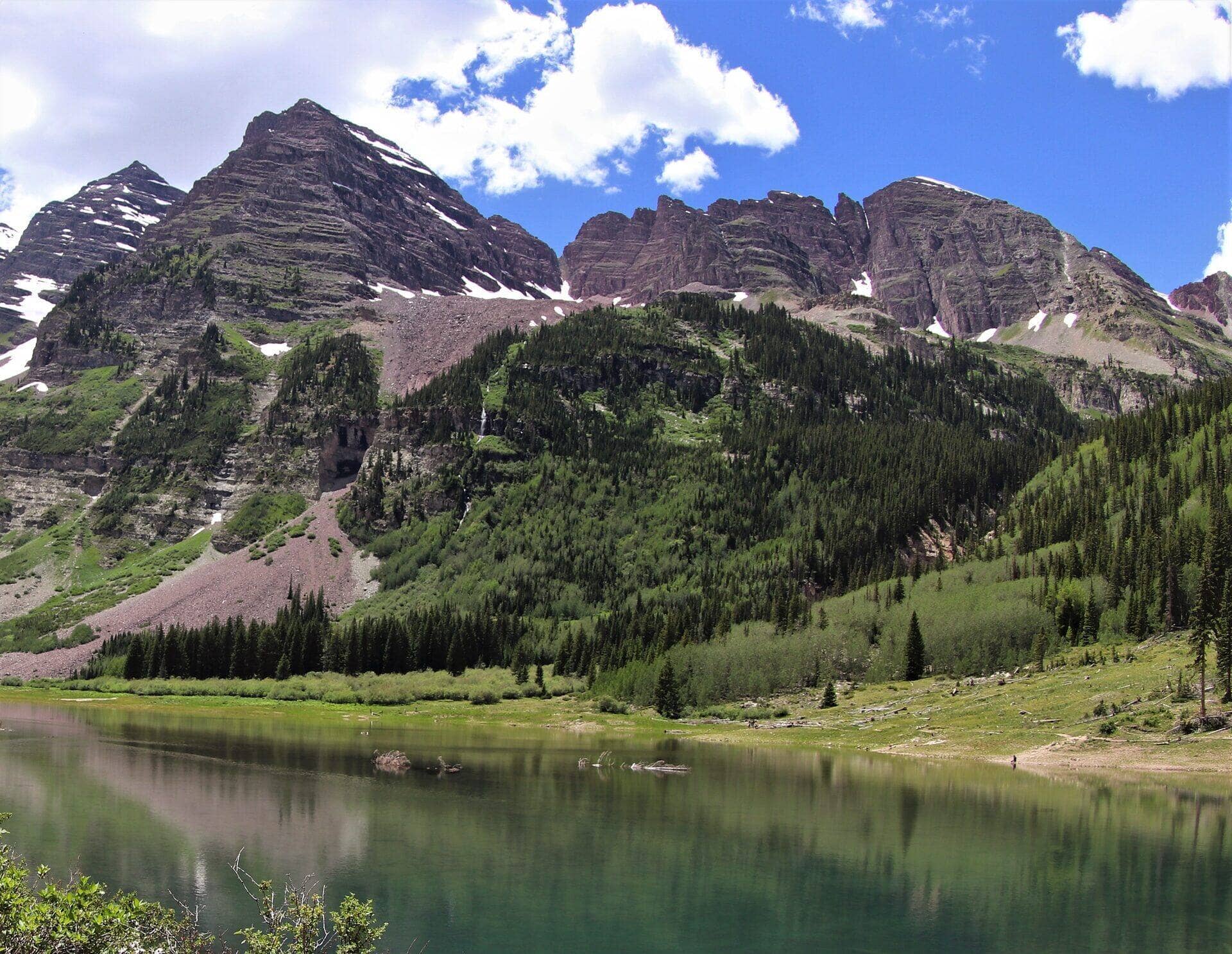
Maroon Peak is the taller of the Maroon Bells, the most photographed mountains in Colorado and among the most dangerous to climb. The rock is mudstone that breaks in your hands, the standard South Ridge route is Class 3 and 4 for its upper half, and the route-finding through gullies and chimneys has led dozens of climbers onto terrain they could not reverse. The mountains earned the name Deadly Bells.
Standard Route
From Maroon Lake at 9,580 feet, hike 1.8 miles to Crater Lake, then continue about 1.5 miles on the West Maroon trail up the valley. Leave the trail and climb a brutal 2,800-foot slope of grass and dirt to the south ridge at about 13,300 feet. From there the route drops onto the west side of the ridge and works north through a sequence of gullies, ledges, and short chimneys, Class 3 with several Class 4 steps, marked by cairns, to the summit at 14,163 feet. Total: about 11.5 miles round trip, 4,800 feet of gain. Plan on 12 to 14 hours from Maroon Lake.
What to Expect
The grass slope is the physical crux and the ridge traverse is the technical one; the rock quality never improves. Every hold needs testing, and parties above you send stones down every gully. Route-finding is the killer: climbers who descend the wrong gully get cliffed out, and rescues and fatalities here are annual. A GPS track from a reliable source and a party that has done Class 4 before are the minimum. Hiring a guide for a first attempt is a reasonable choice, not an admission.
Access & Logistics
From mid-May through October, Maroon Creek Road above the T-Lazy-7 Ranch is closed to most private vehicles during the day. Climbers reserve either a shuttle seat from Aspen Highlands or a parking permit that allows driving in before 8 AM; both are booked at visitmaroonbells.com and sell out. Outside those months the road is open until snow closes it. Day use needs no permit beyond the reservation; camping at Crater Lake requires an overnight permit from Recreation.gov.
When to Climb
Late July through mid-September, once the gullies on the ridge are free of snow and the rock is dry. Wet mudstone is a different substance, and rain turns the descent into a survival exercise. The Elk Mountains get afternoon storms nearly every day in July and August; parties leave Crater Lake by 3 or 4 AM to be off the ridge by early afternoon.
Camping, Permits, and Nearby
Camp at Crater Lake, designated sites only, permit required, no fires, to shorten the summit day. Aspen, 30 minutes from the shuttle, has every service. North Maroon, across the saddle, is the same rock and the same warnings, and the traverse between the Bells is Class 5. Read the Maroon Bells visitor guide on this site for the shuttle and reservation details before you plan the climb.
Gear Notes
Helmet, sticky-soled boots, a GPS track, a headlamp with fresh batteries for the alpine start, and a 30-meter rope with slings if anyone wants protection on the Class 4 steps. Three liters of water; the last reliable source is below the grass slope.
Related Reading
Planning a Maroon Peak climb? Get the prep checklist.
Free PDF — pre-climb fitness, gear, weather decision tree. Plus weekly Colorado trail picks.
We respect your inbox. Unsubscribe anytime.