Dispersed Camping in Colorado: Free Sites, Rules, and Where to Go (2026)
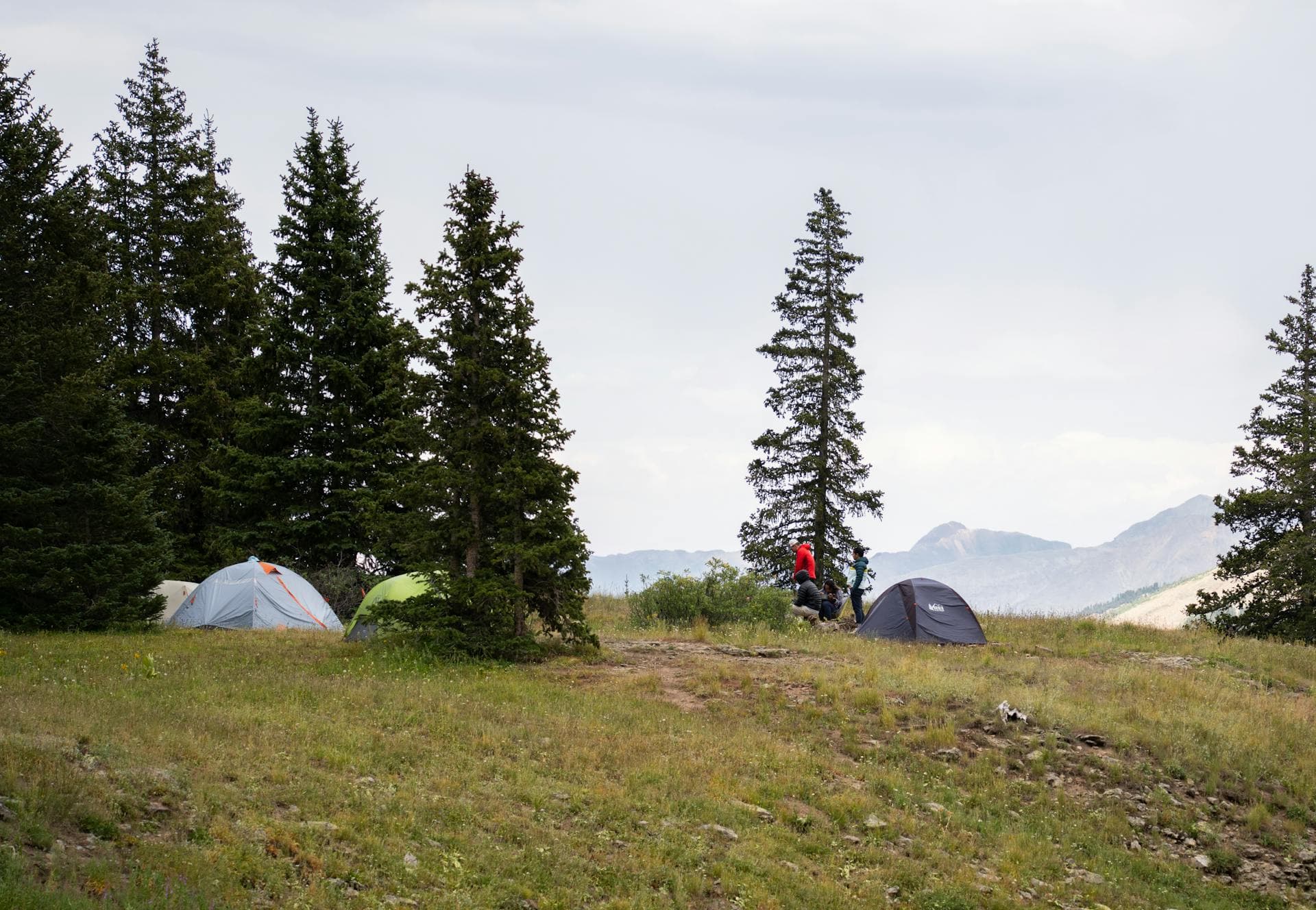
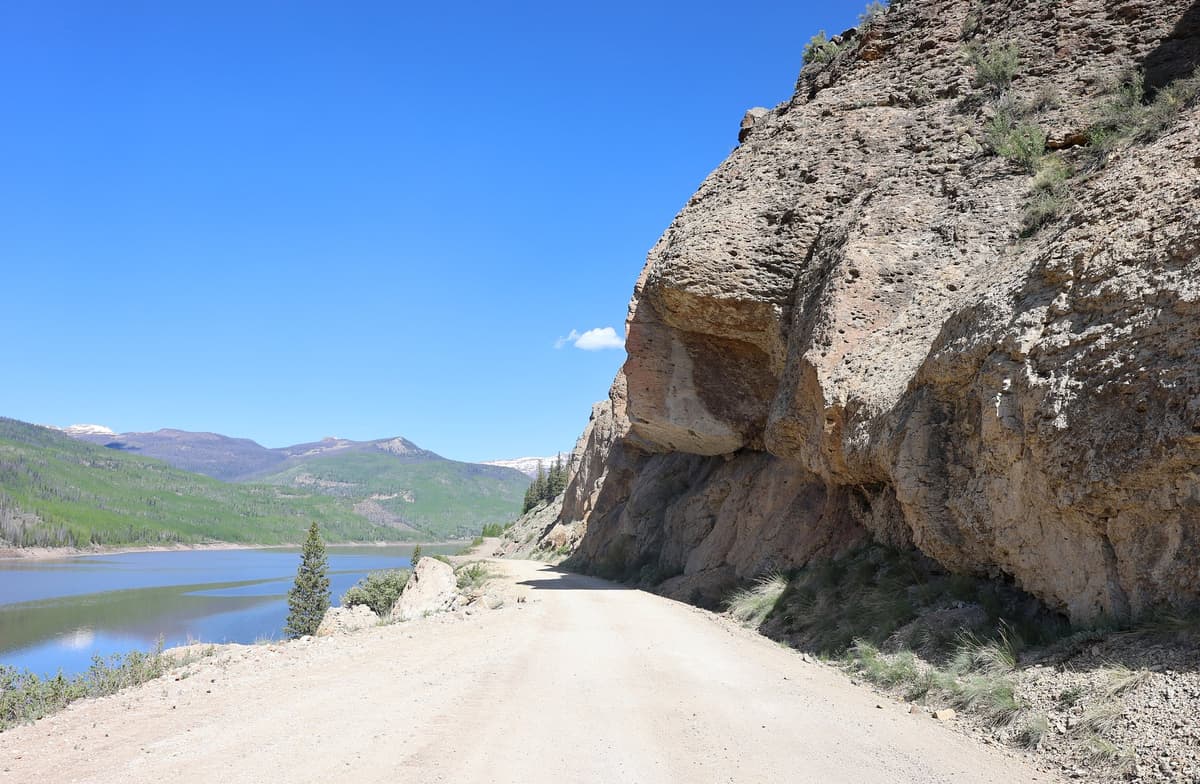
Dispersed camping in Colorado is free, requires no reservation, and is legal on most of the state's 14 million acres of national forest. You drive a forest service road, find a pull-off that somebody has already camped on, and pitch a tent or park the van. No fee, no host, no bathroom, no water. The trade is that you handle everything yourself and follow rules that most people never bother to read.
Those rules are the part that trips people up. Every one of Colorado's national forests writes its own camping order, so the answer to "how far off the road can I park?" changes depending on which side of a county line you're on. This guide covers what dispersed camping actually is, the rules that apply statewide, the ones that vary by forest, how to find a legal site before you're driving a two-track at dusk, and eight areas that are still worth going to.
If you're heading out this weekend, three things separate a good night from a miserable one: a freestanding tent that pitches on hard packed dirt without stakes biting, a 7-gallon water jug since there's no spigot, and a portable camp toilet or at minimum a trowel and wag bags.
What You'll Learn
- What Dispersed Camping Actually Means
- Is Dispersed Camping Free in Colorado?
- The Dispersed Camping Rules in Colorado
- How to Find a Legal Dispersed Site
- 8 Areas for Dispersed Camping in Colorado
- What Vehicle Do You Need?
- Fire Restrictions Change Everything
- What to Pack
- Where You Can't Dispersed Camp
- Frequently Asked Questions
What Dispersed Camping Actually Means
Dispersed camping is camping outside a developed campground on public land. In Colorado that mostly means U.S. Forest Service land across the 11 national forests, plus Bureau of Land Management ground in the western and southern parts of the state.
You'll also hear it called boondocking, primitive camping, or just free camping. Same thing. What you get is a flat spot, usually with a rock fire ring somebody built years ago, and whatever view came with it. What you don't get: picnic tables, trash pickup, potable water, vault toilets, a camp host, or any guarantee the spot will be open when you arrive.
The appeal isn't just that it's free. Developed campgrounds in Colorado book out months ahead through recreation.gov, and the good ones near Rocky Mountain National Park or the Maroon Bells go instantly. Dispersed camping is the version of a Colorado trip you can still decide on Thursday night.
Is Dispersed Camping Free in Colorado?
Almost always, yes. Standard dispersed camping on Forest Service and BLM land carries no fee and no reservation.
There are a handful of exceptions worth knowing before you count on free. Some heavily used corridors have been converted to designated dispersed sites, where you can still camp for free but only in numbered spots. A few areas now sell a cheap permit: overnight camping around Rainbow Lakes in the Indian Peaks area, for example, runs about $5 per group per trip during the June 1 to September 15 season. And a small number of forests have added fee-managed dispersed areas near the busiest trailheads to pay for trash and toilets.
The pattern over the last several years has been steady: the closer an area is to Denver, Boulder, or Colorado Springs, the more likely it's gone from free-for-all to designated sites, permits, or closed to camping entirely. Drive another hour and it's usually still wide open.
The Dispersed Camping Rules in Colorado
Some rules are consistent across the state. Others depend on which forest you're in, and that's the part people get wrong.
Statewide, more or less:
- Stay limit. No more than 14 days in a 30-day period on Forest Service land. On the Arapaho and Roosevelt, it's also capped at 30 days total per year. Once you hit the limit you have to move a real distance, not just down the road. White River asks for 20 miles, and other forests use 25.
- 100 feet from water. Don't camp within 100 feet of any lake, stream, or river. Some districts push this to 200 feet.
- Use an existing site. If there's a fire ring and bare dirt, that spot has already taken the damage. Camping there instead of on fresh grass is both the rule in most districts and the right call.
- Pack out everything. No trash service. That includes food scraps, toilet paper, and anything that came out of a fire ring.
- Human waste. Bury it 6 to 8 inches deep, at least 200 feet from water, trails, and camp. Above treeline or on rock, pack it out in a wag bag.
Rules that vary by forest:
Distance from the road is where forests diverge most. White River National Forest, which covers Aspen, Vail, and Glenwood, allows camping within 300 feet of the centerline of a designated road. Arapaho and Roosevelt also uses 300 feet along most forest service roads. But certain corridors inside those same forests restrict you to within one vehicle length of the road, and a few require designated sites only with a 7-day limit instead of 14.
The only reliable way to know is to check the individual forest's alerts page before you go. Forest orders change season to season, and a spot that was legal two summers ago may now be posted closed.
How to Find a Legal Dispersed Site
The Motor Vehicle Use Map is the tool that matters. Every national forest publishes one, it's free on the forest's website, and it's the legal document showing which roads are open to which vehicles and where roadside camping is allowed. Camping-permitted stretches show up as a dotted line running alongside the road. No dotted line means no dispersed camping there, regardless of how many fire rings you find.
Download the MVUM for your forest as a PDF before you leave the house. You will lose cell service, usually within five minutes of turning off pavement.
Beyond the MVUM, a few tools do the heavy lifting:
- Free Roam and iOverlander map user-reported sites with photos and notes about road conditions. Treat the coordinates as a starting point, not gospel.
- onX Backcountry and Gaia GPS overlay land ownership, which is how you avoid pitching a tent on a private inholding surrounded by forest.
- The forest's alerts page on fs.usda.gov lists active closures, fire restrictions, and new camping orders. Check it the morning you leave.
Practical timing advice: arrive before dark, and on a summer Friday, arrive before 4 p.m. The good pull-offs within two hours of the Front Range are claimed by early afternoon. Have a second and third option mapped. Scouting a rough forest road by headlamp with a tired car full of people is how trips go sideways.
8 Areas for Dispersed Camping in Colorado
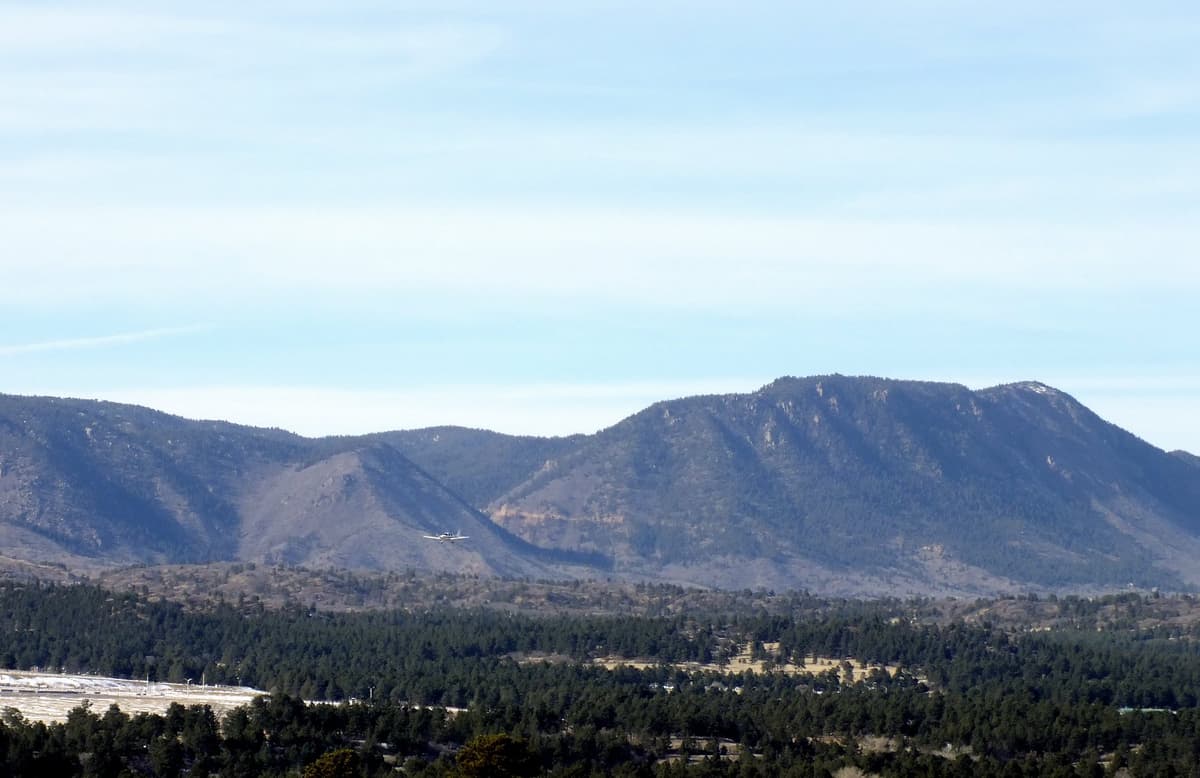
Rampart Range Road (Pike National Forest). About 40 minutes from Colorado Springs, with a long run of pull-offs along the ridge and easy access to hikes near Colorado Springs. It's popular and it gets loud with OHV traffic on weekends. Go midweek.
Geneva Creek Road, Guanella Pass (Pike National Forest). You can no longer camp along the pass road itself. Instead there are roughly 30 to 40 numbered designated dispersed sites down Geneva Creek Road (FR 119), still free, first-come. It's the closest legal free camping to a Mount Bierstadt attempt.
Buffalo Creek and Redskin Creek Road (Pike National Forest). Southwest of Denver near Pine, with free dispersed sites along County Road 550. Ponderosa forest, mountain bike trails everywhere, and about 90 minutes from the city.
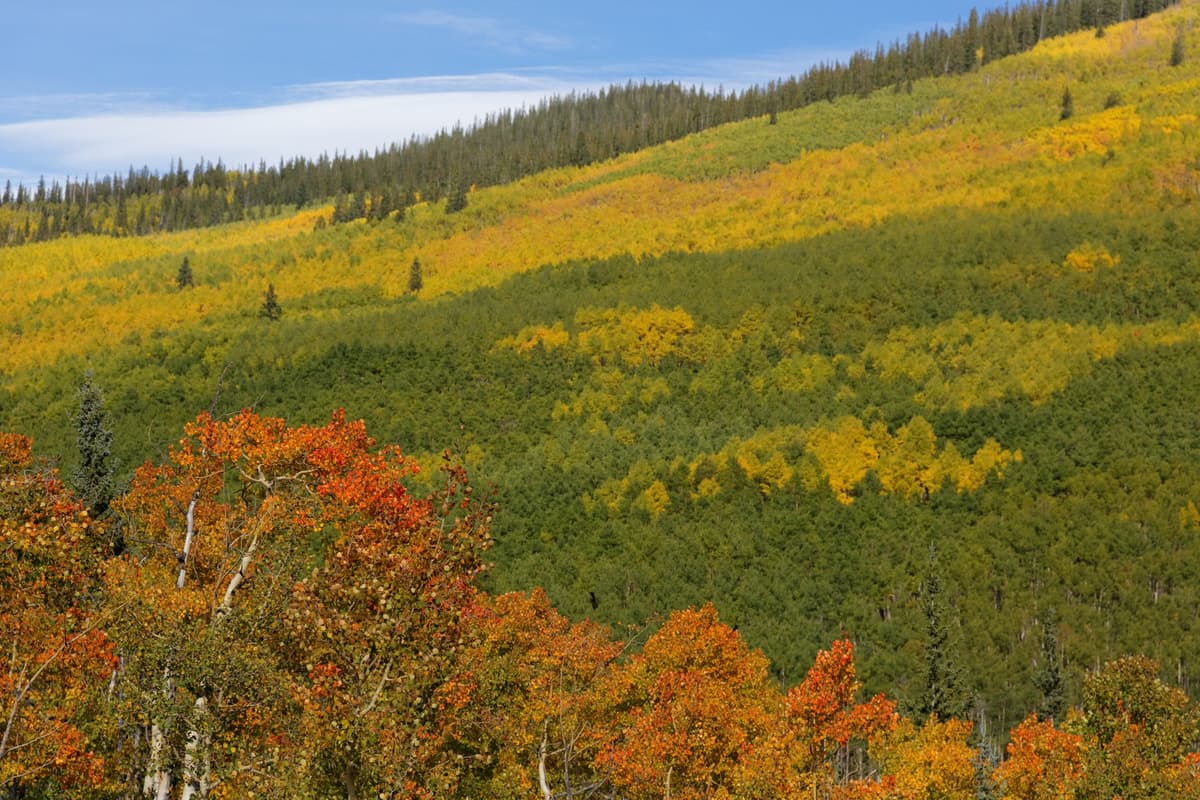
Kenosha Pass and Lost Park Road (Pike National Forest). Aspen groves that turn gold in the third week of September, plus the Colorado Trail crossing right at the pass. Lost Park Road runs deep enough east of the highway to find quiet.
Peaceful Valley and Middle St. Vrain (Roosevelt National Forest). The free overflow when Brainard Lake is full. Good staging for the Indian Peaks Wilderness, though the Indian Peaks proper has its own permit rules for backcountry overnights.
Red Feather Lakes (Roosevelt National Forest). North of Fort Collins, lower elevation, opens earlier in the spring than the high country. A reasonable May and early June option when everything above 10,000 feet is still snowed in.
Rio Grande National Forest near Creede. Forest roads climbing toward the Rio Grande Reservoir and Stony Pass hold some of the least crowded high-country camping in Colorado. It's a long drive from anywhere, which is exactly the point.
San Juan National Forest, West Fork and Molas Pass area. The San Juans have the best scenery-per-campsite ratio in the state and generally permissive dispersed rules, with specific closures posted near the busiest trailheads. Pair it with a few days in the San Juan Mountains.
What Vehicle Do You Need?
More than people expect and less than the internet claims.
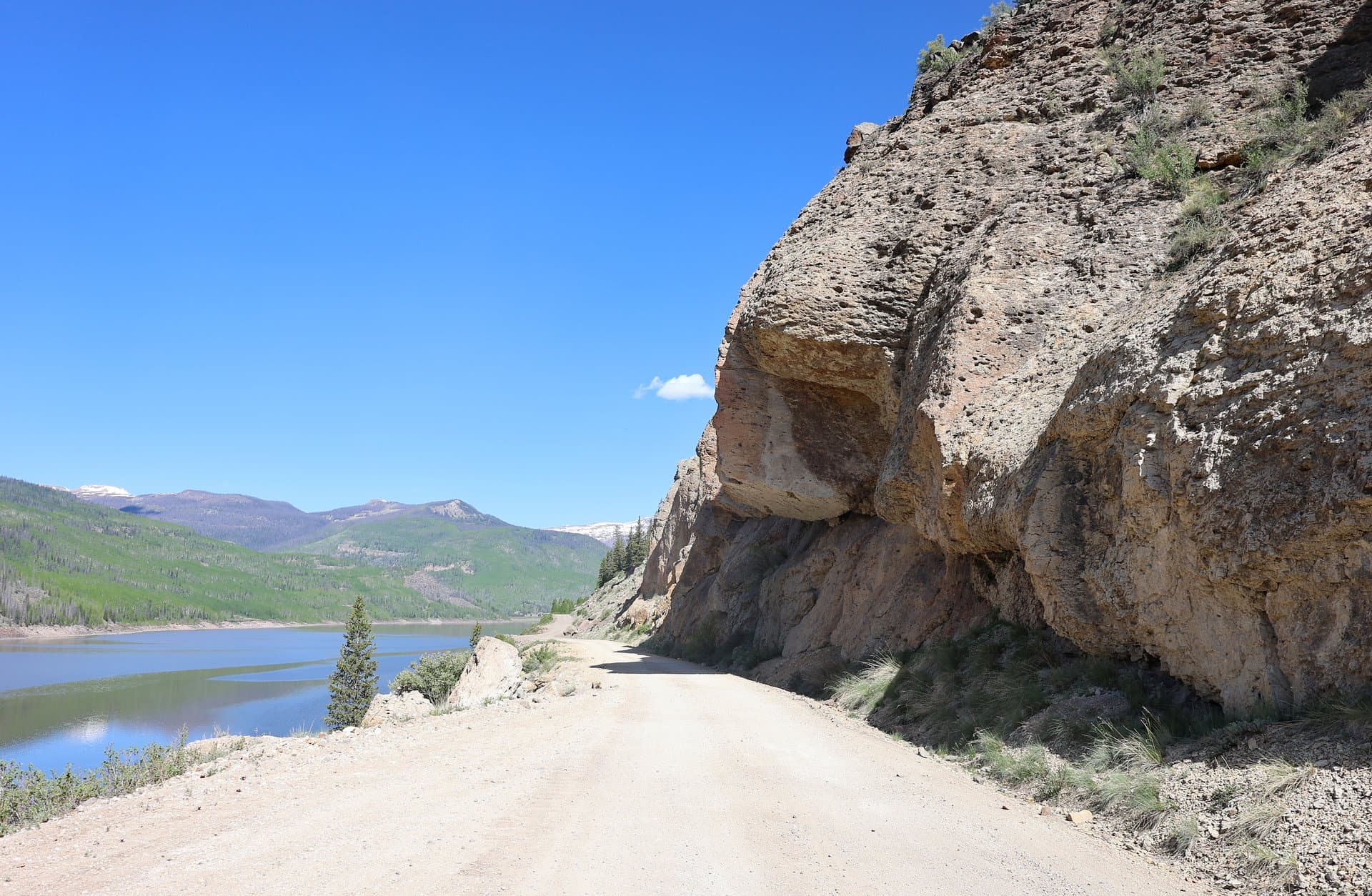
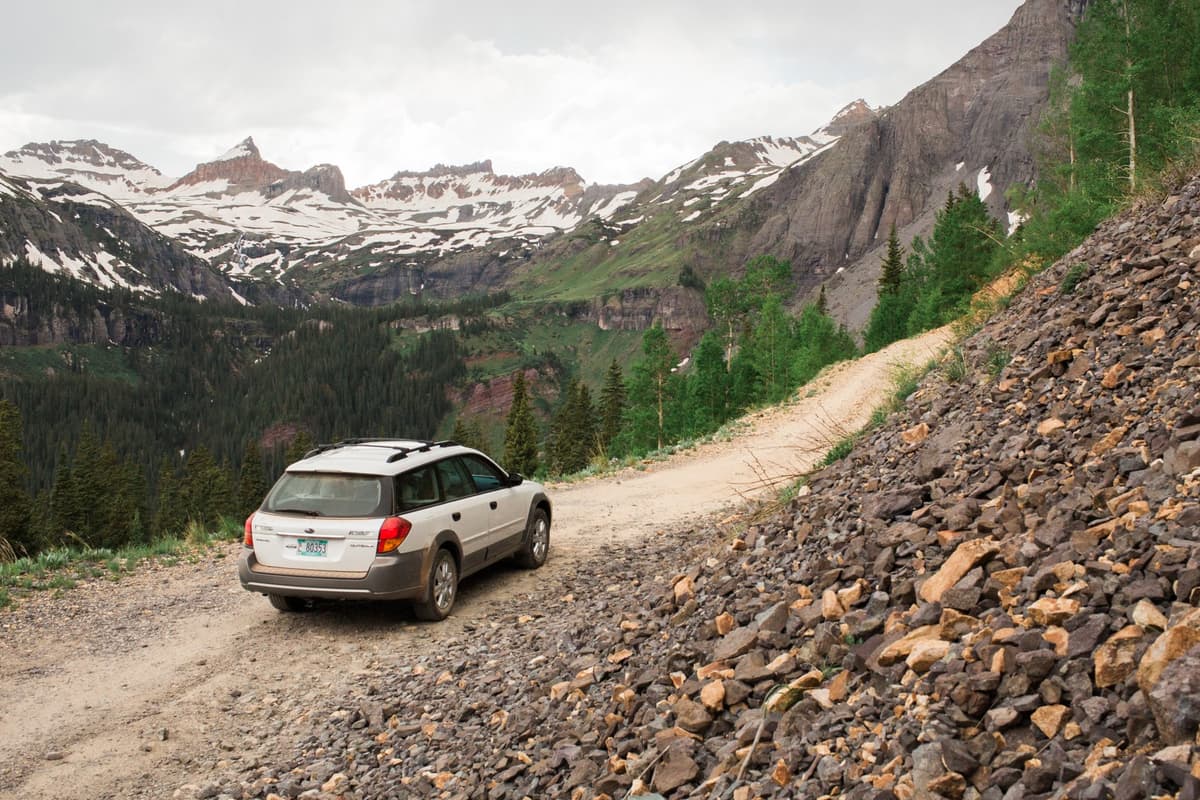
Plenty of legal dispersed sites sit within the first mile of a graded dirt road, and a Camry will reach them fine in dry conditions. The problem is that the graded first mile is where everyone else already is. Getting to the quiet spots usually means a rockier road, a water bar or two, and enough ground clearance to not scrape.
A stock crossover or all-wheel-drive wagon gets you to maybe 80 percent of Colorado's dispersed camping. High clearance with real tires gets you most of the rest. Actual four-wheel drive with low range matters on a small number of steep, loose, or rutted roads, and the MVUM tells you which roads are restricted to which vehicle types before you find out the hard way.
Two things regardless of vehicle: carry a full-size spare that's actually inflated, and know that afternoon rain turns clay forest roads into something you can't climb. If a storm rolls in and you're up a steep road, come down early rather than waiting it out.
Fire Restrictions Change Everything
Colorado runs fire restrictions most summers, and they can turn a planned campfire trip into a stove-only trip overnight.
Stage 1 typically bans campfires except in permanent metal or concrete fire rings inside developed campgrounds, which means no fires at dispersed sites. Liquid-fuel and propane stoves with a shutoff valve stay legal.
Stage 2 goes further: no fires at all, no charcoal, and often restrictions on running generators or vehicles off designated roads. Some Stage 2 orders limit stove use to certain hours.
Restrictions are posted by county and by forest, and the two don't always match. Check both the forest's alerts page and the county sheriff's office the day you leave. Assume you won't have a fire and bring a propane camp stove plus enough fuel. If restrictions lift, you got lucky. If they don't, dinner still happens.
When fires are allowed, use the existing ring, keep it small, and drown it until you can put your hand in the ashes. Colorado has burned enough acres in the last decade that this isn't a formality.
What to Pack
Dispersed camping is car camping without a safety net. The list gets longer because nothing is provided.
Water. Plan on a gallon per person per day, plus extra for dishes. At altitude in dry air you'll drink more than you think. If you're camping near a creek, a gravity water filter saves you hauling every gallon, and our guide to the best water filters for Colorado covers what actually works on silty runoff.
Shelter that handles wind. Exposed forest road sites catch more wind than a sheltered campground loop. See our picks for backpacking tents built for Colorado if you want something that doubles for trail use.
Warm sleep system. Nights at 9,000 to 11,000 feet drop into the 30s in July. A 20-degree bag and a insulated sleeping pad is the honest minimum.
Light. No campground lamps out there. A rechargeable headlamp each, plus a lantern for the kitchen. Our headlamp guide goes deeper.
Waste. Trowel, wag bags, and trash bags. A collapsible camp toilet is worth the space if you're staying more than a night or camping with kids.
Food storage. Black bears are active across most of the Colorado high country. Keep food in the vehicle or in a bear canister, never in the tent. Our bear canister picks cover the sizes that fit a weekend.
Recovery basics. Traction boards or at least a shovel, a tire plug kit, and a portable air compressor. Cell service is a coin flip.
Where You Can't Dispersed Camp
- National parks. Rocky Mountain, Great Sand Dunes, Mesa Verde, and Black Canyon all prohibit dispersed car camping. Overnights outside developed campgrounds need a backcountry permit and a designated site. The closest free camping to RMNP is on Roosevelt National Forest just outside the boundary.
- Within a quarter mile of certain roads. Rainbow Lakes Road and Ceran St. Vrain, for example, are posted no-camping corridors.
- At trailheads and day-use areas. Sleeping in your car at a trailhead is not dispersed camping and is banned at most Colorado trailheads. Our guide to trailhead parking in Colorado explains where overnight parking is actually allowed for peak starts.
- Within a mile of developed campgrounds in many districts, and in posted closure areas near reservoirs and ski resorts.
- On private land. The checkerboard of private inholdings inside national forest boundaries is real, especially around old mining claims. Verify ownership with a mapping app.
Frequently Asked Questions
How long can you dispersed camp in Colorado?
Fourteen days within any 30-day period on national forest land, and after that you have to move at least 20 to 25 miles depending on the forest. Some forests, including the Arapaho and Roosevelt, add a 30-day-per-year cap. A few high-traffic areas cut the limit to 7 days.
Do you need a permit for dispersed camping in Colorado?
Usually not. Most Forest Service and BLM dispersed camping is free and permit-free. Exceptions exist in high-use areas, such as the roughly $5 overnight permit around Rainbow Lakes from June 1 to September 15, and any overnight inside a national park or a wilderness area with a quota.
Can you dispersed camp near Denver?
Yes, but not close. The nearest legal free camping is roughly 1.5 to 2.5 hours west in the Arapaho and Roosevelt National Forests, or southwest near Buffalo Creek in Pike National Forest. Anything closer to the city is either private land, open space with no camping, or a posted closure. See our day hikes near Denver for pairing a hike with a camp night.
How far from the road can you camp?
Depends on the forest. White River and Arapaho-Roosevelt generally allow up to 300 feet from the centerline of a designated road. Some corridors restrict you to one vehicle length off the road. The Motor Vehicle Use Map for that forest is the authority.
Is dispersed camping safe at altitude?
It's fine if you plan for it. Sleeping your first night at 10,000 feet after flying in is a common way to get a headache and no sleep. Spend a night lower first, drink more water than feels necessary, and read our guide to altitude sickness in Colorado.
The Short Version
Pull the Motor Vehicle Use Map for the forest you're headed to, check the alerts page for closures and fire restrictions, arrive before dark, camp on a spot that's already been camped on, and pack out everything including waste. That covers 95 percent of doing this right.
If you'd rather have a table, a toilet, and a reservation, our roundup of the best Colorado campgrounds has 12 picks with fees and booking details. And if you're building a whole trip around it, the 7-day Colorado hiking road trip works well with free camping between stops.
Get the Colorado 14er Packing Checklist (free PDF)
Plus a weekly note on the best Colorado trails, gear deals, and seasonal hike picks. No spam, unsubscribe anytime.
We respect your inbox. Unsubscribe anytime.