7 Best Backpacking Backpacks for Colorado in 2026
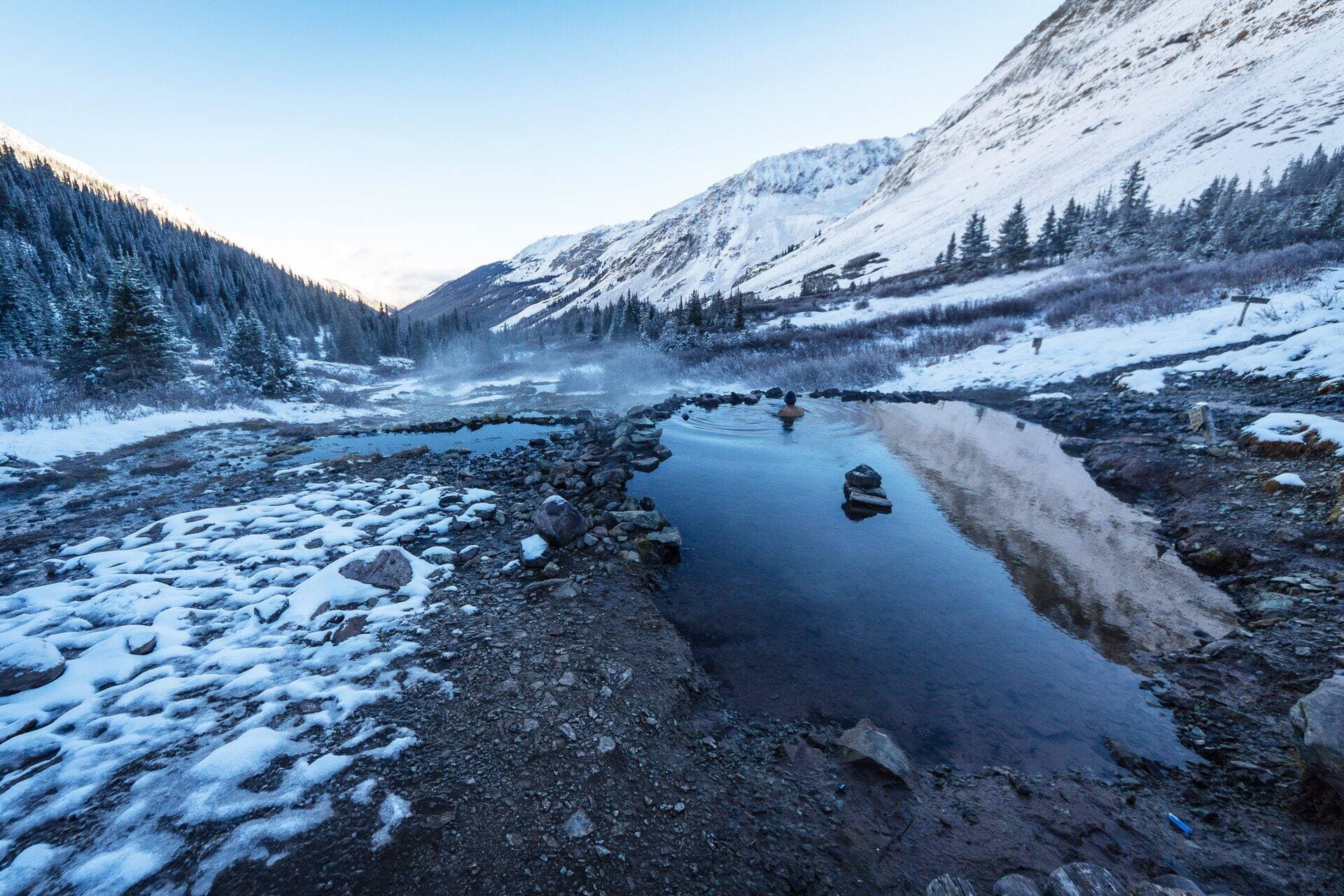
Colorado backpacking puts pressure on a pack in ways the rest of the country doesn't. You'll start a trip at 9,000 feet, climb a pass at 12,500, and camp by a lake at 11,000, all in the same day, with afternoon thunderstorms forcing you to move efficiently. The right pack carries 40 pounds without destroying your shoulders, ventilates against sweaty pine climbs, and survives years of granite-scraping use.
Here are the seven best backpacking backpacks for Colorado in 2026, ranked for the specific demands of high-altitude multi-day trips in the Rockies, San Juans, and Sangre de Cristos.
Our top pick: The Osprey Atmos AG 65 sits on top because it ventilates better than anything else in this category and carries up to 50 pounds without complaint. It's been the Colorado backpacker's default for a reason.
Quick pick — backpacking packs for Colorado multi-day trips
| Product | Best for | Price | Weight | Spec | |
|---|---|---|---|---|---|
Osprey Atmos AG 65 Our pickThe benchmark — best ventilation of any 65L pack | All-around multi-day, hot weather | $340 | 4 lb 9 oz | 65L, Anti-Gravity suspension | Check price → |
Gregory Baltoro 65 | Heavy loads, long trips | $360 | 5 lb 1 oz | 65L, hip-belt swap | Check price → |
Granite Gear Crown3 60 | Lightweight thru-hiking | $230 | 2 lb 4 oz | 60L, frameless option | Check price → |
Osprey Aura AG 65 (women's) | Women's-specific fit | $340 | 4 lb 11 oz | 65L, women's harness | Check price → |
Prices and availability change. As an Amazon Associate, we earn from qualifying purchases.
What You'll Learn
- What Pack Size Do You Need for Colorado?
- Best Overall: Osprey Atmos AG 65
- Best for Heavy Loads: Gregory Baltoro 65
- Best Lightweight: Granite Gear Crown3 60
- Best Women's Fit: Osprey Aura AG 65
- Best Budget: REI Co-op Flash 55
- Best for the Colorado Trail: Hyperlite Mountain Gear Southwest 55
- Best Weekender: Osprey Exos 48
- How to Fit Your Pack
What Pack Size Do You Need for Colorado?
Pack size is measured in liters of internal volume. For Colorado, the answer depends on trip length and how much your gear has been ultralight-ified.
40 to 50 liters works for one-night and two-night trips if your sleep system, shelter, and cookset are dialed in. You'll feel it on three nights, and you'll fight it in colder weather when you need a bigger sleeping bag and an extra puffy.
55 to 65 liters is the sweet spot for most Colorado backpackers. Long enough for week-long trips, big enough to swallow a 20°F sleeping bag and bear canister, and still light enough that you're not punishing yourself.
70+ liters is for guided trips, winter expeditions, or carrying a kid or dog gear. Most adults don't need this much.
A useful rule for Colorado: assume you'll always carry more water than at sea level (no reliable resupply at trail miles 4-8 of a pass climb), warmer layers (alpine temperatures swing 40 degrees), and a bear canister where required. That adds 3-6 pounds and 4-8 liters to your baseline.
Best Overall: Osprey Atmos AG 65
The Osprey Atmos AG 65 is the benchmark Colorado backpacking pack. Its Anti-Gravity suspension uses a mesh trampoline that lifts the pack body off your back entirely. Air flows behind you, sweat dries, and the load transfers through the suspended mesh instead of squashed against your spine. On the long, sun-exposed pine climbs that define Colorado backpacking approaches, this is the single feature that separates a tolerable carry from a miserable one.
The fit system is adjustable in real-world dimensions. You can dial torso length on the trail without tools, swap to the trekking-pole carry without taking the pack off, and access the main compartment from the front zip instead of unloading from the top. The hipbelt is genuinely supportive up to about 45 pounds, and the load-lifter geometry holds the pack body close on rough terrain so it doesn't pendulum when you scramble.
The drawbacks are real but minor: at about 4 lb 9 oz it's not lightweight, the mesh suspension takes up some carrying volume you don't see in the 65L number, and the hipbelt fit runs slightly narrow if you have hips wider than the lumbar pad expects. Try one on at REI before you buy if you're between sizes.
Best for: All-around Colorado multi-day trips, sweaty climbers, anyone who runs hot.
Capacity: 65L. Weight: 4 lb 9 oz (medium). Max recommended load: 50 lbs.
Best for Heavy Loads: Gregory Baltoro 65
If you're carrying 40-55 pounds. Winter trips, photography gear, group-share tents and cooksets, multi-day trips with kids, the Gregory Baltoro 65 carries weight better than anything else under $400. The hipbelt is wider, more thickly padded, and contoured to the iliac crest in a way the Atmos isn't, and the frame transfers load to the hips with almost no shoulder bleed-through.
The Baltoro's standout feature is the dual-density EVA hipbelt that you can swap out independently of the pack. If your hipbelt wears out or you change body shape, you replace the belt, not the pack. The internal organization is more thoughtful than most: a sleeping bag compartment with proper compression, a sleeping pad shove-it pocket, U-zip access to the main compartment, and a top lid that detaches into a small hipbelt fanny pack for summit days.
The cost is weight. At about 4 lb 13 oz it's heavy for 65L. If you're sub-30 pounds, you'll feel like you're carrying the pack as much as the load. But the moment you cross 40 pounds, the Baltoro starts feeling like the lighter pack.
Best for: Heavy loads, expedition trips, photographers carrying camera gear.
Capacity: 65L. Weight: 4 lb 13 oz (medium). Max recommended load: 50 lbs.
Best Lightweight: Granite Gear Crown3 60
The Granite Gear Crown3 60 takes the opposite approach: strip almost everything, keep the load supportive, sell it for about two-thirds of what the Osprey costs. At about 2 lb 9 oz it's roughly two pounds lighter than the Atmos, and that two pounds matters on a 50-mile loop more than any single piece of clothing you brought.
The Crown3 uses a removable internal frame and a removable lid, so you can run it as a 60L framed pack for week-long trips or strip it to a frameless 50L pack for weekend missions. The roll-top closure replaces the usual drawstring and lid, which saves weight and adapts to varying load sizes. The hipbelt is genuinely supportive. Uncommon for packs in this weight class.
The compromises are visible. Pockets are simpler. The carry comfort above 30 pounds isn't in the Atmos's league. Mesh side pockets won't survive granite forever. But for the Colorado backpacker who's been refining their gear list for years and consistently carries 25-35 pounds, the Crown3 is the right tool.
Best for: Ultralight Colorado Trail hikers, weight-conscious weekenders.
Capacity: 60L. Weight: 2 lb 9 oz (regular). Max recommended load: 35 lbs.
Best Women's Fit: Osprey Aura AG 65
The Osprey Aura AG 65 is the women's version of the Atmos and shares the Anti-Gravity suspension. The differences are in the use geometry: shorter torso lengths, narrower shoulder straps angled for a different shoulder structure, a hipbelt that wraps around higher iliac crests, and slightly thicker lumbar padding for typical female body distribution.
If your torso length is between 14" and 19", this is the right pack. If you've ever felt like your "men's unisex" pack rode high on your hips or bit into your collarbone with full loads, this is why. The Aura has been refined over multiple generations and the fit is unusually consistent across sizes XS through Large.
Best for: Female-bodied hikers, anyone with a short torso.
Capacity: 65L. Weight: 4 lb 10 oz (medium). Max recommended load: 50 lbs.
Best Budget: REI Co-op Flash 55
For new backpackers who want a real pack without spending $300+, the REI Co-op Flash 55 punches above its price. It's a 55L roll-top with a perimeter aluminum frame that supports up to about 35 pounds comfortably. The hipbelt is removable, the trekking-pole holsters work without taking the pack off, and the daisy chains and side pockets are well thought out for the price.
The Flash 55 isn't fancy. The fabric is lighter than premium packs, so it won't survive being dragged across talus for a decade. The hipbelt padding is thinner. But for the backpacker who's putting in 5-10 trips a year and isn't loading 40+ pounds, it's a smart entry point that doesn't compromise where it counts.
Best for: New backpackers, budget-focused buyers, occasional weekend trips.
Capacity: 55L. Weight: 2 lb 13 oz. Max recommended load: 35 lbs.
Best for the Colorado Trail: Hyperlite Mountain Gear Southwest 55
The Hyperlite Mountain Gear Southwest 55 is built from Dyneema Composite Fabric. The same material used in racing sails and ultralight tents. It's effectively waterproof, abrasion-resistant, and weighs about 1 lb 13 oz for the 55L size (medium). For Colorado Trail thru-hikers and Continental Divide Trail section-hikers who are counting ounces, no pack carries 25-30 pounds for 30 days as comfortably as this one.
The Southwest is also the most expensive pack on this list. Dyneema is not cheap, and the company manufactures everything in Maine in small batches. But the pack will outlast three or four conventional packs of equivalent capacity, and the lifetime cost-per-mile is actually competitive once you account for replacement cycles.
The fit takes some getting used to. The minimalist frame depends on a properly loaded pack to hold its shape. Pack it poorly and it slumps. Pack it correctly and it carries beautifully.
Best for: Long-trail hikers, Dyneema converts, weight-obsessed minimalists.
Capacity: 55L. Weight: 1 lb 13 oz (medium). Max recommended load: 40 lbs.
Best Weekender: Osprey Exos 48
The Osprey Exos 48 splits the difference between the Atmos and an ultralight pack. It uses the same AirSpeed mesh suspension family as the Atmos but in a smaller, lighter package. About 2 lb 12 oz for the 48L size (S/M). For one- and two-night Colorado backpacking trips where you're carrying 22-32 pounds, the Exos is sometimes the right answer instead of stuffing too much gear into too small a pack or hauling an oversized 65L.
The Exos's ventilation is genuinely effective. The frame is supportive. The fabric is light enough that it won't last forever on granite scrambles, but for a pack that goes out 8-15 times a year, it'll hold up fine for half a decade.
Best for: Weekend backpackers, summer-season Colorado trips, sweaty hikers.
Capacity: 48L. Weight: 2 lb 12 oz. Max recommended load: 35 lbs.
How to Fit Your Pack
A pack that doesn't fit you is more painful than no pack at all. Measure your torso length before you buy: from the bony bump at the base of your neck (C7 vertebra) down to the level of your iliac crest (the top of your hip bone, found by sliding your hand down your ribcage to the bony shelf). That distance in inches is your torso length, and most packs come in S, M, L sizes that map to ranges (S: 14-17", M: 16-19", L: 18-21").
When you fit a pack:
- Loosen all straps. Start with everything slack.
- Hipbelt first. Center it over your iliac crest, not on your waist. Cinch it firmly. The hipbelt should carry about 70-80% of the load.
- Tighten shoulder straps. They should follow the contour of your shoulders and connect to the pack body just below the top of your shoulders. Not above.
- Load lifters. The thin straps that go from the top of the shoulder straps to the top of the pack should pull at roughly 45 degrees. They keep the pack body close to your back.
- Sternum strap. Snug, not tight. It just keeps the shoulder straps from sliding outward.
If you can't get the load lifters to a 45-degree angle, the torso length is wrong, go up or down a size.
Final Picks
Buy the Osprey Atmos AG 65 if you want one pack to handle every Colorado backpacking trip you'll do for the next decade. It's the default for a reason.
Buy the Granite Gear Crown3 60 if you've dialed your gear list and consistently carry under 35 pounds. The two-pound weight savings is real.
Buy the REI Co-op Flash 55 if you're starting out and don't want to spend $300 to find out whether you actually like backpacking.
Whatever you buy, pair it with the right sleeping bag for Colorado conditions and a water filter that handles alpine sources. The pack carries the rest of your gear, but those two pieces are what determine whether your nights are warm and your stomach is intact.
Get the Colorado 14er Packing Checklist (free PDF)
Plus a weekly note on the best Colorado trails, gear deals, and seasonal hike picks. No spam, unsubscribe anytime.
We respect your inbox. Unsubscribe anytime.