Sandbeach Lake Trail: A Quiet Wild Basin Hike Under Mount Meeker (2026)
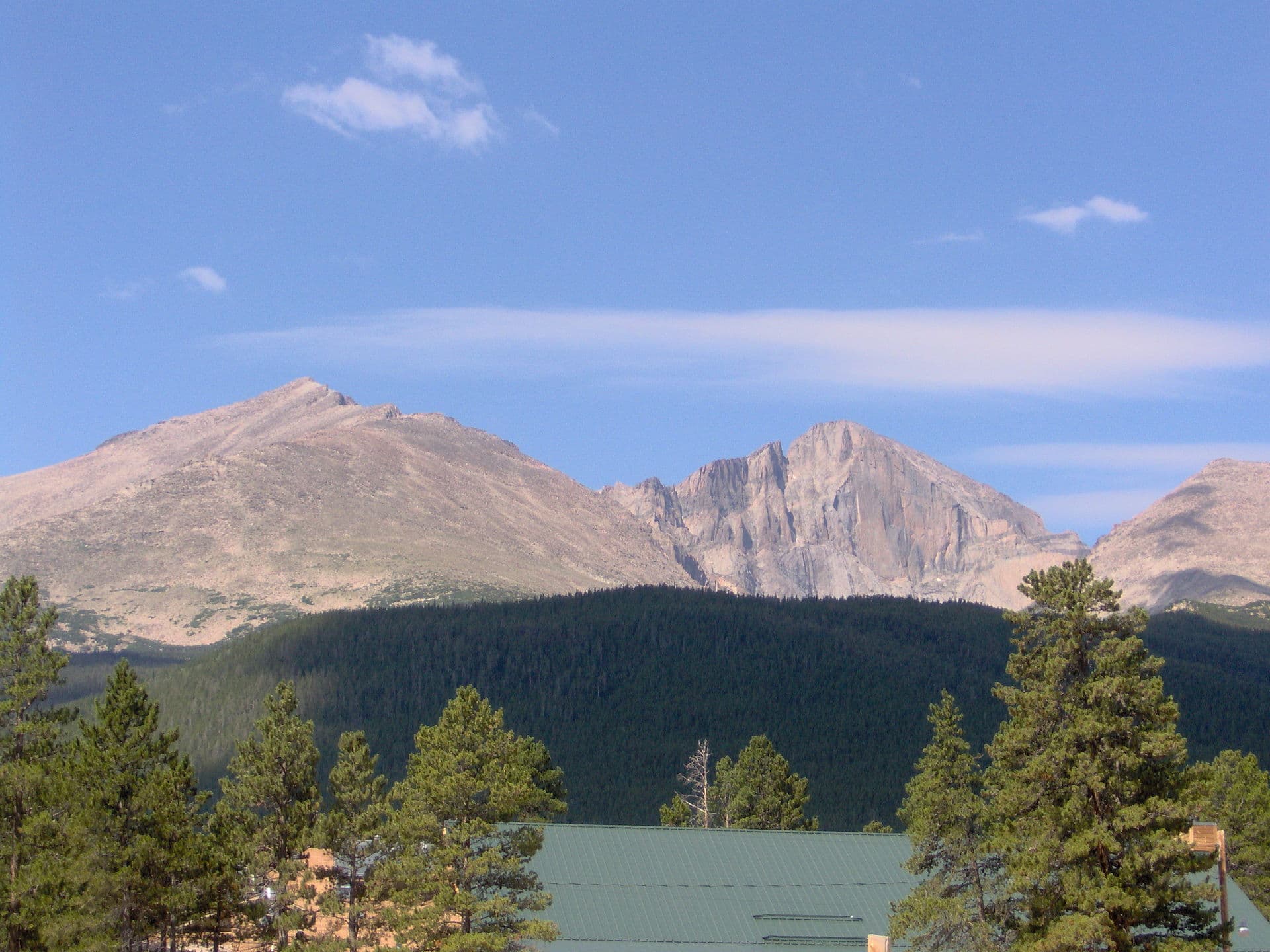
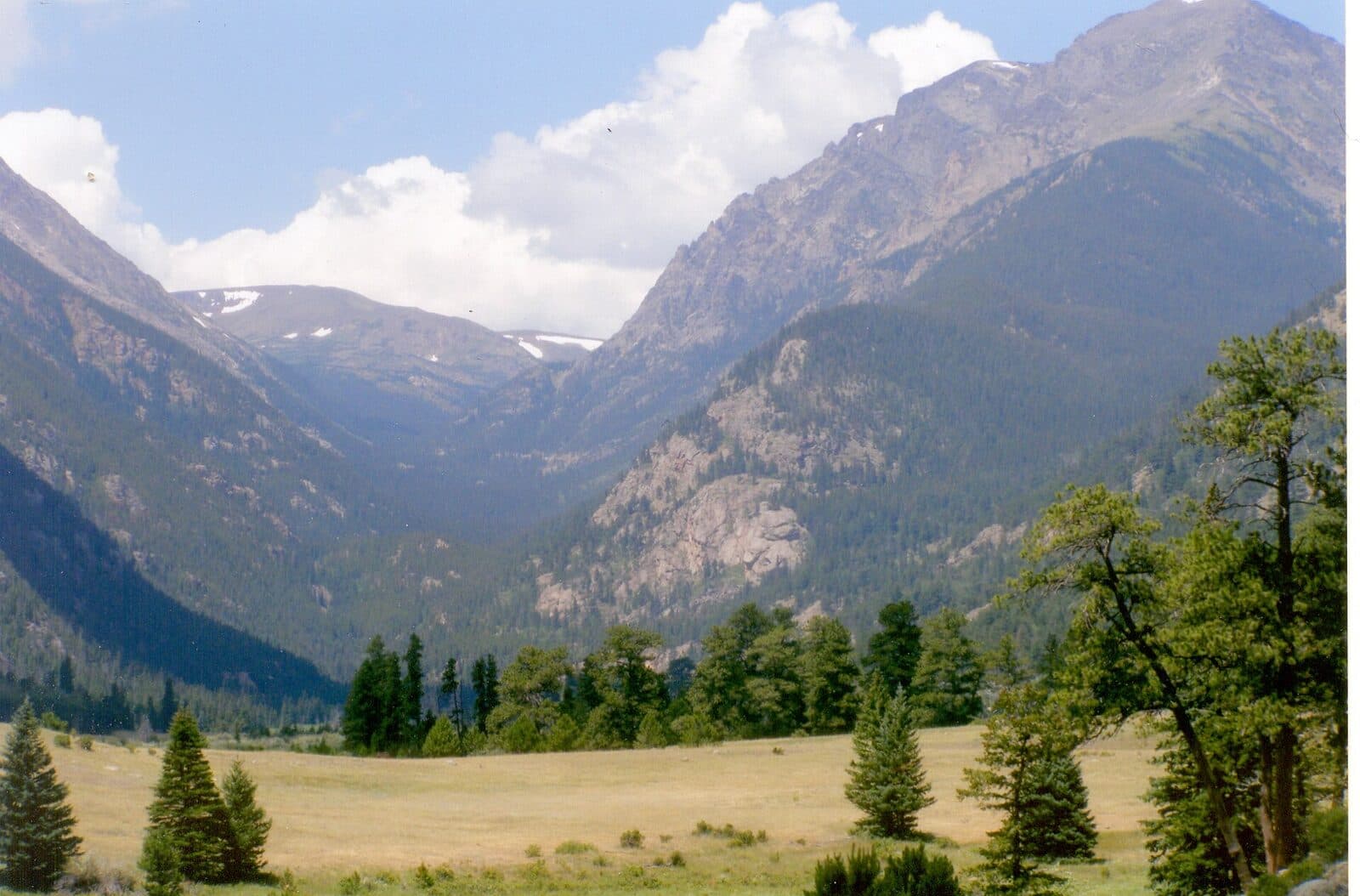
Sandbeach Lake is the trade you make when you want a real alpine lake without the Bear Lake circus. It sits at about 10,283 feet in the Wild Basin corner of Rocky Mountain National Park, and getting there means a steady climb of roughly 8.4 miles round trip with close to 2,000 feet of gain. The payoff is a wide, sandy shoreline (rare for a Colorado lake this high) with Mount Meeker filling the skyline behind it.
Here's the honest part most trail listings bury: this hike makes you earn it. The Sandbeach Lake Trail climbs almost the entire way with no big viewpoints until you reach the water, so it filters out casual foot traffic. That's exactly why it stays quiet on days when the rest of the park is packed. It's also a favorite for a first overnight, because the backcountry campsites near the lake are some of the closest legal camping to a trailhead in this part of the park.
This guide covers the drive and the small trailhead, the climb mile by mile, the view at the top, how the backpacking permits work, when to go, and the park rules that catch people off guard (starting with the fact that you can't bring your dog). Get the logistics right and Sandbeach Lake is one of the better low-key days in Rocky Mountain National Park.
What you'll learn
- Quick stats for the day hike and the backpacking trip
- Getting to the trailhead and why the parking is the crux
- The hike, mile by mile through the Wild Basin forest
- Sandbeach Lake and Mount Meeker at the top
- Backpacking Sandbeach Lake and how permits work
- Best time to hike season by season
- Wildlife and the no-dogs rule
- What to pack for a long climb at altitude
- Park rules and permits that carry real fines
- FAQs
Quick stats {#quick-stats}
| Detail | Day hike | Overnight |
|---|---|---|
| Distance (RT) | ~8.4 miles | ~8.4 miles plus camp |
| Elevation gain | ~1,970 ft | ~1,970 ft |
| Trailhead elevation | ~8,320 ft | ~8,320 ft |
| Lake elevation | ~10,283 ft | ~10,283 ft |
| Difficulty | Moderate to strenuous | Strenuous with a pack |
| Type | Out and back | Out and back |
| Season | Late June to early October | July to September |
| Permits | Timed entry may apply | Wilderness camping permit required |
| Dogs | Not allowed | Not allowed |
The trailhead sits low for this park, around 8,320 feet, which is a blessing and a warning. It melts out earlier than the high Bear Lake trails, but it also means you climb almost 2,000 feet to reach the lake, and most of that comes in one long, honest grind.
Getting to the trailhead {#getting-there}
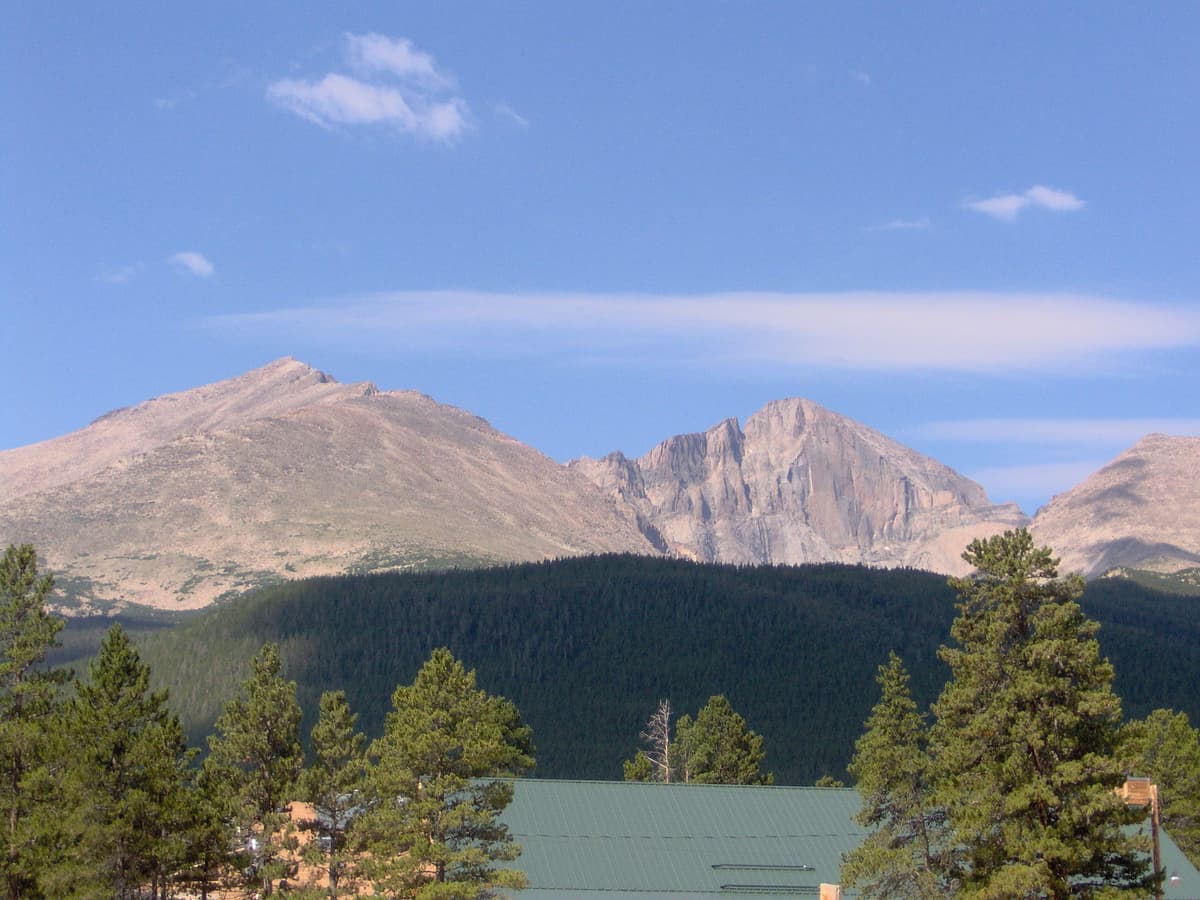
Sandbeach Lake starts from the Wild Basin area in the southeast corner of the park, near the town of Allenspark. From Estes Park, drive south on Colorado Highway 7 for about 13 miles and watch for the Wild Basin turnoff near the Copeland Lake entrance. From the Front Range, it's roughly 90 minutes from Boulder and a little over two hours from Denver, which makes it a solid addition to a weekend built around hikes near Estes Park.
The Sandbeach Lake Trailhead is not the main Wild Basin trailhead. It's right at the entrance, by the Wild Basin ranger station and Copeland Lake, before the dirt road continues to the busier lots that serve Ouzel Falls and Thunder Lake. That location is the whole problem: the parking area is tiny, and it fills early on summer weekends. There's no shuttle to bail you out here the way there is on Bear Lake Road, so an early start isn't a nice-to-have, it's the plan.
Two things to sort before you go. First, Rocky Mountain National Park runs a timed-entry reservation system in the summer, and the window and boundaries shift year to year. Some seasons Wild Basin falls under the general park permit, some seasons the rules loosen after Labor Day. Check the official park site for current dates before you commit, the same way you would for any Rocky Mountain National Park trip. Second, you still pay the standard park entrance fee (or show an America the Beautiful pass) on top of any timed-entry reservation. The two are separate.
The trailhead has a vault toilet and not much else. No water, no store, no reliable cell signal. Fill your bottles in Estes Park or Lyons on the way in.
The hike, mile by mile {#the-hike}
Don't expect a warmup. The Sandbeach Lake Trail starts climbing within the first few hundred yards and barely lets up. It splits off left from the main Wild Basin road almost immediately and switchbacks up a dry, sunny slope of ponderosa pine. This lower stretch can feel warm in the afternoon, so morning light and cooler air help.
After the first mile or so the grade eases into a long, rolling climb through lodgepole forest. You'll cross Campers Creek and later Hunters Creek on log bridges, and these shady creek crossings are the natural spots to rest, filter water, and eat. Between them the trail is mostly a green tunnel: pretty, peaceful, and short on big views, which is the price of admission for the quiet you're enjoying.
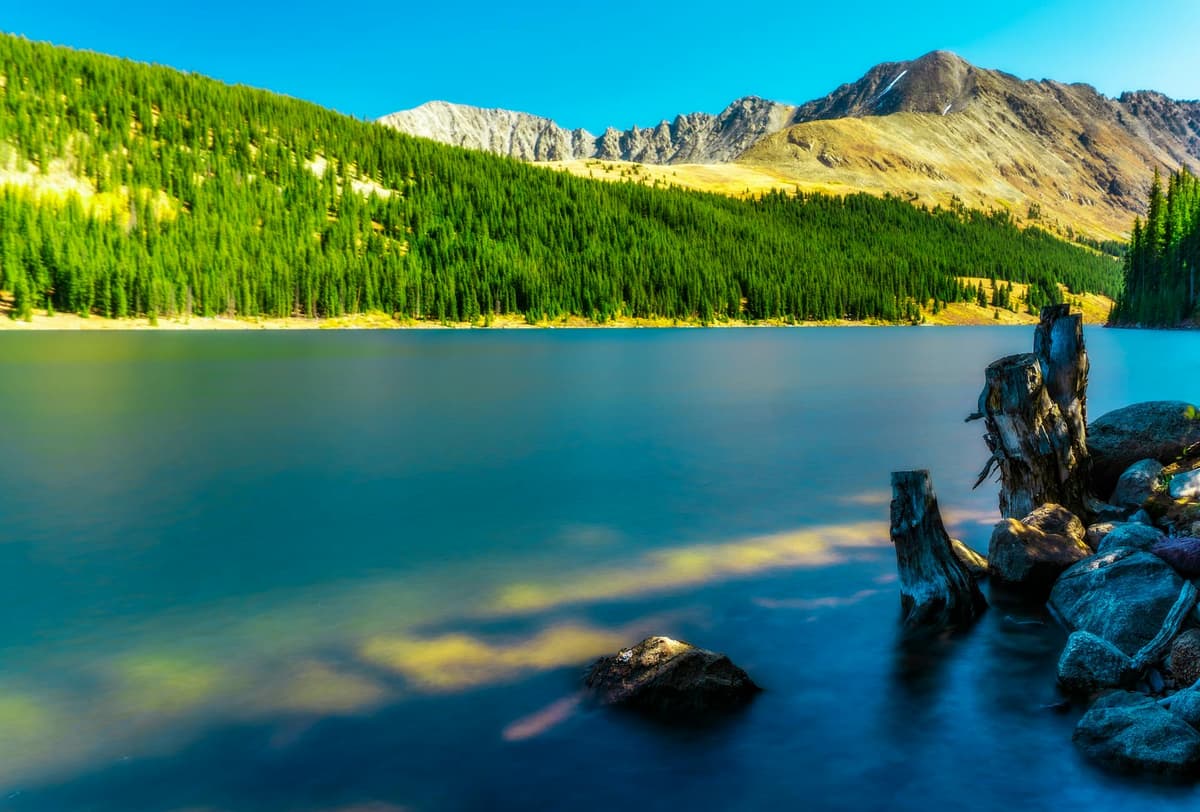
The last mile is the one that tests you. The trail steepens again as it climbs the final forested shoulder, and at altitude with a couple thousand feet already in your legs, it can feel longer than it reads on the map. Keep the pace boring and steady. Then the trees pull back, the ground turns sandy underfoot, and you step out onto the shoreline. It's an abrupt, satisfying finish: forest one minute, wide-open lake the next.
Sandbeach Lake and Mount Meeker {#the-lake}
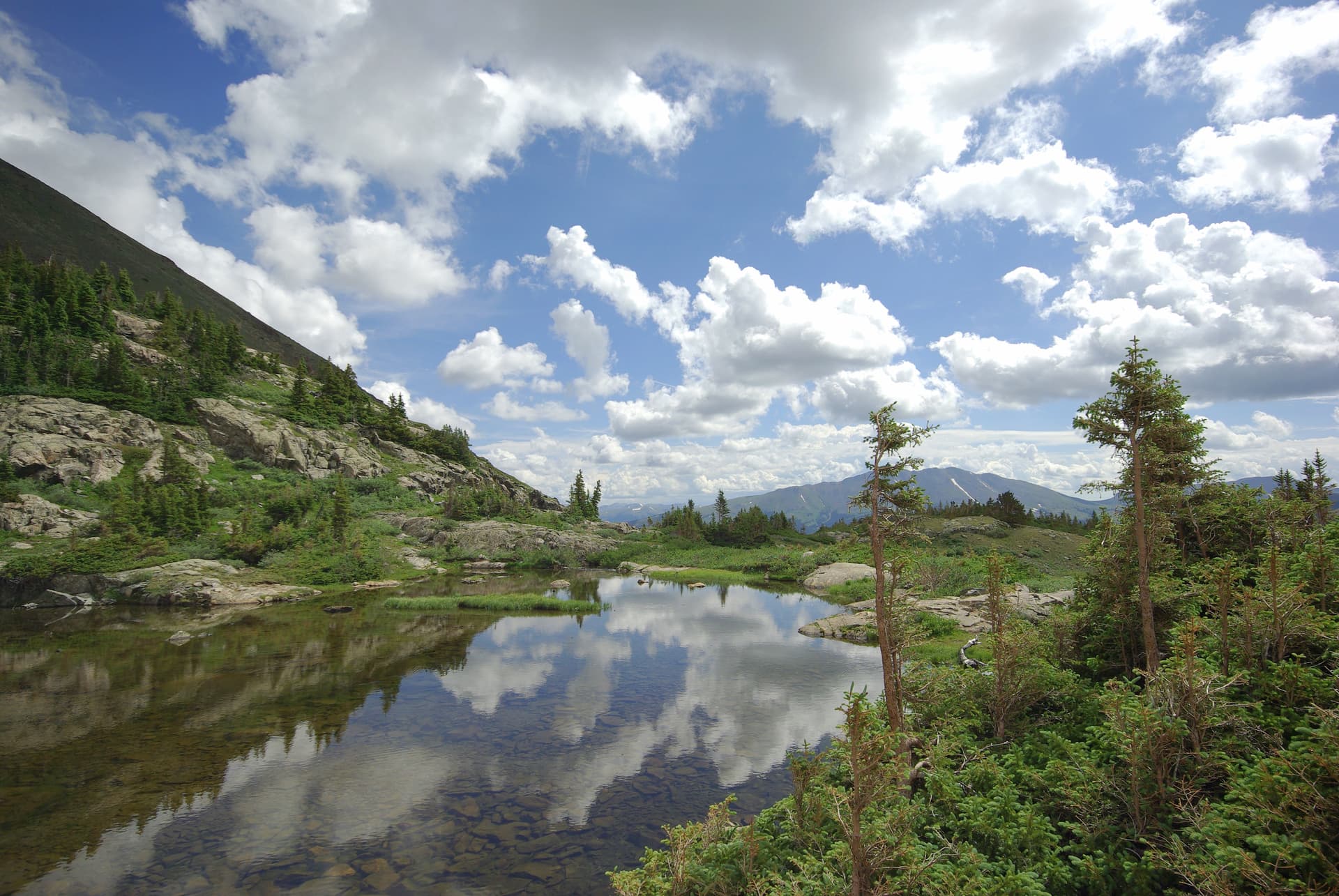
The name is not marketing. Sandbeach Lake really does have a broad, sandy beach along its eastern shore, deposited by the creeks that feed it. For a lake sitting above 10,000 feet, that's unusual and genuinely fun. You can drop your pack on actual sand, kick off your boots, and let your feet recover while you eat lunch.
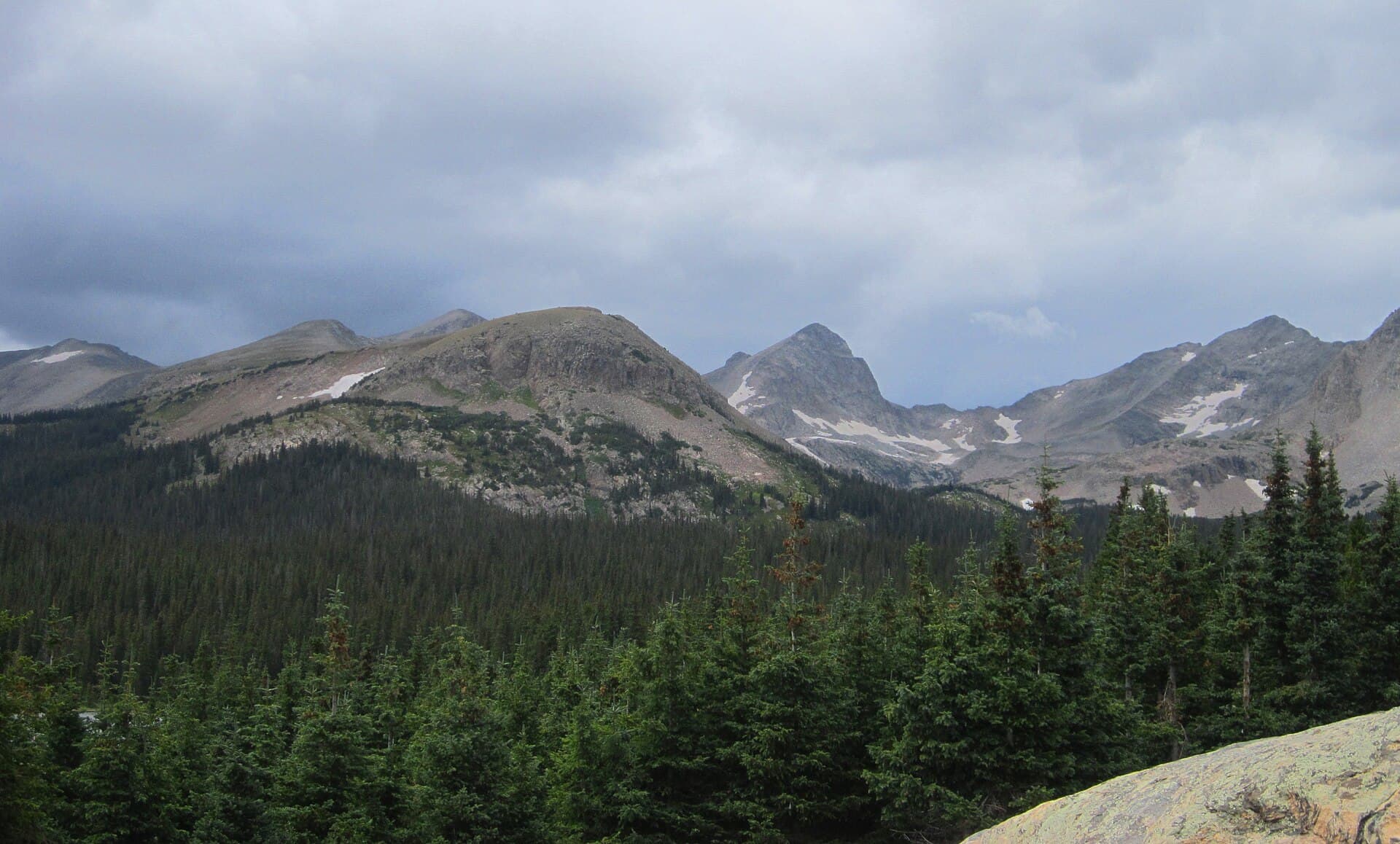
The view is the reason to linger. Mount Meeker (13,911 feet) rises straight off the far side of the basin, with the Longs Peak massif stacking up to the northwest. On a still morning the reflection is worth the whole climb.
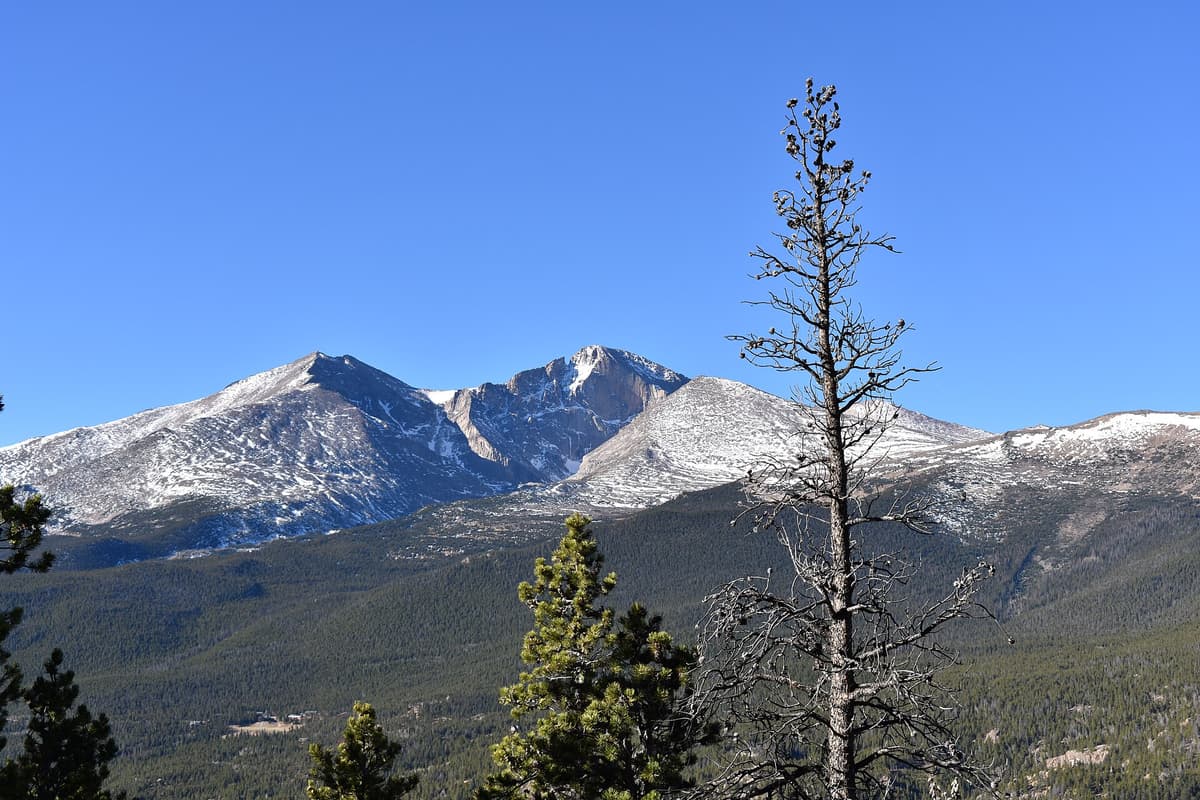
The water is cold, snowmelt cold, so a swim is a quick plunge-and-scramble rather than a float, but plenty of hikers wade in on a hot August afternoon.
Time your visit around the weather. You're exposed at the lake, and Colorado summer afternoons bring near-daily thunderstorms that build fast over these peaks. Aim to be at the water by late morning and heading down before storms stack up. If the sky turns dark and the hair on your arms stands up, get back into the trees and off the high ground. The same rule protects hikers on every big peak nearby, including the Longs Peak Keyhole route just to the north.
Backpacking Sandbeach Lake {#backpacking}
Sandbeach Lake is one of the more approachable first-night backpacking trips in the park. There's a cluster of designated backcountry campsites near the lake, and because the trailhead is low and the distance is moderate, you can carry a full pack in without a brutal day. That combination makes it popular, so the sites book out.
Here's how it works. Overnight camping in Rocky Mountain National Park requires a wilderness camping permit, and you reserve a specific designated site for a specific night through the park's backcountry office. You can't just roll up and pitch a tent at the lake. Permits for summer nights open months ahead and go quickly, so plan early. Once you have a site, you're required to store all food, trash, and scented items in an approved bear-resistant container. Pick one up in our bear canister guide or grab a park-approved canister before you go, because rangers do check.
A few overnight specifics for this basin: campfires are not allowed at the backcountry sites, so bring a stove; use the provided privy or pack out waste per park rules; and set your tent up only on the designated pad, not on the fragile shoreline. A freestanding shelter earns its keep on the rocky, uneven ground up here, and our backpacking tent picks for Colorado lean toward models that handle exactly this kind of site.
Best time to hike {#when-to-go}
Late June to early July. The low trailhead melts out early, but the upper mile can hold snow and mud well into June. Carry microspikes if you go early, and expect the creeks to run high and loud.
Mid-July to mid-August. Prime time. Wildflowers peak in the meadows, the beach is warm, and the water is as swimmable as it gets. This is also the busiest window and thunderstorm season, so start at dawn and watch the sky.
Late August to mid-September. My pick. The crowds thin midweek, the bugs fade, and the light gets long and warm. The lake settles into its deepest color and the aspens down low start turning.
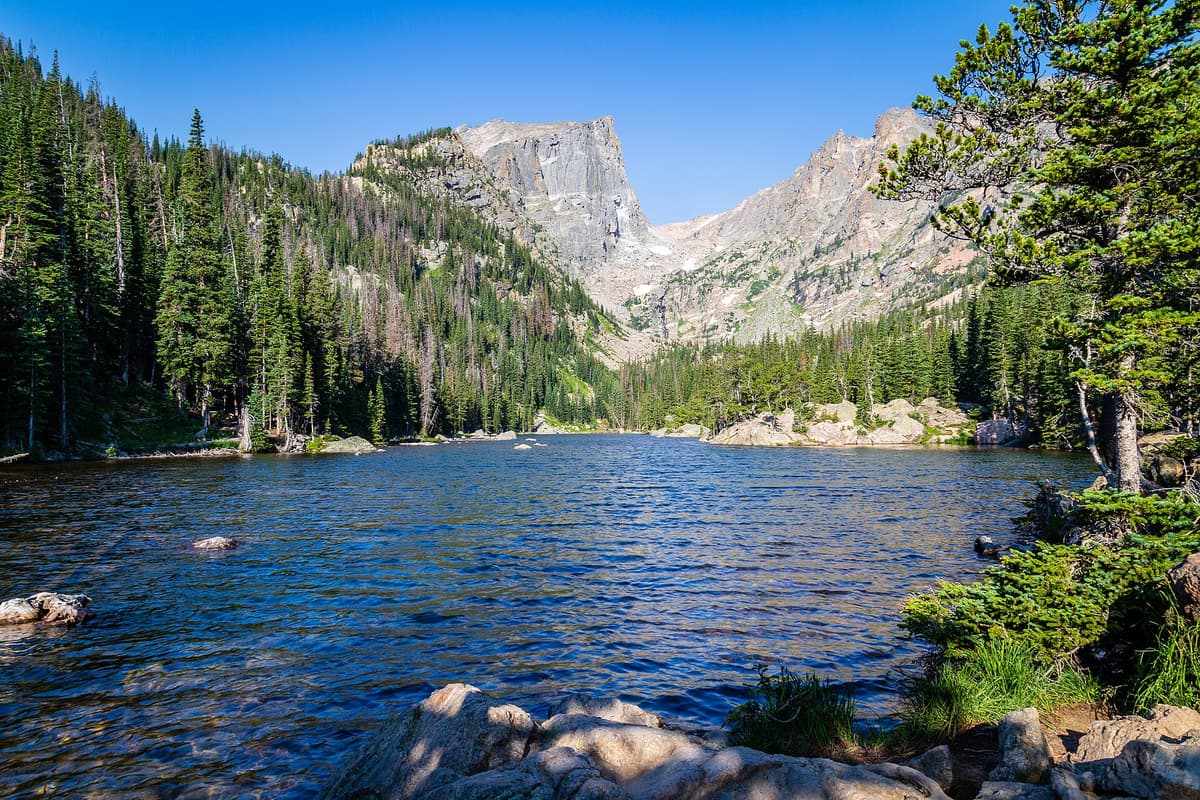
Late September to early October. Crisp, quiet, and often stunning, with gold aspen on the drive in. Nights get cold and early snow is possible up high, so pack layers and check the forecast.
Mid-October to May. The trail is a winter route now: snow-covered, avalanche-aware travel for people with the skills and gear. The beach you came for is under ice and snow.
Wildlife and the no-dogs rule {#wildlife}
Start with the rule that surprises the most first-timers: dogs are not allowed on any trail in Rocky Mountain National Park, and that includes Sandbeach Lake. This is a national park, not a national forest, so the pet rules are strict. Leave the dog at home or plan a different outing on nearby Forest Service land, where leashed dogs are welcome.
As for what you'll actually see, Wild Basin holds black bears, which is the real reason for the food-storage rules, plus moose in the wetter meadows, elk, mule deer, and the usual marmots and pikas on the rocks near the lake. Give any moose a wide berth of at least 50 feet, more with a calf, and never get between a mother and her young. Don't feed anything, including the marmots that will case your lunch on the beach. A fed animal is a dead animal, and a chewed pack is a lousy souvenir.
What to pack {#what-to-pack}
Treat this like the long, high-altitude climb it is, even as a day hike.
- Sturdy footwear. The lower trail is dry and rocky and the upper section can stay wet. Trail runners or boots with real tread both work. See our Colorado hiking boots guide.
- Trekking poles. Your knees will thank you on the long descent. Picks in our trekking poles roundup.
- Water and a filter. Carry two to three liters and top off at Campers or Hunters Creek with a backpacking water filter. More in our water filter guide.
- Rain shell and layers. Mornings start cool and afternoon storms are routine. Details in our rain jacket guide.
- Sun protection. Sunscreen, a hat, and sunglasses. The beach is fully exposed.
- Bear canister if you're camping. Required for overnight food storage, per park rules.
- Acclimatize first. Coming from sea level, give yourself a day or two up high and read our altitude sickness guide before you push to 10,000 feet.
Park rules and permits {#rules}
Rocky Mountain National Park enforces its rules, and Wild Basin is no exception.
- No dogs on trails, at all. This is the most common surprise and the most common ticket.
- Timed-entry reservations may be required to enter the park in summer. Check current dates before your trip.
- Wilderness camping permit is required for any overnight, tied to a specific designated site and night.
- Bear-resistant food storage is mandatory for backcountry camping.
- No campfires at the backcountry sites. Use a stove.
- Stay on trail and off the fragile lakeshore vegetation. Camp only on designated pads.
- Pack out everything, including food scraps, peels, and toilet paper. Nothing breaks down fast at this altitude.
- Drones are prohibited anywhere in the park.
Frequently Asked Questions
How long is the Sandbeach Lake Trail?
It's about 8.4 miles round trip with roughly 1,970 feet of elevation gain, from a trailhead near 8,320 feet up to the lake at about 10,283 feet. Most fit hikers take 5 to 7 hours with breaks and lunch at the lake. There are no major viewpoints until the water, so it feels like a workout the whole way up.
Do you need a permit to hike to Sandbeach Lake?
For a day hike you don't need a trail permit, but Rocky Mountain National Park may require a timed-entry reservation to enter the park in summer, plus the standard entrance fee. For overnight trips you need a wilderness camping permit tied to a specific designated site. Check the park's official site for current timed-entry dates.
Can you camp at Sandbeach Lake?
Yes, at designated backcountry sites near the lake, and only with a wilderness camping permit reserved in advance. It's one of the more popular first-night backpacking trips in the park, so summer permits go fast. A bear-resistant food canister is required.
Are dogs allowed on the Sandbeach Lake Trail?
No. Dogs are not permitted on any trail in Rocky Mountain National Park, including Sandbeach Lake. Plan on leaving your dog at home or hiking on nearby Forest Service land instead, where leashed dogs are allowed.
Why is it called Sandbeach Lake?
Because it actually has one. Creeks feeding the lake deposit sand along the eastern shore, forming a wide beach that's unusual for a lake above 10,000 feet. It's a comfortable, sandy spot to rest with Mount Meeker rising across the water.
Final word
Sandbeach Lake rewards patience. You trade a long, viewless climb for a quiet sandy shoreline and a straight-on look at Mount Meeker, and on a summer weekend that quiet is the whole point. Start early to beat the tiny parking lot and the afternoon storms, sort your permits ahead of time, and leave the dog at home. When you're ready for more in this corner of the park, the Emerald Lake Trail and the Bear Lake trailhead are a short drive north, and our full trail directory has plenty more across Colorado.
Get the Colorado 14er Packing Checklist (free PDF)
Plus a weekly note on the best Colorado trails, gear deals, and seasonal hike picks. No spam, unsubscribe anytime.
We respect your inbox. Unsubscribe anytime.