Lawn Lake Trailhead: RMNP's Big Alpine Hike Without the Bear Lake Permit
The Lawn Lake Trailhead sits in Horseshoe Park on the east side of Rocky Mountain National Park, and it's the start of one of the park's best big-mileage days that most visitors never touch. From a small lot at about 8,540 feet, the trail climbs beside the Roaring River for 6.2 miles to Lawn Lake, a wide alpine lake at nearly 11,000 feet under the Mummy Range. Round trip, that's about 12.4 miles with roughly 2,500 feet of gain, and you'll trade the elbow-to-elbow crowds of Bear Lake for long stretches where you might not see another person.
Here's the part worth knowing before you go. The Lawn Lake Trailhead is not on Bear Lake Road, so it doesn't need the strict Bear Lake corridor permit that trips everyone up. In 2026 it falls under the park's standard timed entry window instead, which is easier to get and easier to skip with an early start. That one detail makes this a smart pick for anyone who couldn't score a Bear Lake reservation.
This guide covers the trail's strange and dramatic backstory, the 2026 timed entry rules, how to reach the lot, the hike broken into sections, the shorter options nearby, and what to pack for a day this high.
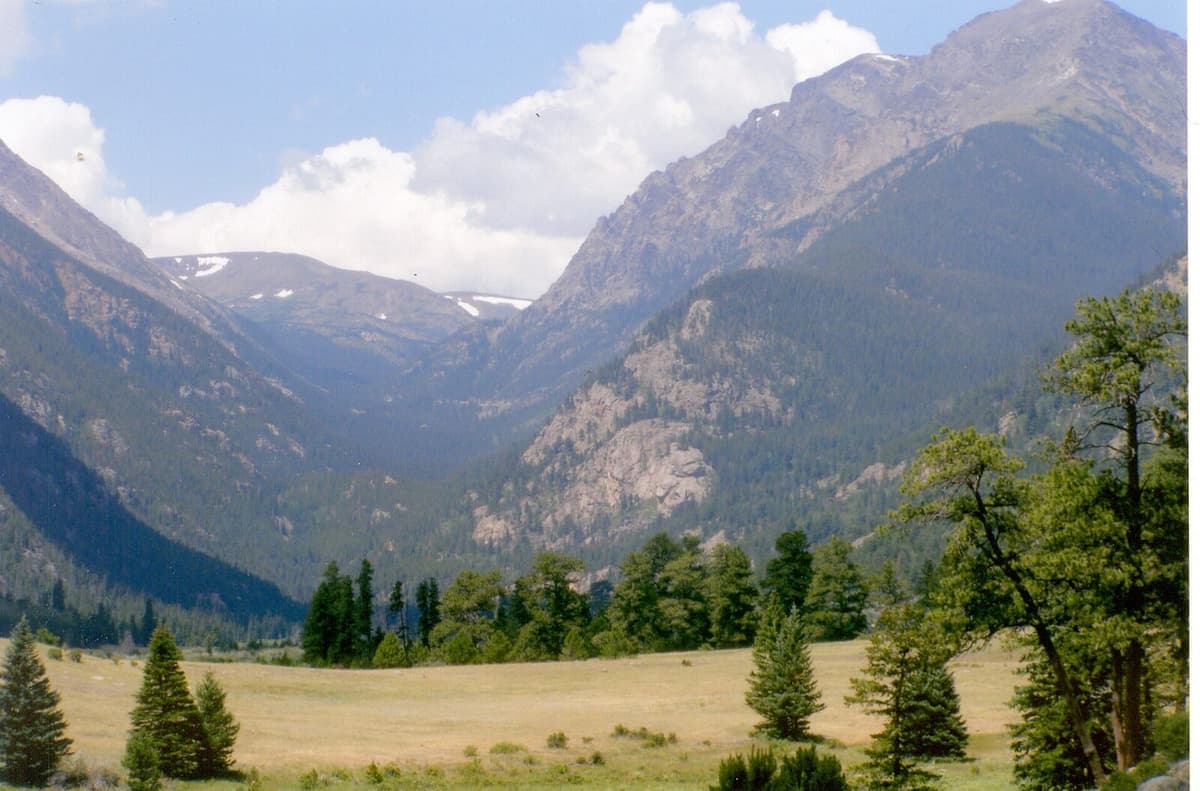
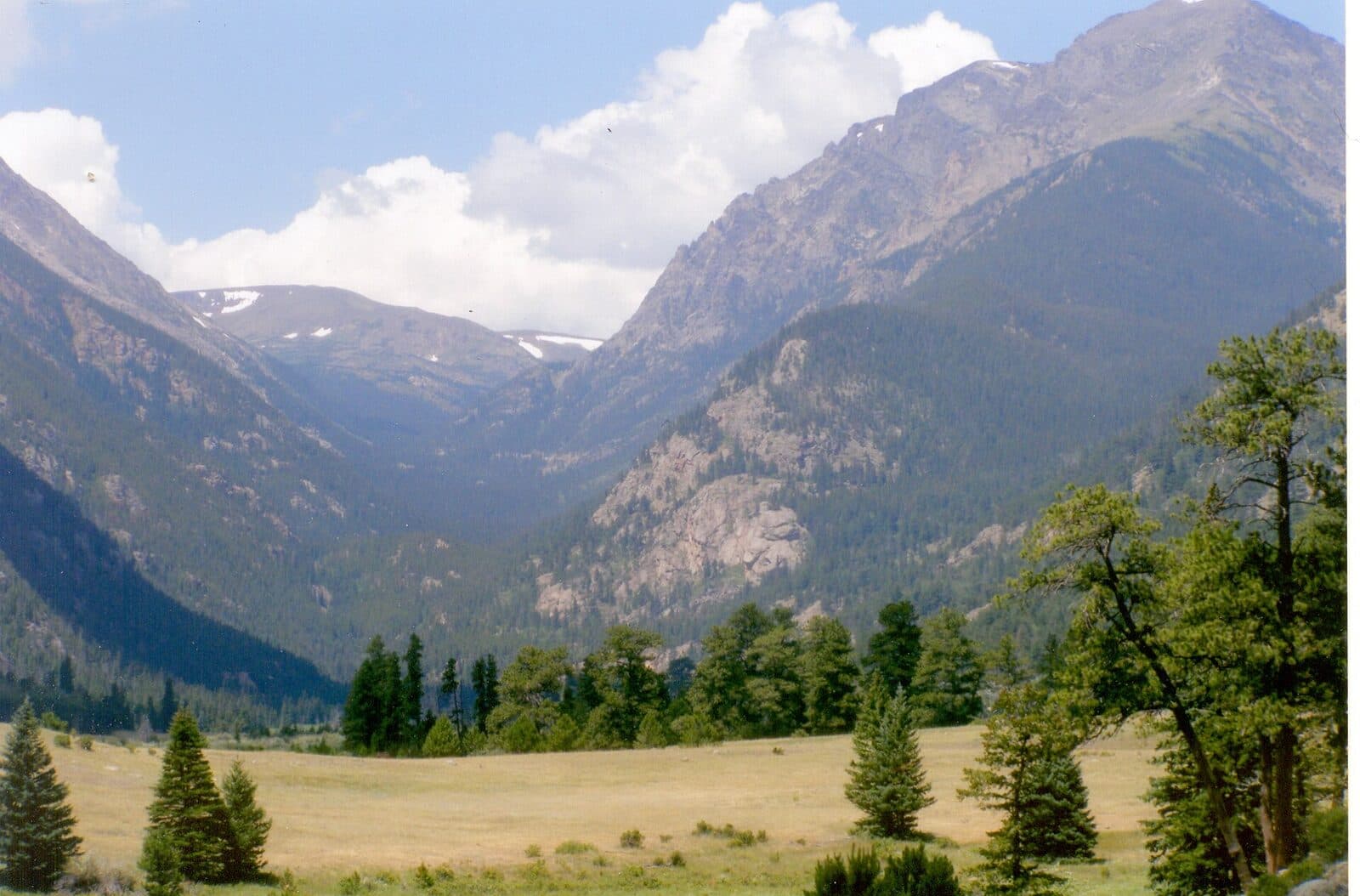
Horseshoe Park spreads out below the Mummy Range, with the Lawn Lake Trailhead tucked at its western edge.
What You'll Learn
- Quick Stats
- The 1982 Flood That Shaped This Trail
- Timed Entry and Parking in 2026
- Getting to the Trailhead
- The Hike to Lawn Lake, Section by Section
- Other Hikes From the Lawn Lake Trailhead
- What to Pack
- Best Time to Hike
- Wildlife and Trail Rules
- Common Mistakes
- Frequently Asked Questions
Quick Stats {#quick-stats}
To Lawn Lake (the main hike):
- Round trip distance: about 12.4 miles
- Elevation gain: about 2,500 ft
- Time: 6 to 8 hours
- High point: about 10,987 ft
Trailhead elevation: about 8,540 ft
Class: 1 (a walking trail the whole way)
Difficulty: strenuous, mostly from the distance and altitude
Nearest town: Estes Park, about 15 to 20 minutes
Best season: late June through early October
Dogs: not allowed on any national park trail
Permit: standard park timed entry reservation, 9 a.m. to 2 p.m., May 22 to October 12, 2026
The 1982 Flood That Shaped This Trail {#the-flood}
You can't really understand this hike without the story of the day it changed. Early on July 15, 1982, the earthen dam holding back Lawn Lake failed. Around 6 a.m. it let go, and roughly 30 million cubic feet of water tore down the Roaring River valley at a peak of about 18,000 cubic feet per second. The lake emptied in about half an hour.
The flood scoured the Roaring River channel as much as 50 feet deep and widened it by 300 feet, which is why the lower trail feels so raw and rocky today. When the water hit the flat, broad floor of Horseshoe Park, it slowed and dropped everything it was carrying: about 10 million cubic feet of rock, sand, and boulders spread across 42 acres. That debris pile is the Alluvial Fan you can visit near the trailhead, and it even dammed the Fall River long enough to form a small new lake.
The human cost was real. Three campers died, and the flood caused around $31 million in damage downstream in Estes Park, sending water down Elkhorn Avenue through the middle of town. The dam was never rebuilt. Lawn Lake today is a natural lake again, smaller than the reservoir once was, and the trail up to it doubles as a walk through one of Colorado's most-studied natural disasters.
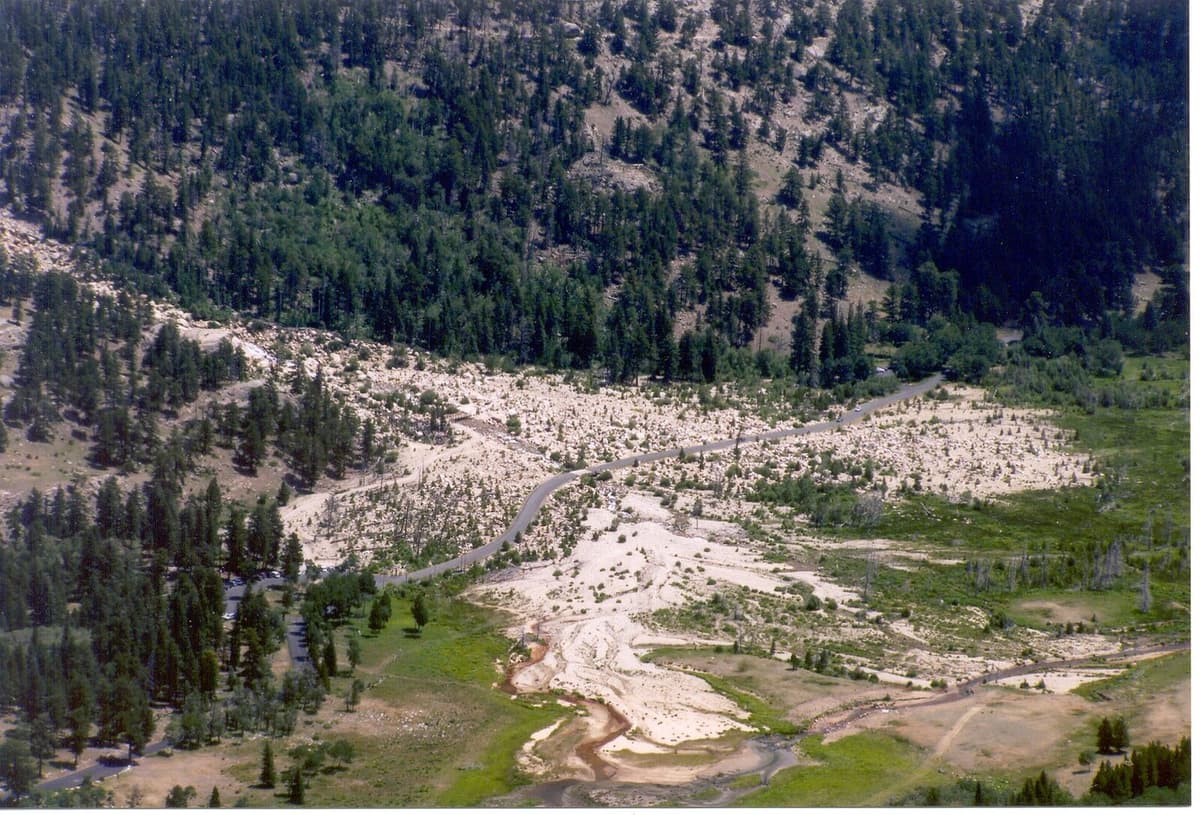
The Alluvial Fan spread across Horseshoe Park in half an hour when Lawn Lake Dam failed in 1982.
Timed Entry and Parking in 2026 {#timed-entry-2026}
This is the section that decides your morning, so read it closely.
Which permit you need. Rocky Mountain National Park runs two timed entry permits, and the difference matters here. The stricter one covers the Bear Lake Road corridor from 5 a.m. to 6 p.m. The Lawn Lake Trailhead sits in Horseshoe Park, off Bear Lake Road entirely, so it only falls under the park's standard Timed Entry permit. That one is required from 9 a.m. to 2 p.m. daily, May 22 through October 12, 2026. If you already tried and failed to land a Bear Lake permit, this trail is your workaround: it's a different, easier reservation.
How to get one. Reservations go live on Recreation.gov on a rolling schedule. A block of dates opens on the first of the prior month, and then a fresh batch of next-day permits drops at 7 p.m. Mountain time the evening before your visit. Set a reminder for that 7 p.m. release; it's the reliable way in during a busy stretch. The reservation itself costs a $2 processing fee, and you'll still need a park entrance pass on top of it.
How to skip it. Because the standard window doesn't start until 9 a.m., you can drive in before 9 without a timed entry reservation at all. For a 12-mile day you want that early start anyway. Be through the entrance station by 7 or 7:30 a.m. and the permit question takes care of itself.
Parking. The Lawn Lake lot is small, and no park shuttle serves this side of the park, so it's drive-in only. On summer weekends it can fill by mid-morning. An early start solves the crowd and the permit at the same time. If the lot is full, do not park on the road shoulders where it's signed against it; rangers ticket there.
Managed access like this is now the norm at Colorado's busiest trailheads. Our Rocky Mountain National Park guide walks through the whole reservation system if you're planning a longer trip.
Getting to the Trailhead {#getting-there}
The Lawn Lake Trailhead is easy to reach, which is part of its appeal. From Estes Park, take US-34 west through the Fall River Entrance station. The trailhead is on the north side of the road about 2 miles past the entrance, right where US-34 meets the start of Old Fall River Road at the edge of Horseshoe Park. Look for the Lawn Lake Trailhead sign; the lot is small and set back from the highway.
From Denver, plan on roughly 90 minutes to Estes Park, then another 15 to 20 minutes up to the lot. If you're stacking hikes into a Front Range weekend, our roundup of the best day hikes near Denver pairs well with a day up here.
The trailhead has a vault toilet and trail signs but no water and no store. Fill your bottles and download an offline map in Estes Park, because cell service goes patchy fast once you're in the park.
The Hike to Lawn Lake, Section by Section {#the-hike}
Lawn Lake is a steady climber. There's no flat warm-up and no single brutal wall, just a long, honest grade that adds up over 6 miles. Pace yourself early and you'll have plenty left for the last stretch.
Trailhead to the Ypsilon Lake junction (about 1.4 miles). The trail leaves the lot and starts climbing right away through ponderosa pine, working up the east side of the Roaring River gorge. You get quick views down into the scoured channel from the 1982 flood. At about 1.4 miles you reach a signed junction where the Ypsilon Lake Trail splits left across the river. Stay right (straight) for Lawn Lake.
Junction to the switchbacks (about 2 miles). Past the split, the trail keeps grinding uphill above the Roaring River. This middle stretch is the workhorse of the day: shady, steady, and quiet, with the river noise for company. You'll gain most of your elevation through here on a well-graded path.
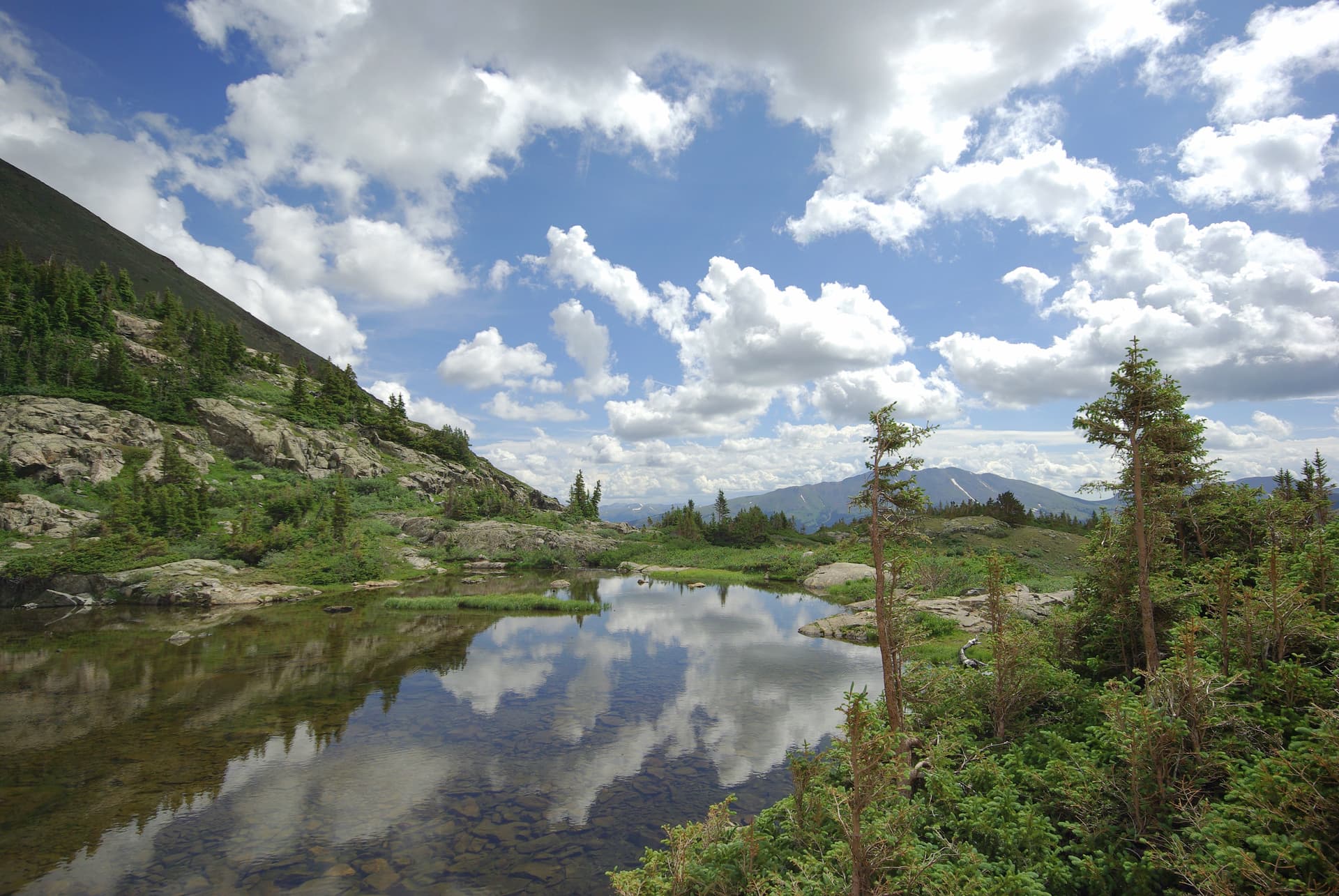
Switchbacks to Lawn Lake (the final push). The trail tightens into switchbacks as it climbs toward the basin, then eases as you approach the lake. Around 6.2 miles you break out to Lawn Lake at nearly 11,000 feet, a wide, shallow sheet of water sitting below Fairchild Mountain, Hagues Peak, and Mummy Mountain. This is the payoff, and because so few people make the full distance, you often get it close to yourself. Find a rock, eat lunch, and watch the light move across the Mummy Range.
None of the trail is technical. It's Class 1 the whole way, well-marked and easy to follow, though the upper basin can hold snow into early July and gets exposed to wind and afternoon weather. If alpine lakes are your thing, our guide to the best alpine lakes in Colorado has more high basins worth the miles.
Other Hikes From the Lawn Lake Trailhead {#other-hikes}
The distance to Lawn Lake scares off a lot of people, but the same trailhead opens shorter and longer options.
Ypsilon Lake (about 4.5 miles one way). Take that left split at 1.4 miles, cross the Roaring River, and climb to Ypsilon Lake, a moody lake set in dark timber below the sheer face of Ypsilon Mountain. It's a shorter round trip than Lawn Lake with a different feel, more forest and less open basin.
Crystal Lakes (add about 1.6 miles from Lawn Lake). Strong hikers can push past Lawn Lake and climb another mile and a half or so to the Crystal Lakes, tucked higher in the basin near 11,500 feet under Fairchild Mountain. This turns the day into a serious 15-plus-mile outing, so save it for when you're acclimated and moving well.
The Alluvial Fan (about a 0.6-mile stroll). Just down the road from the trailhead, the Alluvial Fan Trail is a short, mostly easy walk over the debris field the 1982 flood left behind, with a small waterfall tumbling through the boulders. It's the family-friendly counterpoint to the big Lawn Lake day and a good leg-stretcher if the long hike isn't in the cards.
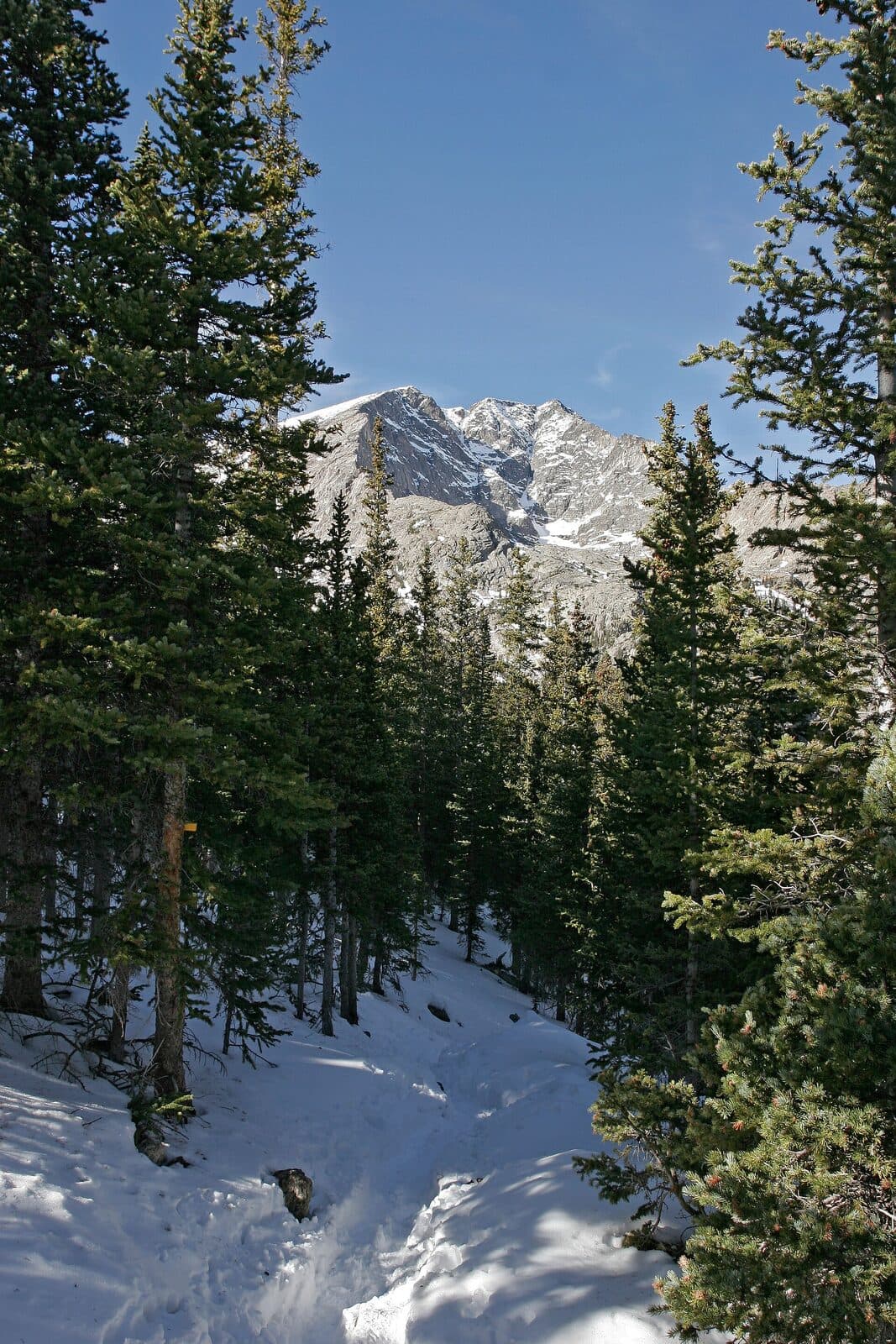
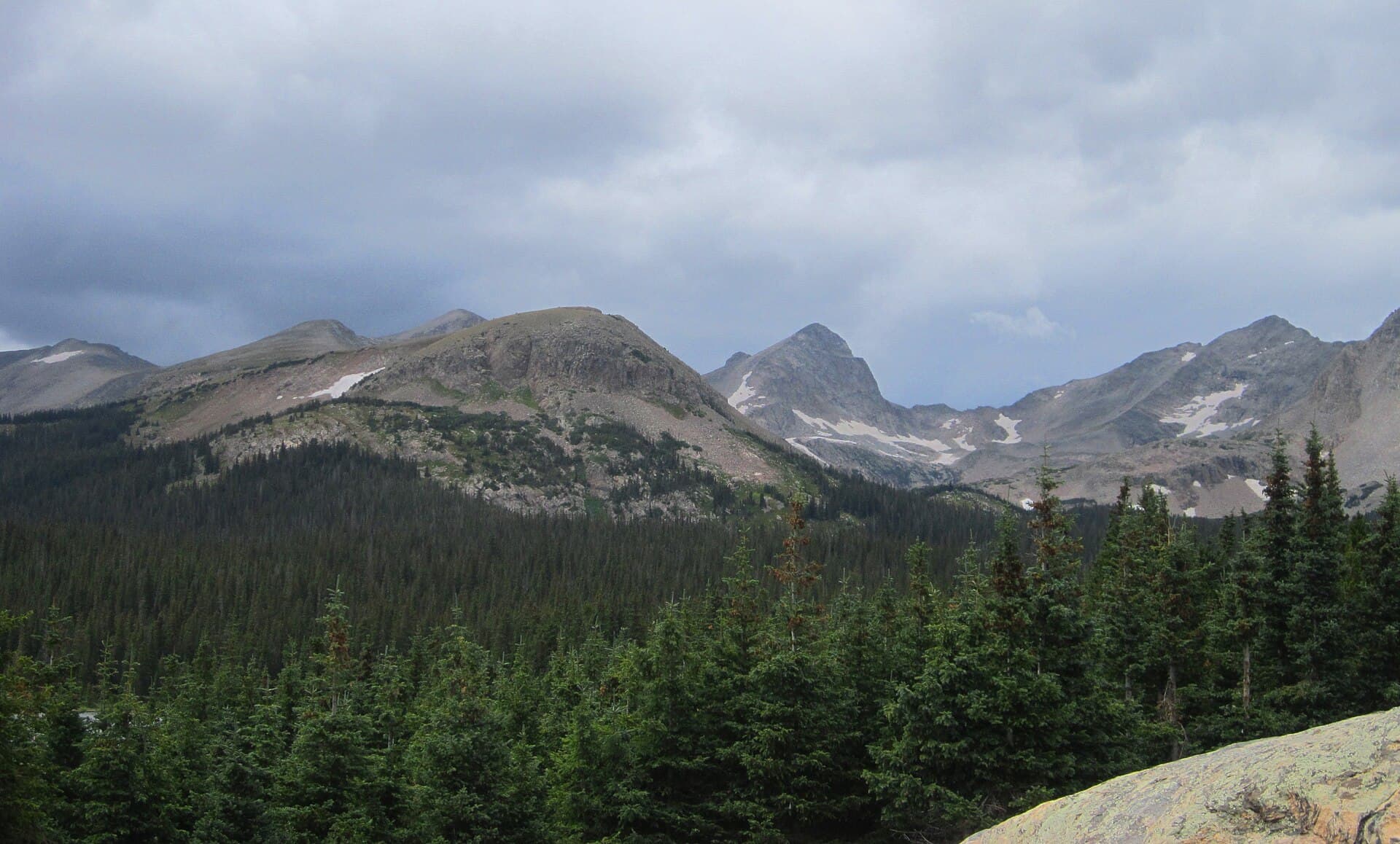
The Ypsilon Lake Trail branches off the Lawn Lake route and climbs into darker timber below Ypsilon Mountain.
What to Pack {#what-to-pack}
Lawn Lake is a long day at altitude, with a start well below the lake and a finish above 10,000 feet where weather swings hard. Pack for a real mountain outing, not a stroll.
Quick pick: A dependable pair of hiking boots is the single best thing you can bring for this trail. Twelve rocky miles are a lot kinder on your feet with real support and grip.
The rest of the short list:
- A hiking daypack large enough for layers, food, and at least 2 to 3 liters of water for a full day
- A layering system: a base layer, a warm midlayer, and a packable rain and wind shell, because it can be 45 degrees and blowing at the lake while it's 75 in Estes Park
- A set of trekking poles to save your knees on the long descent
- A water filter so you can refill from the Roaring River instead of hauling all 3 liters uphill
- Sun protection: a brimmed hat, sunglasses, and sunscreen for the exposed upper basin
For our full picks on the pieces that matter most, see our guides to hiking boots for Colorado, trekking poles, and water filters. Early in the season, a set of microspikes helps on snow that lingers in the upper basin into July.
Best Time to Hike {#when-to-go}
Late June to early July: Snowmelt has the Roaring River loud and full, and Horseshoe Park greens up fast. Expect lingering snow and mud in the upper basin, and pack microspikes if you want to reach the lake cleanly.
Mid-July to August: Prime time. The trail dries out, wildflowers fill the meadows, and the lake basin is at its warmest, though afternoon thunderstorms are almost a daily promise. Start early and aim to be off the exposed upper trail by early afternoon.
September to early October: The best window for solitude. Crowds thin after Labor Day, the aspen and willows turn gold, and the air gets crisp. Watch for the first snows up high and shorter daylight for a 12-mile day.
Late October through May: The high basin turns to a winter objective for people with snow skills. That's a different trip. If you're building toward long alpine days like this one, start with our beginner's guide to Colorado hiking.
Whatever month you pick, get an early start. Storms build fast over the Mummy Range in summer, and you don't want to be standing at an open alpine lake when the sky goes dark.
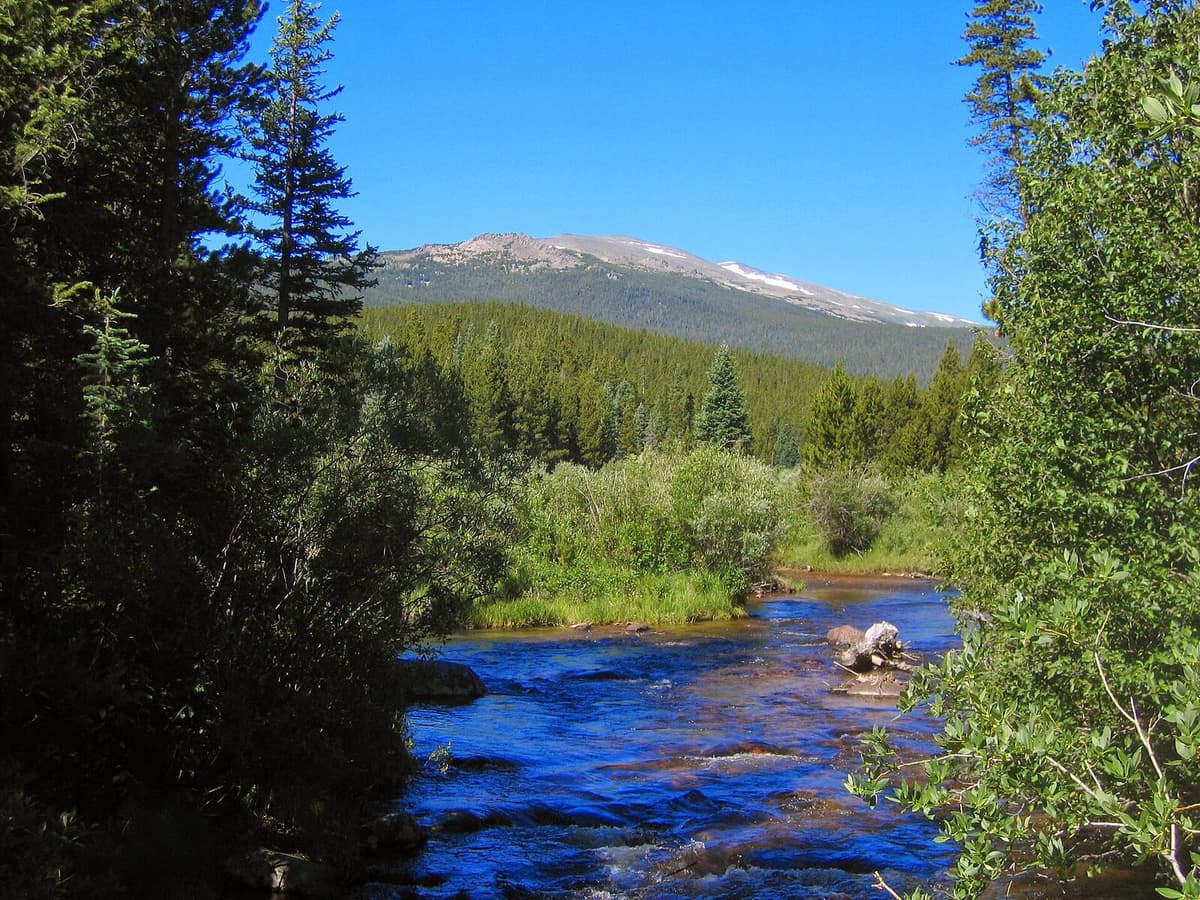
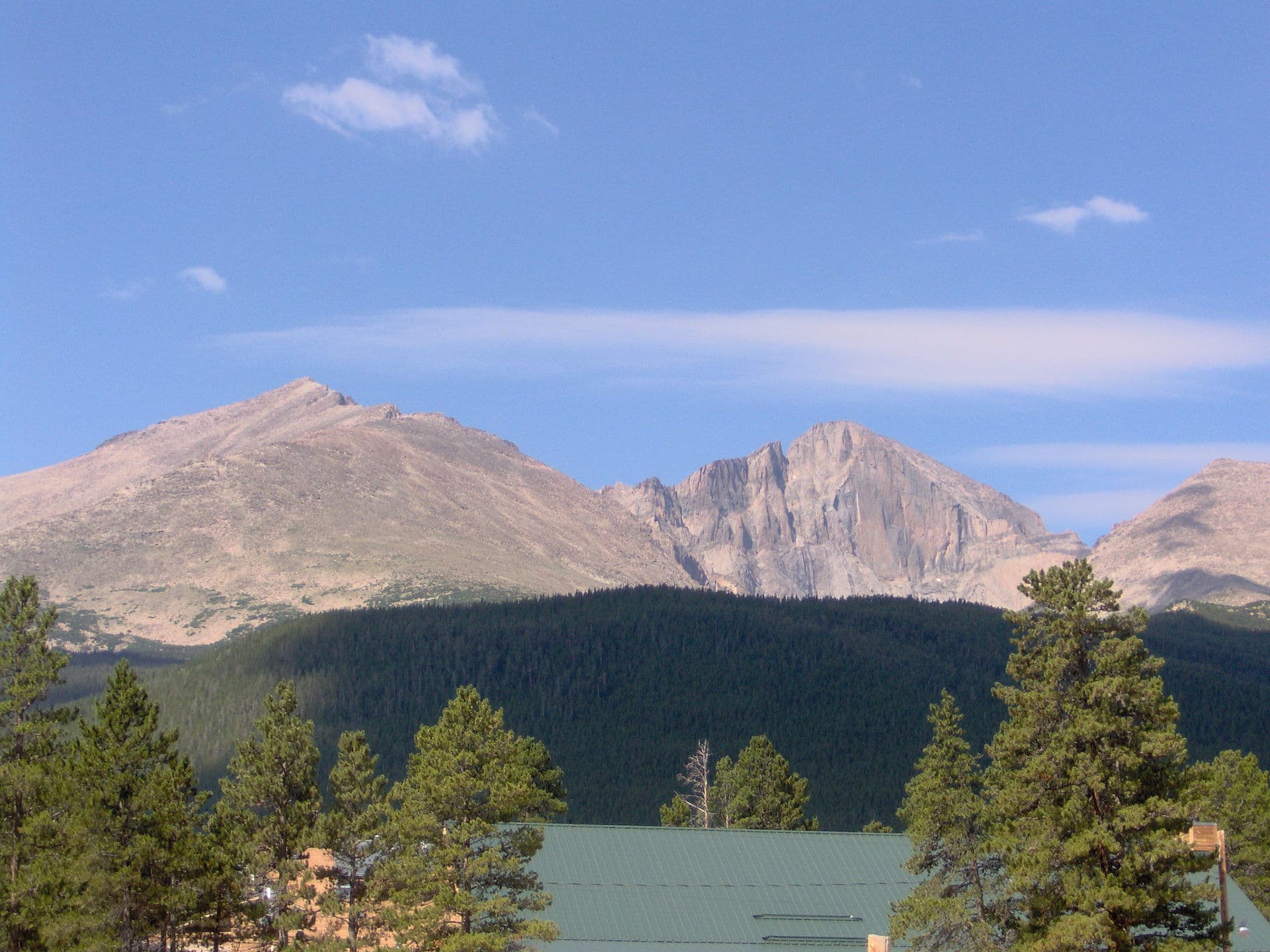
Fairchild Mountain, Hagues Peak, and Mummy Mountain form the wall behind Lawn Lake.
Wildlife and Trail Rules {#wildlife-rules}
Horseshoe Park is one of the best places in the park to spot bighorn sheep. In late spring and early summer they come down from the Mummy Range to the mineral licks near Sheep Lakes, right across the meadow from the trailhead. Rangers sometimes stop traffic on US-34 to let them cross. You may also see elk in the meadows, marmots and pika up in the rocks, and the occasional moose in the willows.
A few ground rules keep this place worth visiting:
- Dogs are not allowed on any trail in the park, only in parking lots and campgrounds, and they must be leashed there
- Stay on the trail through the alpine tundra; those plants take decades to recover from a bootprint
- Give bighorn sheep and every other animal plenty of room, and never feed them
- Pack out everything you bring in, food scraps included
Altitude is the real hazard on this hike, not the terrain. You finish above 10,000 feet after a long climb, and headaches, nausea, or dizziness can hit even fit hikers. Drink water, slow down, and turn around if it gets worse. Our guide to altitude sickness in Colorado covers how to prevent it and when to call it.
Common Mistakes {#common-mistakes}
Overpaying attention to the Bear Lake permit. People assume every RMNP trail needs the hard-to-get Bear Lake reservation. Lawn Lake doesn't. It's on the standard timed entry, or you can skip that entirely by arriving before 9 a.m.
Underestimating the distance. A 12.4-mile round trip with 2,500 feet of gain at altitude is a full day, not a morning walk. Budget 6 to 8 hours and start early.
Running out of water. There's none at the trailhead and it's a long, dry climb. Carry at least 2 to 3 liters or bring a filter to refill from the Roaring River.
Starting too late. A mid-morning start puts you at the exposed lake right when storms fire. Be walking by 7 or 8 a.m., earlier on busy summer weekends.
Skipping the flood story. Take five minutes at the Alluvial Fan on your way out. Seeing where all that rock landed makes the scarred lower trail make sense.
Frequently Asked Questions {#faqs}
Do you need a permit for the Lawn Lake Trailhead?
You need a standard Rocky Mountain National Park timed entry reservation between 9 a.m. and 2 p.m. from May 22 to October 12, 2026, plus a park entrance pass. The Lawn Lake Trailhead is not on Bear Lake Road, so it does not require the stricter Bear Lake corridor permit. Arrive before 9 a.m. and you can skip the timed entry entirely.
How long is the Lawn Lake hike?
Lawn Lake is about 6.2 miles one way, or roughly 12.4 miles round trip, with about 2,500 feet of elevation gain. Most hikers take 6 to 8 hours for the full out-and-back, so it's a committing day rather than a quick morning outing.
How hard is the Lawn Lake Trail?
It's strenuous, but not technical. The trail is a well-marked Class 1 path the whole way with no scrambling, so the difficulty comes from the distance, the steady climb, and finishing above 10,000 feet rather than from the terrain itself.
What happened at Lawn Lake in 1982?
The earthen dam holding Lawn Lake failed on July 15, 1982, releasing about 30 million cubic feet of water down the Roaring River. The flood killed three campers, caused around $31 million in damage in Estes Park, and left the Alluvial Fan debris field you can still see in Horseshoe Park.
Can you see Lawn Lake without the full hike?
Not the lake itself, since it sits 6.2 miles up the trail. But you can visit the Alluvial Fan near the trailhead on a short 0.6-mile walk, which tells the flood story, and Horseshoe Park at the base is a great spot to watch for bighorn sheep.
Lawn Lake rewards the hikers willing to trade a short trail for a long, quiet one, and it hands you an alpine lake, a wild flood story, and a permit that's far easier to land than Bear Lake's. Get your timed entry or beat the 9 a.m. window, pack for a full day up high, and start early. For more of the park, read our Rocky Mountain National Park guide and our roundup of the best hikes near Estes Park.
Get the Colorado 14er Packing Checklist (free PDF)
Plus a weekly note on the best Colorado trails, gear deals, and seasonal hike picks. No spam, unsubscribe anytime.
We respect your inbox. Unsubscribe anytime.