Mount Bierstadt Weather: When to Climb and What to Expect
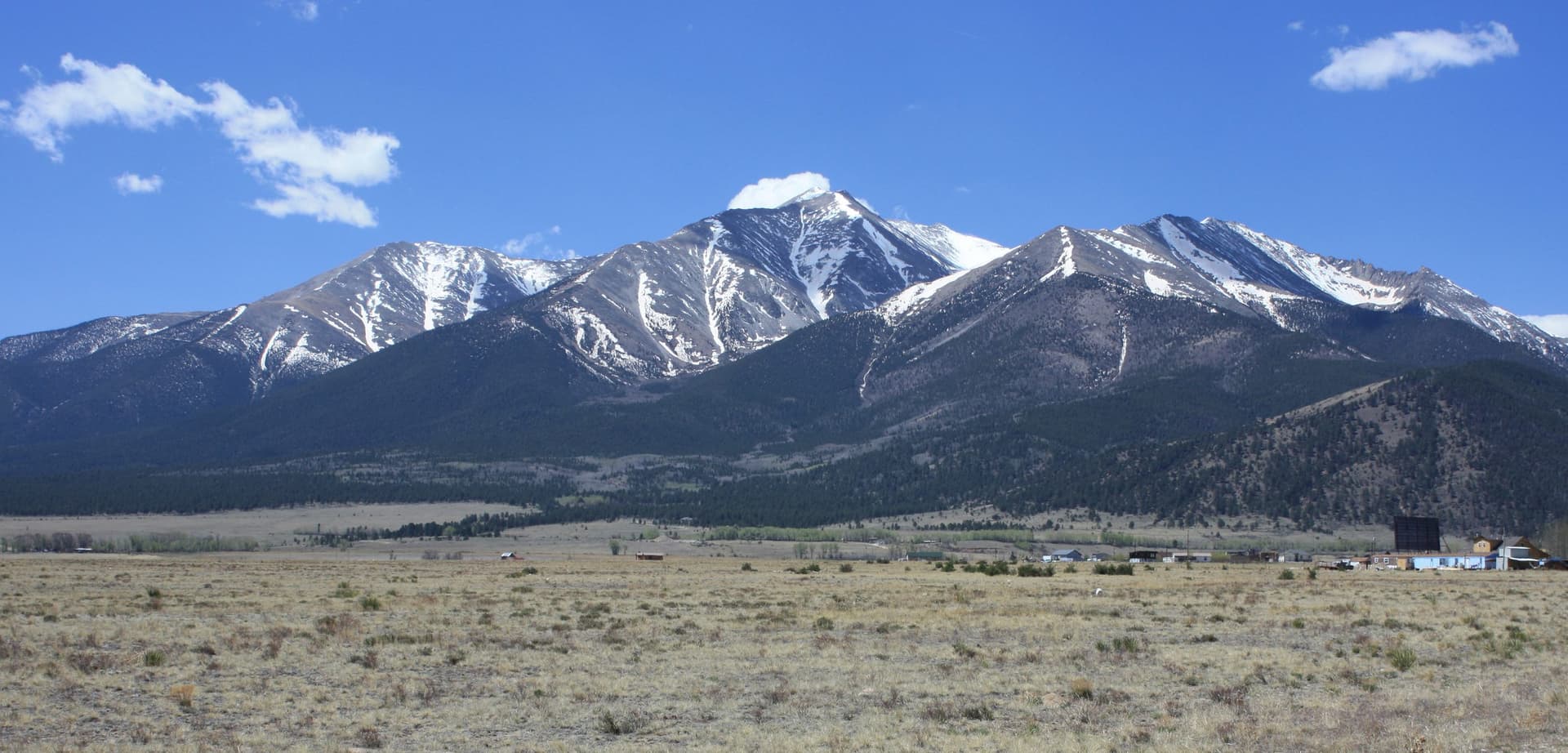
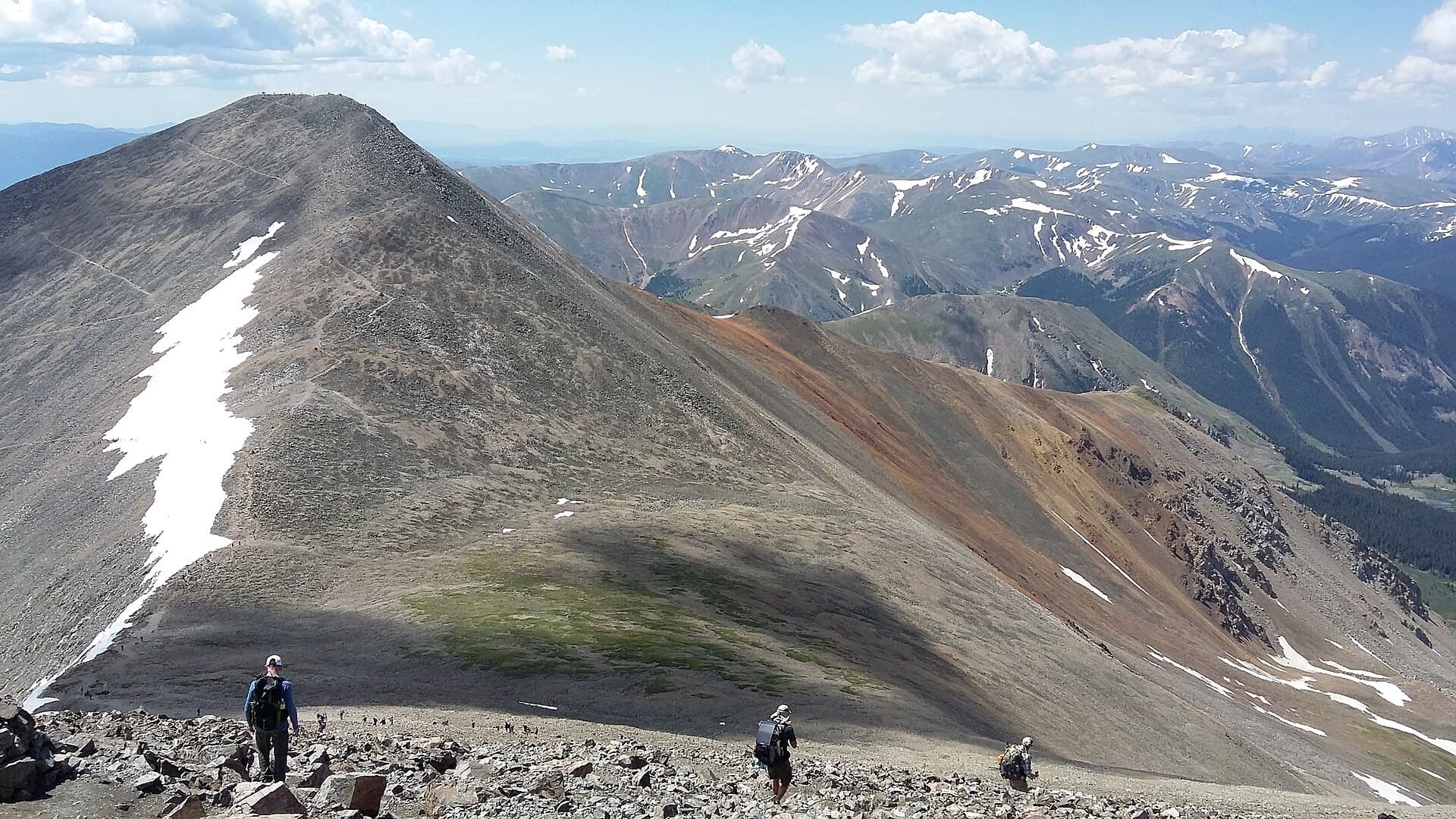
Mount Bierstadt weather is the part of the climb people plan around last and regret first. The summit sits at 14,060 feet, the trailhead at Guanella Pass starts you at 11,669 feet, and almost the entire route runs above treeline. That's the catch. Bierstadt is Colorado's most-climbed 14er and one of its easiest walk-ups, so it draws crowds who treat it like a long hike. The weather doesn't care that it's easy. You're exposed from the parking lot to the summit, and in summer the afternoon storms show up on schedule.
The good news is that Bierstadt's weather is predictable enough to plan around. Mornings are usually calm and clear. Storms build in the afternoon. Get up early, move fast, and turn around on time, and you'll have the mountain at its best. Ignore the clock and you're the tallest thing on an open ridge when the lightning starts.
This guide covers what to actually expect on Mount Bierstadt: temperatures, the month-by-month picture, the best window to climb, how the summer storms work, and how to read the forecast so the weather doesn't decide the day for you.
What You'll Learn
- Quick Weather Facts
- How Cold Does It Get on Mount Bierstadt?
- Mount Bierstadt Weather by Month
- The Best Time to Climb Mount Bierstadt
- Summer Storms and the Noon Rule
- Winter and Shoulder-Season Conditions
- Why the Weather Feels Worse Above Treeline
- What to Wear and Pack
- How to Check the Mount Bierstadt Forecast
- Frequently Asked Questions
Quick Weather Facts
- Summit elevation: 14,060 ft
- Trailhead elevation: 11,669 ft (Guanella Pass)
- Summit vs. Denver: typically 25 to 35°F colder
- Summer summit highs: mid-40s to mid-50s°F (July-August)
- Summer summit lows: upper 20s to mid-30s
- Winter summit highs: 5-20°F, with lows well below zero
- Wind: commonly 20-40 mph up high, far stronger in storms
- Snow: possible any month; the west slopes hold snow into June and again by October
- Standard non-technical window: mid-June through late September
- Afternoon storm season: July and August (the monsoon)
- Most stable stretch: September, before winter moves back in
How Cold Does It Get on Mount Bierstadt?
The number to plan around: the summit runs roughly 25 to 35°F colder than Denver. So when the city is showing 85°F on a July afternoon, the top of Bierstadt is sitting somewhere in the low 50s at best, and that's before you factor in wind.
In the standard climbing season, summit highs land in the mid-40s to mid-50s on a good day, and overnight lows drop into the upper 20s and 30s. You'll usually leave Guanella Pass in the 40s or low 50s at first light, warm up on the climb up the west slopes, then feel it all come back once you stop moving on the summit.
Wind is the part hikers underestimate on Bierstadt. Because you're above treeline almost the whole way, there's nothing to slow it down. A 45°F reading with a 25 mph wind feels closer to the low 30s on bare skin, and gusts of 40 mph or more are common on the summit ridge even on an otherwise nice day. Pack as if the top will be cold and windy no matter how warm it is at the car, because it usually is.
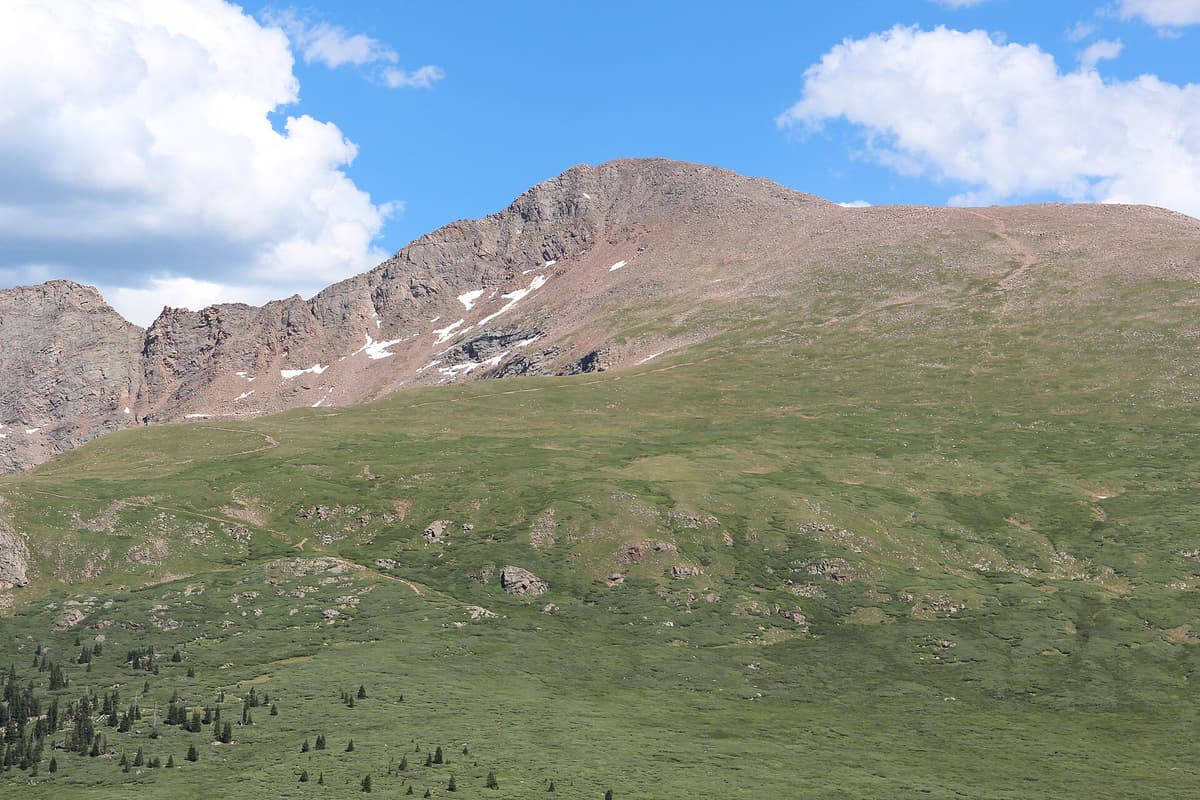
Mount Bierstadt Weather by Month
Here's the rough shape of the year up high. Treat these as typical patterns, not promises, because high-altitude weather swings hard from one day to the next.
January-February. Deep winter. Summit highs in the single digits and teens, lows below zero, and steady wind that can top 60 mph in storms. Guanella Pass Road is closed past the South Clear Creek Picnic Area, which turns the climb into a 26-plus-mile commitment on snow.
March-April. Still full winter up high. Snow is deep in the willows and on the west slopes, days are short, and the road stays closed. March is one of the snowier months in the Front Range high country.
May. The base starts to thaw, but the upper mountain stays buried and the road usually isn't open yet. The willow flats near Scott Gomer Creek turn into a wet, postholing mess as the snow rots out.
June. The transition month. Once Guanella Pass Road opens, usually by mid-June, the standard season begins. Early June still holds snow in the gully and the willows can be soggy, but by late June the west slopes are often clear enough for a straightforward walk-up.
July. Prime time for daylight and warmth, and the start of the monsoon. Afternoon thunderstorms build almost daily, so mornings are your only reliable window. This is the busiest month on the mountain.
August. Warm, crowded, and the wettest month. Storms fire most afternoons, and a passing cell can drop hail or graupel even in the middle of summer. Early starts aren't optional.
September. The sweet spot for weather. The monsoon usually breaks, the air dries out, and conditions stabilize. Mornings are colder and the light fades sooner, and a late-month storm can put fresh snow on the route with little notice.
October. Winter returns fast. Early snow ices the gully and the summit boulders, the road closes again, and the standard season effectively ends.
November-December. Full winter, with cold, wind, short days, and a long snow approach once the road shuts.
The Best Time to Climb Mount Bierstadt
If you want the standard west slopes route without technical snow gear, the window is roughly mid-June through late September. That's once Guanella Pass Road opens and the route has melted out enough to move on rock and tundra instead of snow. Bierstadt clears earlier than the harder, higher peaks because it's a Class 2 walk-up with a short, sun-exposed route.
Within that window, September gives you the most stable weather. The August monsoon has usually faded, the afternoon storms taper off, and high pressure brings drier, clearer days. The trade-offs are colder starts and less daylight. July and August are warmer with the longest days, but you're climbing in peak thunderstorm season, so the early start matters even more.
Because Bierstadt is the go-to first 14er, it gets slammed on summer weekends. The Guanella Pass lots fill by 6 AM on a July or August Saturday, and an early arrival for parking lines up perfectly with the early start the weather demands. If you're deciding whether Bierstadt is the right peak for your first summit at all, our guide to the easiest 14ers in Colorado puts it next to the other beginner-friendly options, and the full Mount Bierstadt route guide walks the climb section by section.
Summer Storms and the Noon Rule
Summer on Bierstadt comes with the same rule that governs the whole Colorado high country: be off the summit and headed down by noon, and earlier is better. Afternoon thunderstorms build almost daily in July and August. They form fast, throw lightning and hail, and drop the temperature hard, and above treeline there's nowhere to hide.
The daily pattern is predictable enough to plan around. Mornings start clear and calm. By late morning, clouds stack up over the Sawtooth and the summit. By early afternoon, storms are going. Since the round trip runs about 5 to 8 hours for most hikers, working backward from a noon deadline is exactly why the standard advice is a pre-dawn start. Plenty of people aim to be on the summit by 9 or 10 AM and back in the willows before the sky turns.
What makes Bierstadt riskier than its easy reputation suggests is the exposure. On many 14ers you climb through forest for an hour or two before you're out in the open. Here the trailhead already sits at treeline, so you're exposed to lightning almost from the first step. If you hear thunder or watch clouds building while you're still climbing, the summit isn't worth it. Turn around. Altitude makes the call harder to think through, so if you're feeling the elevation, read up on altitude sickness in Colorado before you go, because a pounding headache at 14,000 feet clouds exactly the judgment you need.
Winter and Shoulder-Season Conditions
Outside the summer window, Mount Bierstadt is a different objective. From roughly late October through May, Guanella Pass Road is closed past the South Clear Creek Picnic Area, so the climb starts miles lower and turns into a 26-plus-mile snow trek or an overnight. Summit highs sit in the single digits and teens, lows fall below zero, and wind chills of -20°F or colder are normal in a storm.
The willows are their own winter problem. That flat stretch near the creek fills with deep, unconsolidated snow that swallows a leg to the hip, and it saps energy long before you reach the real climbing. Add short daylight and a long road walk, and a winter Bierstadt day is a serious outing even though the summer version is a beginner's peak.
If you're set on a shoulder-season or winter attempt, treat it like the cold-weather mountaineering trip it is: real traction, warm layers with backups, and a hard turnaround time. Our winter hiking guide for beginners covers the gear and the decision-making that keep cold trips from going sideways, and it's worth reading before you commit to Bierstadt in the snow.
Why the Weather Feels Worse Above Treeline
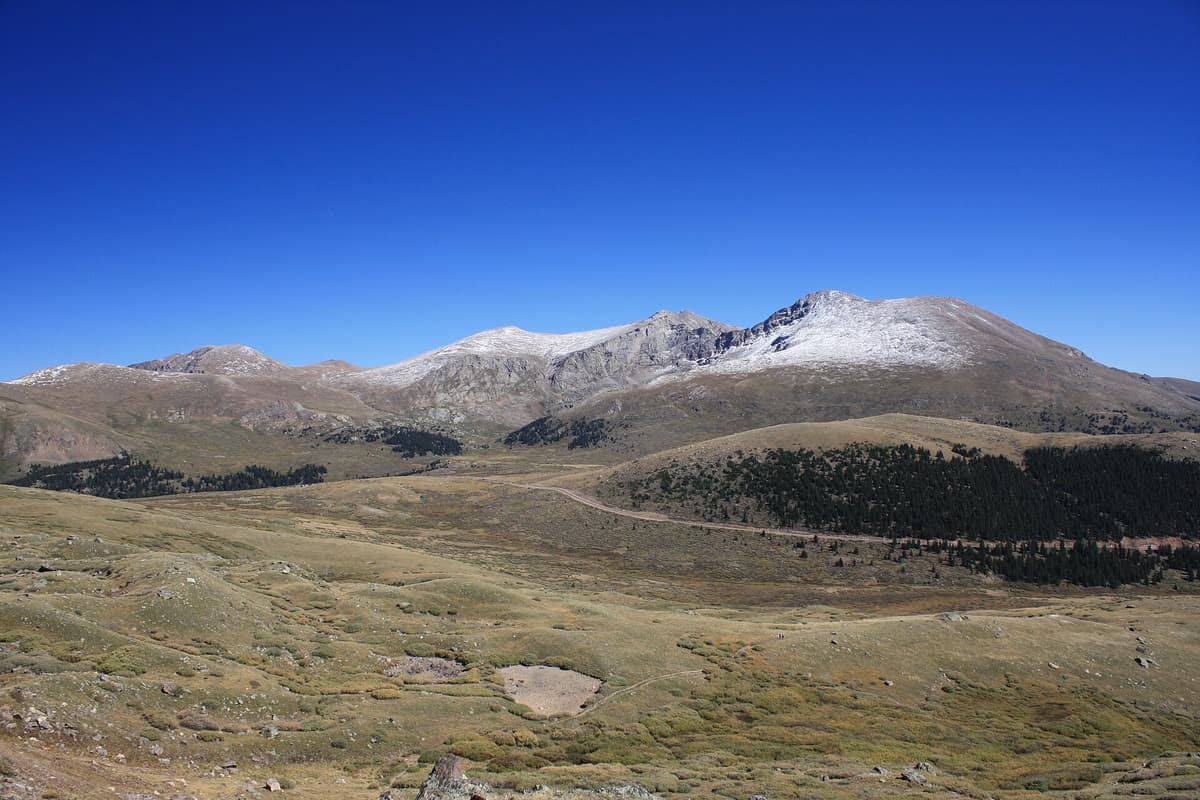
The reason Bierstadt feels so much colder and windier than Guanella Pass comes down to elevation and exposure. Air cools as you climb, roughly 3 to 5°F for every 1,000 feet. The summit is about 2,400 feet above the trailhead and nearly 8,800 feet above Denver, which alone explains most of the temperature gap.
The bigger factor is that there's no shelter. On a forested peak, the trees block wind and give you somewhere to wait out a passing cell. Bierstadt's route is open tundra and boulder the whole way, so whatever the range is throwing at you hits you directly. That's why a calm morning at the car can turn into a stiff, cold wind on the ridge, and why the summit boulders feel arctic even when the valley is warm.
Thin air adds to it. Higher up, the sun is stronger, the air is drier, and weather moves in faster than it looks like it will. A pillow-shaped lenticular cloud parked over the summit or the Sawtooth is a classic sign that strong wind is on the way, and it's worth heeding even under blue sky. For the bigger picture on how Front Range peaks stack up, our Colorado 14ers guide puts Bierstadt in context, and the sibling Longs Peak weather guide covers a nearby peak with the same afternoon-storm rhythm.
What to Wear and Pack
The rule for Bierstadt is simple: dress for the summit, not the trailhead. You'll start cool in the dark, warm up fast on the climb, and end cold and windy on exposed rock, so layers you can add and shed are the whole game.
A working summer kit looks like this:
- Insulating layer. A packable down jacket or synthetic puffy you can pull on at the summit and stuff away for the climb. See our down jacket picks.
- Wind and rain shell. A waterproof rain jacket blocks the ridge wind and any afternoon cell you get caught in. Our rain jacket roundup has options built for the alpine.
- Warm base and midlayer. A merino wool base layer holds heat even when you sweat on the way up.
- Hat and gloves. A warm beanie and lightweight gloves weigh almost nothing and save your hands on cold summit rock.
- Headlamp. You're leaving in the dark, so a bright headlamp with fresh batteries isn't optional.
- Sun protection. The high-altitude sun is brutal on open tundra. Bring high-SPF sunscreen and polarized sunglasses.
For an early-season climb in June or a late-season one in October, add traction. A pair of microspikes handles firm snow in the gully and on the willow crossing, and our microspike guide explains where they help and where you need more.
How to Check the Mount Bierstadt Forecast
Town forecasts lie about the summit. An app pinned to Georgetown or Denver shows you low-elevation conditions, which can be 25 to 35°F warmer and much calmer than 14,060 feet. Check a forecast built for the elevation instead, and pay attention to the storm timing specifically.
A few reliable sources:
- Mountain-forecast.com publishes a dedicated Mount Bierstadt forecast broken out by elevation band, including summit-level wind and temperature.
- The National Weather Service point forecast for the summit coordinates gives you a government read on temperature, wind, and thunderstorm probability by hour.
- The Guanella Pass Road status from Clear Creek County and the Forest Service tells you whether you can even drive to the trailhead, which matters most in the shoulder seasons.
Check the forecast the night before and again the morning of. In summer, zero in on the afternoon thunderstorm timing so you can set a turnaround that gets you off the ridge before storms fire. In the shoulder seasons, watch the wind and the chance of new snow. If the summit forecast looks ugly, there are plenty of lower, safer days out nearby, and our best day hikes near Denver can point you somewhere the weather isn't the whole story.
Frequently Asked Questions
What is the best time of day to climb Mount Bierstadt?
Start before dawn, usually between 4 and 6 AM in summer. The goal is to reach the summit by mid-morning and be headed down by noon, because afternoon thunderstorms build almost daily in July and August. Since the route is above treeline the whole way, an early start is the single most useful safety decision on the mountain.
Does it snow on Mount Bierstadt in summer?
Yes. Snow can fall on Mount Bierstadt in any month, including July and August. Summer snow usually comes as brief hail or graupel during afternoon storms and rarely piles up, but it can make the summit boulders slick and drop the temperature sharply within minutes.
How cold is it on the summit of Mount Bierstadt?
The summit typically runs 25 to 35°F colder than Denver. In the summer climbing season, expect summit highs in the mid-40s to mid-50s and overnight lows in the upper 20s to mid-30s. Wind makes it feel colder than the thermometer reads, so carry a warm layer even on a hot day at the trailhead.
When does Guanella Pass Road open for Mount Bierstadt?
Guanella Pass Road usually opens by mid-June and closes again in late October, though exact dates depend on the snowpack each year. When the road is closed past the South Clear Creek Picnic Area, the climb becomes a 26-plus-mile trek, so check the road status before a shoulder-season attempt.
Is Mount Bierstadt a good winter climb?
It can be, but it's far harder than the summer walk-up. The closed road adds many miles, the willows fill with deep snow, and summit temperatures drop below zero with heavy wind chill. Treat a winter Bierstadt as a real mountaineering day with traction, warm layers, and a firm turnaround time.
Final Thoughts
Mount Bierstadt rewards hikers who respect the clock and the sky. Climb in the mid-June to late-September window, start before dawn, watch the forecast at summit elevation, and set a hard turnaround that gets you off the exposed ridge before the afternoon storms build. Do that and Bierstadt lives up to its reputation as the friendliest 14er in Colorado.
Ready to plan the climb itself? Our Mount Bierstadt route guide walks the west slopes section by section, from Guanella Pass to the summit and back.
Get the Colorado 14er Packing Checklist (free PDF)
Plus a weekly note on the best Colorado trails, gear deals, and seasonal hike picks. No spam, unsubscribe anytime.
We respect your inbox. Unsubscribe anytime.