Chautauqua Park, Boulder: Trails, Parking, and the Flatirons Guide
Chautauqua Park is the green lawn and red rock at the base of the Flatirons in Boulder, and it's the single best place to start hiking in the city. From the trailhead you can walk a flat meadow loop with a stroller, scramble up to a sandstone arch, or pick up the Mesa Trail and disappear into the foothills for the whole day. The park itself is free, the views start the moment you step out of the car, and the trail network fans out in every direction from one small ranger cottage.
The catch is parking, which fills before breakfast on summer weekends and now runs on a paid permit system in peak season. Get that part sorted and Chautauqua delivers more trail per minute of driving than almost anywhere in Colorado. This guide covers how to get there, where to park, the six hikes worth your time, and what to bring so the afternoon doesn't catch you out.
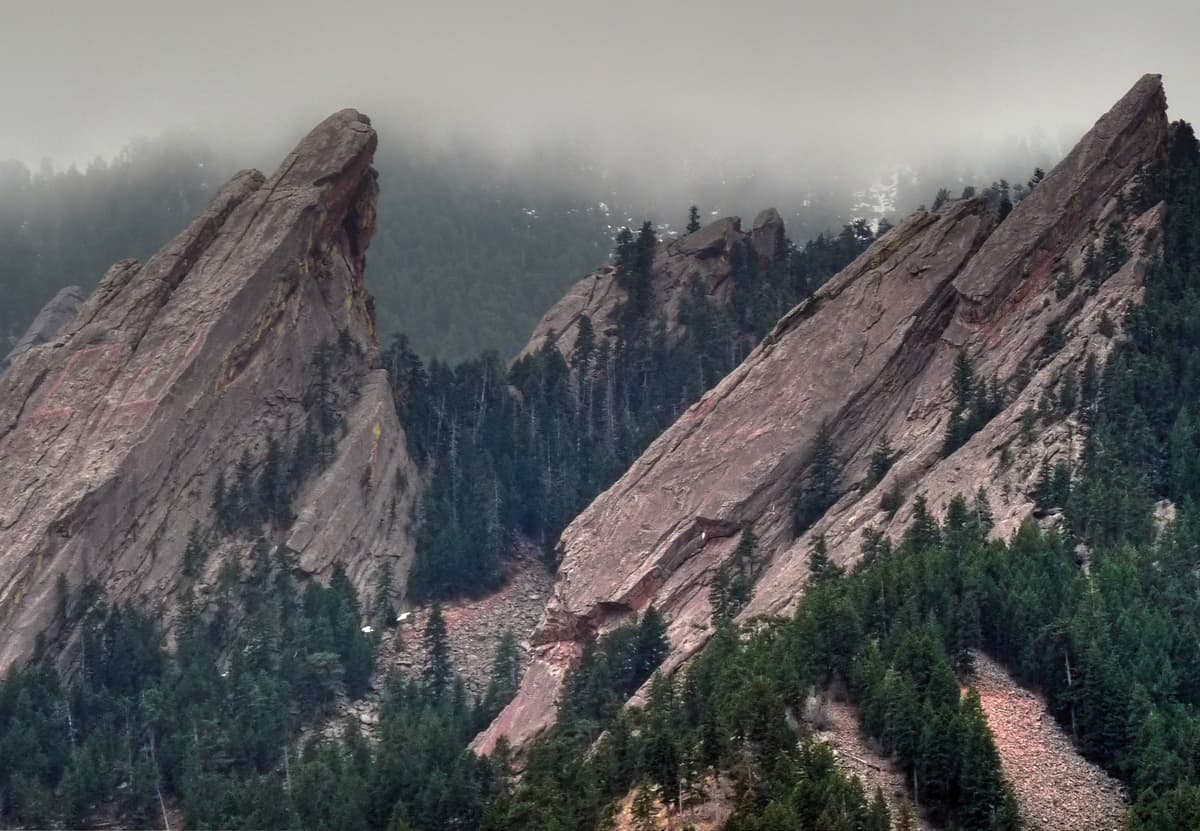
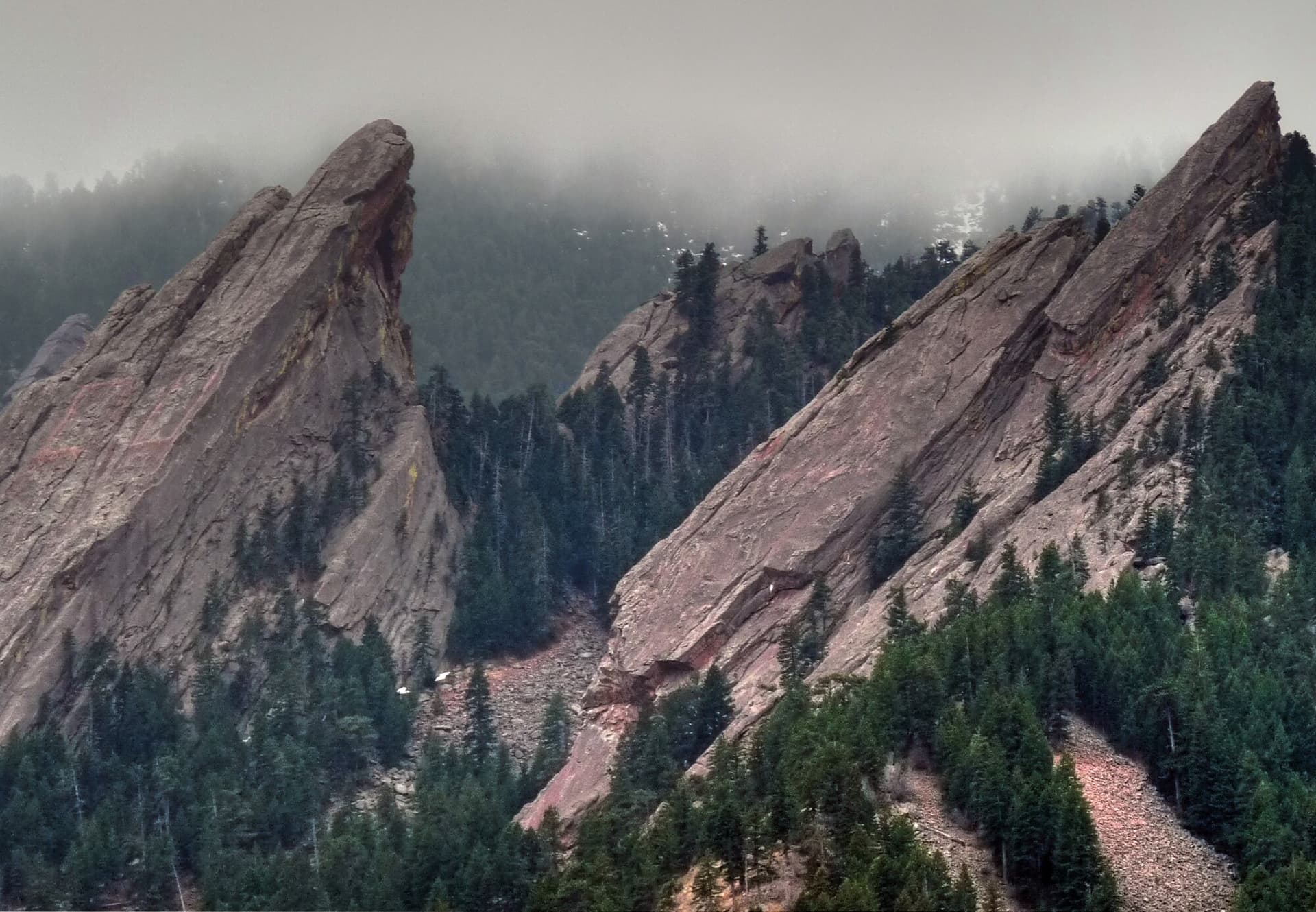
The Flatirons tower over the Chautauqua meadow, and most of Boulder's best foothill trails start right here.
Quick pick: Short on time? Hike the Chautauqua Trail up to the Bluebell Shelter and back. It's about 2.5 miles round trip, climbs you straight into the Flatirons, and turns around before the steep stuff. Want the payoff hike? Make it Royal Arch.
Planning a Boulder trip? Pair this with our best hikes near Boulder roundup, the Boulder Canyon Trail guide, and the Colorado hiking beginner's guide if you're new to hiking at altitude.
What You'll Learn
- What Makes Chautauqua Park Special
- Where Is Chautauqua Park and How to Get There
- Parking and the Summer Permit System
- The 6 Best Hikes From the Chautauqua Trailhead
- Chautauqua Trail Difficulty and What to Bring
- The Dining Hall, Cottages, and Concerts
- Best Time to Visit Chautauqua Park
- Dogs and Trail Rules
- Frequently Asked Questions
What Makes Chautauqua Park Special
Most trailheads are a gravel pullout and a sign. Chautauqua is a whole place. The Colorado Chautauqua opened in 1898 as a summer retreat for Texas teachers, and it's one of the few original Chautauquas in the country still running the way it was built. The white cottages, the big auditorium, and the dining hall all date to that era, and the whole site is a National Historic Landmark. You hike out of a working historic village, not a parking lot.
The land behind it belongs to Boulder's Open Space and Mountain Parks, the city program that protects roughly 46,000 acres of foothills and ranch land. That's why the trails are so well built and so well signed. From the meadow at about 5,700 feet, the path climbs fast into the First and Second Flatirons, the tilted slabs of Fountain Formation sandstone that give Boulder its skyline.
What sets Chautauqua apart from a normal trailhead is how many different hikes share the same start. A family with little kids can do the flat Chautauqua Trail loop. A trail runner can link Royal Arch with the Flatirons traverse. A through-hiker can drop onto the Mesa Trail and walk all the way to Eldorado Springs. One parking lot, a dozen good days out.
Where Is Chautauqua Park and How to Get There
Chautauqua Park sits at the corner of Baseline Road and Ninth Street on the south side of Boulder, about 30 minutes northwest of downtown Denver on US 36. From the highway, take the Baseline Road exit and head west until the road tips up toward the mountains. The Ranger Cottage and the main lot are on your left, with the dining hall and cottages just past it.
The Ranger Cottage is your information hub. It has restrooms, a water fountain to top off bottles, trail maps, and staff who can tell you which trails have seasonal closures that week. Start there if it's your first visit. The trails leave from behind the cottage and from the top of the meadow near the Bluebell parking area.
If you're driving in from the Front Range, Chautauqua pairs naturally with other foothill stops. It's an easy add-on to a day hike near Denver, and it's about 45 minutes from the trailheads we cover in our Estes Park guide if you're stitching together a longer Colorado week.
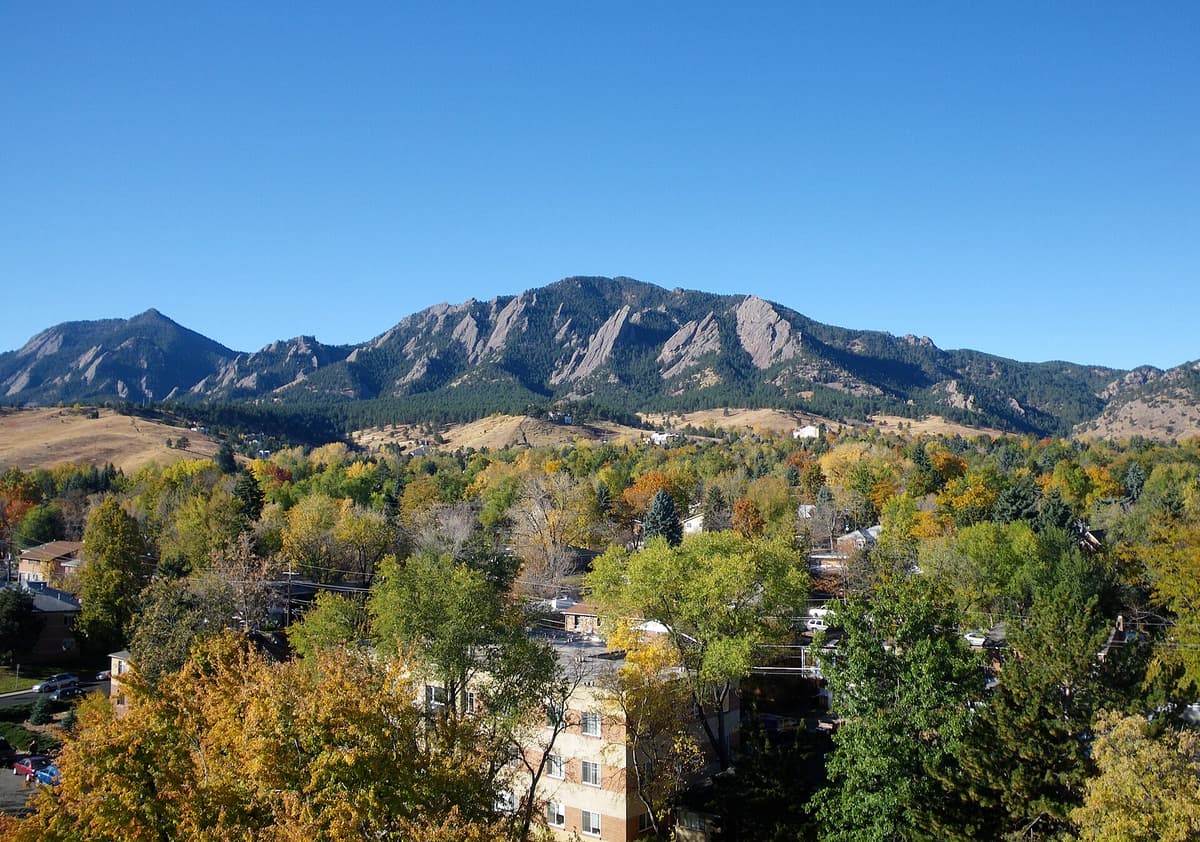
Fall light on the Flatirons is the reason locals show up at Chautauqua before sunrise.
Parking and the Summer Permit System
Here's the part that trips up first-timers. Chautauqua's small lots fill by 7 or 8 AM on summer weekends, and from late May through early September the city runs a paid parking program on weekends and holidays. During those peak hours you either reserve a parking permit ahead of time, pay at the lot, or skip the car entirely.
The smartest move in summer is the free Park-to-Park shuttle, which runs from the bus station downtown and from satellite lots straight to the Chautauqua trailhead on busy weekends. Park once, ride in, and you never circle for a spot. It saves the frustration of arriving at 9 AM to find every space taken and the overflow parking half a mile down Baseline.
Outside of summer weekends, parking is free and usually open, though early mornings on bluebird fall days still pack out fast. The rule of thumb at Chautauqua is the same one that works at most Colorado trailheads: get there before the crowd or plan to walk in from farther away. If you're chasing the quiet, a weekday start before 8 AM almost always gets you a spot right at the Ranger Cottage.
The 6 Best Hikes From the Chautauqua Trailhead
You could spend a month here. These six cover the range from stroller-flat to lung-busting.
1. Chautauqua Trail to Bluebell Shelter. The classic warm-up. This wide path climbs straight up the meadow into the base of the Flatirons, gaining about 500 feet in a little over a mile to the stone Bluebell Shelter. Turn around there for a roughly 2.5-mile round trip, or use it as the front door to everything above.
2. Royal Arch Trail. If you do one real hike at Chautauqua, make it this one. The 3.4-mile round trip climbs behind the First and Second Flatirons and finishes at a 20-foot sandstone arch framing the city and the plains. It gains around 1,400 feet, and the last half mile up to Sentinel Pass is steep and rocky. A pair of trail shoes with real grip makes the descent a lot kinder on your knees.
3. First and Second Flatiron Loop. This is the hike that puts you right up against the iconic slabs. The trail switchbacks into the saddle between the First and Second Flatirons, close enough to watch rock climbers working the faces above you. It's roughly 2.6 miles with about 1,400 feet of gain, steep and loose near the top, and it pairs well with Royal Arch for a bigger day since both share the lower Chautauqua network.
4. Mesa Trail. The spine of Boulder's south foothills. The Mesa Trail runs about 6.5 miles one way from Chautauqua to Eldorado Springs, rolling along the base of the Flatirons through meadow and ponderosa. Walk a couple miles and turn around, or set a car shuttle and do the whole thing as a point-to-point. It also feeds dozens of side canyons like Fern, Shadow, and Bear.
5. Enchanted Mesa and McClintock Loop. The gentle option. This shaded 2.5-mile loop climbs a wide gravel road up Enchanted Mesa, then drops back on the McClintock Nature Trail past interpretive signs and a small creek. It's the best pick for kids, dogs, or a recovery day, with shade most of the way.
6. Bear Peak via Fern Canyon. The big one. For strong hikers, Bear Peak is a roughly 8.5-mile round trip with over 2,900 feet of gain, much of it up the steep, rocky Fern Canyon. The summit needs a short hands-on scramble and rewards you with a 360-degree view of the Continental Divide. Save it for a clear morning and an early start.
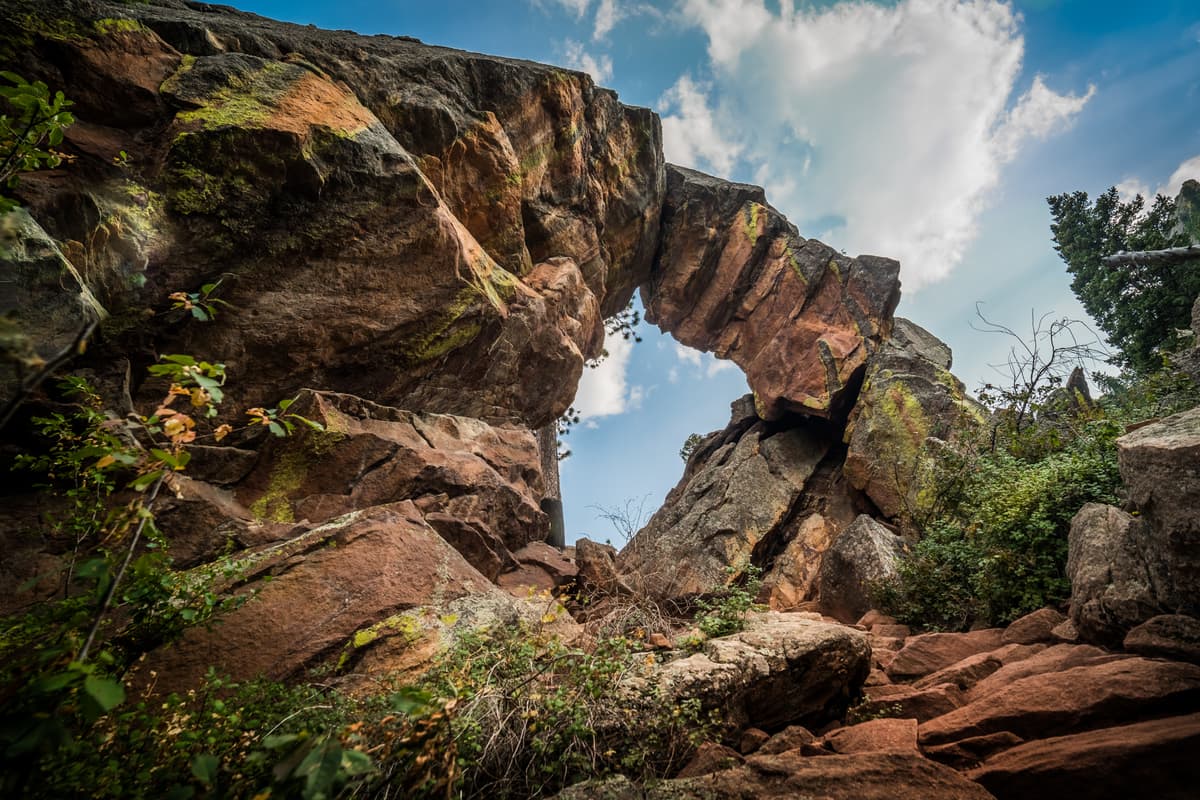
Royal Arch is the payoff hike from Chautauqua, a 20-foot span of rock with the whole city below.
Chautauqua Trail Difficulty and What to Bring
The trails here range from flat gravel to genuine scrambles, so the difficulty is whatever you choose. What stays constant is the climate. Chautauqua faces east at altitude, which means brutal morning sun, fast-moving afternoon storms in summer, and ice that lingers on the upper, shaded pitches well into spring. The First Flatiron trail can be dry at the meadow and snow-packed in the saddle on the same April day.
Pack for the trail, not the parking lot. Even for a short Royal Arch loop, carry a daypack with more water than you think you need, since the dry air and elevation dehydrate you faster than you notice. Toss in a packable rain shell from June through August and start early enough to be off the high points before the clouds build. A sun hat and sunscreen earn their weight on these exposed slopes.
Two small extras pay off here. Trekking poles steady you on the loose, rocky descents off the Flatirons and Royal Arch, and a pair of microspikes in your pack from November through April keeps the icy upper switchbacks from ending your day early. For a full breakdown of trail packs, see our guide to the best hiking daypacks for Colorado.
The Dining Hall, Cottages, and Concerts
Chautauqua isn't only trails. The Chautauqua Dining Hall, built in 1898, sits a short walk from the trailhead and serves a sit-down menu on a wide wraparound porch that looks out at the Flatirons. It's a genuinely good post-hike meal, and the porch is one of the better spots in Boulder to watch alpenglow hit the rock. Reservations help on weekends.
The white cottages scattered across the grounds are rentals. You can book a historic cottage through the Colorado Chautauqua Association and wake up a two-minute walk from the trailhead, which is about as good as Front Range trail access gets. They book out far ahead for summer, so plan early if you want one.
The Chautauqua Auditorium, a wooden barn of a concert hall from 1898, hosts a summer season of music and film. Plenty of people make an evening of it: an early hike, dinner on the dining hall porch, and a show in the auditorium as the light fades off the Flatirons. It's the rare trailhead where you can build a whole day without driving anywhere else.
Best Time to Visit Chautauqua Park
Fall is the standout. From mid-September into October the crowds thin, the air cools, and the low sun lights the red rock and golden grass in a way no summer afternoon matches. Weekday fall mornings are the quietest, best-looking window of the year here.
Spring brings wildflowers to the meadow and rushing water in the canyons, though the upper trails hold ice and mud into May. Summer is the busy season: the trails are dry and the days are long, but parking is tightest, afternoons bring storms, and you'll want to be hiking by 7 AM. Winter is underrated. After a snow the Flatirons look alpine, the lots are wide open, and a set of microspikes turns the lower trails into a quiet morning all to yourself. Check our Colorado hiking beginner's guide before a winter visit if you're still building cold-weather habits.
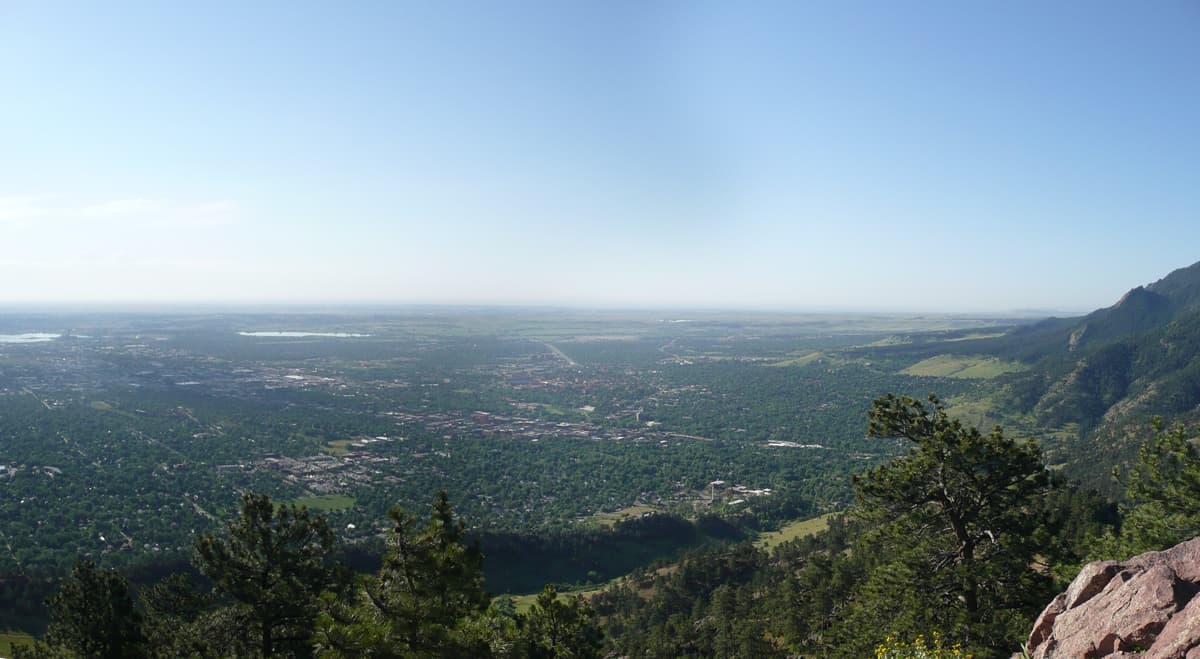
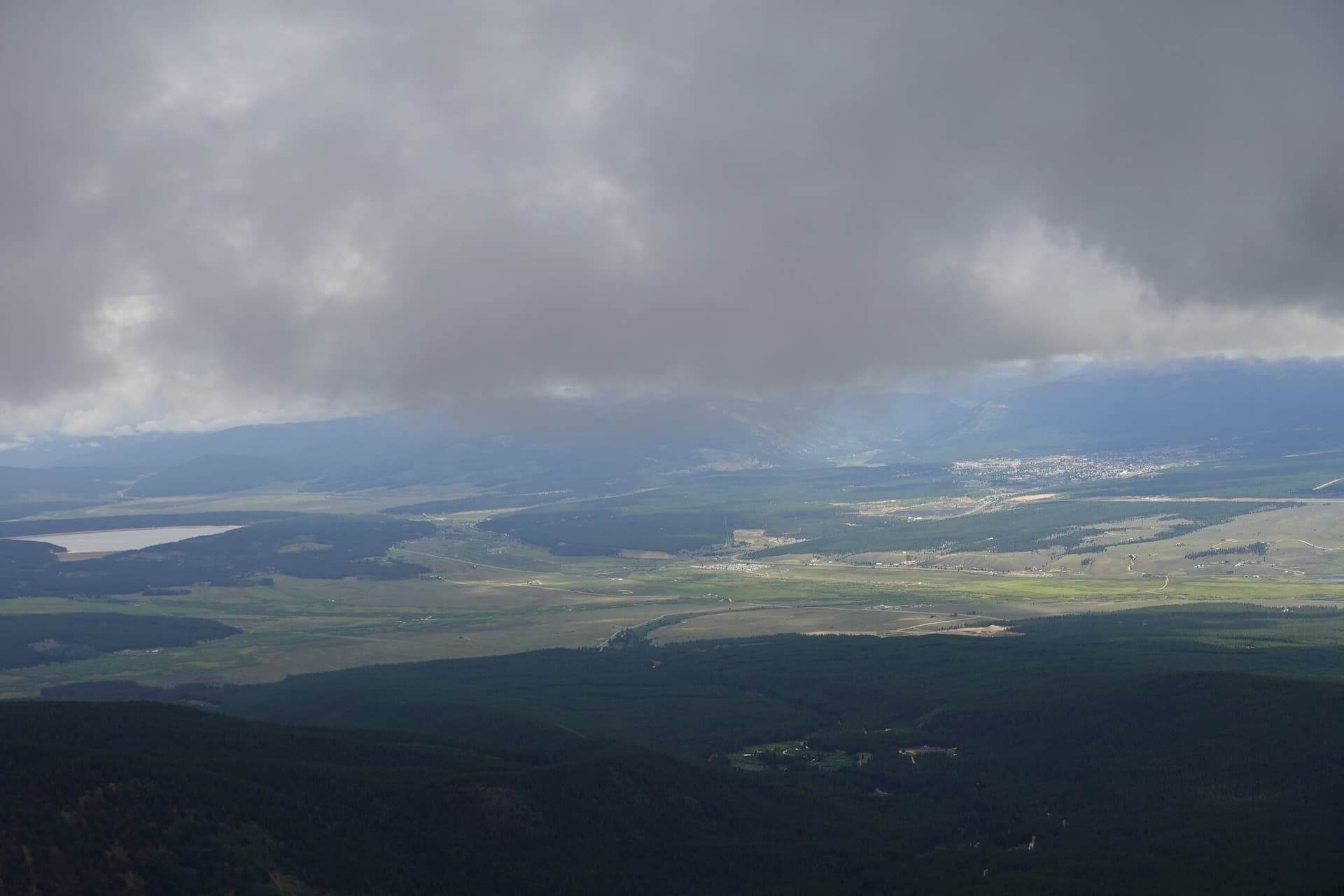
From the higher Chautauqua trails, the foothills drop away to the plains stretching east toward Denver.
Dogs and Trail Rules
Dogs are welcome on Chautauqua's trails, and Boulder runs a Voice and Sight program that lets registered dogs go off-leash on many Open Space trails. To use it, your dog needs a green Voice and Sight tag from the city and has to stay under your control. Without the tag, dogs hike on a leash. Royal Arch, the Flatirons, and the busy lower meadow trails are leash-friendly either way.
A few rules keep the place working. Some trails and rock faces close seasonally, usually February through July, to protect nesting raptors, so check the signs at the Ranger Cottage before you head up. Stay on the marked trail, since the slopes here are steep and the social paths cause real erosion. Pack out everything, including dog waste, and remember there's no overnight camping anywhere in the park.
The thin air deserves respect too. At 5,700 feet and climbing, hikes that look short on the map hit harder than they would at sea level. If you've just flown in, take it easy the first day and read up on the warning signs in our guide to altitude sickness in Colorado.
Frequently Asked Questions
Is Chautauqua Park free?
The park and its trails are free to hike year-round. The only cost is parking, and only in peak season. From late May through early September, the lots charge for parking on weekends and holidays, so you either pay, reserve a permit ahead, or ride the free Park-to-Park shuttle from downtown.
Where do you park for Chautauqua Park?
The main lots are at the Ranger Cottage off Baseline Road and the Bluebell area up the hill, plus free street parking along nearby blocks. All of it fills by 7 or 8 AM on summer weekends. The free shuttle from the downtown bus station is the reliable option on busy days.
How long is the hike to Royal Arch?
Royal Arch from Chautauqua is about 3.4 miles round trip with roughly 1,400 feet of gain. Most hikers take two to three hours. The trail is moderate to strenuous, with a steep, rocky final push up to Sentinel Pass before the short drop to the arch.
Can you hike the Flatirons at Chautauqua?
Yes. The First and Second Flatiron trail climbs into the saddle between the two slabs, close to the rock without requiring any climbing gear. The faces themselves are technical climbing routes, but the hiking trail gets you right up against them with about 1,400 feet of gain.
Are dogs allowed at Chautauqua Park?
Dogs are allowed on the trails. With a city Voice and Sight tag they can go off-leash on many Open Space trails as long as they stay under control; without it, they hike on leash. Always pack out waste and check for seasonal wildlife closures at the Ranger Cottage.
Chautauqua Park packs more good hiking into one trailhead than almost anywhere on the Front Range, from a flat meadow stroll to a summit scramble up Bear Peak. Sort out the parking, start early, and the Flatirons are yours for the morning. Ready to keep exploring the area? Walk through our full best hikes near Boulder guide for the trails just beyond the park boundary.
Get the Colorado 14er Packing Checklist (free PDF)
Plus a weekly note on the best Colorado trails, gear deals, and seasonal hike picks. No spam, unsubscribe anytime.
We respect your inbox. Unsubscribe anytime.