Summit Lake, Colorado: The Highest Lake You Can Drive To
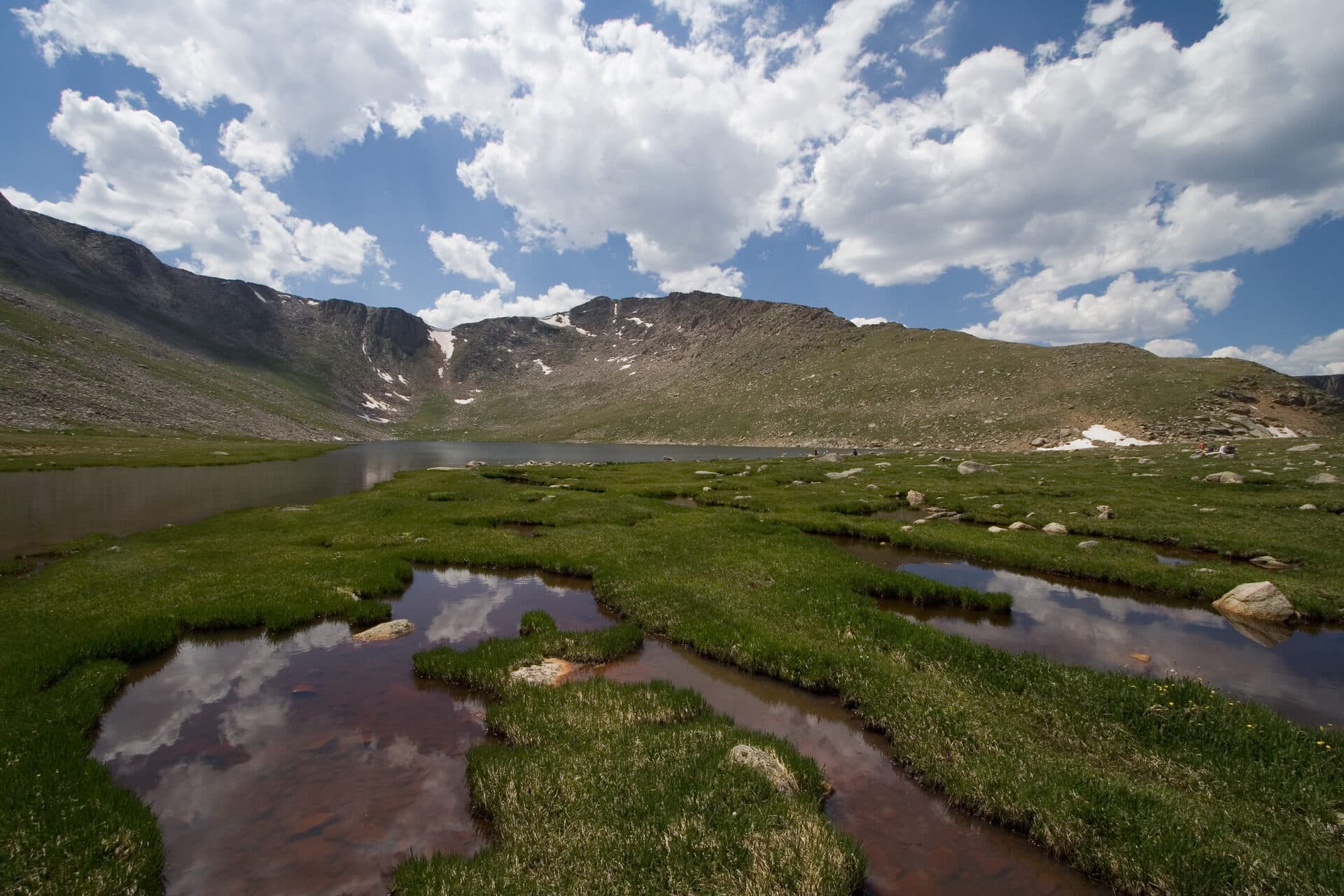
Summit Lake sits at 12,836 feet on the shoulder of Mount Blue Sky, and you can reach it in your car. That makes it the highest lake in Colorado you can drive to without walking a step. Pull into the parking lot off the Mount Blue Sky Scenic Byway and you're standing in arctic tundra, the kind of ground that otherwise only exists hundreds of miles north of here.
The lake and the park around it reopened in May 2026 after being closed for two full seasons while crews rebuilt the high road above it. If you tried to visit in 2024 or 2025 and found a gate, that's why. The road is open again, and Summit Lake is worth the drive.
Here's what you need to know before you go: how high it really is, how to get there, whether you need a reservation, the short hikes that start at the lot, and what to pack for a place where it can snow in July.
What You'll Learn
- Quick Stats: Summit Lake at a Glance
- Where Is Summit Lake and How High Is It?
- How to Get There: The Mount Blue Sky Scenic Byway
- Do You Need a Reservation?
- Why Summit Lake Is a National Natural Landmark
- Hiking at Summit Lake
- Climbing Mount Spalding from the Lake
- Wildlife You'll See
- What to Pack for 12,800 Feet
- When to Go and How the Weather Behaves
- Frequently Asked Questions
Quick Stats: Summit Lake at a Glance
- Elevation: 12,836 ft
- Location: Mount Blue Sky (formerly Mount Evans), between Idaho Springs and Evergreen
- Drive from Denver: about 64 miles, roughly 2 hours to the lake
- Access road: Mount Blue Sky Scenic Byway (Highway 103 to Highway 5)
- Reservation: timed-entry ticket required in the developed sites (check current status)
- Designation: National Natural Landmark, the first in Colorado, set aside in 1965
- Park size: 207 acres of city-owned tundra, part of Denver Mountain Parks
- Trails from the lot: a short lake loop, the Chicago Lakes Overlook, and the route up Mount Spalding
- Season: late May through early September, weather permitting
- Best for: high-alpine scenery without a long hike, tundra wildflowers, wildlife, and acclimatizing before a bigger climb
Where Is Summit Lake and How High Is It?
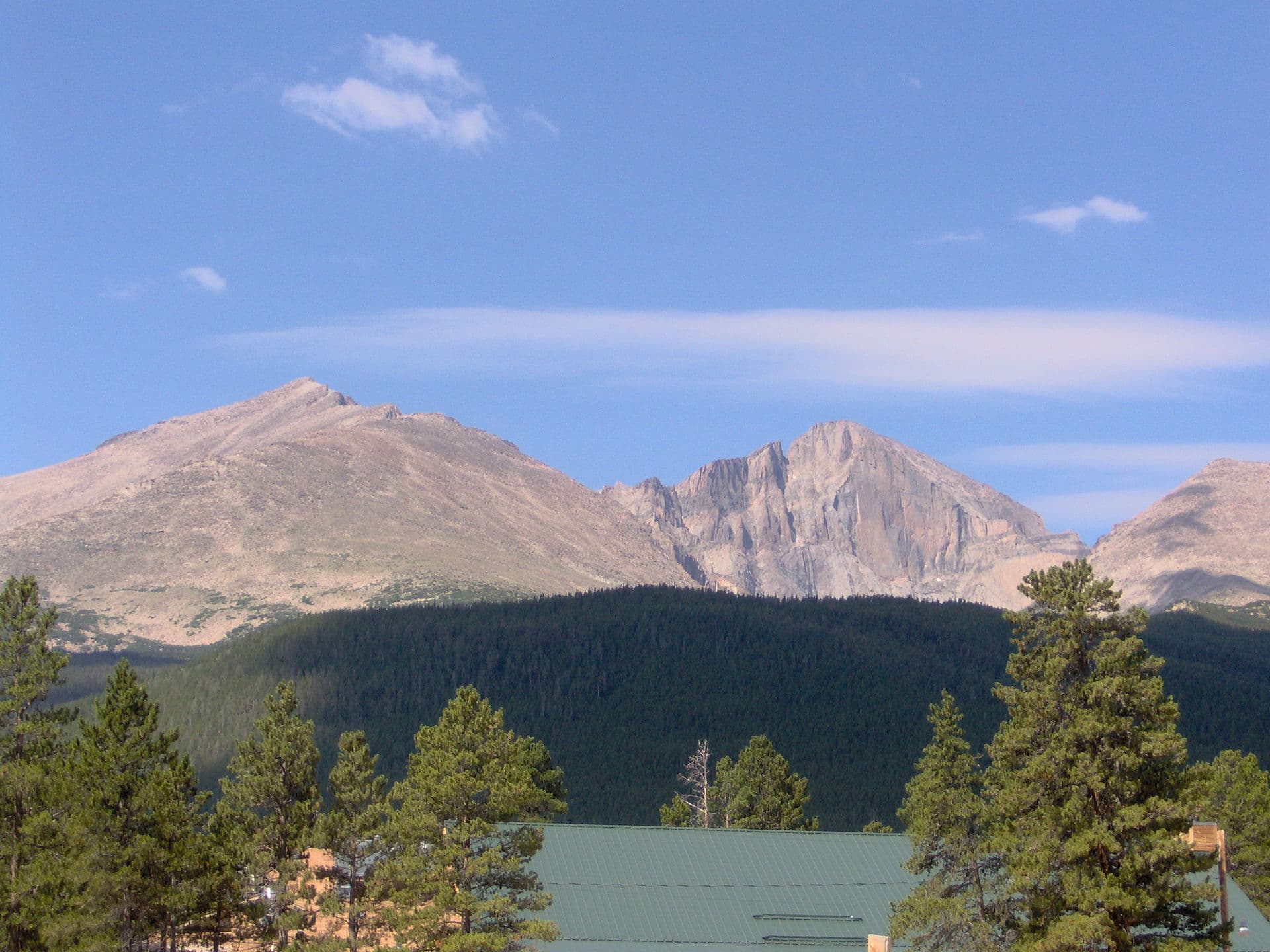
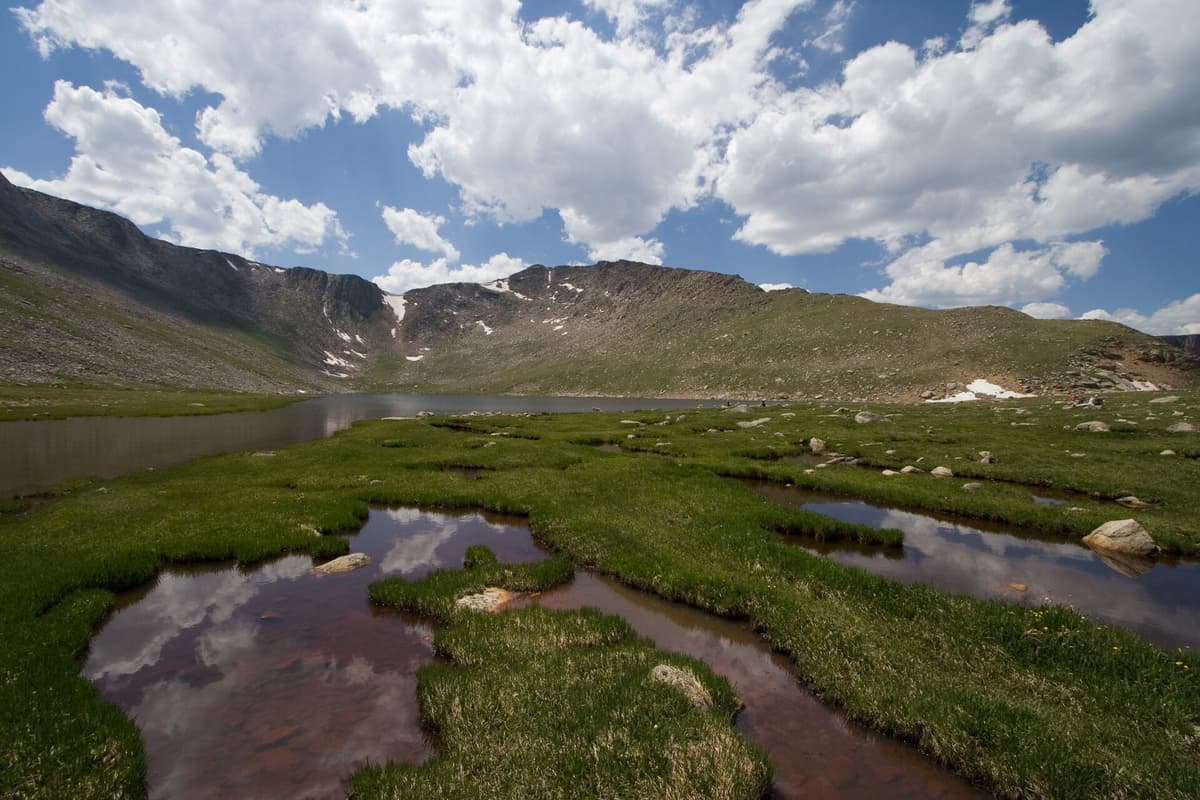
Summit Lake sits at 12,836 feet, high on the Mount Blue Sky massif west of Denver. Mount Blue Sky is the peak most people still call Mount Evans; the U.S. Board on Geographic Names changed the official name in 2023, but signs, maps, and locals lag behind. Both names point to the same mountain, and this guide uses them the way you'll hear them on the road.
To put 12,836 feet in perspective, it's higher than the summit of most peaks in the eastern United States, and you're reaching it from a paved parking lot. The lake fills a glacial basin below the summit ridge, fed by snowmelt that lingers into summer. Even in July you'll often find ice along the shaded edges.
The park is one of the few places in the lower 48 where you stand in true arctic tundra rather than the alpine tundra you find on most Colorado peaks. That distinction is the reason it earned federal protection, and it's why the short walks here feel different from a normal mountain trail.
How to Get There: The Mount Blue Sky Scenic Byway
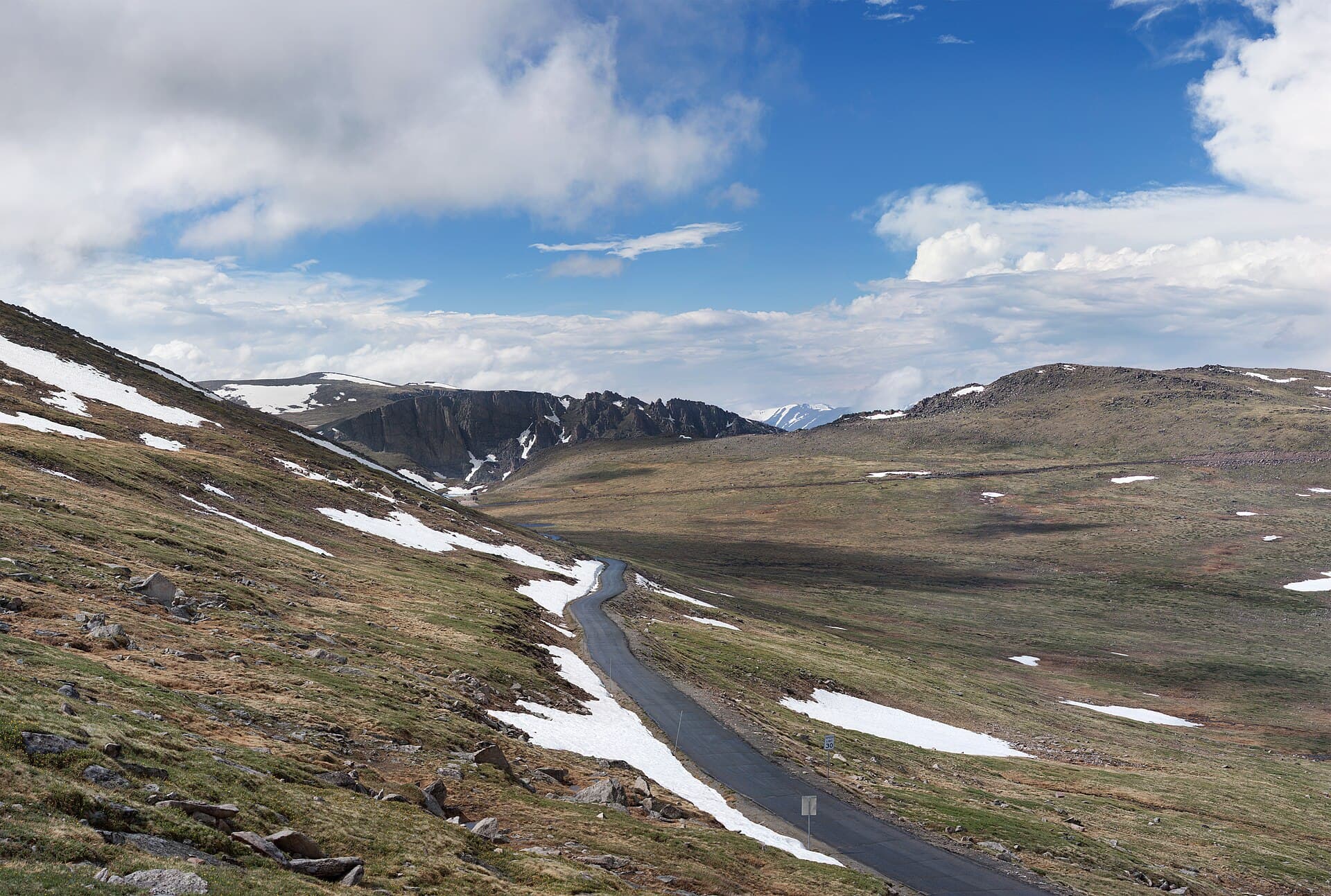
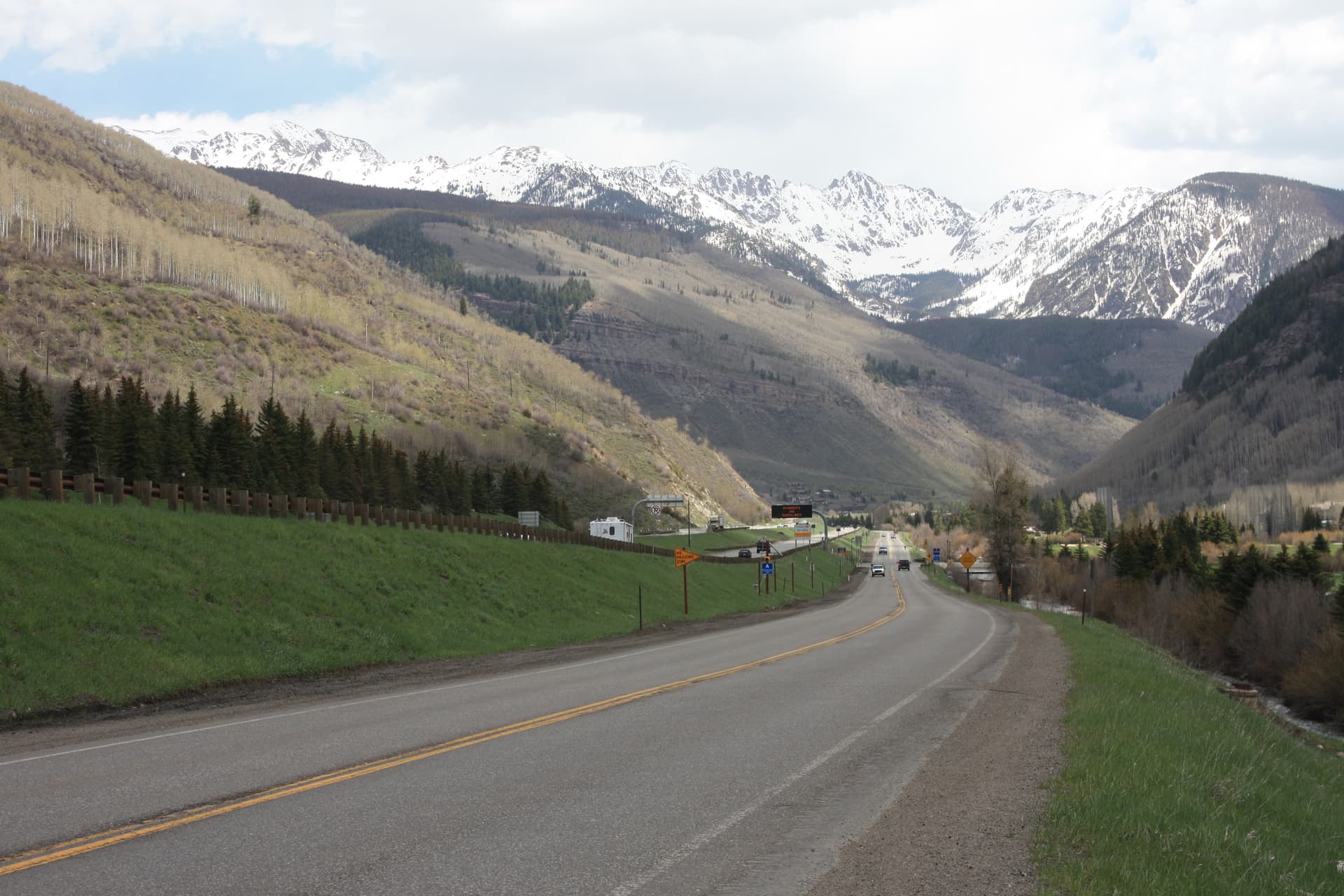
From Denver, take Interstate 70 west to Idaho Springs, then follow Highway 103 south toward Echo Lake. At Echo Lake, Highway 5 (the upper Mount Blue Sky Scenic Byway) branches off and climbs toward the summit. Summit Lake is about four miles up that road, on the left, with a marked parking area and vault toilets. The whole trip runs about 64 miles and takes close to two hours from central Denver in good conditions.
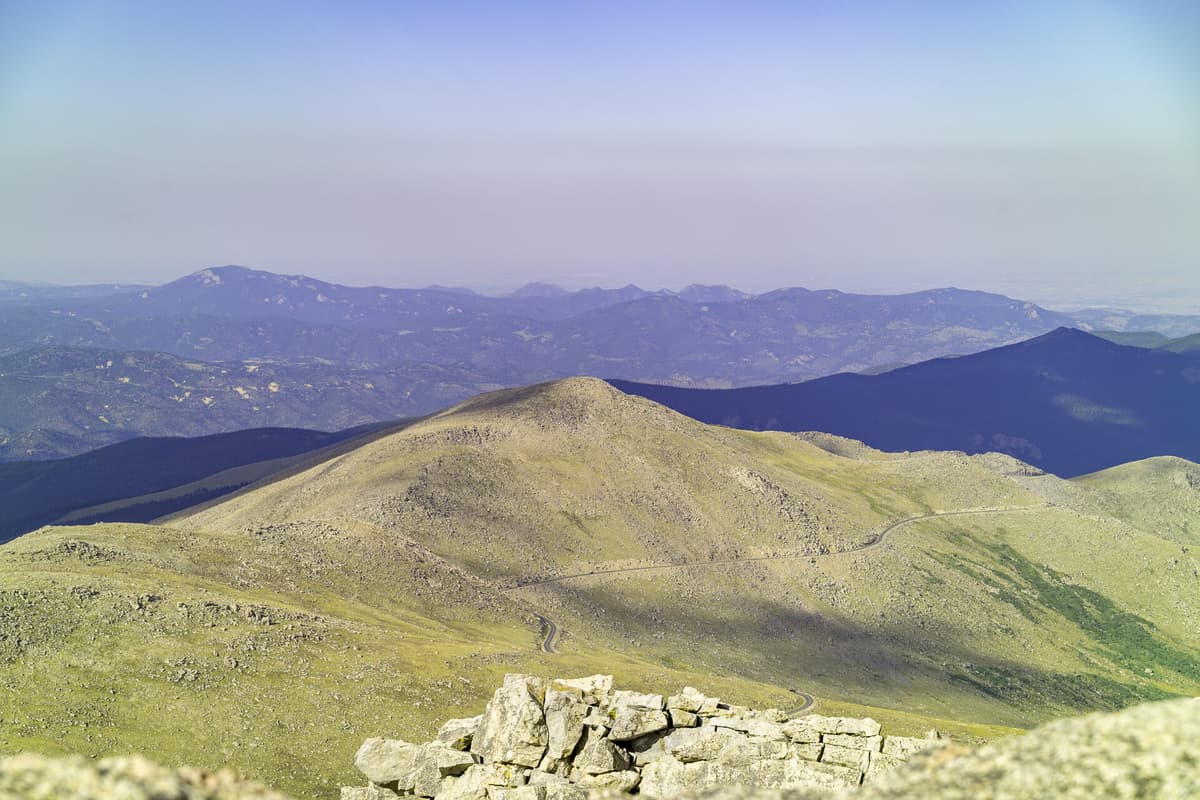
The important update for 2026: this road was closed for the entire 2024 and 2025 seasons while crews rebuilt sections that had buckled from frost and drainage problems. The Mount Blue Sky Recreation Area reopened on May 22, 2026. If you've been putting off a visit, this is the first summer in three years that you can actually make the drive.
Drive it slowly. The byway is narrow, has no guardrails in places, and shares the pavement with cyclists grinding up one of the hardest paved climbs in the country. Downshift on the descent so you're not riding your brakes, and pull into an overlook if you want to gawk at the view.
Do You Need a Reservation?
Yes. The three developed sites in the Mount Blue Sky Recreation Area, which are the Mount Goliath Natural Area, Summit Lake Park, and the Mount Blue Sky summit, all require a timed-entry reservation. You book it on recreation.gov before you go. A block of tickets opens up to 30 days ahead, and more are released a couple of days in advance, so if the calendar looks full, keep checking.
The all-sites pass runs about $20 per vehicle, motorcycles are around $15, and bicycles get in free. Denver Mountain Parks runs the reservation system and the fees, and that money goes back into maintaining the road and facilities. Prices and rules shift from season to season, so check the current status on recreation.gov before you drive up. Showing up without a ticket during peak summer can mean getting turned around at the gate.
Book an early slot if you can. Afternoon thunderstorms are the rule up here, not the exception, and a morning reservation gets you to the lake before the sky turns mean.
Why Summit Lake Is a National Natural Landmark
In 1965, Summit Lake became the first National Natural Landmark in Colorado. The 207-acre park protects one of the best examples of arctic tundra in the contiguous United States. Some of the plants that grow here, tiny cushion flowers and sedges hugging the ground, are found nowhere else in the lower 48. Their nearest relatives live above the Arctic Circle.
That fragility comes with a rule you have to respect: stay on the trails and the rock. A single footprint in the wrong spot can kill plants that took decades to establish, because at this elevation everything grows in slow motion. The short growing season, thin soil, and constant wind mean a scar here lasts far longer than one down in the forest.
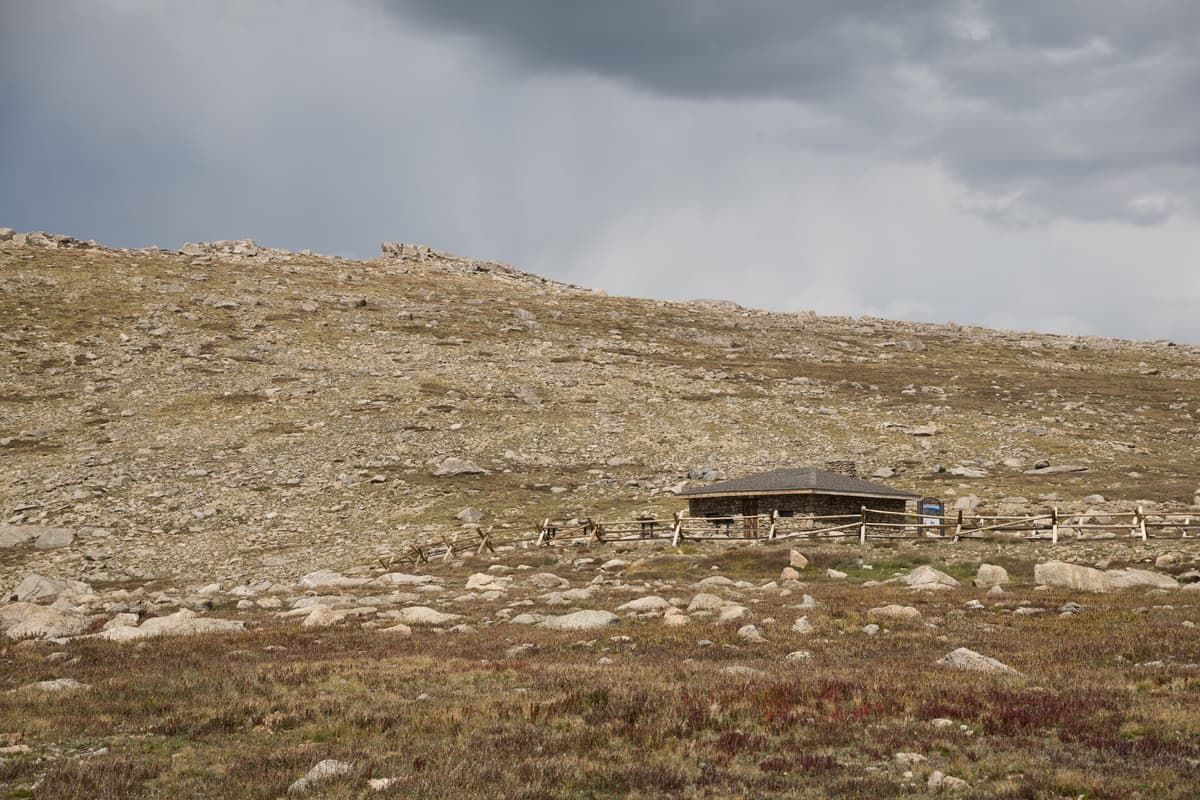
The stone shelter house near the lot dates to 1924, from the early days of the Denver Mountain Parks system. It's a good spot to duck out of the wind while you eat a snack and look out over the water. Take a minute to read the interpretive signs; the story of how arctic plants ended up on a mountain south of Idaho Springs is a strange and good one.
Hiking at Summit Lake
You don't come to Summit Lake for big mileage. You come for a lot of scenery with very little walking, which is rare in the high country.
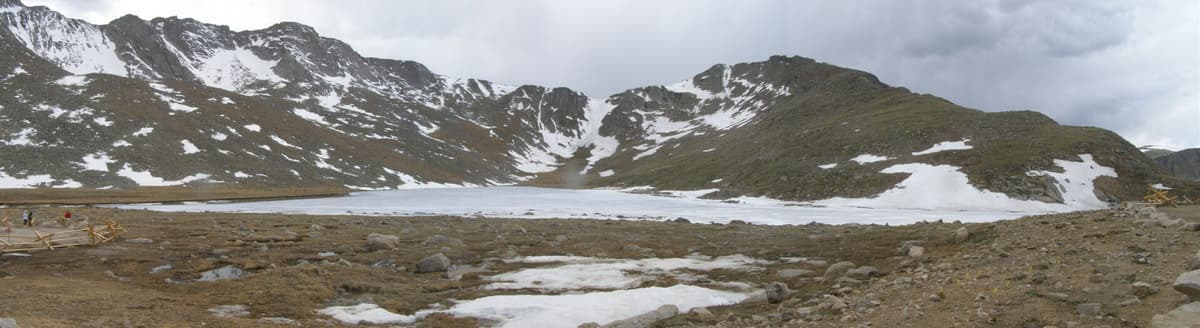
Two short options start right at the lot. A flat lake loop of roughly half a mile traces part of the shoreline and gives you the classic view of the water below the summit ridge. It's mostly level, but remember you're at 12,800 feet, so even easy ground will leave you breathing hard if you drove up from lower elevation that morning.
The better payoff is the Chicago Lakes Overlook. From the parking area, a short trail climbs to the rim on the north side, under a mile round trip, and drops you at the edge of a cliff looking down into the Chicago Lakes basin hundreds of feet below. It's one of the best views-per-step ratios in Colorado. Watch your footing near the edge, and keep dogs and kids close.
If you want a longer day that connects to the water below, the full Chicago Lakes Trail runs from Echo Lake and is a serious hike in its own right. For a broader look at where this lake ranks against other high basins, see our roundup of the best alpine lakes in Colorado. And if you're building a Mount Blue Sky day around the drive, our complete Mount Evans (Mount Blue Sky) guide covers the summit, the byway, and the reservation system in more depth.
Climbing Mount Spalding from the Lake
For hikers who want to earn a summit, Summit Lake is the standard launch point for Mount Spalding, a 13,842-foot peak on the ridge northwest of the lake. It's roughly a mile and a half and about 1,000 feet of climbing one way, mostly Class 2 rock and tundra. On a clear morning it's a reasonable half-day objective for someone comfortable off a groomed trail.
From the top of Spalding, a rugged ridge continues toward the Mount Blue Sky summit. That connection is real mountaineering terrain with loose rock and long exposure, not a casual add-on, and plenty of people turn it into a longer loop only after they know what they're getting into. If you're new to peaks like this, don't make Spalding your first one. Build up to it. Our Colorado 14ers guide explains how the ratings work and where to start.
Whatever you climb up here, watch the clock. You want to be off any high ridge well before noon, because lightning at 13,000 feet is not something you outrun.
Wildlife You'll See
Summit Lake is one of the most reliable places in Colorado to see mountain goats up close. They graze the tundra around the lot, sometimes within a few yards of the road, and they're used to people. Give them room anyway; a big billy weighs as much as you do and has horns. Bighorn sheep work the same slopes, though they're shyer.
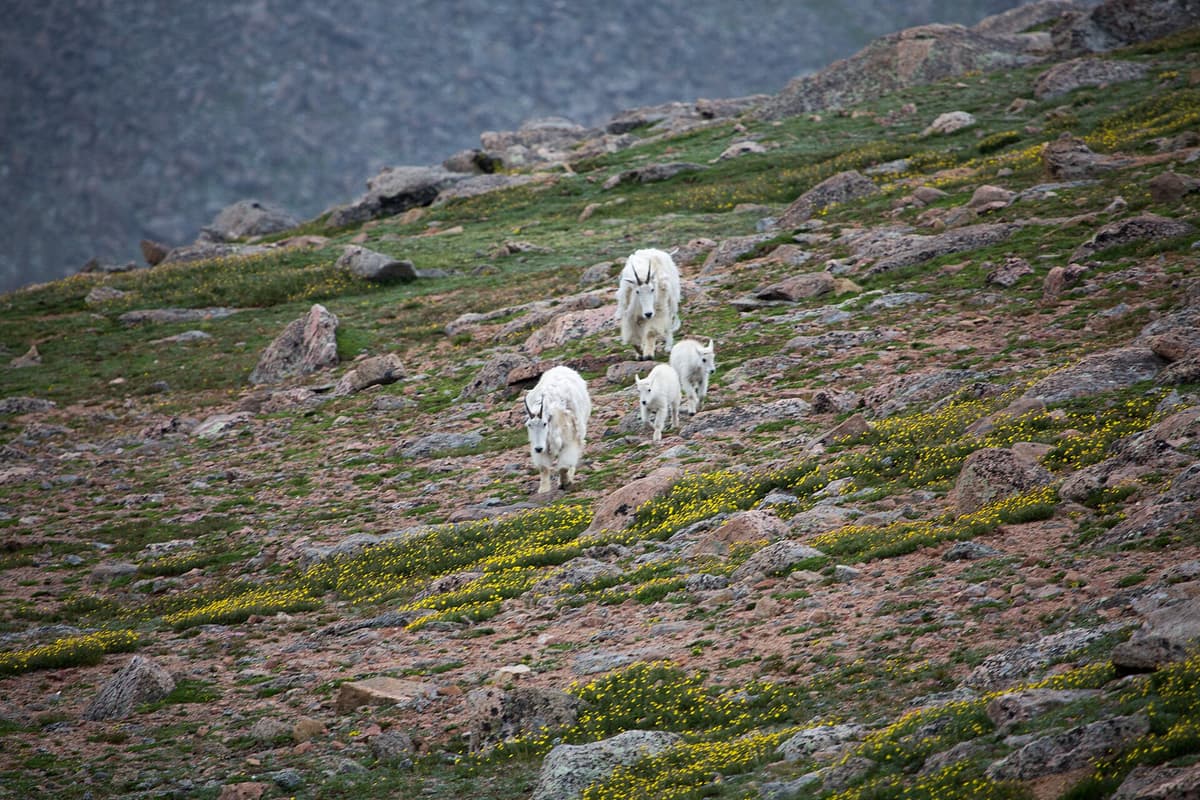
Lower to the ground, watch for yellow-bellied marmots sunning on rocks and pikas darting between the talus with mouthfuls of grass. White-tailed ptarmigan nest up here too, so well camouflaged you'll usually only spot them when one moves. Do not feed any of it. Human food wrecks wild animals' health and teaches them to hang around parking lots, which never ends well for the animal.
What to Pack for 12,800 Feet
The lot is easy to reach, and that lulls people into showing up in shorts and a t-shirt. Don't. Weather at 12,836 feet swings hard and fast, and the wind almost never quits.
- Layers you can add and shed. A merino wool base layer under a warm mid-layer handles most summer mornings. Bring a packable down jacket for when the wind kicks up.
- A real wind and rain shell. Even a bluebird forecast can turn. Our picks for the best rain jackets for Colorado hiking hold up to alpine gusts, or grab a lightweight rain shell.
- A warm hat and gloves, even in July. Order a pair of fleece gloves if you don't already have some. Your hands feel the wind first.
- Sun protection. The UV up here is brutal, and there's no shade on the tundra. Bring polarized sunglasses, a brimmed hat, and strong sunscreen.
- Water and a snack. You dehydrate faster at altitude than you expect. Carry a full insulated water bottle even for a short visit.
Sturdy shoes help too. The rock around the overlook is loose in spots, and you'll be glad for grip if you wander off the pavement.
When to Go and How the Weather Behaves
The road to Summit Lake opens in late May, once crews clear the snow, and closes with the first hard storms in September or October. That's your whole window. Outside those months the byway gate is locked, and you're looking at a serious snowshoe or ski tour to reach the lake instead.
Go on a weekday morning if you can. Weekends and holidays fill the reservation calendar and the lot both. Aim to arrive early, ideally before 9 a.m., for two reasons: parking is limited, and Colorado's high country builds thunderstorms most summer afternoons. Getting there early means calmer air, better light on the water, and a clean exit before the sky goes dark.
Dress for winter no matter the date. It has snowed here in every month of the year. A 70-degree morning in Denver can be a 40-degree, 30-mile-an-hour scene at the lake. If you're not used to elevation, take it slow; the drive gains over 6,000 feet from the city, and altitude can hit hard. Read up on altitude sickness prevention and treatment before you go, and turn around if you feel worse than a mild headache.
Frequently Asked Questions
Can you drive to Summit Lake in Colorado?
Yes. Summit Lake has a paved parking lot right off the Mount Blue Sky Scenic Byway, about four miles above Echo Lake on Highway 5. At 12,836 feet, it's the highest lake in Colorado you can reach by car. You'll need a timed-entry reservation to drive the road in season.
How high is Summit Lake?
Summit Lake sits at 12,836 feet above sea level on the Mount Blue Sky massif. The park around it is the highest city park in North America, part of the Denver Mountain Parks system, and one of the highest spots in the country you can reach on a paved road.
Do you need a reservation for Summit Lake and Mount Blue Sky?
Yes. Timed-entry tickets are required for the developed sites, including Summit Lake, and you book them on recreation.gov. An all-sites vehicle pass runs about $20, with tickets released up to 30 days out and again a couple of days before. Check the current status before you drive up.
Is Summit Lake worth visiting?
For most people, yes. You get high-alpine scenery, arctic tundra found almost nowhere else in the lower 48, close-up mountain goats, and a cliff-edge overlook of the Chicago Lakes, all within a short walk of the car. It's one of the biggest payoffs for the least effort in Colorado.
Why was Summit Lake closed in 2024 and 2025?
The entire Mount Blue Sky Recreation Area closed for the 2024 and 2025 seasons so crews could rebuild sections of the high-alpine road that had buckled from frost and drainage damage. It reopened on May 22, 2026, so the drive to Summit Lake is available again.
Before You Go
Summit Lake gives you a genuine high-alpine experience without a grinding hike: book a morning reservation, pack for winter no matter the month, stay on the trails to protect the tundra, and keep your distance from the goats. Then take the short walk to the Chicago Lakes Overlook, because that view is the whole point. Planning the rest of your Mount Blue Sky day? Start with our complete Mount Evans (Mount Blue Sky) guide for the summit, the byway, and everything the reservation covers.
Get the Colorado 14er Packing Checklist (free PDF)
Plus a weekly note on the best Colorado trails, gear deals, and seasonal hike picks. No spam, unsubscribe anytime.
We respect your inbox. Unsubscribe anytime.