Hot Springs in Durango, CO: Where to Soak Near Town
Durango has one large developed hot springs resort right in town, one free roadside spring that's more a photo stop than a soak, and a cluster of excellent springs within an easy drive. So if you're searching for hot springs in Durango, CO, the short answer is this: book a session at Durango Hot Springs Resort & Spa for a full soak, pull over at Pinkerton Hot Springs for the colorful travertine mound, and set aside a half day if you want to reach the bigger springs at Pagosa, Ouray, or the wild pools along the Piedra River. Durango sits at about 6,512 feet in the Animas Valley, close enough to the San Juan Mountains that geothermal water bubbles up all over this corner of the state.
This guide walks through every option, from the polished resort to the free finds, with rough prices, hours, drive times, and honest notes on what each place is actually like.
Our top pick: Durango Hot Springs Resort & Spa for most visitors. More than 30 mineral pools, easy access, open year round. Add Pinkerton Hot Springs as a free 15-minute stop on your way north.
What You'll Learn
- Does Durango have hot springs?
- Durango Hot Springs Resort & Spa
- Pinkerton Hot Springs, the free roadside marvel
- Piedra River Hot Springs, the wild soak
- Hot springs within a day trip
- Best time to go and what to pack
- Soaking at altitude: a few tips
- Frequently asked questions
Does Durango have hot springs?
Yes, though the picture is more nuanced than most travel lists let on. There's exactly one full soaking destination inside the Durango area itself, and that's Durango Hot Springs Resort & Spa, the property older locals still call Trimble. Pinkerton Hot Springs, a few miles farther up the highway, is a real geothermal spring, but it's a mineral formation you look at, not a pool you climb into.
Everything else worth a soak sits an hour or two away. That's not a knock on Durango. It's one of the best hot springs base camps in Colorado precisely because it's ringed by so many springs. Here's the quick lay of the land:
- In town: Durango Hot Springs Resort & Spa (developed, paid, year round)
- Roadside, free: Pinkerton Hot Springs (look, don't soak)
- Free and wild: Piedra River Hot Springs (a hike and a river crossing)
- Day trips: Pagosa Springs (about an hour east), Ouray and Ridgway (about two hours north), Rico (about 90 minutes north)
If you're pairing a soak with time on the trail, our roundup of the best hikes near Durango covers where to earn that warm water first.
Durango Hot Springs Resort & Spa
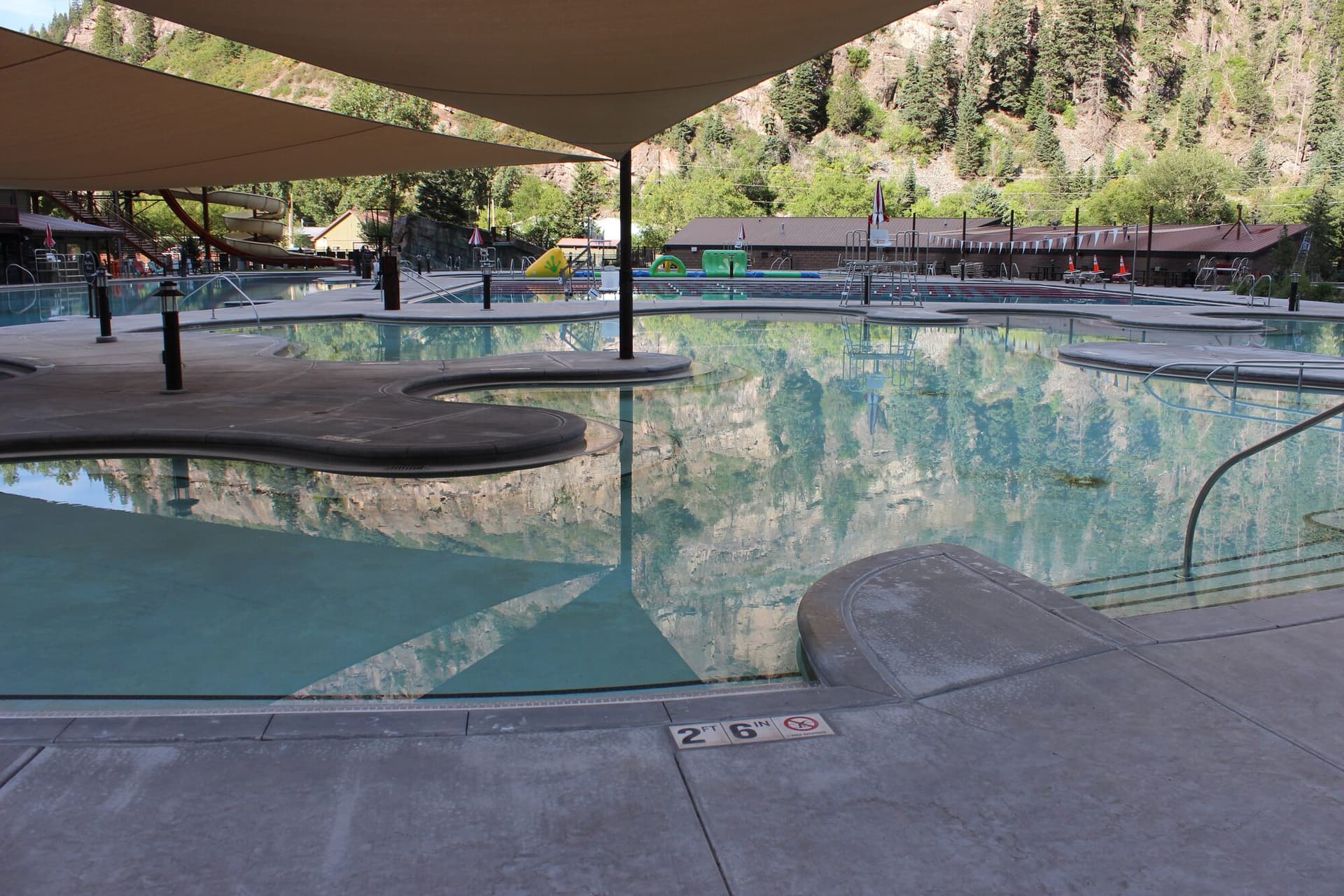
This is the one most people mean when they ask about hot springs in Durango, CO. It sits at 6475 County Road 203, roughly six miles north of downtown just off U.S. Highway 550 near Trimble Lane. New owners bought the run-down Trimble property in 2019 and rebuilt it from the ground up, so what you'll find today looks nothing like the tired old pool from a decade ago.
There are more than 30 mineral soaking pools now, ranging from family-friendly shallow pools to quieter adults-only tubs, plus a couple of cold plunges, a large resort-style swimming pool, and a handful of private Japanese-inspired cedar soaking tubs called ofuros that you can reserve. Water temperatures spread across the pools from a bracing plunge up to around 108 to 110 degrees in the hottest tubs, so you can pick your comfort level and move between them.
Plan on paying somewhere around $39 for a two-hour adult day pass and a bit more for a three-hour session, with kids' passes running lower. Prices and hours shift with the season, so confirm current rates at durangohotspringsresortandspa.com before you drive out. It's typically open daily from mid-morning into the evening, and the on-site spa keeps shorter hours. One thing to know: after the renovation there's no longer lodging on the property, so book a room in town and come out for the day.
Weekends and holidays fill up fast, and the resort sometimes caps entry, so buy your session online ahead of time in summer and over ski-season weekends. Mornings and late evenings are the calmest windows.
Pinkerton Hot Springs, the free roadside marvel
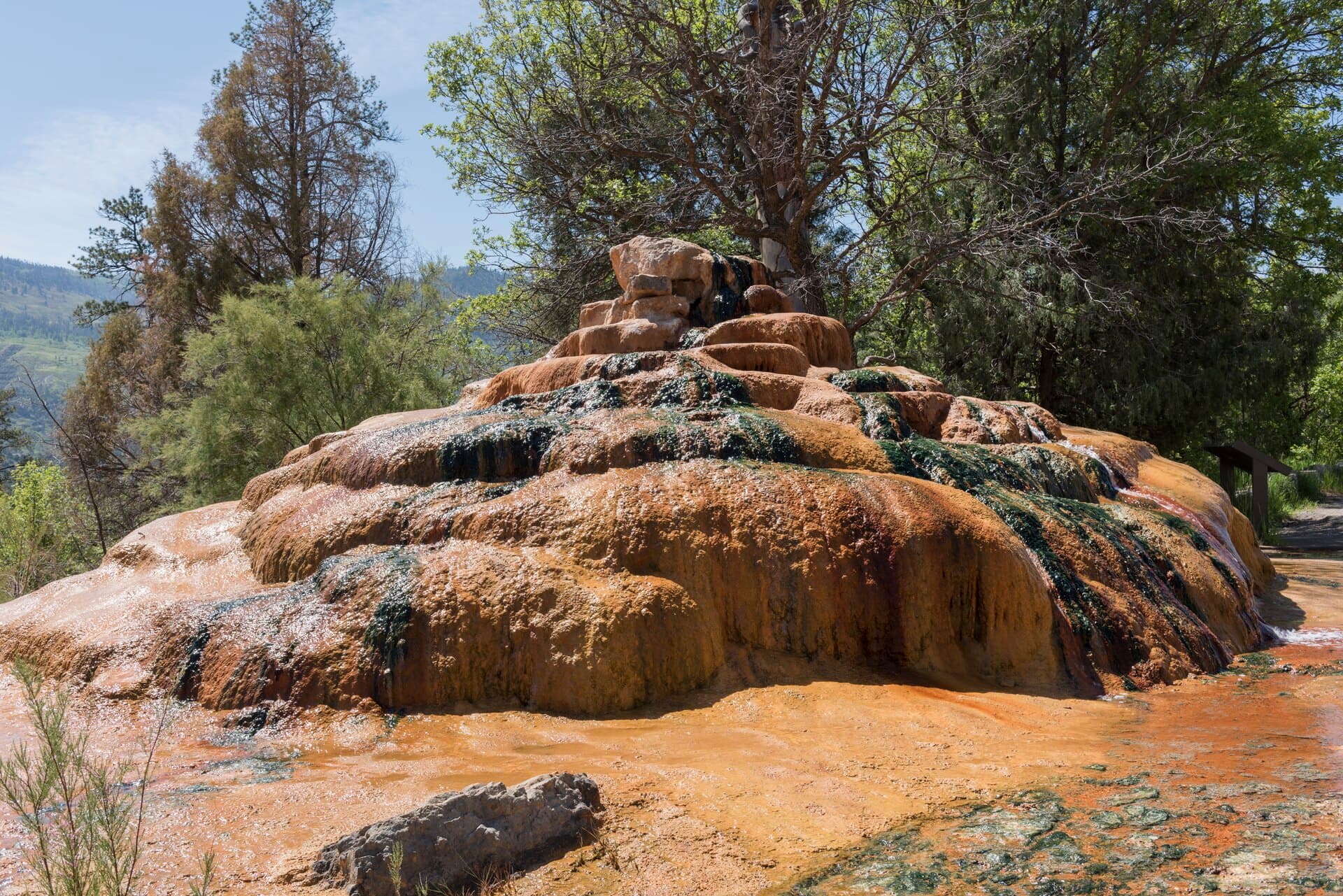
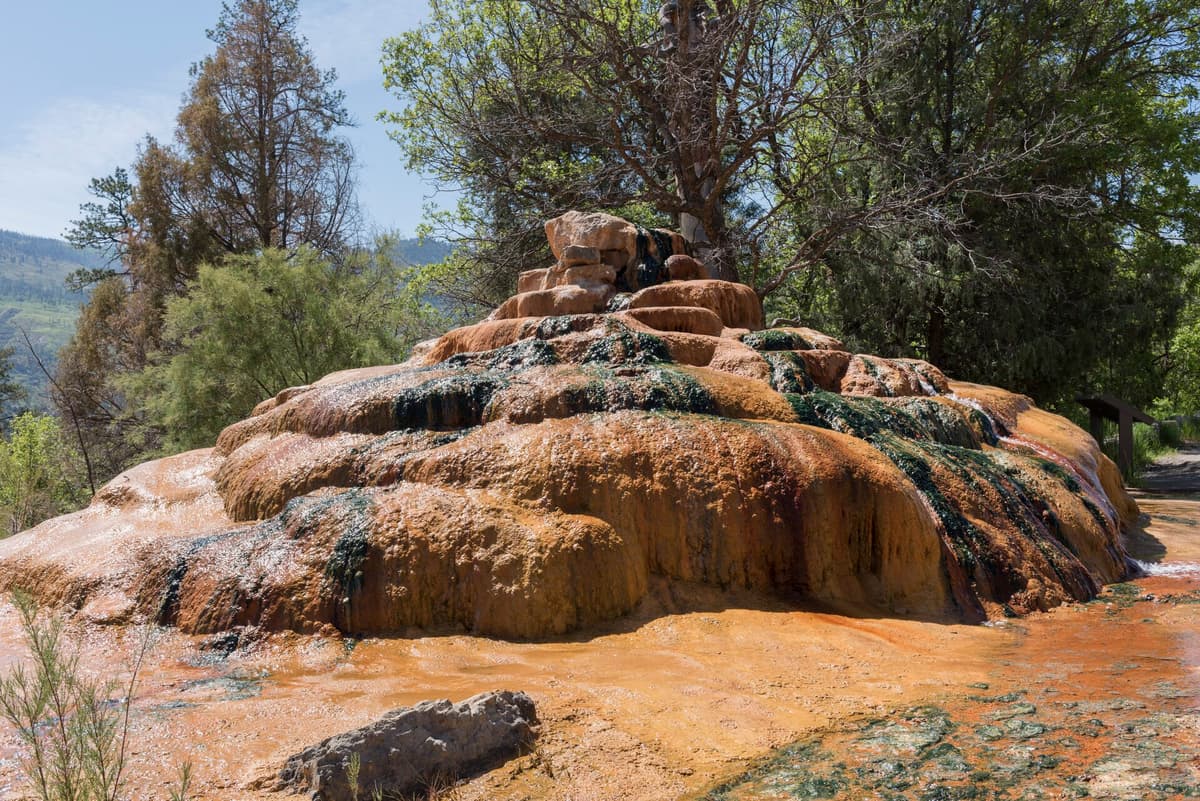
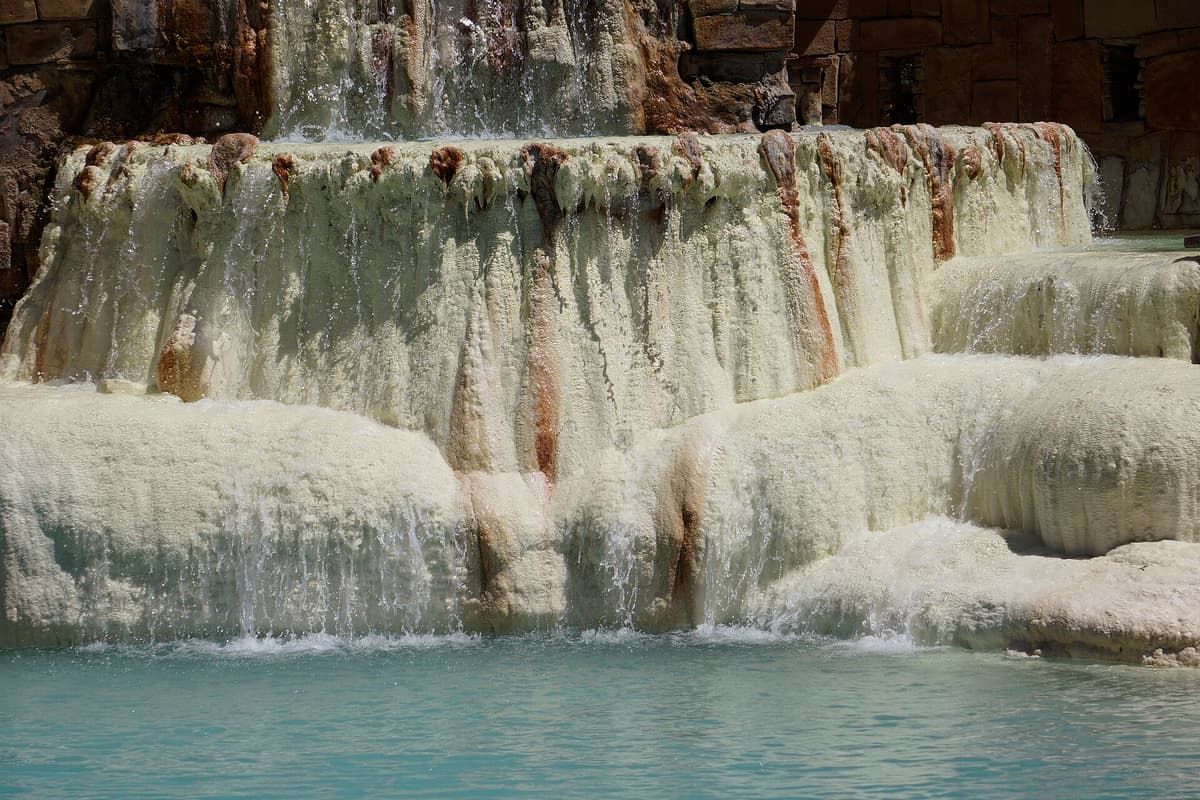
About 15 miles north of Durango on the west side of U.S. Highway 550, you'll spot a strange, colorful mound rising a few feet off the ground with warm water trickling down its sides. That's Pinkerton Hot Springs, and it's genuinely one of the more photogenic free stops in the region. The rust-orange, yellow, and green streaks come from iron, sulfur, and algae in the mineral water, which builds the travertine formation up a little more every year.
Here's the honest part, because plenty of listicles gloss over it: you can't really soak at Pinkerton. It's a seeping rock pile, not a pool. The water emerges somewhere around 95 to 105 degrees and spreads thin across the mound before draining off, so the surface is slick and marshy, and you shouldn't climb on the formation. Treat it as a five-minute photo stop on your way to Purgatory or Silverton, not a bathing destination.
The spring carries some history. A settler named James Harvey Pinkerton homesteaded this stretch of the Animas Valley back in the 1870s and served as a La Plata County judge, and the spring on his ranch kept his name. There's a small pullout, so it's easy to hop out, grab a few photos, and get back on the road. It costs nothing.
Piedra River Hot Springs, the wild soak
If you want a free, natural soak and don't mind working for it, the Piedra River Hot Springs deliver. They sit in the San Juan National Forest off U.S. Highway 160, roughly a 45-minute to one-hour drive east of Durango toward Chimney Rock, then up a forest road to the trailhead. From there it's about a 1.5-mile hike each way, so figure a three-mile round trip down to the river.
The reward is a handful of rock-lined pools right beside the Piedra, most hovering near 100 degrees, with the cold river a step away for when you overheat. It's primitive: no bathrooms, no fees, no attendant, and a clothing-optional culture that varies by who's there. Pack out every scrap of trash and skip the soap and shampoo, since this is untreated wild water.
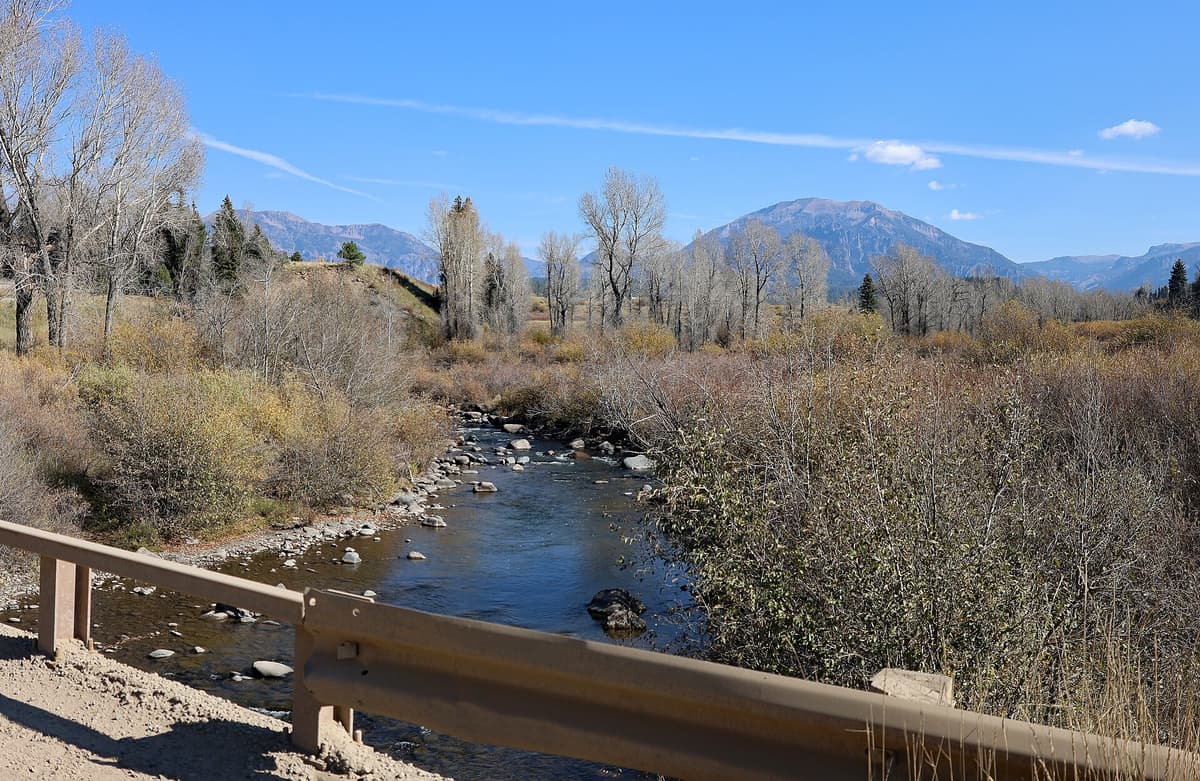
One serious caution: reaching the best pools usually means crossing the Piedra, and during spring snowmelt (roughly May into early July) that river runs high, cold, and dangerous. Save this one for late summer and fall when flows drop, wear sturdy water shoes for the rocky crossing, and turn around if the current looks pushy. No soak is worth a swim in snowmelt.
Hot springs within a day trip
Durango's real advantage is what surrounds it. Three directions, three very different soaking towns.
Pagosa Springs, about an hour east
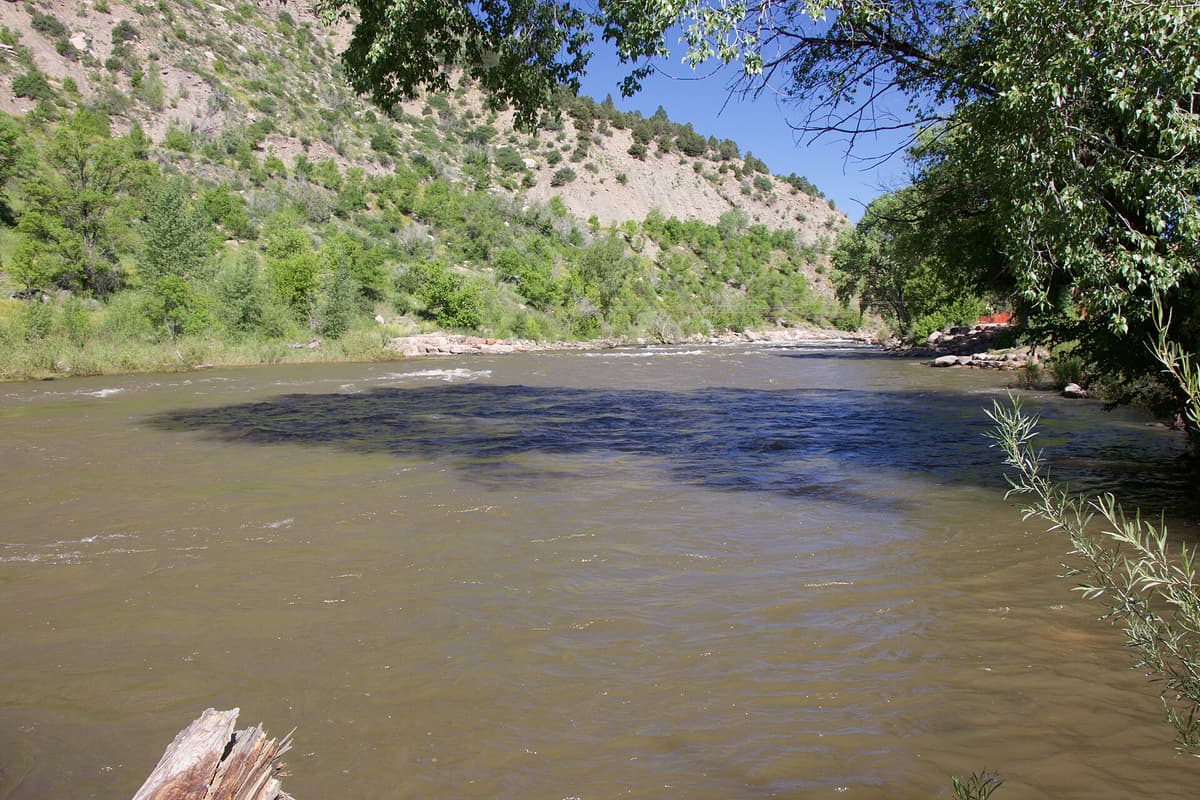
Drive roughly 60 miles east on U.S. Highway 160, about 75 minutes, and you reach Pagosa Springs, home to the deepest geothermal hot spring on record. The Springs Resort & Spa terraces more than 20 pools down the bank of the San Juan River, fed by the Mother Spring, which Guinness World Records recognizes as the world's deepest measured geothermal hot spring. Downtown you'll also find Overlook Hot Springs Spa, with rooftop tubs, and Healing Waters Resort & Spa, an older and more budget-friendly option.
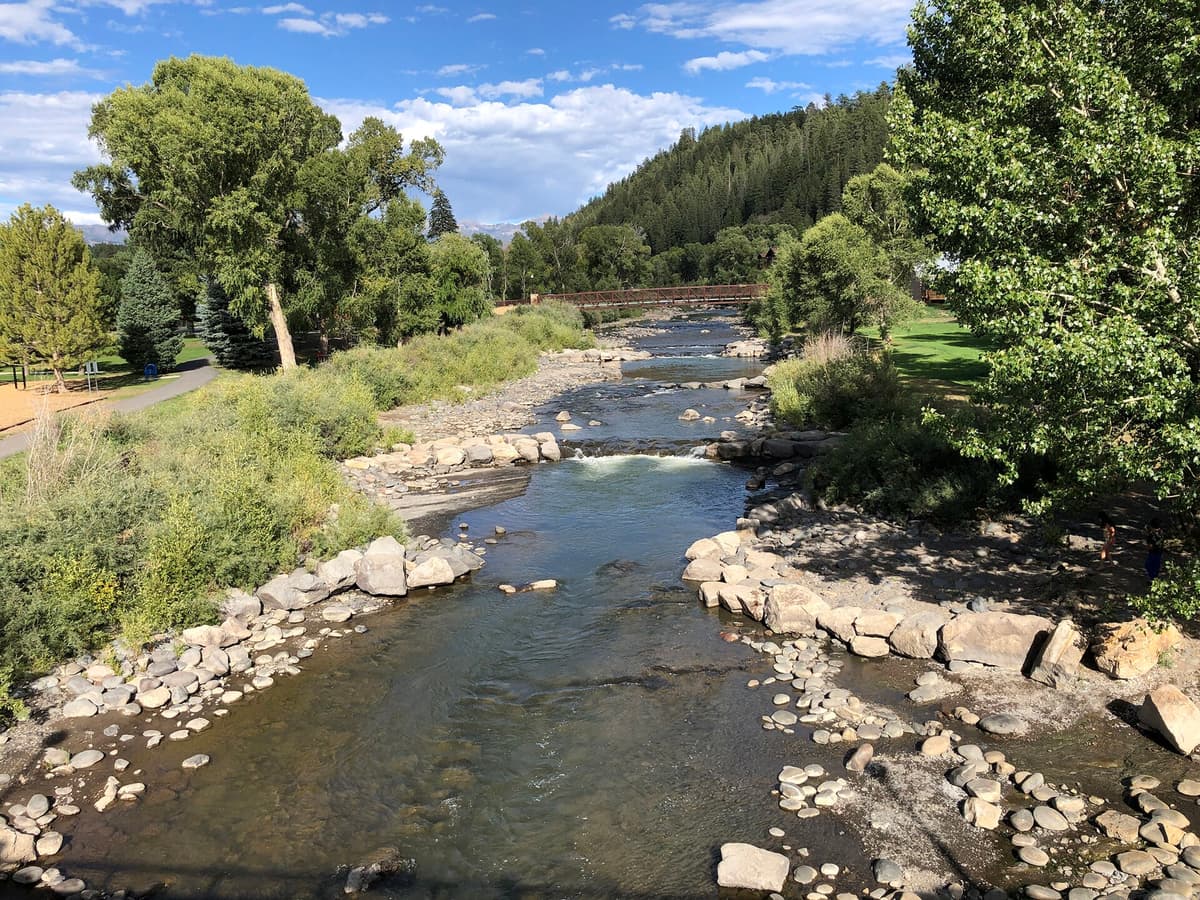
Pagosa makes an easy day trip or an overnight, and the drive along the Piedra and San Juan country is a good one. If you're already planning a longer loop, it slots neatly into a wider Colorado hiking road trip.
Ouray and Ridgway, about two hours north
Head north on U.S. Highway 550, the Million Dollar Highway, and in roughly two hours of slow, jaw-dropping mountain driving you reach Ouray, the self-styled "Switzerland of America." The Ouray Hot Springs Pool is a big, family-friendly municipal pool with a mountain-wall backdrop. Just up the valley in Ridgway, Orvis Hot Springs offers a quieter, clothing-optional set of natural pools, and in Ouray itself smaller lodges like Wiesbaden and Box Canyon keep their own spring-fed tubs.
Rico, about 90 minutes north
On the back road to Telluride, State Highway 145, the tiny old mining town of Rico has a small, primitive hot spring or two near the Dolores River. These are rustic, easy to miss, and access shifts over the years, so ask locally before you count on them. They're best folded into a trip to the Telluride area rather than chased on their own.
For the full statewide picture, our guide to the best hot springs in Colorado ranks these against soaks in the rest of the state.
Best time to go and what to pack
Hot springs near Durango are a year-round draw, but the season changes the mood. Winter is the classic time, when steam rises off the pools and snow rings the deck; it's also the busiest at the developed resorts. Spring runoff makes the wild springs risky, so lean on the paid pools from May into early July. Late summer and fall are the sweet spot for the free and hike-in options, with lower rivers and thinner crowds.
Whatever the season, a little gear makes any soak better:
- A quick-dry travel towel packs down small and won't stay soggy in your bag.
- Water shoes or sport sandals protect your feet on rocky pool floors and river crossings.
- A packable swim robe keeps you warm on the walk between hot pools and cold air.
- A dry bag keeps your phone, keys, and clothes dry at the wild springs.
- An insulated water bottle matters more than you'd think, because hot water plus altitude dehydrates you fast.
Leave glass at home, most springs ban it, and check whether your chosen spot allows swimsuits only or is clothing-optional so nobody's caught off guard.
Soaking at altitude: a few tips
Durango's springs sit high, and Pagosa and Ouray are higher still. Heat plus elevation is a real combination, so treat it with a little respect. Drink water before and after you soak, not alcohol, since booze and a 104-degree pool at 7,000 feet is a fast track to feeling awful. Keep individual soaks to 15 or 20 minutes, then cool off, especially on your first day in the mountains.
If you've just arrived from sea level, give your body a day before a long session, and know the warning signs of altitude sickness so you can tell it apart from ordinary post-soak grogginess. Pregnant travelers and anyone with heart conditions should check with a doctor before hot soaking at elevation.
Frequently asked questions
Does Durango have natural hot springs?
Yes. Durango Hot Springs Resort & Spa uses genuine geothermal mineral water, and Pinkerton Hot Springs north of town is a natural roadside spring, though it's a formation to view rather than a pool to soak in. Wild soaking pools sit a short drive out, along the Piedra River and near Pagosa Springs.
Can you soak at Pinkerton Hot Springs?
Not really. Pinkerton is a colorful travertine mound with warm water seeping across it, not a soaking basin. The surface is slick and marshy, and you shouldn't climb on the formation. It's free and easy to reach off U.S. 550, so treat it as a quick photo stop, not a bath.
How much does Durango Hot Springs Resort cost?
Expect around $39 for a two-hour adult day pass and a little more for three hours, with lower prices for kids. Rates and hours change seasonally and can sell out on busy weekends, so book online and confirm current pricing on the resort's website before you go.
Are there free hot springs near Durango?
Pinkerton Hot Springs is free but not for soaking. For an actual free soak, the Piedra River Hot Springs about an hour east are your closest bet, though they require a roughly three-mile round-trip hike and a river crossing that's dangerous during spring runoff. Rico has small primitive springs to the north.
How far is Pagosa Springs from Durango?
Pagosa Springs is about 60 miles east of Durango on U.S. Highway 160, roughly a 75-minute drive. It's an easy day trip and home to The Springs Resort's Mother Spring, the deepest measured geothermal hot spring in the world.
The bottom line
For a reliable soak in town, Durango Hot Springs Resort & Spa is the pick, and Pinkerton makes a fun free detour on the way north. Save the Piedra River pools for low water in late summer, and if you've got a full day, point the car toward Pagosa or Ouray for something bigger. However you soak, warm up first on one of the best day hikes near Durango so you've earned it.
Get the Colorado 14er Packing Checklist (free PDF)
Plus a weekly note on the best Colorado trails, gear deals, and seasonal hike picks. No spam, unsubscribe anytime.
We respect your inbox. Unsubscribe anytime.