Best Women's Hiking Backpacks for Colorado Trails (2026)
A women's hiking backpack isn't just a smaller version of a men's pack in a different color. The good ones are built around a shorter torso range, narrower shoulder straps that clear your collarbones, and a hip belt shaped to sit on actual hips. On Colorado trails, where you might start a climb at 9,000 feet in the cold and finish in afternoon hail, that fit difference is what keeps the weight on your hips instead of grinding your shoulders raw by mile six.
The pack we recommend for most women hiking in Colorado is the Osprey Tempest 24. It's roomy enough for a full day in the mountains, light enough that you forget it's there, and the women's-specific fit is dialed in right out of the box. Below are picks for every type of hiker and trip length, plus how to size a pack so it actually fits.
Our top pick: Osprey Tempest 24: women's-specific fit, 24L of space, and a built-in rain cover for those 2 p.m. storms. Best for most day hikers.
Table of Contents
What You'll Learn
- What makes a women's hiking backpack different
- How to size a women's pack
- Our top picks for 2026
- How much capacity do you need in Colorado
- Daypack or overnight pack
- Frequently Asked Questions
What Makes a Women's Hiking Backpack Different
Brands like Osprey, Gregory, and Deuter design their women's packs around three real anatomical differences, not marketing. First, the torso range runs shorter, usually 14 to 18 inches instead of 17 to 22. A pack sized for a longer back will ride too high and pull at your shoulders no matter how you adjust it.
Second, the shoulder straps are set closer together and curve more aggressively so they don't dig into your collarbones or chest. Third, the hip belt is angled and contoured to sit on hips rather than a straighter waist. Since most of your load should ride on your hips, a belt that doesn't fit means the weight creeps up onto your shoulders, which is exactly where you don't want it on a long climb.
You'll see these models marked "WM," "W," or "SL" (Deuter's "Slim Line"). If you have a shorter torso or narrower shoulders, that's the fit to start with. Plenty of women hike happily in unisex packs too, so treat the women's line as a starting point, not a rule.
How to Size a Women's Pack
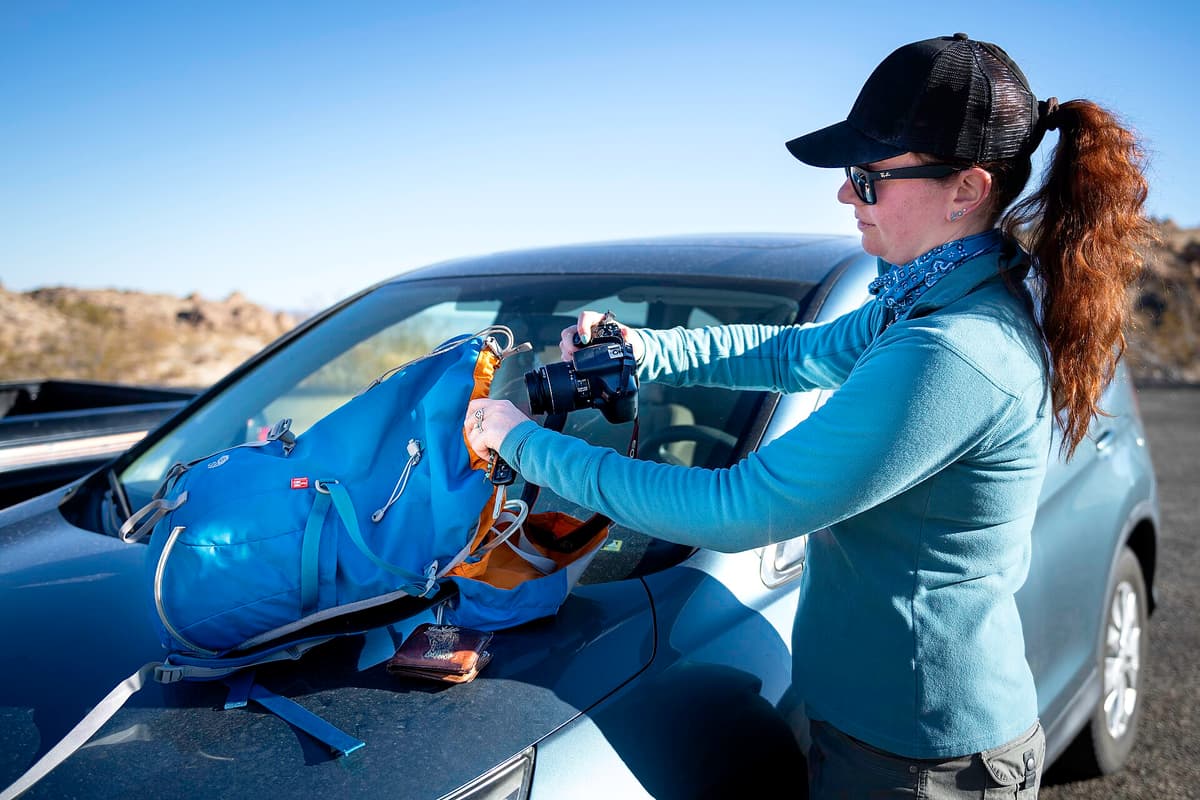
Capacity gets all the attention, but torso length is what makes a pack comfortable. Here's how to measure yours at home in two minutes.
Tilt your head forward and find the bony bump at the base of your neck (your C7 vertebra). That's the top. Now put your hands on the top of your hip bones with your thumbs pointing back. The spot where your thumbs meet your spine is the bottom. Have someone measure the distance between those two points along your spine. That number, in inches, is your torso length.
Match it to the brand's size chart, then load the pack with about 10 pounds before you decide. Tighten the hip belt first so it sits on your hip bones and carries the weight, then snug the shoulder straps, then clip and adjust the sternum strap. If the weight rides on your hips and the shoulder straps wrap without gaps, the size is right. A local shop like REI or Wilderness Exchange in Denver will fit you for free if you'd rather not guess.
Our Top Picks for 2026
Every pack below comes in a women's-specific fit and handles Colorado's range of conditions. Links go to current pricing on Amazon.
1. Osprey Tempest 24. Best Overall
The Tempest 24 is the pack most Colorado day hikers should buy. The AirScape back panel keeps air moving on sweaty climbs, the women's-specific suspension fits torsos from 13 to 19 inches, and there's an integrated rain cover tucked in the bottom for when the sky turns at 2 p.m. The hip belt pockets swallow your phone and a couple of snacks without breaking stride.
Why it works in Colorado: 24 liters is enough room for extra layers, lunch, and 2 liters of water on a long day hike, and the trekking pole attachment frees your hands for rocky scrambles.
Specs: 24L, ~2.2 lbs, fits torsos 13 to 19 inches
2. Gregory Jade 28. Best for All-Day Comfort
If your shoulders or hips complain on long days, the Jade is worth a look. Gregory's FreeFloat suspension lets the back panel and hip belt pivot with your stride, which takes a lot of strain off your lower back over 10-plus miles. The ventilated trampoline back keeps you cool, and the extra 4 liters over the Tempest gives you room for a packed-out summit day.
Why it works in Colorado: That moving suspension shines on uneven 14er talus and long approaches, where a rigid pack would fight every step.
Specs: 28L, ~2.8 lbs, fits torsos 14 to 18 inches
3. Deuter Futura SL 24. Best Ventilation
Colorado's sun is brutal above treeline and you'll sweat through any back panel that sits flat against your spine. The Deuter Futura uses an Aircomfort mesh suspension that holds the pack body away from your back, so air flows behind you the whole climb. The SL (Slim Line) version is shaped for women's frames with softer, narrower shoulder straps.
Why it works in Colorado: Less back sweat means you stay drier and warmer when the temperature drops on an exposed ridge or during an afternoon storm.
Specs: 24L, ~2.9 lbs, women's SL fit
4. REI Co-op Trail 25. Best Value
You don't need to spend $180 for a solid day hiking pack. The REI Co-op Trail 25 covers the basics well: a ventilated back panel, a hydration sleeve, hip belt pockets, and a women's fit, usually for around $90. It skips the fancy moving suspension, but for casual day hikers and weekend trail walkers it's plenty.
Why it works in Colorado: A great first pack for someone easing into hikes near Boulder or the Front Range foothills before committing to bigger gear.
Specs: 25L, ~1.9 lbs, women's fit
5. Osprey Sirrus 36. Best for Overnights
When a day hike turns into a hut trip or a first backpacking overnight, 24 liters won't cut it. The Sirrus 36 adds a sleeping bag compartment, more structure in the frame, and the same Tempest-style women's strap shaping, all while staying light enough for a single night out. The Airspeed suspension keeps it cool on the way up.
Why it works in Colorado: Right-sized for a summer overnight to an alpine lake, with room for a bag, pad, stove, and the warm layers Colorado nights demand even in July.
Specs: 36L, ~3.3 lbs, fits torsos 15 to 19 inches
6. Gregory Maven 45. Best for Multi-Day Trips
For two to four nights on the trail, the Maven 45 hits the sweet spot between capacity and weight. It carries a loaded pack comfortably thanks to a wire frame and supportive hip belt, the women's-specific shaping fits shorter torsos, and the 45-liter body holds a bear canister, which you'll need in plenty of Colorado backcountry.
Why it works in Colorado: Enough room for a multi-day loop through the Indian Peaks or the Weminuche without overloading you on the climbs.
Specs: 45L, ~3.0 lbs, fits torsos 14 to 18 inches
How Much Capacity Do You Need in Colorado
Capacity is measured in liters, and the right number depends on how long you're out and how much your conditions force you to carry. Colorado pushes you toward the bigger end of each range because afternoon storms and big temperature swings mean you're always packing layers you may not wear.
| Trip type | Capacity | Good pick |
|---|---|---|
| Short morning hike | 18 to 22L | REI Trail 25 |
| Full day or 14er | 22 to 28L | Osprey Tempest 24 |
| Hut trip or overnight | 32 to 40L | Osprey Sirrus 36 |
| 2 to 4 night backpacking | 45 to 55L | Gregory Maven 45 |
For most readers, a 24- to 28-liter pack is the one to own first. It's big enough for a long day with rain gear, extra insulation, and 2 to 3 liters of water, which matters because altitude dehydrates you faster than you expect. A pair of pockets that fit a hydration reservoir is worth prioritizing over almost any other feature.
Daypack or Overnight Pack
If you're new to hiking and trying to buy one pack, start with a daypack in the 24- to 28-liter range. The vast majority of Colorado hiking is day hiking, and a well-fitted daypack will cover everything from a Front Range foothills loop to a summer 14er push. You can always rent or borrow a bigger pack for your first overnight.
Once you're heading out for nights in the backcountry, a daypack won't hold a sleeping bag, pad, stove, and food, so size up to 36 liters or more. The jump from day hiking to backpacking changes a lot of your gear, and the pack is the piece that ties it together. Our guide to the best backpacking backpacks for Colorado covers the larger end in detail, and if you want a smaller everyday option, the best hiking daypacks for Colorado trails roundup is a good companion to this one.
Either way, fit beats features. A perfectly equipped pack that sits wrong on your back will still ruin a hike. Pair the right pack with the right women's hiking apparel and you've got the foundation for a comfortable day on any Colorado trail.
Final Thoughts
For most women hiking in Colorado, the Osprey Tempest 24 is the pack to buy first. It fits a shorter torso out of the box, carries a full day's load comfortably, and the built-in rain cover earns its keep nearly every summer afternoon. Hikers who want extra comfort on long days will love the Gregory Jade 28, and anyone moving toward overnights should size up to the Sirrus 36.
Whatever you pick, get fitted before a big trip and load it up on a few short hikes first. The right pack should disappear on your back by mile two. Next, sort out your layers with our women's hiking apparel guide so the whole kit works together.
Frequently Asked Questions
What is the best women's hiking backpack?
For most day hikers in Colorado, the Osprey Tempest 24 is the best all-around choice. It has a women's-specific fit for shorter torsos, 24 liters of usable space, hip belt pockets, and a built-in rain cover. For long days, the Gregory Jade 28 offers more comfort; for overnights, step up to the Osprey Sirrus 36.
What size backpack do I need for day hiking?
A 22- to 28-liter pack covers nearly all day hiking. That's enough room for water, snacks, a rain shell, an extra insulating layer, and the ten items every hiker should carry. In Colorado, lean toward 24 liters or larger so you can carry the extra layers that sudden weather changes and afternoon storms demand.
Are women's-specific backpacks worth it?
If you have a shorter torso or narrower shoulders, yes. Women's packs use a shorter back length, contoured shoulder straps, and a shaped hip belt so the load rides on your hips instead of your shoulders. That said, fit is individual, so try both women's and unisex models if you can.
How do I measure my torso for a backpack?
Find the bony bump at the base of your neck and measure down your spine to the point level with the top of your hip bones. That distance in inches is your torso length. Match it to the brand's size chart rather than guessing by height, since two people the same height can need different sizes.
How much should a women's hiking backpack weigh?
A good day hiking pack weighs around 1.9 to 2.9 pounds empty. Lighter is nicer on the climbs, but don't sacrifice a comfortable suspension and hip belt just to save a few ounces, especially on Colorado's long, steep trails where a supportive frame matters more than raw weight.
Get the Colorado 14er Packing Checklist (free PDF)
Plus a weekly note on the best Colorado trails, gear deals, and seasonal hike picks. No spam, unsubscribe anytime.
We respect your inbox. Unsubscribe anytime.