7 Best Hydration Packs for Hiking in Colorado in 2026
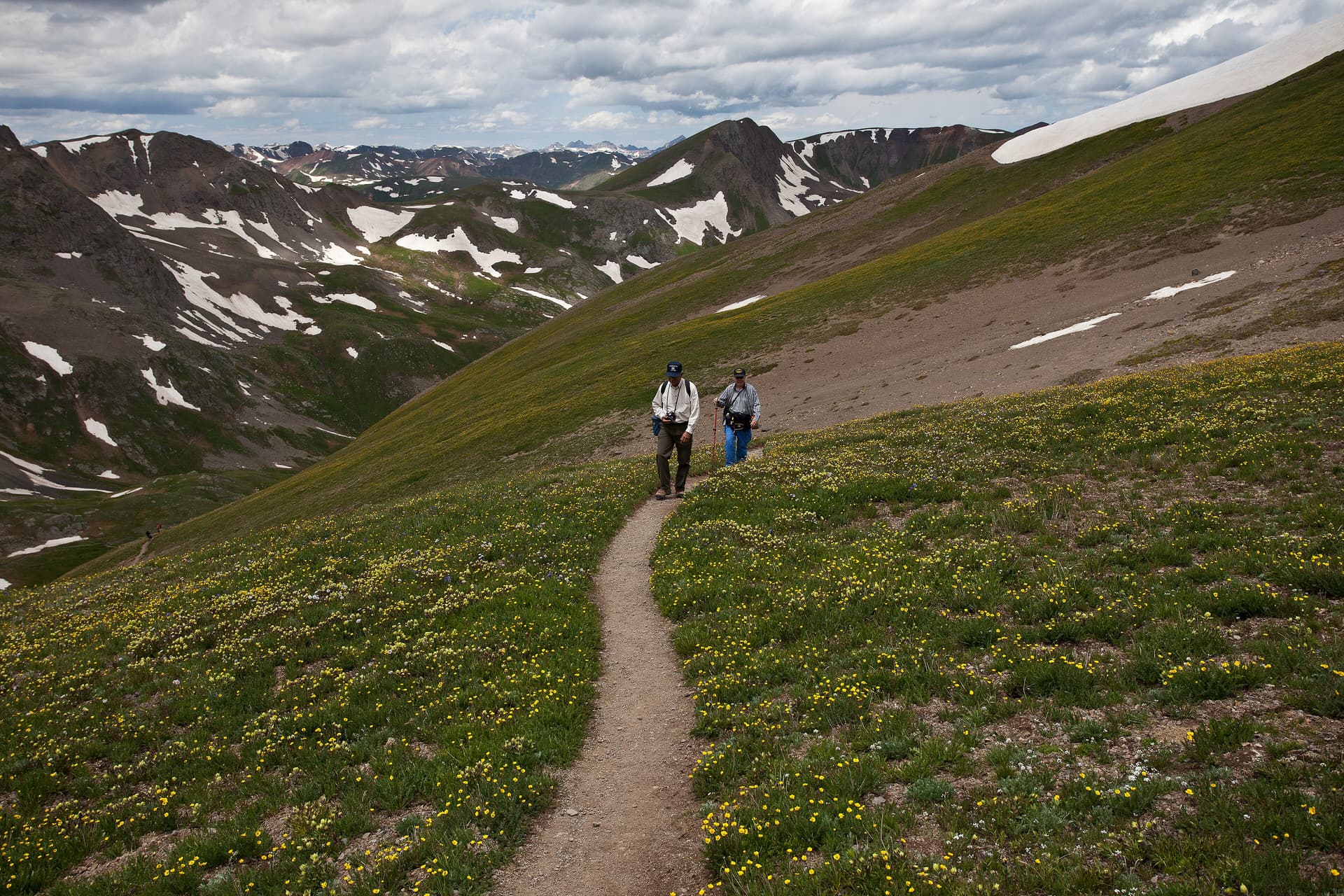
Colorado dries you out faster than almost anywhere else you'll hike. The combination of high altitude, low humidity, and intense sun pulls water out of your body through your skin and lungs before you even feel thirsty. By the time your mouth goes dry, you're already behind. A good hydration pack fixes that, because sipping from a tube on your shoulder strap is the easiest way to drink steadily instead of waiting for water breaks you'll skip.
I've pulled together the best hydration packs for Colorado hiking, from full-featured day packs that swallow a 14er's worth of gear to minimalist vests built for trail runners. There's a pick here for every budget and every kind of day on the mountain.
Our top pick: Osprey Skarab 18. It pairs a 2.5-liter reservoir with 18 liters of cargo space and a back panel that actually breathes on hot climbs. The best all-around hydration pack for Colorado day hikes.
Quick pick — hydration packs for Colorado day hikes
| Product | Best for | Price | Weight | Spec | |
|---|---|---|---|---|---|
Osprey Skarab 18 Our pickAirScape back panel breathes on hot climbs | All-around day hikes + 14ers | $110 | 1 lb 7 oz | 2.5L reservoir, 18L cargo | Check price → |
CamelBak M.U.L.E. | Long days, big water carries | $130 | 1 lb 8 oz | 3L Crux reservoir | Check price → |
Osprey Skimmer 22 (women's) | Women's-specific fit | $120 | 1 lb 8 oz | 2.5L reservoir, 22L cargo | Check price → |
Salomon Active Skin 8 | Trail running / fastpacking | $120 | 9 oz | Vest fit, 2 soft flasks | Check price → |
Teton Sports Oasis 1100 | Budget pick | $45 | 1 lb 6 oz | 2L reservoir, 18L cargo | Check price → |
Platypus Big Zip EVO 3L | Reservoir upgrade for any pack | $45 | 6 oz | Wide-mouth bladder only | Check price → |
Prices and availability change. As an Amazon Associate, we earn from qualifying purchases.
What You'll Learn
- Why Hydration Packs Matter at Altitude
- Best Overall: Osprey Skarab 18
- Best for Long Days and 14ers: CamelBak M.U.L.E.
- Best for Women: Osprey Skimmer 22
- Best for Trail Running: Salomon Active Skin 8
- Best Budget: Teton Sports Oasis 1100
- Best Reservoir Upgrade: Platypus Big Zip EVO
- How to Choose a Hydration Pack for Colorado
- Frequently Asked Questions
Why Hydration Packs Matter at Altitude
Drinking on the move isn't a luxury in Colorado. It's how you avoid the headache, nausea, and dead legs that come from showing up dehydrated at 12,000 feet. Here's what makes a reservoir-and-tube setup worth it here.
You lose water faster up high. The air above treeline holds almost no moisture, so every breath you exhale carries water away. Add the effort of climbing and the sun reflecting off rock and snow, and you can lose well over a liter an hour without noticing. A hose clipped to your strap means you sip every few minutes instead of every hour.
Bottles make you ration. When water lives in a side pocket you have to stop, dig it out, and twist a cap. On a steep climb you'll talk yourself out of it. With a bite valve right there, you drink constantly, and steady sipping is exactly what keeps altitude sickness at bay.
Capacity matters more here. Many Colorado trailheads are an hour from the nearest store, and reliable water sources can be scarce on dry ridgelines. Carrying 2.5 to 3 liters covers most day hikes without a refill. For longer routes, pair your pack with a good filter so you can top off at a stream.
If you're heading up a 14er or tackling a long summer hike, a hydration pack belongs near the top of your gear list, right alongside your boots and rain shell.
Best Overall: Osprey Skarab 18
Why it's our top pick for Colorado hikers
The Osprey Skarab 18 hits the sweet spot for Colorado day hiking. It comes with a 2.5-liter Hydraulics reservoir and 18 liters of cargo space, which is enough to stash a rain layer, snacks, a first aid kit, and an extra insulating layer for when the wind picks up on a ridge.
Key specs:
- Reservoir: 2.5L Hydraulics, included
- Cargo capacity: 18L
- Weight: about 1 lb 9.5 oz (with reservoir)
- Back panel: AirScape ventilated
- Fit: Unisex, adjustable sternum strap
The standout feature for Colorado is the AirScape back panel. Ridged foam and a channel down the spine let air move between your back and the pack, which keeps you cooler on those sweaty south-facing climbs. The reservoir slides into its own dedicated sleeve, so refilling at a stream doesn't mean unpacking your whole day's gear.
The magnetic bite valve clips to the sternum strap and stays put instead of swinging into the rocks every time you scramble. External pockets handle a water filter, sunscreen, and a map without you having to open the main compartment.
What could be better: At 18 liters it's a touch small for shoulder-season trips where you're hauling microspikes, extra layers, and more food. And the hipbelt is a simple webbing strap rather than a padded belt, so it won't transfer weight off your shoulders the way a bigger pack does. For most day hikes, though, that's a fair trade for the lighter, cooler setup.
Best for Long Days and 14ers: CamelBak M.U.L.E.
Maximum water for the biggest objectives
When you're staring down a 12-mile day with 4,000 feet of gain, water capacity becomes the whole game. The CamelBak M.U.L.E. ships with a 3-liter Crux reservoir, the most water of anything on this list, and CamelBak basically invented this category.
Key specs:
- Reservoir: 3L Crux, included
- Cargo capacity: ~9L of gear (plus 3L water)
- Weight: about 1 lb 4 oz
- Back panel: Air Support back panel with body-mapping
- Fit: Adjustable, with stable hipbelt wings
The Crux reservoir is the reason to buy this pack. The bite valve delivers about 20% more water per sip than older designs, which matters when you're breathing hard and don't want to suck on a tube forever. The on/off lever stops drips from soaking your gear, and the wide-mouth cap makes filling and cleaning painless.
The M.U.L.E. leans more toward mountain biking and fast hiking, so the cargo space is tighter than the Skarab's. But the load sits close to your back and stays stable when you're scrambling the upper sections of a peak. For long Front Range objectives or any route where water is scarce, that extra liter is reassurance you'll appreciate around mile nine.
What could be better: Nine liters of gear space fills up fast once you add layers, so it's better suited to summer day trips than cold, gear-heavy outings. The full 3-liter fill also adds noticeable weight up high, though you can always carry it partly full and refill at a stream.
Best for Women: Osprey Skimmer 22
A women's-specific fit that actually fits
The Osprey Skimmer 22 is the women's counterpart to the Skarab, and it's more than a color swap. The harness, shoulder straps, and hipbelt are shaped for a narrower torso and different chest geometry, which means less chafing and a more secure carry on long days.
Key specs:
- Reservoir: 2.5L Hydraulics, included
- Cargo capacity: 22L
- Weight: 1 lb 8 oz
- Back panel: AirScape ventilated
- Fit: Women's-specific harness
The 22-liter cargo space gives you a bit more room than the men's Skarab 18, which is handy when you're packing layers for variable mountain weather. You get the same AirScape ventilated back panel, the same magnetic bite valve, and the same easy-access reservoir sleeve.
The women's-specific shoulder straps curve to avoid pressure points, and the sternum strap sits at a more comfortable height. Anyone who's hiked in a unisex pack that digs in across the chest will notice the difference within the first mile. It's a great match for full days in the foothills around Boulder or longer alpine outings.
What could be better: Like the Skarab, the hipbelt is webbing rather than padded, so it's built for day-hike loads, not multi-day weight. And the larger 22-liter body can feel a little roomy if you only carry the basics on shorter hikes.
Best for Trail Running: Salomon Active Skin 8
Featherweight water for moving fast
If you're running Colorado's trails or moving light and fast on a peak, a bulky pack just slows you down. The Salomon Active Skin 8 wraps around your torso like a vest and carries two soft flasks up front, so the water sits on your chest instead of bouncing on your back.
Key specs:
- Reservoir: Two 500ml soft flasks (included), reservoir-compatible
- Cargo capacity: 8L
- Weight: about 7.4 oz (vest only)
- Back panel: Stretch mesh, vest-style
- Fit: Snug, sized XS to XL
The vest design is the whole point. Front-mounted flasks are easy to grab and squeeze, and the closer the water sits to your center of gravity, the less it sloshes. The stretch mesh body hugs you with almost no bounce, even at a run, and the whole thing weighs about half a pound empty.
You still get pockets for gels, a phone, a light shell, and a pair of folding trekking poles tucked into the rear stash. For fastpacking missions or training runs in the foothills, it's hard to beat how invisible this thing feels once it's loaded and cinched.
What could be better: Eight liters is tight for a full day with lots of layers, so this is a running and fast-hiking tool, not an all-day cargo hauler. The snug vest fit also runs small, so size up if you're between sizes or plan to layer underneath.
Best Budget: Teton Sports Oasis 1100
Solid hydration without the sticker shock
You don't have to spend $120 to drink on the move. The Teton Sports Oasis 1100 delivers a 2-liter reservoir and roughly 18 liters of storage for around $45, which makes it a smart entry point for new hikers or anyone outfitting the whole family.
Key specs:
- Reservoir: 2L, included
- Cargo capacity: ~18L
- Weight: 1 lb 6 oz
- Back panel: Mesh with airflow channels
- Fit: Adjustable, with sternum and waist straps
For the money, you get a surprising amount of pack. The 2-liter bladder covers most half-day hikes, the mesh back panel keeps some air moving, and there's enough room for snacks, a layer, and the ten essentials. Teton throws in a chest strap and a basic hipbelt, so the load stays stable on moderate terrain.
It's the pack I'd hand a friend who's hiking their first trail near Denver and isn't sure they'll stick with it. Spend $45, find out you love it, and upgrade later if you want better ventilation and a bigger reservoir.
What could be better: The reservoir and bite valve aren't as refined as Osprey or CamelBak. The plastic can hold a slight taste when new, and the valve flows a little slower. The materials feel less rugged too, so it's better for casual day hikes than years of hard use on rocky 14er routes.
Best Reservoir Upgrade: Platypus Big Zip EVO
Turn the pack you already own into a hydration pack
Maybe you already love your day pack or backpacking pack and just want to add a reservoir. The Platypus Big Zip EVO is a standalone bladder that drops into most packs with a hydration sleeve, and it's one of the easiest to live with.
Key specs:
- Capacity: 3L (also in 1.5L and 2L)
- Weight: ~6 oz
- Opening: Full-width zip closure
- Material: Taste-free, BPA-free film
- Compatibility: Fits most hydration sleeves
The wide zip-lock opening is the selling point. You can open the entire top of the bladder, which makes filling at a shallow stream easy and cleaning even easier (you can practically turn it inside out to dry). The reservoir lies flat against your back so water doesn't pool at the bottom, and the SlideLock seal has a strong reputation for not leaking.
If your current pack has an empty hydration sleeve, this is the cheapest, fastest way to stop fumbling with bottles. It's also a smart spare to keep at home, since reservoirs are the part of any hydration setup most likely to wear out first.
What could be better: It's a bladder only, not a pack, so it won't help if you don't already own something with a reservoir sleeve. And the included hose lacks an on/off valve on some versions, so check the listing if drip control matters to you.
How to Choose a Hydration Pack for Colorado
Reservoir Size
For most Colorado day hikes, 2 to 2.5 liters is the sweet spot. It's enough water for a half day without weighing you down. Step up to 3 liters for long 14er pushes, dry ridgeline routes, or hot summer outings where refills are scarce. Remember that water weighs about 2.2 pounds per liter, so don't carry more than you'll actually drink.
Cargo Capacity
Match the pack's storage to your day. A 15 to 20-liter pack handles a typical summer hike with a rain layer, snacks, and the ten essentials. Shoulder-season trips with microspikes and extra insulation push you toward 22 liters or more. Trail runners can get away with 8 liters or less.
Ventilation
This is the feature Colorado hikers underrate. Intense sun and big climbs mean a sweaty back, so look for a suspended mesh or ridged back panel that keeps the pack off your skin. The Osprey AirScape and CamelBak Air Director systems both do this well.
Bite Valve and Hose
A magnetic clip keeps the hose anchored to your strap instead of flapping around when you scramble. An on/off lever stops drips from soaking your gear. And a wide-mouth or zip-top reservoir makes filling and cleaning far less of a chore, which matters because a bladder you can't clean easily is a bladder that grows mold.
Fit
A hydration pack should sit snug and high, with the sternum strap keeping the shoulder straps from sliding. Women's-specific models like the Osprey Skimmer aren't a gimmick, they genuinely fit narrower torsos better. Try the pack loaded if you can, since an empty pack hides the pressure points a full one reveals.
Frequently Asked Questions
How much water should I carry hiking in Colorado?
Plan for about half a liter per hour in mild conditions, and closer to a full liter per hour on hot days or strenuous climbs above treeline. For most day hikes that means 2 to 3 liters. Colorado's dry air dehydrates you faster than you expect, so err on the side of more.
Are hydration bladders better than water bottles for hiking?
For steady drinking on the move, yes. A bladder and hose let you sip constantly without stopping, which keeps you better hydrated at altitude. Bottles are easier to measure, clean, and refill from a filter, so many Colorado hikers carry a bladder for sipping plus one bottle as backup.
How do I keep my hydration reservoir from getting moldy?
Empty and dry it fully after every hike. Open the reservoir wide, hang it upside down, and prop the opening so air circulates. Use a brush kit for the hose and bite valve. For deep cleaning, a little baking soda or a cleaning tablet in warm water works well, then rinse and dry completely.
Can I use a hydration pack for a 14er?
And it's one of the best ways to stay hydrated on a long summit day. Choose a pack with a 2.5 to 3-liter reservoir and at least 15 to 18 liters of cargo for layers and food. Just be aware that bite valves can freeze on cold alpine starts, so blow water back into the reservoir between sips.
Do hydration pack tubes freeze in cold weather?
They can, especially on early-morning starts and winter hikes. After each drink, blow the water in the hose back into the reservoir so there's nothing left in the tube to freeze. Insulated hose sleeves help too. For deep winter, many hikers switch to insulated bottles carried upside down.
The right hydration pack turns drinking water into something you do without thinking, which is exactly what Colorado's thin, dry air demands. Whether you're chasing your first summit or logging trail miles near town, pick the capacity and fit that match your typical day and drink early and often.
Ready to plan your next outing? Browse our guide to the best summer hikes in Colorado and fill that reservoir before you hit the trailhead.
Get the Colorado 14er Packing Checklist (free PDF)
Plus a weekly note on the best Colorado trails, gear deals, and seasonal hike picks. No spam, unsubscribe anytime.
We respect your inbox. Unsubscribe anytime.