Best Snowshoes for Colorado in 2026
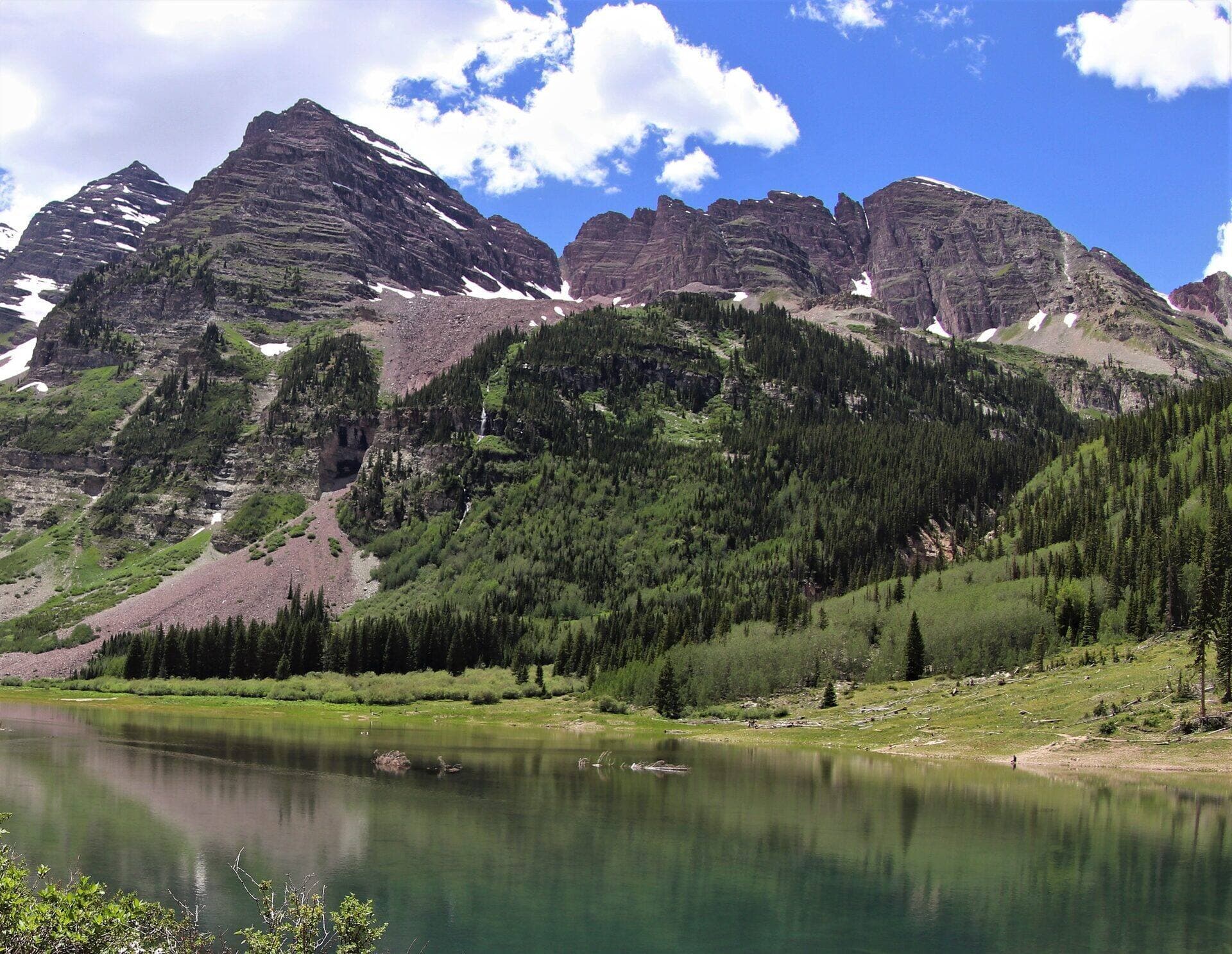
Colorado winter trails divide cleanly into "where microspikes work" and "where you need snowshoes." Below treeline on packed Front Range trails, microspikes are the right tool. Above treeline, in unbroken powder, in the deep snowpack of the I-70 corridor and RMNP, snowshoes become necessary. Without them you posthole to your thigh on every step; with them you move at normal hiking pace through 18 inches of fresh snow.
Picking snowshoes is more nuanced than picking microspikes because the terrain you'll use them on determines the right tool. Steep mountaineering approaches need aggressive crampon snowshoes. Rolling Nordic touring needs lighter, less-aggressive designs. Here are the seven that cover every realistic Colorado winter use case.
Quick pick — snowshoes for Colorado
| Product | Best for | Price | Weight | Spec | |
|---|---|---|---|---|---|
MSR Lightning Ascent Our pickBest for backcountry climbing approaches | Steep alpine terrain + 14er prep | $330 | 4 lb 7 oz/pair | Aggressive traction, heel lifter | Check price → |
Tubbs Wilderness | Rolling terrain + day touring | $220 | 4 lb 10 oz/pair | Crampon bottoms, easy ratchet bindings | Check price → |
Atlas Helium-Trail | Lightweight day hiking | $230 | 3 lb 12 oz/pair | Pivoting binding, modest traction | Check price → |
MSR Evo Trail | Budget pick + flat terrain | $160 | 3 lb 11 oz/pair | Plastic deck, modular tail extensions | Check price → |
Prices and availability change. As an Amazon Associate, we earn from qualifying purchases.
What You'll Learn
- What to look for in Colorado snowshoes
- Best Overall: MSR Lightning Ascent
- Best All-Around: Tubbs Wilderness
- Best Lightweight: Atlas Helium-Trail
- Best Budget: MSR Evo Trail
- Best for Women's Fit: Tubbs Wayfinder W
- Best for Backpacking: MSR Lightning Explore
- Best for Kids: MSR Tyker
What to look for in Colorado snowshoes
Three specs determine how a snowshoe performs:
Traction system. This is where snowshoes diverge. MSR's Lightning series uses a steel frame with traction extending the full perimeter. The snowshoe itself becomes a crampon. Tubbs and Atlas use plastic decks with smaller toothed crampons under the binding only. For Colorado's steep alpine terrain, full-perimeter traction is genuinely valuable.
Binding system. Modern snowshoes use either ratchet straps or BOA closures. Ratchets are simpler but slower to operate with gloves. BOA closures (MSR has gone to these) are faster but harder to repair in the field. Either works; pick what you've used before.
Surface area + weight. Bigger snowshoes float better in deep snow. Smaller ones move faster on packed routes. The "right" size depends on user weight plus pack weight. A 180-lb hiker with a 30-lb pack needs roughly 25-30 inch snowshoes; a 130-lb hiker with no pack can use 22-25 inch snowshoes.
For Colorado specifically: the snowpack here is dry (lower water content than Sierra or Pacific Northwest snow), so trail-breaking is easier than in those areas. Most Colorado snowshoers use 25-inch snowshoes most of the time.
Best Overall: MSR Lightning Ascent
The MSR Lightning Ascent is the snowshoe of choice for Colorado backcountry skiers, 14er winter climbers, and anyone whose snowshoe needs to perform on real terrain. The steel-tube frame extends the entire perimeter as traction, the under-foot crampons are aggressive, and the binding is a step-in mechanism that works with gloves on.
The Lightning Ascent's killer feature is steep-terrain confidence. Side-hill on a 35-degree slope with these on and you feel locked in. The heel-lifter bar (a ratchet that pops up to support your heel on uphills) reduces calf fatigue noticeably. For 14er prep climbs or ski-tour approaches, this is genuinely superior to plastic-deck competitors.
Trade-offs: $330 is the most expensive snowshoe in the category. Weight is 4 lb 7 oz/pair. Not light. And the steel frame can develop micro-bends after 200+ days of hard use (MSR will replace under warranty).
Best for: Steep terrain, 14er climbing approaches, ski touring access.
Weight: 4 lb 7 oz/pair. Sizes: 22, 25, 30 inch.
Check MSR Lightning Ascent on Amazon
Best All-Around: Tubbs Wilderness
For most Colorado winter hikers, the Tubbs Wilderness is the right snowshoe. Plastic deck, crampon under the binding, easy ratchet straps, durable construction. Less aggressive than the MSR but more comfortable for rolling terrain and weekend day-touring.
The Wilderness handles a 30-pound pack confidently and tracks straight on packed routes. The binding tightens fast even with cold hands. It's the snowshoe you grab when you're going somewhere familiar and just need to get there.
Best for: Day touring, rolling terrain, occasional weekend backpacking.
Weight: 4 lb 10 oz/pair. Sizes: 25, 30 inch.
Best Lightweight: Atlas Helium-Trail
The Atlas Helium-Trail saves a half-pound over typical snowshoes. The plastic deck and minimal traction make it less suited for steep terrain, but for rolling Nordic touring and packed-trail use, the weight savings are noticeable on the legs.
If your hiking is mostly groomed trail or modestly-pitched approaches, the Helium is plenty. For steep alpine work, the Lightning Ascent's traction is worth the extra pound.
Best for: Nordic touring, lighter users, rolling terrain.
Weight: 3 lb 12 oz/pair. Sizes: 23, 26 inch.
Check Atlas Helium-Trail on Amazon
Best Budget: MSR Evo Trail
For occasional snowshoers who don't need MSR's high-end traction, the Evo Trail is the budget MSR option. Same plastic deck construction as competitors but with MSR's quality on the binding. The tail extensions are modular. Start with the base length, add 6-inch tails for deeper snow.
The Evo Trail is fine for once-or-twice-a-winter snowshoeing. Real heavy users should step up to the Lightning Ascent or Tubbs Wilderness.
Best for: Occasional snowshoers, beginner gift.
Weight: 3 lb 11 oz/pair (base). Sizes: 22-inch base + optional 6-inch tails.
Best for Women's Fit: Tubbs Wayfinder W
Women-specific snowshoes have shorter bindings and a tapered deck for narrower stride patterns. The Tubbs Wayfinder W is a popular women's-cut snowshoe with the same traction as the Wilderness in a smaller package.
The men's Wilderness in a smaller size is also fine for many women; the Wayfinder is for hikers who've felt the men's binding rub or who have a noticeably narrower hip-stride.
Best for: Women hikers, narrower-stride users.
Weight: 4 lb 4 oz/pair (W).
Check Tubbs Wayfinder W on Amazon
Best for Backpacking: MSR Lightning Explore
For multi-day winter backpacking (carrying 40+ lbs through the backcountry), the MSR Lightning Explore adds slightly larger surface area to the Lightning Ascent base. The extra float matters with the heavier load. The steel frame traction handles steep approaches.
For day-touring or shorter trips, the regular Lightning Ascent is more nimble. The Explore is specifically for heavy-pack winter backcountry.
Best for: Winter backpacking, heavy loads.
Weight: 4 lb 14 oz/pair.
Check MSR Lightning Explore on Amazon
Best for Kids: MSR Tyker
For introducing kids to snowshoeing, the MSR Tyker fits sizes 8-13 children's shoes. The deck is sized for kid pace, the binding is simple to operate, and the kid-specific snowshoe is more fun than an oversized adult model.
Best for: Kids learning to snowshoe.
Weight: 2 lb/pair.
When to use snowshoes vs. Microspikes
Use microspikes when:
- The trail is packed by foot traffic (most Front Range trails)
- You're on a known route with traffic from other hikers
- Snow is less than 6 inches deep on the trail
Use snowshoes when:
- You're breaking trail in unbroken snow
- The snowpack is deeper than 6 inches on the trail
- You're traveling in the backcountry without a packed trail to follow
Most Colorado winter hikers carry both. Microspikes go on for the parking-lot section, come off when snow gets deep enough that snowshoes work better, and go back on for the descent.
Final Picks
Buy the MSR Lightning Ascent if you'll do steep terrain, mountaineering approaches, or ski touring access.
Buy the Tubbs Wilderness if you want one solid snowshoe for rolling Colorado winter terrain.
Buy the MSR Evo Trail if you snowshoe once or twice a winter and want quality on a budget.
For a complete winter setup, see our microspikes guide and beginner's guide to winter hiking in Colorado.
Get the Colorado 14er Packing Checklist (free PDF)
Plus a weekly note on the best Colorado trails, gear deals, and seasonal hike picks. No spam, unsubscribe anytime.
We respect your inbox. Unsubscribe anytime.